
Parbhani Mayor demolishes Hanuman temple days before Ram Navami
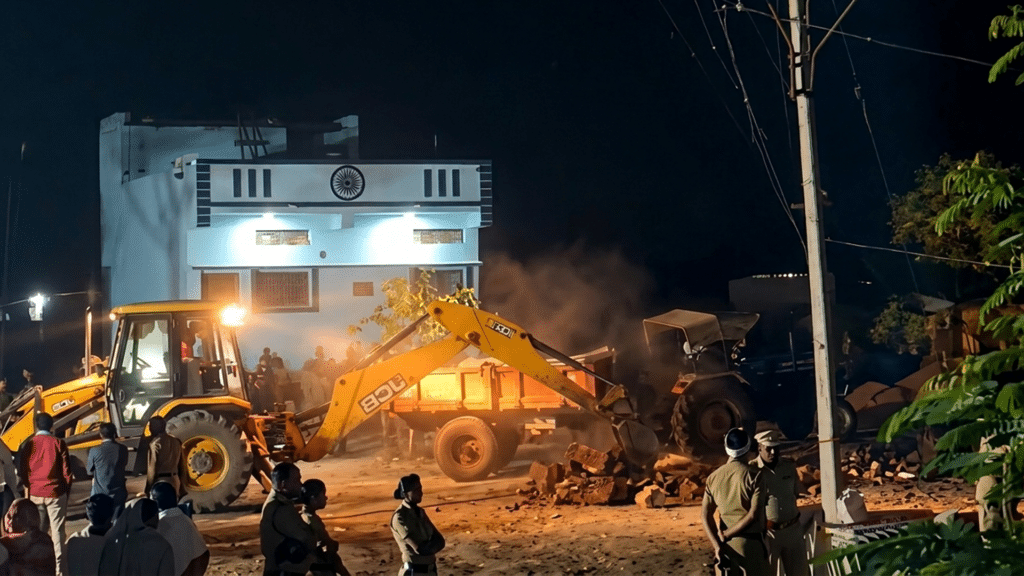
In Maharashtra’s Parbhani, a Hanuman temple was demolished overnight, just two days before Ram Navami, on the orders of Shiv Sena (UBT) Mayor Syed Iqbal Sayyad. City administration cited a complaint filed nine years ago as the basis for the move, using it to justify the removal of the temple’s structure. The development comes as preparations for Ram Navami, are underway across the region. UBT functionaries had earlier alleged that Sayyad’s selection as Mayor was due to the support shown to SS (UBT) by the Muslims of the city.
Manuel Neuer at 40: The GOAT?
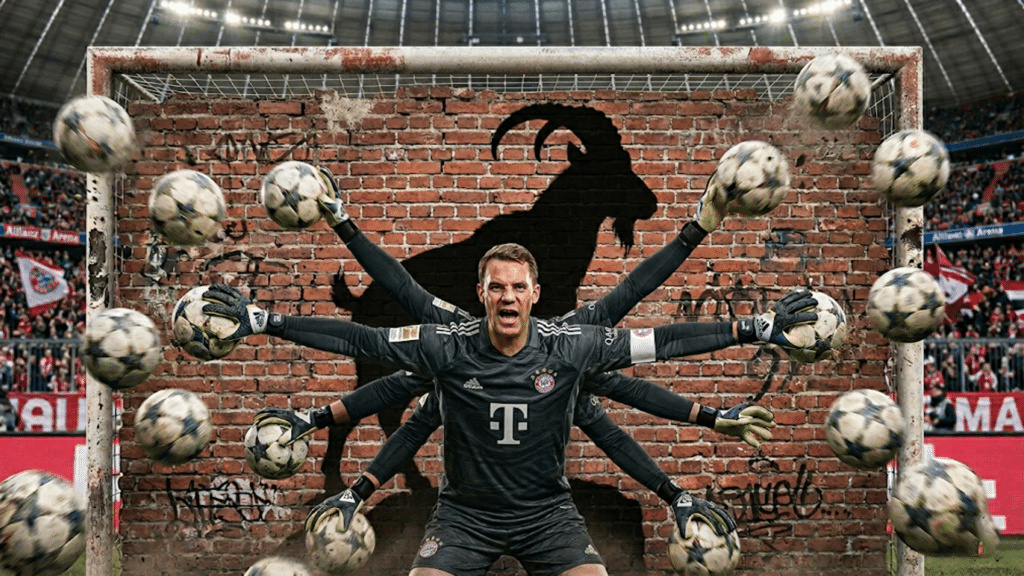
There are players who master a position, and then there are players who redefine it. And then there is Manuel Neuer, a footballer who did not merely evolve the role of the goalkeeper, but fundamentally rewrote its language. As he turns 40, we are not just celebrating longevity or consistency. We are reflecting on a career that altered the geometry of football itself, a career that expanded the goalkeeper from a reactive last line of defence into an active, almost outfield orchestrator of the modern game. Neuer’s place in football history is not a matter of debate. It is a conclusion. Like Lionel Messi or Cristiano Ronaldo, whose greatness exists in a class of its own, Neuer belongs to that rare echelon where comparison becomes irrelevant. There is no “next best.” There is only Neuer. The Birth of the Sweeper-Keeper Before Neuer, goalkeepers were defined by their box. Their world ended where the penalty area did. They were shot-stoppers, commanders of the six-yard box, custodians of positioning and reflex. Their role was fundamentally defensive, almost static in its orientation. Neuer shattered that paradigm. Emerging at FC Schalke 04 before reaching global prominence at FC Bayern Munich, Neuer introduced the concept of the “sweeper-keeper,” a goalkeeper who operates as a defensive sweeper behind the backline. He doesn’t wait for danger; he anticipates it. He doesn’t react; he preempts. His positioning, often several yards outside the penalty area, transformed defensive structure. Bayern Munich could push their defensive line higher because they trusted Neuer to act as the insurance policy. In doing so, he compressed the field, reduced space for opponents, and allowed his teams to dominate territory in ways previously unimaginable. This was not just tactical evolution, it was a philosophical revolution. Defenders who played in front of him, such as Javi Martinez, have said that they almost became complacent while chasing back because they knew Neuer would be there. But to reduce Neuer’s greatness to his sweeping would be a disservice. His technical foundation is arguably the most complete ever assembled in a goalkeeper. His shot-stopping ability remains elite, an almost paradoxical blend of explosive reflexes and calm anticipation. Remember the saves against Real Madrid? His one-on-one technique is particularly remarkable. The Algeria game in the 2014 World Cup is the perfect example. Neuer rarely dives prematurely; instead, he delays, reading the attacker’s body language, narrowing angles and forcing the opponent into discomfort. His distribution is another defining pillar. Neuer can initiate attacks with both precision and vision, whether it is a short pass to beat a press or a 60-yard diagonal that bypasses entire midfield lines or a strong throw that, more often than not, finds a teammate deep into the opponent’s half. In an era where build-up play from the back is crucial, Neuer is not just a participant, he is often the starting point. And then there is his footwork. It is not hyperbole to say that Neuer is as comfortable with the ball at his feet as many outfield players. His touch, control, and composure under pressure allow Bayern and Germany to play out from the back with a confidence that few teams can replicate. In modern football, where pressing systems suffocate traditional goalkeepers, Neuer stands as an antidote, a player who doesn’t just survive the press, but manipulates it. But, Neuer’s greatest impact may be invisible in highlight reels, no matter how exquisite they are. It lies in the way he alters space. With Neuer in goal, defensive lines can be higher. Full-backs can push forward more aggressively. Midfielders can press with greater intensity, knowing that there is a security net behind them. In essence, Neuer adds an extra defender without occupying a field position. This spatial intelligence has allowed teams like Bayern to dominate possession and territory in ways that force opponents into submission. It is not just that Neuer prevents goals; it is that he prevents opportunities before they even exist. He has changed how coaches think. How defenders position themselves. How opponents attack. Few players in history can claim to have influenced tactical theory itself. Neuer is one of them. Leadership and Mentality Greatness is not only measured in technique. It is also measured in presence. As captain of Bayern Munich and previously the German national team, Neuer embodies leadership that is both vocal and embodied. He commands his defensive line with authority, directs positioning with clarity, and instills confidence through sheer presence. Neuer does not stay rooted in his penalty area. He ventures forward, intercepts through balls, clears danger outside the box, and functions almost as a libero. His performances are so transformative that it forces analysts to reconsider the boundaries of goalkeeping itself. During key games, he leads from the back, organising the defensive lines, helping players positioning themselves, breaking opposition presses and even lashing out at his players when they make a mistake. His presence on the field is enough to intimidate opponents, much like his predecessor Oliver Kahn. However, unlike Kahn’s chaos, there is an eerie calm about his confidence that demoralises most attackers. In the 2014 World Cup, which was the crown of his career, he was awarded the Golden Glove, a recognition of his status as the best goalkeeper in the tournament. But the award itself feels almost insufficient. Neuer did not just outperform his peers, he redefined the metrics by which goalkeeping excellence is measured. Longevity is often cited as a hallmark of greatness. Take the example of Gigi Buffon. But in Neuer’s case, it is the consistency of excellence that stands out. From his early years at Schalke to his dominance at Bayern Munich, Neuer has maintained a level of performance that spans over a decade. He has faced injuries, setbacks and the natural decline that comes with age. Yet, even at 40, his presence continues to influence matches, so much so that even at this age when most goalkeepers either hang their gloves or switch to second division clubs, Neuer continues to be
Akhilesh Yadav Says No Film Should Be Made on Atiq Ahmed
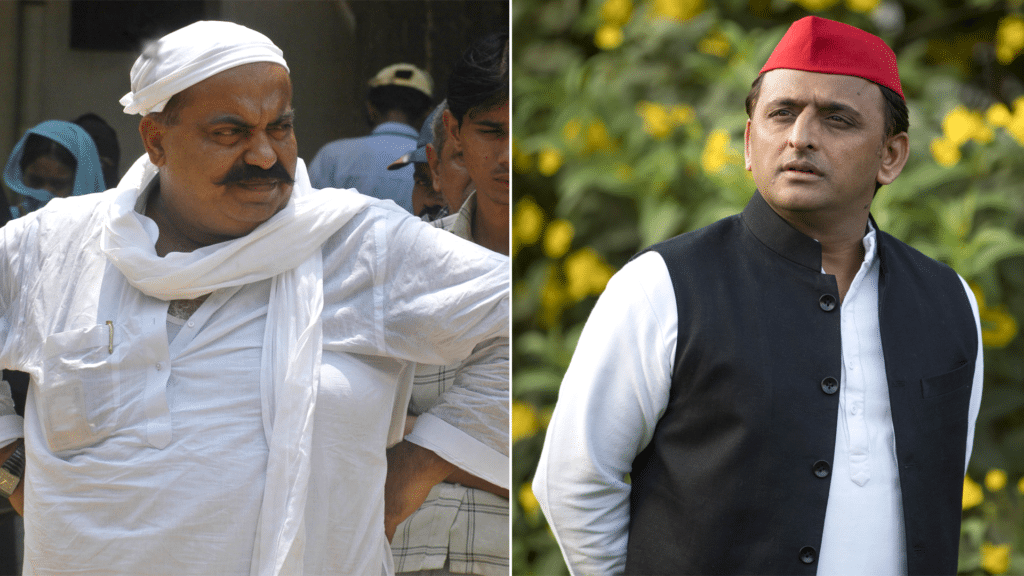
Speaking at the Times Now Summit, the Samajwadi Party chief addressed questions about a film project titled Dhurandhar 2 and its alleged links to Atiq Ahmed. During the interaction, he was asked to share his views on the project and its connection to the former politician, who had past associations with the Samajwadi Party. Responding to Navika Kumar of Times Now, Yadav pointed out that Atiq Ahmed also had ties with individuals linked to the Bharatiya Janata Party (BJP), adding another dimension to the discussion. He further said that questions should be asked with proper information, delivering the statement calmly but with a firm undertone. His comments have since drew attention among political observers, who see his response as pointed and significant. The debate around Dhurandhar 2 and its possible real-life inspirations continues, especially amid ongoing discussions about how films and television portray crime, politics, and historical figures. As the discourse evolves, Yadav and the Samajwadi Party remain central to the conversation, with many closely following their stance on Atiq Ahmed and the proposed film project.
Ram Navami procession attacked in Murshidabad; security tightened
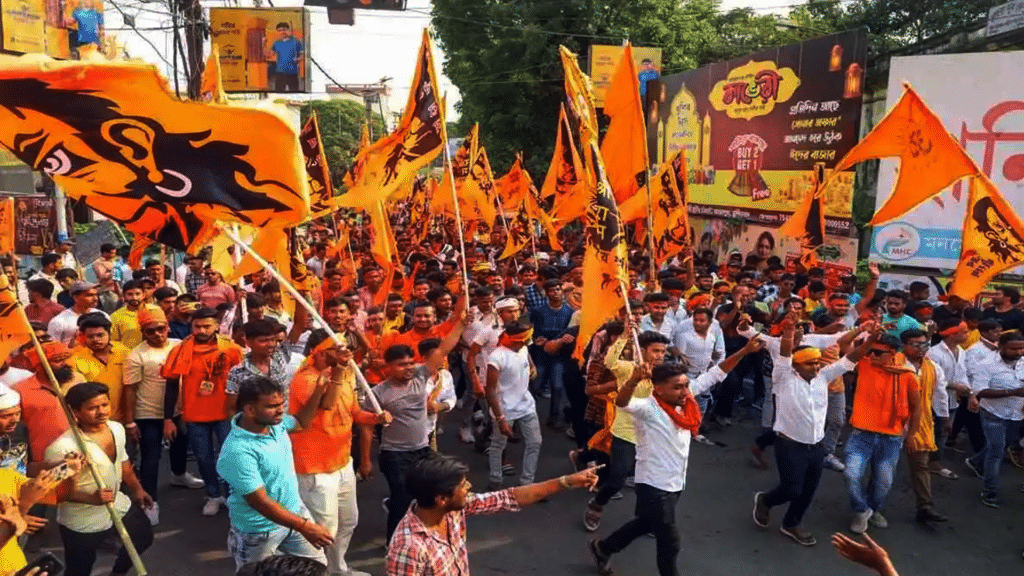
Violence errupted during a Ram Navami Shobha Yatra in Murshidabad, West Bengal, on March 27, 2026, prompting a swift response from police and local authorities to bring the situation under control. Officials said the procession began peacefully but tensions escalated as it passed through certain areas, leading to arguments that turned into physical confrontations. According to reports, some Muslim individuals resorted to stone-pelting, causing damage to property, including shops and roadside structures. Police personnel deployed along the route intervened to disperse the crowd and tear gas was used in certain areas to restore order. To prevent further escalation, authorities imposed restrictions under Section 163 of the Criminal Procedure Code (CrPC), prohibiting large gatherings in sensitive areas. Security was tightened across the district, with additional forces deployed, increased patrolling and enhanced monitoring to maintain law and order. Officials confirmed that several individuals were detained in connection with the incident, with at least 12 arrests made so far. Authorities are reviewing CCTV footage and collecting eyewitness accounts as part of an ongoing investigation to identify those responsible and understand the sequence of events. While the exact cause of the violence is still under investigation, officials have emphasized their priority to maintain peace and prevent further disturbances. The district administration has urged residents to remain calm and avoid spreading rumours, assuring that strict action will be taken against those found involved in the violence. Damage assessments are currently underway and authorities have indicated that steps will be taken to support those affected. Police and administrative teams continue to monitor the situation closely, ensuring that normalcy is maintained. Community leaders have appealed for restraint and cooperation, calling for harmony and peaceful coexistence. Authorities reiterated their commitment to safeguarding public order and taking action against anyone attempting to disrupt peace. The situation in Murshidabad is now reported to be under control, with security forces remaining on alert to prevent any recurrence. Officials said the incident highlights the importance of vigilance and coordination during large public gatherings.
Mumbai’s ‘Jai Ho’ Road Turns Into Daily Headache

There is something almost cinematic about this idea. A car glides over a road. Instead of tyre hum, a melody rises. In Mumbai, that melody is Jai Ho. India’s first musical road was built along the Coastal Road. It was a rare marriage of engineering and art. The mechanics were simple. Grooves in the asphalt produced a tune. Vehicles had to pass at a steady, regulated speed. Drive responsibly and the road rewards you with music. It was civic engineering with a sense of occasion. For a brief window, Mumbai admired it. People slowed down just to hear it properly. Videos circulated online. There was genuine delight across the city. But novelty didn’t stay contained in Mumbai for long. The distance between delight and intrusion is a matter of proximity. The road was designed as a private moment for drivers. But it could not stay private in Mumbai. The Coastal Road runs past densely populated residential areas. Apartment complexes press close to the highway here. There are no buffers. No open land between the road and buildings. Just walls, windows and people living their lives. For residents, the music was never occasional. It was never a surprise. It was a loop. The same melody, triggered by every passing vehicle. Repeating from early morning until late at night. Jai Ho was composed as a song of celebration. Here, it became a metronome of intrusion. The tune never changed. It never paused. It simply continued, hour after hour. Windows that once caught the sea breeze stayed permanently shut. Conversations had to be raised above the sound. Families sharing dinner shared it with a song they never chose. Residents Push Back The complaints were neither isolated nor disorganised. Hundreds of residents raised formal objections. They came from housing complexes along the Coastal Road corridor. Their accounts were consistent and impossible to dismiss. What united them was not just the sound. It was relentless. Residents described it as “unavoidable background noise.” That phrase carries a particular kind of exhaustion within it. Background noise follows you from room to room. It is there when you wake up. It is there when you try to sleep. Sleep was among the first casualties. Early mornings and late evenings became the worst. The repetition felt more pronounced in those quieter hours. More invasive. More impossible to tune out. This was no longer a question of personal preference. It had become, plainly, a question of livability. The volume of complaints eventually could not be deferred. The Brihanmumbai Municipal Corporation was compelled to act. Officials reviewed the situation and assessed noise levels. They arrived at what they hoped was a workable compromise. The musical road would not be removed. But it would be partially silenced. Traffic restrictions were imposed between 10 PM and 7 AM. Nine hours of quiet were carved out for exhausted residents. It was an acknowledgement dressed as a compromise. The BMC had conceded the road was incompatible with its surroundings. But it stopped short of fixing the fundamental problem. Because the problem remains. The music continues during the day. The repetition continues. The residents continue to live inside the loop. Partial relief is not resolution. Mumbai’s residents know the difference. How Musical Roads Work – And Why They Work Elsewhere The engineering behind the concept is straightforward. Grooves are cut into the road surface at calculated intervals. Tyres passing over them create vibrations. Those vibrations translate into distinct musical notes. Drive at the right speed and a melody emerges. Drive too fast and the tune distorts entirely. The road is, at its most functional, a speed-regulation device. It is behavioural engineering dressed in the language of music. This concept has worked in the United States, Japan and South Korea. In those places it functions exactly as intended. Drivers slow down. The road rewards them. Everyone is briefly delighted. The crucial difference is location. Musical roads abroad sit along open highways. They are placed in areas with low residential density. The sound stays contained near the vehicles. There are no walls to bounce it off. No windows to carry it through. The experience remains brief, engaging and self-contained. Mumbai does not accommodate self-contained experiences easily. It is one of the densest urban environments on earth. Infrastructure and habitation exist on top of each other here. They negotiate space with relentless pragmatism. Roads in Mumbai are not corridors. They are neighbourhoods in motion. They run alongside homes, markets, schools and hospitals. The distances separating them barely qualify as margins. To build a musical road here and expect contained sound is a mistake. It misunderstands the physics of sound. It misunderstands the nature of this city entirely. Sound in Mumbai does not dissipate. It ricochets, finds gaps between buildings, moves through them and climbs walls and enters windows. A melody lasting three seconds for a passing driver lasts far longer for nearby residents. Multiply that across a full day of traffic. What you have is not music. It is an acoustic siege. There is also a psychological dimension to this story. It goes beyond decibels and planning documents. Music, when we choose it, is enormously powerful. It can shift a mood in seconds. It can collapse time and conjure memory. But the operative word is choose. The moment music is imposed, something fundamental changes. It stops being music. It starts being noise. Jai Ho carries genuine cultural weight. Composed by A. R. Rahman, it is associated with triumph and collective joy. None of that survives a hundred repetitions a day. By the fiftieth hearing, it has shed every layer of meaning. It becomes simply a sound that will not stop. Residents have described this arc with painful precision. From curiosity, to amusement, to irritation, to something closer to despair. The problem, they insist, is not the song. It is the absence of any choice in hearing it. A Question of Urban Planning At its core, this is a story about a good idea becoming a bad decision. The
Fund misuse row in Kerala; mayor flags ₹6,000 lamp rental

The mayor of a Kerala Municipal Corporation has raised concerns about financial management and past procurement practices, pointing to the high cost of renting a Nilavilakku (metal oil lamp) for official events. According to the mayor, the lamp was previously rented at ₹6,000 per program, which could amount to ₹18,000 per day for multiple events an expense the mayor described as excessive. The mayor underlined that the lamp could be purchased outright at a comparatively lower one-time cost. The current administration, however, claims to have reduced expenses by securing the same item at a much lower rental rate of ₹500 per day from a different vendor, with plans to further reduce costs through an annual contract. The mayor emphasized a commitment to improving transparency and ensuring more efficient use of public funds.
Ram Navami procession in Garhwa turns violent; several injured
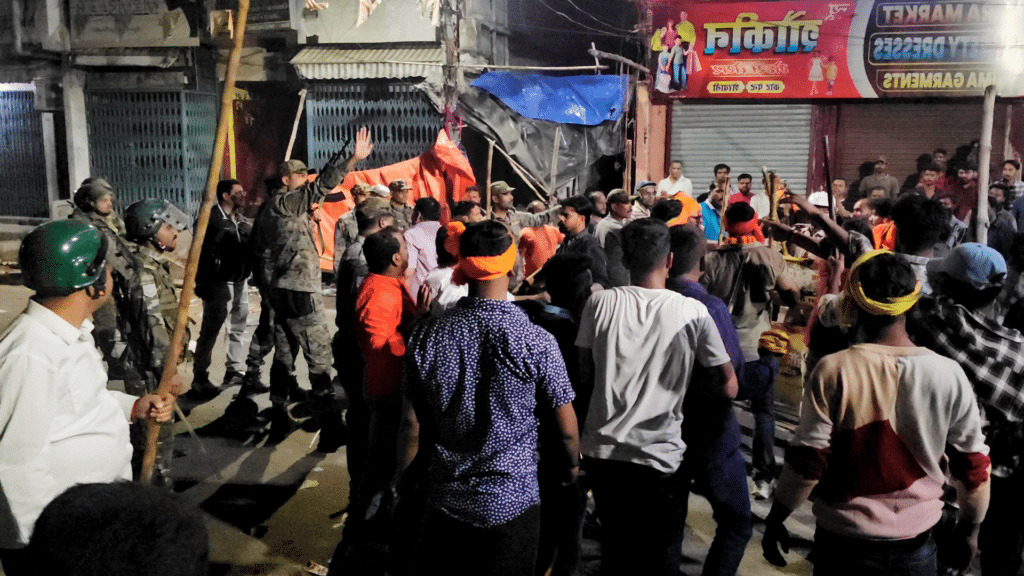
A Ram Navami procession in Garhwa, Jharkhand turned violent after a clash broke out between different groups of people, leading to widespread chaos and injuries. Several individuals were hurt in the incident and were taken to nearby hospitals for treatment. Police personnel were deployed to the scene. Tear gas was used to disperse the crowd and bring the situation under control. Additional forces were also sent to prevent the unrest from escalating further. Eyewitnesses said the situation deteriorated during the procession, although the exact cause of the confrontation is still unknown. Authorities have stated that the matter is under investigation. Journalists covering the incident reportedly faced disruptions in their work, raising serious concerns about media safety in such volatile situations. Police are reviewing video footage and speaking to witnesses to determine what triggered the clash and identify those responsible. While the situation has now been brought under control, a significant police presence remains in the area as a precaution. Further details are awaited as the investigation continues.