
Mob chants “All Kafirs will be chopped”; pelts stones & glass bottles in Mathura
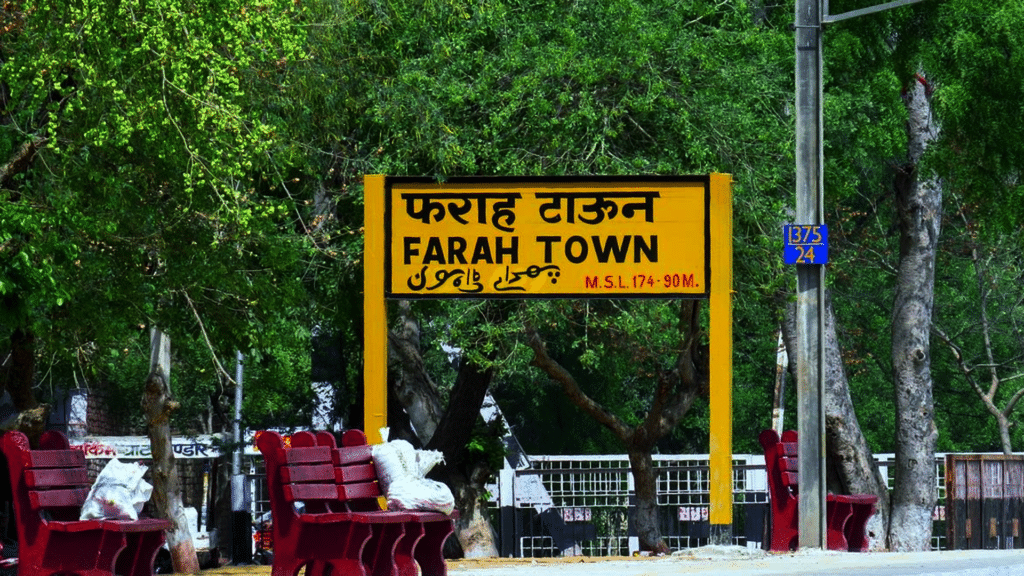
Tensions were reported in the Krishnanagar area of Mathura after incidents of stone-pelting and vandalism created panic among residents and shopkeepers. According to initial accounts, a large group gathered on a street and began pelting stones and bottles, disrupting normal activity and forcing people to flee for safety. Several shops were damaged, though the full extent of the losses is yet to be determined. A video of the incident has gone viral online, with the mob also heard hurling provocatory slogans like “Kaffirs will be cut” against the Hindu community. Police have increased vigilance in the area and are reviewing video footage to identify those responsible. Officials have stated that strict action will be taken against anyone found involved in violence or unlawful activities.
Bangladeshi migrant from Saudi Arabia threatens PM Modi & Assam CM Himanta
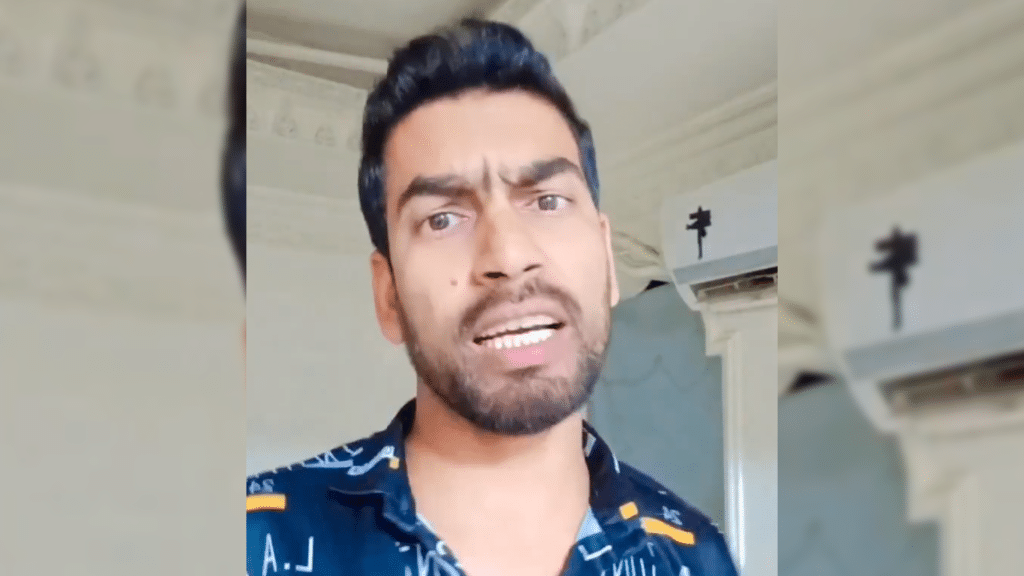
A video has been circulating on social media of a Bangladeshi migrant worker in Saudi Arabia using offensive language and making threats against Indian leaders, including Prime Minister Narendra Modi and Assam’s Chief Minister Himanta Biswa Sarma. The individual is also seen making remarks involving religion, which has further heightened reactions online. The clip has been widely shared across platforms, with some users urging authorities to take action. However, officials have not yet confirmed the authenticity of the video or identified the person seen in it.
“Narendra Modi does not care about religion, Hinduism or temples”: Rahul Gandhi

At a rally in Kerala, Leader of Opposition Rahul Gandhi sharply criticised Prime Minister Narendra Modi, alleging that he uses Hinduism and temples to secure votes. Gandhi claimed that Modi does not genuinely care about religion or temple traditions, but instead deploys them as political tools during elections. During the ongoing election campaign, the Congress and incumbent Left Democratic Front government has frequently been accusing the BJP of appealing to religious sentiments for electoral advantage. Gandhi argued that such practices dilute the true essence of religion and shift focus away from pressing governance issues. The BJP has consistently denied these allegations, asserting that its policies reflect respect for religious and cultural values.
“No Muslim will be evicted if Congress comes to power”: INC’s Ghana Burhagohain

During an election rally in Assam’s Lakhimpur, Congress candidate for 76 No. Lakhimpur legislative assembly constituency Ghana Burhagohain told a gathering that no Muslims would be forced to leave their homes if the Congress forms the government. Burhagogain, who represented the constituency from 2006 to 2011, said the party would ensure the safety and protection of minority communities, drawing a clear contrast with the BJP, which currently governs the state. His remarks come amid ongoing eviction drives by the BJP-led NDA government in Assam, which the government says are aimed at removing illegal encroachments on government land and enforcing the law. However, critics of the BJP argue that these actions are unfair and disproportionately impact vulnerable communities already facing hardships.
Md. Iftekhar Alam shares offensive AI videos of political leaders

Authorities are currently examining allegations against Md. Iftekhar Alam, who is accused of sharing offensive videos created using artificial intelligence on social media. The videos reportedly target well-known political leaders, raising concerns over the misuse of emerging technologies. The matter is being treated seriously, as the use of AI to generate and circulate manipulated or misleading content has become a growing issue. Officials have stated that the authenticity of the videos has not yet been confirmed, and investigations are ongoing to determine whether any laws have been violated. Police are working to trace the origin of the videos, understand the intent behind their circulation, and identify the technology used in their creation. If the allegations against Alam are proven, he could face legal consequences under relevant provisions. Authorities have also urged the public to remain cautious and avoid sharing unverified content online. This case highlights the broader challenges associated with regulating AI-generated material and ensuring its responsible use. Further details are expected as the investigation progresses.
In Swirls of Yellow: The Genius and Tragedy of Van Gogh
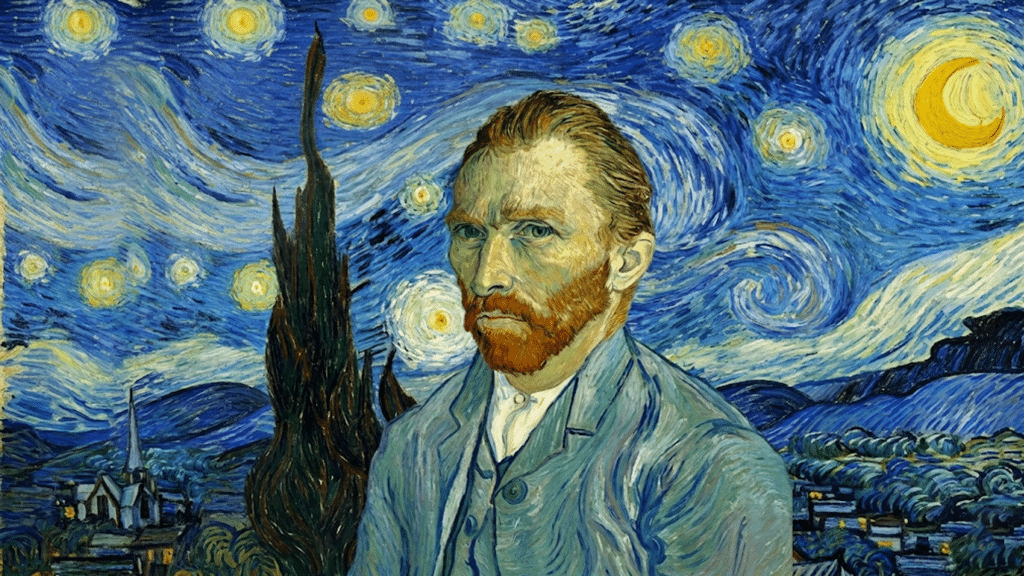
A sky that seems to breathe, stars that spiral with restless energy and fields of wheat that tremble as if alive — this is the world of Vincent van Gogh, an artist who did not simply depict reality but reshaped it. His work stands at the threshold of modern art, where perception gives way to emotion and where brushstrokes themselves become a language of feeling. Van Gogh’s significance lies not only in his artistic output but in the radical shift he helped usher into art history. Working in the late 19th century, he was part of a generation that challenged the academic traditions dominating European art, traditions that prized realism, precision and idealized representation, which reached its pinnacle during the High Renaissance era. Instead of adhering to these conventions, Van Gogh aligned himself loosely with and eventually moved beyond Impressionism, transforming its foundations into something far more expressive and psychologically charged. To understand Van Gogh’s contribution, one must first consider the movement he emerged from: Impressionism. Impressionism, pioneered by artists like Claude Monet, broke away from rigid academic standards of the Classical, Renaissance and Realism periods by focusing on light, color and the fleeting impressions of a moment. Rather than meticulously rendering subjects, Impressionists painted en plein air, capturing the ephemeral: sunlight flickering on water, shifting atmospheres, the transient nature of perception itself. Yet, even within Impressionism, Van Gogh pushed further. Where Monet and his contemporaries emphasized optical realism, the visual effect of light on surfaces, Van Gogh internalized this approach and infused it with emotional intensity. His brushwork became more vigorous, his colours more saturated, his compositions more expressive. He was not content to simply record what the eye sees; he sought to express what the soul feels. Consider The Starry Night (1889), perhaps his most iconic work. Painted during his time at the Saint-Paul-de-Mausole asylum, the canvas depicts a night sky alive with movement. The stars are not static points of light; they swirl, pulse and radiate energy. The cypress tree in the foreground stretches upward like a dark flame, connecting earth and sky in a dramatic vertical tension. Below, the village rests in quiet stillness, almost detached from the cosmic drama above. This is not a literal night sky; it is a psychological one, a vision shaped by isolation, longing and awe. Van Gogh transforms Impressionism’s concern with light into a metaphysical inquiry into the nature of existence itself. Similarly, his series of Sunflowers (1888) demonstrates both his mastery of color and his departure from traditional subject matter. While Impressionists often depicted landscapes or scenes of modern life, Van Gogh focused on objects imbued with symbolic resonance. The sunflowers, rendered in varying stages of bloom and decay, are not merely botanical studies. They are meditations on life cycles, on beauty and transience. The thick application of paint, known as impasto, gives the flowers a tactile presence, as if they could be touched, felt and even experienced beyond the visual realm. The yellows, vibrant, almost incandescent, push the boundaries of color theory, demonstrating Van Gogh’s belief that color could convey emotion directly. In works like The Bedroom (1888), Van Gogh further distorts perspective to create emotional clarity. The room’s angles appear slightly skewed, the furniture simplified, the colors deliberately flattened. This is not a failure of technique but a conscious rejection of realism in favor of psychological intimacy. The painting conveys a sense of solitude, of personal space, of quiet rest. It invites the viewer into the artist’s private world, not as an observer of objective reality, but as a participant in his inner experience. Van Gogh’s approach challenged the dominant status quo of his time in profound ways. Academic art institutions valued technical mastery, historical themes and polished finishes. Van Gogh, by contrast, embraced immediacy, emotional authenticity and visible brushwork. His paintings often appear unfinished by academic standards, yet it is precisely this rawness that gives them power. The visible strokes, sometimes thick, sometimes swirling, become records of movement, of thought, of feeling translated into paint. In doing so, Van Gogh helped pave the way for modern art movements that would fully reject representational constraints. Expressionism, in particular, owes a deep debt to his vision. Artists began to prioritize subjective experience over objective reality, exploring inner states rather than external appearances. Van Gogh’s work stands as a bridge between Impressionism’s optical explorations and the emotional abstraction of 20th-century art. Yet, for all his innovation, Van Gogh’s life ended not in recognition but in obscurity. He struggled with mental illness, poverty and isolation throughout his career. He was a painter whose life teetered between brilliance and torment, an artist who once severed his own ear in a moment of anguish and, in his desperation for light and warmth, was said to have consumed yellow paint, as if even the colour that flooded his canvases could somehow offer him a fleeting escape from the darkness within. Despite his relentless productivity, creating over 2,000 artworks in just over a decade, he sold only a single painting during his lifetime. His relationship with his brother Theo van Gogh was one of the few constants in his life, providing both emotional and financial support. Their correspondence reveals a man deeply engaged with artistic philosophy, yet burdened by profound personal turmoil. Van Gogh’s death on July 29, 1890, from a gunshot wound, remains one of the most debated and tragic moments in art history. He died at the age of 37, largely unrecognized, his work still waiting to find its audience. At the time, his name was scarcely known beyond a small circle of friends and fellow artists. In a cruel irony, the very qualities that made his work revolutionary, its emotional intensity, its departure from convention, were the same reasons it was misunderstood during his lifetime. And yet, in the decades following his death, Van Gogh’s reputation underwent a dramatic transformation. As modern art movements took shape, critics and artists alike began to recognize the depth and originality of his work.