
“America can’t buy oil from Russia, Iran & Iraq without American approval”: Rahul Gandhi

Lok Sabha LOP Rahul Gandhi’s viral slip of the tongue during an energy security speech, where he stated, “America cannot buy oil from Russia, Iran and Iraq without America’s approval,” has sparked widespread media attention and online mockery. While some viewed Gandhi’s comments as a critique of American influence on global oil trade and India’s energy strategy, the gaffe primarily triggered a wave of jokes and memes from the online community.
Rahul Gandhi seen seated during ‘Vande Mataram’ at Kerala rally
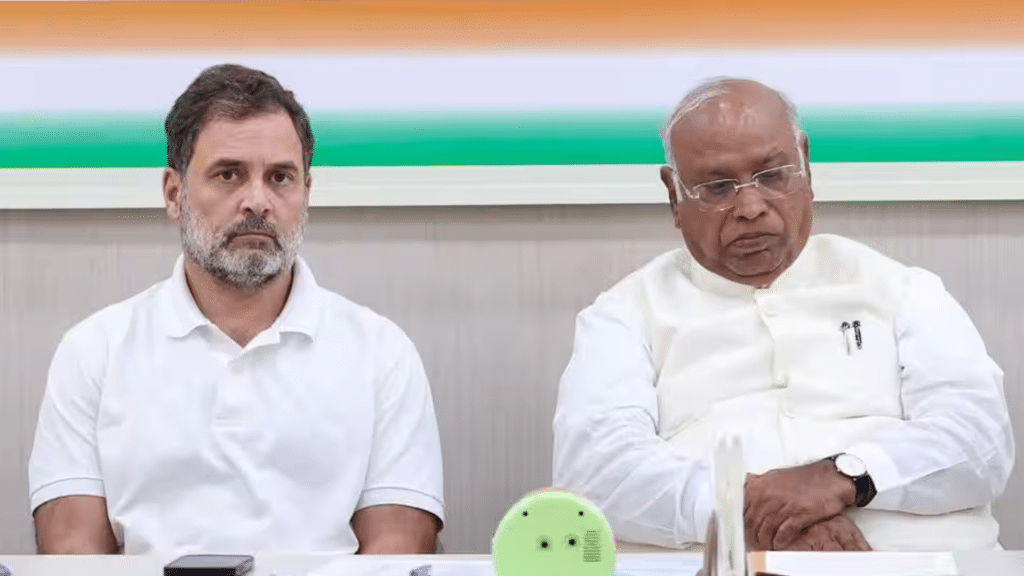
At a Congress rally in Kerala on March 31, 2026, Congress leader Rahul Gandhi was seen engaged in conversation while the national song Vande Mataram was being played. The incident has drawn considerable public attention and sparked discussion in political circles. Videos circulating online show that the event took place in the presence of a large gathering of Congress supporters and workers. As Vande Mataram began, most attendees stood up in respect. However, Rahul Gandhi remained seated and continued speaking with someone beside him. After a short while, an aide approached him and asked him to stand. Following this prompt, he got up and joined the others in standing. The brief delay in rising has since become a point of discussion, particularly on social media, where it has fueled criticism and debate. Leaders and supporters of the Bharatiya Janata Party (BJP) were quick to respond, questioning why he did not stand immediately. Some accused him of showing disrespect, while others suggested that he was not paying proper attention during the moment. In contrast, Congress leaders and supporters dismissed the incident as minor. They stated that Rahul Gandhi stood up as soon as he realized what was happening and argued that the video does not capture the full context. According to them, there was no intention to disrespect the occasion. The episode highlights how quickly such moments can gain traction in today’s political environment, especially on social media, where they are often interpreted in different ways. As of now, Rahul Gandhi has not made any public statement regarding the incident.
Leander Paes joins BJP ahead of 2026 Bengal Assembly polls
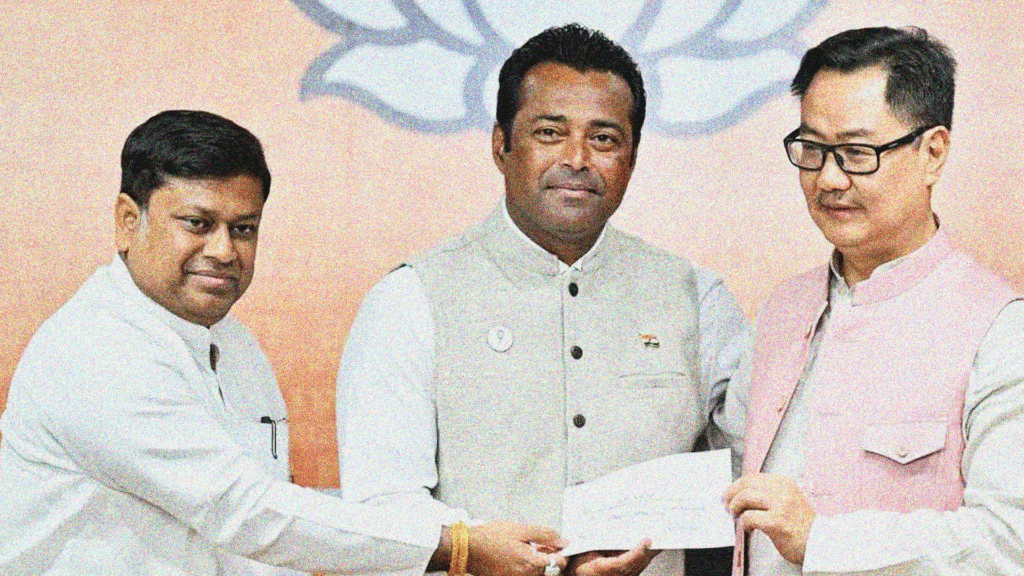
Tennis star Leander Paes has entered the political arena by joining the Bharatiya Janata Party ahead of the crucial 2026 West Bengal Legislative Assembly election. His entry is being seen as significant, especially with the high-stakes contest approaching in West Bengal, where the party is looking to strengthen its appeal among voters, particularly the youth. Paes was inducted into the party in the presence of senior leader Kiren Rijiju. Speaking after joining, he said he aims to contribute to society and play a role in nation-building. He highlighted the importance of giving back to the country and using his journey to motivate others to strive for excellence. The BJP believes Paes’ widespread recognition and popularity across the country could work in its favour during the elections. His presence is expected to enhance the party’s outreach, especially at a time when political competition in the state is intensifying. Known for his achievements in international tennis and his performances in the Davis Cup, Paes’ transition into politics reflects a broader trend of sportspersons stepping into public life. Political observers suggest that such high-profile inductions are part of the party’s strategy to attract voters by bringing influential personalities into its fold. With the West Bengal elections drawing closer, Paes’ political debut is likely to add a new dimension to the electoral landscape, making the contest even more closely watched.
“Jairam Ramesh sought Maoist Raut’s release”: Sambit Patra
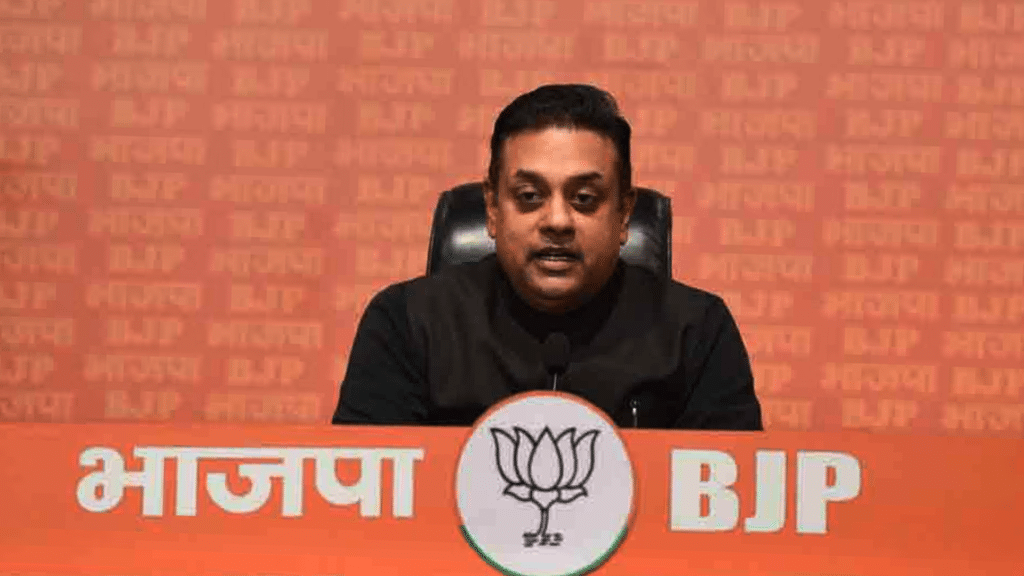
BJP leader Sambit Patra on Monday alleged in the Lok Sabha that Congress leader Jairam Ramesh had written to the then Congress government in Maharashtra seeking the release of Mahesh Raut during his tenure as a Union Minister. Raising the issue during the proceedings, Patra termed the move inappropriate and claimed that Raut was a Maoist. He further alleged that Ramesh had used his position as a minister to intervene with the state government by writing a letter requesting Raut’s release. The remarks come amid ongoing political tensions between the BJP and the Indian National Congress, with both parties frequently clashing over issues such as national security and alleged links to extremist elements. Patra’s statements have added to the intensifying political exchange, with the BJP seeking to target the Congress over the claim. There was no immediate response from the Congress or Jairam Ramesh regarding the allegations at the time of reporting.
“India a mediator; Pak seeking relevance”: Israel’s Sp. Envoy

The Foreign Ministry of Israel’s Special Envoy Fleur Hassan-Nahoum has raised questions over Pakistan’s role as a mediator in the ongoing West Asia conflict, suggesting that Islamabad may be seeking global relevance through its involvement. She said it remains unclear what Pakistan’s intentions are, adding that the country appears to be positioning itself at the centre of the issue without a clear path to contributing effectively. Hassan-Nahoum expressed doubt over Pakistan’s ability to play a meaningful role in resolving the crisis, noting that its efforts may not yield significant results. She also pointed to concerns about Pakistan’s credibility, describing it as a “huge problem” in the context of jihadi terrorism—an issue that continues to draw global attention. According to her, Pakistan’s engagement could be driven more by the desire to be associated with a major international development rather than a genuine effort to help resolve the conflict. Amid rising tensions in West Asia, several countries have shown interest in facilitating dialogue. However, Hassan-Nahoum indicated that Israel remains cautious about Pakistan’s involvement and is closely monitoring its actions while maintaining a degree of skepticism.
Sumeet Mehta rejects ₹1 lakh bribe to defame Modi’s leadership
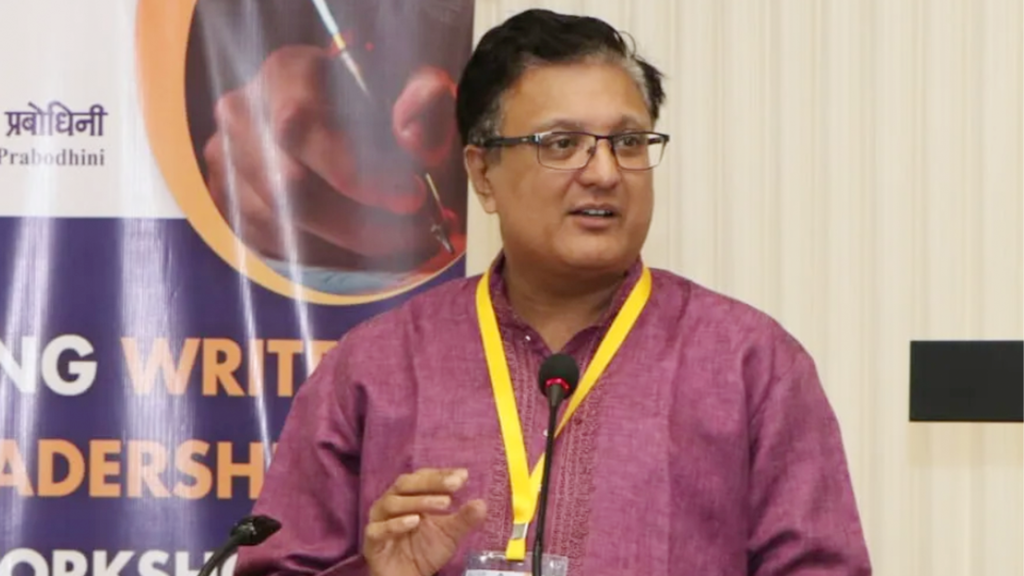
A 2018 video has resurfaced and is drawing fresh attention after journalist Sumeet Mehta claimed he was offered ₹1 lakh to publish a story targeting Narendra Modi ahead of elections. In the clip, Mehta says he was approached with money to run content that would portray the Prime Minister negatively. He maintains that he refused the offer, choosing to uphold journalistic ethics. The video is now widely circulating on social media, sparking debate about media credibility and the challenges journalists face, particularly during election periods. While Mehta’s claims have not been independently verified, the resurfaced clip has raised concerns about potential attempts to influence public narratives. So far, there has been no official response or clarity on who may have made the alleged offer. The incident continues to fuel discussions on trust in the media and the integrity of news reporting.
Remembering Bodofa and His Struggle for Bodoland
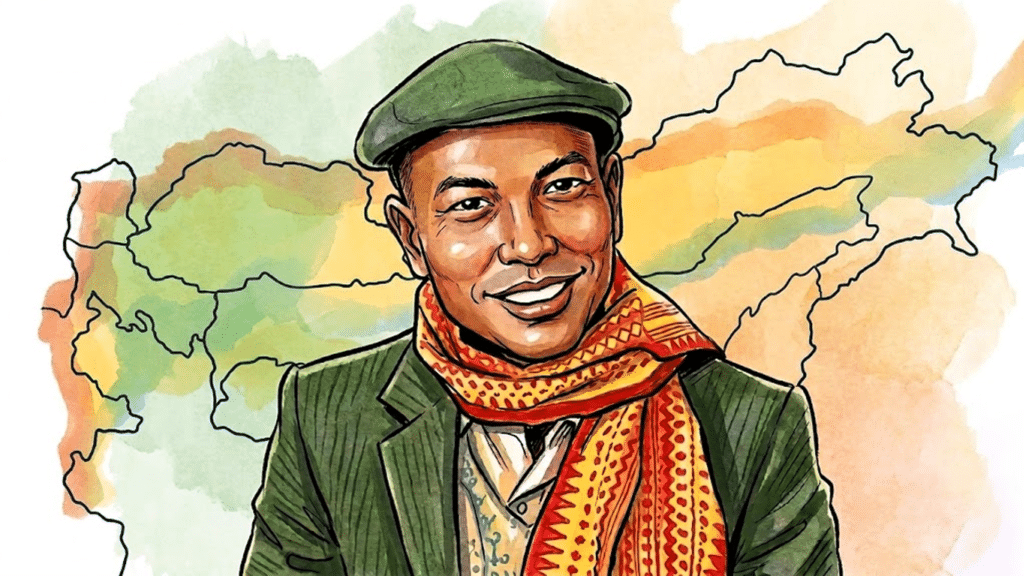
In the political history of Northeast India, the rise of sub-national movements has often been shaped by charismatic leaders who combined identity assertion with mass mobilisation. Among them, Upendranath Brahma stands out not merely as a movement leader, but as a political thinker who redefined the trajectory of the Bodo struggle. Revered as Bodofa, “Father of the Bodos”, Brahma transformed a fragmented ethnic aspiration into a structured political movement that continues to shape governance and identity politics in Assam today. On his birth anniversary, we shall dive into Brahma’s life for insights into how grassroots mobilisation, identity politics, and constitutional engagement intersect in India’s federal framework. Early Life: Social Marginalisation and Political Consciousness Born on March 31, 1956, in Boragari village of Kokrajhar’s Dotma, Brahma grew up in a region marked by economic backwardness and limited access to education and state resources. These structural inequalities were not unique to the Bodos but were particularly acute among plains tribal communities in Assam. His academic journey at Cotton College (now Cotton University) and later Gauhati University, where he studied political science, played a crucial role in shaping his ideological framework. Exposure to constitutional principles, federalism, and democratic rights informed his later articulation of Bodo demands, not as secessionist, but as legitimate claims within the Indian Union. This distinction would become central to his political strategy. ABSU and the Transformation of a Movement The All Bodo Students Union, prior to Brahma’s leadership, functioned largely as a socio-cultural body. Its demands revolved around language recognition, educational access, and cultural preservation. Brahma’s elevation to the presidency in 1986 marked a strategic shift. He recalibrated ABSU into a mass political platform, capable of mobilising not just students but the entire Bodo community. This transformation reflects a classic pattern in identity movements: the evolution from cultural assertion to political negotiation. Under his leadership, ABSU developed: Brahma’s slogan, “Divide Assam 50-50,” was not merely rhetorical, it was a strategic simplification of a complex demand, making it accessible and mobilising. The Bodoland Agitation: Identity Meets Territorial Politics The Bodoland agitation of the late 1980s must be understood within the broader context of Assam’s ethnic politics. Competing claims over land, language, and political representation had intensified following movements such as the Assam Agitation (1979–85). For the Bodos, the issue was two-fold: Brahma’s leadership gave coherence to these concerns. Mass Mobilisation as Political Strategy The agitation, led by ABSU, relied heavily on democratic methods—rallies, bandhs, marches, and public campaigns. This mass participation was critical in legitimising the movement. Brahma successfully converted ethnic identity into political capital, built solidarity across Bodo-inhabited regions and pressured both the Assam government and the Centre in New Delhi to respond. Unlike insurgent movements elsewhere in the Northeast, Brahma’s approach maintained a public, visible, and largely non-violent character, which helped sustain broader legitimacy. Striking a Strategic Balance One of the defining aspects of Brahma’s leadership was his consistent emphasis on non-violence. However, the movement did not exist in isolation. The early 1990s saw the emergence of militant factions within the broader Bodo movement. This created a dual dynamic: Brahma’s refusal to endorse violence can be interpreted as both an ethical stance and a strategic choice. Non-violence allowed the movement to: Negotiations and the Politics of Compromise Brahma’s long-term vision recognised that statehood demands in India often culminate in negotiated autonomy rather than outright separation. His engagement with the government laid the groundwork for the 1993 Bodo Accord, which established the Bodoland Autonomous Council (BAC). While Brahma did not live to see its full implementation, the accord reflected his strategic direction. The BAC represented a partial institutional recognition of Bodo aspirations, a compromise model within India’s federal structure and crucially, a stepping stone toward future arrangements. Critics at the time—and even later—argued that the BAC lacked sufficient powers and clarity. Yet, it marked the first formal acknowledgment of the Bodoland demand. Leadership Style: Moral Authority and Mass Connect Brahma’s leadership was characterised by simplicity and accessibility. Rooted in grassroots engagement, his leadership style was critical in steering the Bodoland movement to fruition. He functioned as: His ability to communicate complex political ideas in simple language made him particularly effective in rural settings, where much of the movement’s base lived. Untimely Death and Its Political Consequences Unfortunately, the spectre of death would cut short Brahma’s promising career. Suffering from a bout of blood cancer, Upendranath Brahma passed away at Mumbai’s Tata Memorial Cancer Hospital on 1 May 1990 as a consequence of the disease. His body was first taken to Kokrajhar and then buried at his birthplace of Dotoma on 4 May. The ground where he was buried became a part of Bodo folklore, revered among the community as “Thulungapuri”. Brahma’s passing, occurring at the height of the agitation, forced the movement to navigate a transitional phase without its primary strategist and moral compass. However, his ideological framework remained influential, guiding subsequent leaders and negotiations. Even after his death, the principles of identity assertion combined with constitutional engagement served as the template for the 1993 Bodo Accord and the eventual creation of the Bodoland Territorial Council. Long-Term Impact: From BAC to BTR The trajectory of the Bodoland movement did not end with the 1993 accord. It evolved through further struggles, negotiations, and institutional developments. The establishment of the Bodoland Territorial Council in 2003, and later the Bodoland Territorial Region (BTR), can be directly linked to the foundation laid by Brahma. Today the BTR encompasses 5 districts of Assam – Kokrajhar, Udalguri, Baksa, Chirang and Tamulpur – and incorporates a population of more than 3 million people. Furthermore, in 2020, the Bodo Kachari Welfare Autonomous Council was formed after long-standing demands of the Bodo Kachari community living outside BTR, continuing the legacy of Upendranath Brahma. His approach, grounded in negotiation and constitutionalism, made such incremental progress possible. A Political Legacy Beyond His Time Upendranath Brahma was not just a leader of the Bodo people, he was an architect of a political movement that redefined how marginalised communities engage with
First-Genration Lawyers: A Human Story of Grit, Growth and Grace
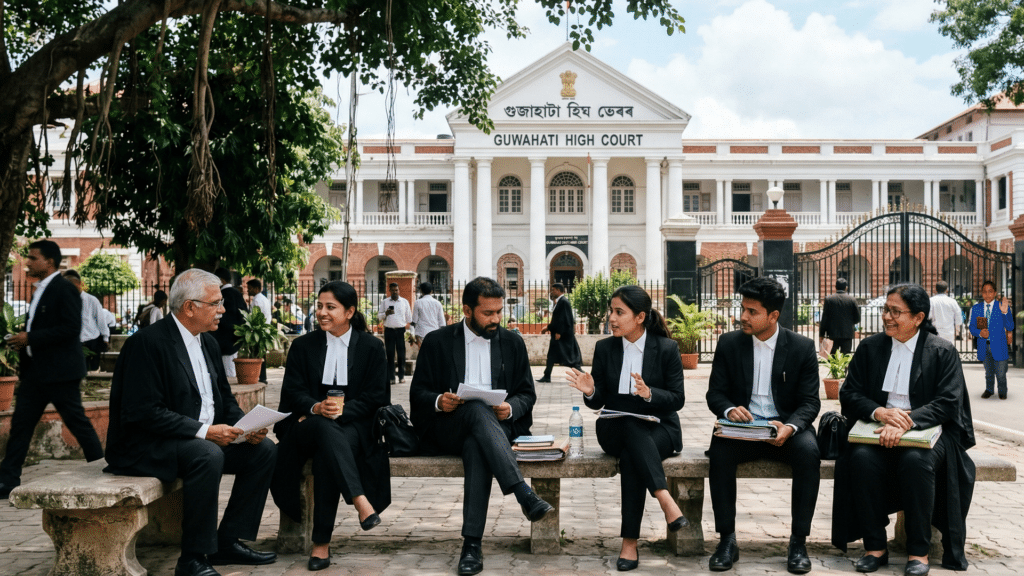
The legal profession has long been regarded as one of tradition, prestige and inherited knowledge. For generations, families of lawyers have passed on not only professional expertise but also networks, reputation and access. However, in recent decades, a new and powerful narrative has emerged, that of the first-generation lawyer. A first-generation lawyer is someone who enters the legal profession without any prior familial background in law. This journey is often marked by resilience, self-reliance and a determination to carve a path where none previously existed. “This is not just a professional journey, it is a deeply personal one”. Walking into a courtroom for the first time can feel overwhelming for anyone. But for a first – generation lawyer, it carries a different weight. There is no family legacy to lean on, no familiar chambers to step into, no inherited guidance whispering what to do next. It is just you, your books, your determination and a quiet belief that you belong. There are moments when you sit in the court and feel like everyone else knows something you don’t. For some, language, confidence, and ease seem almost inherited; for you, it can feel like a constant effort to keep up. That feeling has a name, imposter syndrome. Nearly every first-generation lawyer experiences it at some point. The life of a first-generation lawyer is not scripted; it unfolds gradually day by day, file by file, mistake by mistake. While law school confers degree it rarely prepares one for the reality of practice. The first time a client hands over a file often messy, incomplete, and emotionally charged, it feels less like a professional task and more like being handed someone’s life in paper form. There are no family anecdotes to fall back on, no inherited wisdom to guide you on how to organize a brief or what questions to ask. Instead, you learn through observation, small corrections from seniors and sometimes awkward silences in front of clients. It is in these moments that one realizes the truth behind the quote, “Experience is the hardest teacher—it gives the test first and the lesson later.” Client handling, however, presents an entirely different challenge. The first time a client says, “You are my lawyer, you tell me what to do,” it feels both empowering and terrifying. There is an unspoken expectation of certainty, even when you are still learning. First-generation lawyers often compensate for their lack of experience with sincerity and effort. They listen more carefully, prepare more thoroughly and double-check everything. Over time, they realize that clients value honesty as much as expertise. A calm explanation, a patient hearing and a genuine attempt to help often leave a stronger impression than technical brilliance alone. In these interactions, the lawyer begins to understand that law is not just about statutes and precedents, it is about people. As famously said, “People may forget what you said, but they will never forget how you made them feel.” In a landmark ruling delivered in May 2025, the Supreme Court, in All India Judges Association vs Union of India, reinstated the requirement that law graduates must complete at least three years of practice as advocates before becoming eligible to sit for the judicial services examination, observing that adjudicating questions of life, liberty, property, and reputation demands the insight that only practical courtroom experience can provide. Daily life in the early years of practice is a blend of routine and unpredictability. Mornings often begin with hurried preparations, checking cause lists and organizing files, followed by long hours in court corridors waiting for matters to be called. There is a peculiar rhythm to it, moments of intense activity followed by stretches of waiting. For a first-generation lawyer, these waiting periods are not idle; they are classrooms. Observing senior advocates, noting courtroom etiquett and understanding judicial preferences become part of an informal education system. It is here that one learns the unwritten rules of the profession, the tone of argument, the importance of brevity and the art of persuasion. As one quote aptly captures, “Success is not always about greatness; it is about consistency. Consistent hard work leads to success.” Financial uncertainty adds another layer of complexity to this path. The early years often involve long hours with minimal financial return, testing both patience and commitment. For those without a financial safety net, this phase can be particularly challenging. Yet, it also instills a sense of discipline and resourcefulness. Every small success for instance drafting an assignment, a client consultation or a favourable order feels significant. These moments serve as reminders that progress, however slow, is still progress. As a daily life mantra goes, “Little by little, day by day, what is meant for you will find its way.”Despite the challenges, there is a unique sense of fulfillment in being a first-generation lawyer. Every achievement, no matter how small, carries a deeper meaning because it is entirely self-earned. The first independent appearance, the first drafted petition, the first satisfied client, each milestone is a testament to perseverance. There is also a quiet pride in knowing that one is creating a path where none existed before. For many, this journey is not just about personal success but about setting an example for others who may follow. It reflects the belief that the legal profession is not reserved for a select few but is open to anyone willing to work for it. The story of a first-generation lawyer is one of courage, resilience and transformation. It is a journey that begins with uncertainty but evolves into a narrative of achievement and empowerment. While the challenges are undeniable, the strengths developed along the way often lead to remarkable success. In a profession rooted in tradition, first-generation lawyers represent change and progress. They are not just participants in the legal system but agents of transformation, breaking barriers and building new legacies for future generations. Ultimately, the rise of first-generation lawyers reaffirms a fundamental truth: the law is not inherited; it is earned through dedication, integrity,