
Delhi’s Okhla landfill shrinks from 60m to 20m through biomining

The massive garbage mound at Okhla Landfill has been substantially reduced, shrinking from about 60 metres to nearly 20 metres in height. This transformation is the result of sustained bio-mining efforts aimed at clearing decades-old accumulated waste. According to officials, more than 3.7 lakh tonnes of waste were processed during February and March 2026 alone, contributing significantly to the ongoing cleanup. The initiative forms part of broader efforts by Delhi to address long-standing waste management challenges and improve environmental conditions. The large-scale remediation has also led to the reclamation of around 34 acres of land. Treated waste is being repurposed for uses such as refuse-derived fuel and land development, including the creation of eco-parks with plantations of native species like neem and peepal. Biomining has played a crucial role in reducing the landfill’s size while recovering usable land. Authorities are working towards fully flattening the site by July 2026 as part of their cleanup targets.
Man cleans gutka-stained PM Modi banner on Bengal street

A viral video shows a man cleaning a banner of Prime Minister Narendra Modi on a street in West Bengal. The banner had been stained with gutka spit, and the man is seen carefully scrubbing it clean. The act has drawn widespread attention for its quiet yet powerful nature in a public setting. The identity of the man and his exact location remain unknown, but the video has drawn strong reactions online. Many viewers have praised the gesture as thoughtful and community-minded, while others have used the moment to highlight the importance of maintaining cleanliness in public spaces and discouraging habits like spitting.
“Courts shouldn’t oversee codified religious practices”: J.S. Deepak
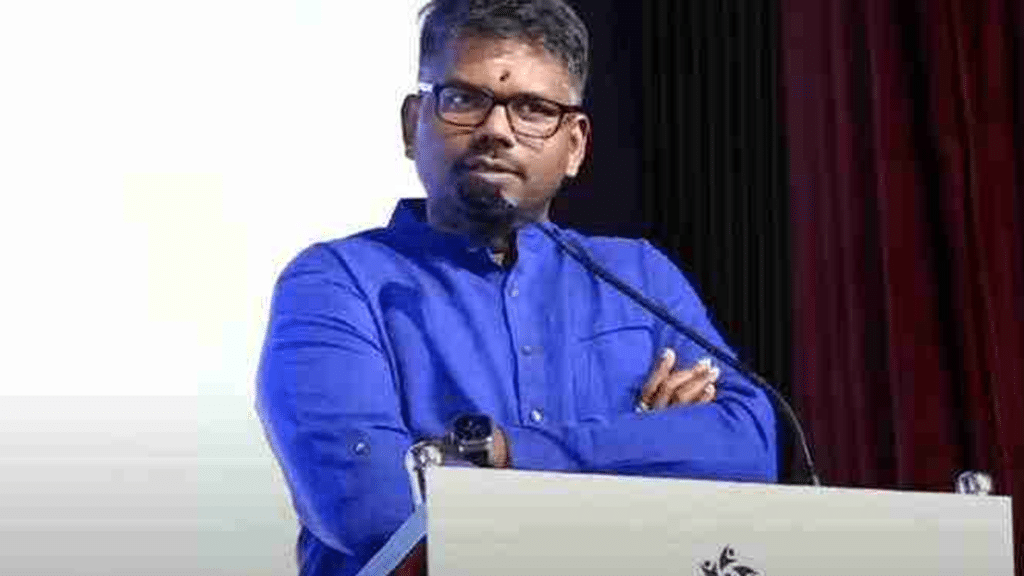
Senior Advocate J. Sai Deepak told the nine-judge Bench of the Sabarimala reference case that merely because a religious practice is codified by the State, it does not automatically become subject to judicial review if it falls outside constitutional scrutiny. He argued that legislation cannot be used as a means to indirectly test or invalidate deeply held religious traditions. Representing devotee groups and other stakeholders, he submitted that State action through codification should not dilute religious freedom, and that courts must respect the constitutional boundaries that protect individual and collective faith practices. The Bench, however, observed that once the State intervenes through legislation or executive action, judicial review is triggered even in matters concerning religion. It noted that while courts exercise restraint in religious issues, it cannot be said that judicial review is entirely excluded.
“Cast your vote freely, we’ll ensure your safety”: CRPF officer
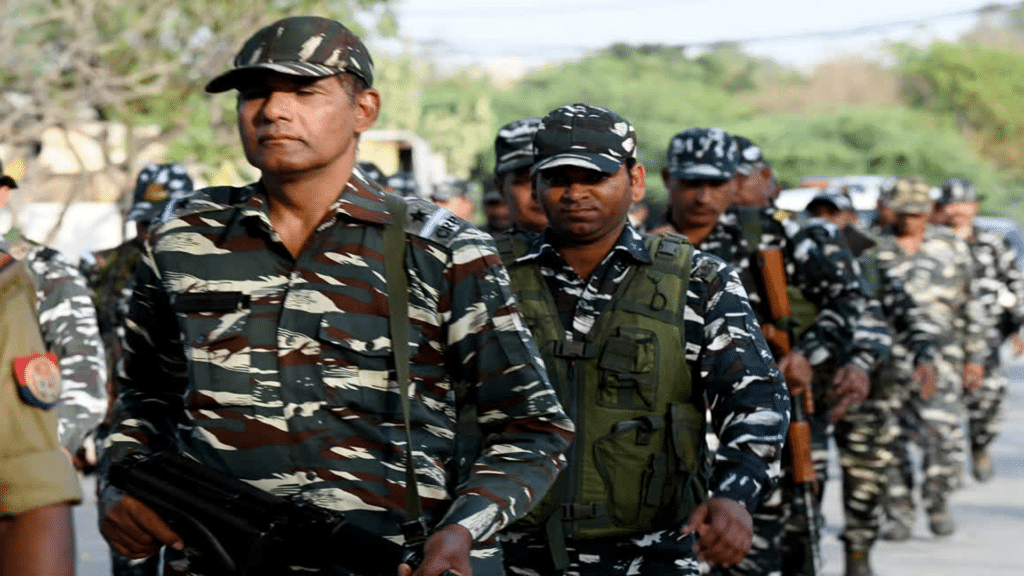
With the Assembly elections approaching, a Central Reserve Police Force officer has assured residents in rural areas of West Bengal that they can vote freely and without fear. CRPF officer Rajeev Chandra Sinha interacted with villagers during a field visit, urging them to exercise their democratic right without any intimidation. He advised voters to report immediately if anyone attempts to threaten or influence them, and reassured them that security personnel are always available to assist. He emphasized that adequate security arrangements are in place across sensitive areas to ensure a peaceful and fair voting process. According to him, central forces will remain deployed before, during, and after polling as part of standard election security measures. Election authorities and security agencies are working jointly to maintain law and order across the state. Their focus, officials said, is to ensure that voters can participate safely and that the electoral process remains free, fair, and peaceful.
“Hum lekar rahenge azadi”: AMU law students chant slogans
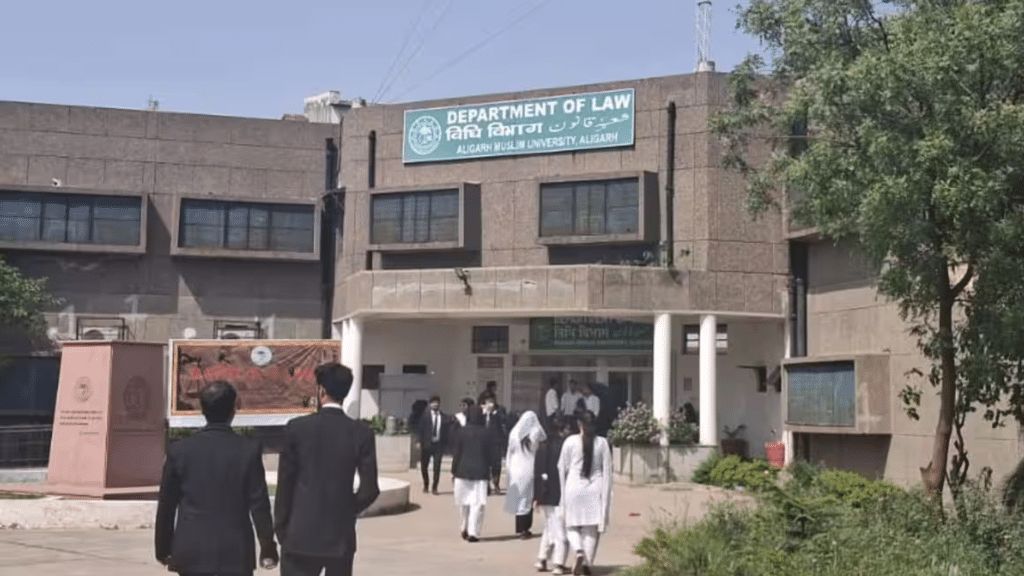
Video of an incident at Aligarh Muslim University, where a group of law students were seen chanting “Hum lekar rahenge azadi”, has gone viral. The footage shows students raising slogans within the university premises, after which intervention by university authorities led to a brief disturbance. Officials were seen stepping in to control the situation and restore normalcy on campus. However, no formal complaint has been lodged so far in connection with the matter. Police officials in Aligarh have confirmed that no complaint has been received, but stated that the matter has been taken note of. They have directed the local Civil Lines police station to look into the incident and gather details. University authorities are also expected to review the situation internally to understand the circumstances under which the slogans were raised and whether any institutional rules were violated.
Pahalgam and the Rise of a New India
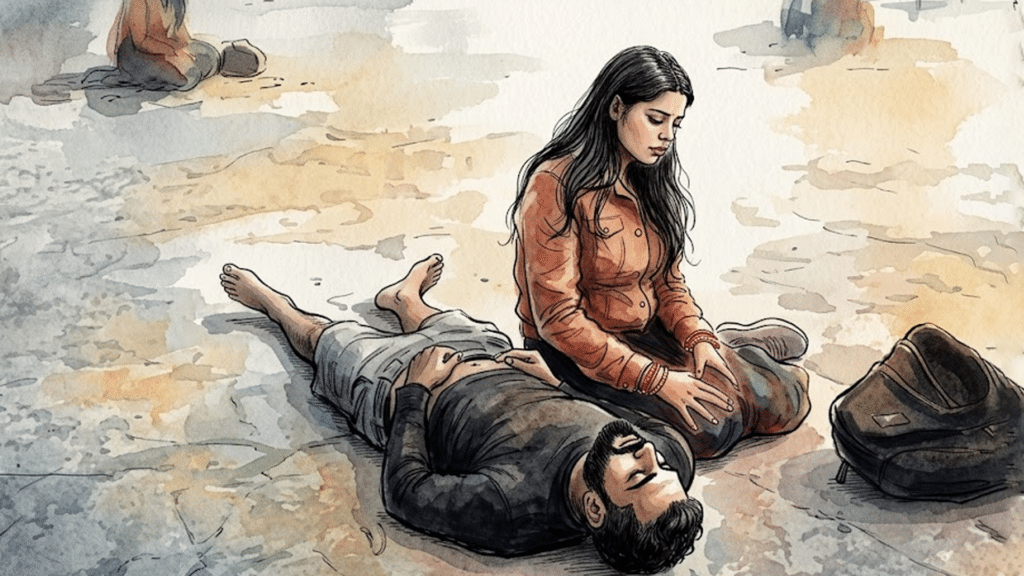
April 22 has, over the past year, taken on a meaning that extends far beyond the calendar. It is no longer just a date, it is a marker of grief, a symbol of sacrifice, and, increasingly, a reference point in the story of a changing India. One year after the attack in Pahalgam, the country finds itself reflecting not only on the tragedy itself but also on what followed in its wake. The memory of that day remains raw. The images, the loss of lives, and the sense of shock that gripped the nation continue to resonate. For many, the passage of time has not dulled the emotional weight of the incident. Families who lost loved ones still carry that absence; communities that were shaken are still in the process of healing. Across the country, April 22 is being observed with solemnity, a moment to pause, remember, and pay tribute. Yet, alongside grief, there is also a recognition that the events of that day marked a turning point.For decades, India’s approach to terrorism was often characterized by restraint. Successive governments, while responding firmly at times, largely maintained a framework that prioritized diplomatic engagement and measured reactions. This approach was shaped by multiple considerations: regional stability, international perception, and the ever-present risk of escalation in a sensitive geopolitical environment. However, over time, and particularly in the years leading up to 2025, this posture began to evolve. Incidents such as Uri and Pulwama had already prompted visible shifts in how the state responded, with more assertive actions entering the strategic playbook. These responses indicated a growing willingness to impose costs and to challenge the assumption that provocations would be met only with restraint. The attack in Pahalgam accelerated this transition. The scale and nature of the incident appeared to cross a threshold in public perception. It was seen not merely as another episode in a long history of violence, but as an act that demanded a rethinking of established approaches. In the immediate aftermath, there was a palpable sense that the status quo could not continue unchanged. What followed was not a single action, but a broader recalibration. Policy discussions began to reflect a shift in emphasis, from managing incidents to deterring them more effectively. The language used by officials, analysts and commentators started to indicate a harder line, one that framed terrorism not as a contained security challenge but as part of a larger strategic contest.Even long-standing arrangements, such as the Indus Waters Treaty, which had endured through decades of tension, were recalibrated. The treaty being held in abeyance signaled a broader point: that previously insulated domains could be reconsidered in light of changing realities. As the Prime Minister mentioned, “Blood and water cannot flow together.” This was less about immediate alteration and more about signaling. It conveyed that the boundaries between different aspects of statecraft—diplomacy, security, and economic engagement—were becoming more fluid. The idea that cooperation in one domain could continue unaffected by hostility in another was increasingly being questioned. At the same time, there was a noticeable shift in how deterrence was conceptualized. For years, the presence of nuclear weapons in the region had been seen as a stabilizing factor, but also as a constraint. The risk of escalation often acted as a brake on overt responses, shaping both policy and perception. In the post-Pahalgam discourse, however, there was a growing argument that this dynamic had been used to India’s disadvantage—that the threat of escalation had, at times, limited its options disproportionately. In response, India’s posture began to emphasize calibrated action, responses designed to be firm yet controlled, signaling capability without triggering uncontrolled escalation. This approach sought to challenge what was often described as a “nuclear overhang,” by demonstrating that deterrence could be managed rather than feared. There is no demonstration of this better than Operation Sindoor, where the Indian Armed Forces called out Pakistan’s “nuclear bluff” by striking terror infrastructure deep inside mainland Pakistan. Another significant development has been the evolving understanding of terrorism itself. Increasingly, there is a view that acts of terror cannot be treated in isolation, divorced from their broader context. Instead, they are seen as part of a continuum of hostility that requires a comprehensive response. This perspective does not necessarily translate into a formal doctrinal declaration, but it does influence how threats are assessed and addressed. The implication is clear: the threshold for response is changing. Actions that might once have been categorized narrowly as law-and-order issues are now being evaluated through a wider strategic lens. This shift has implications for policy, for military planning, and for public expectations. It reflects an attempt to align the state’s response more closely with the scale and nature of the challenges it faces. As a result India changed its doctrine of war forever: any act of terror will be an act of war. At the same time, it is important to note that this transformation is being framed not as a departure from India’s core principles, but as an adaptation to evolving circumstances. Officials and analysts alike have emphasized that the objective remains stability and security, not escalation for its own sake. The emphasis, therefore, is on balance. A balance between firmness and restraint, between signaling and action, and between immediate response and long-term strategy. This balancing act is particularly significant in a region where miscalculation can have serious consequences.On the ground, the role of the armed forces and security agencies continues to be central. Over the past year, there has been a renewed focus on strengthening capabilities, improving coordination, and enhancing preparedness. These efforts are part of a broader push to ensure that the country is better equipped to handle both conventional and unconventional threats. The contributions of security personnel—often operating in difficult and high-risk environments—remain a key part of this narrative. Their work, much of it unseen, underpins the sense of security that citizens rely on. On occasions such as this anniversary, their service is being acknowledged alongside the memory of those who