
“We’ll chase down those who attack our BJP candidates”: Himanta
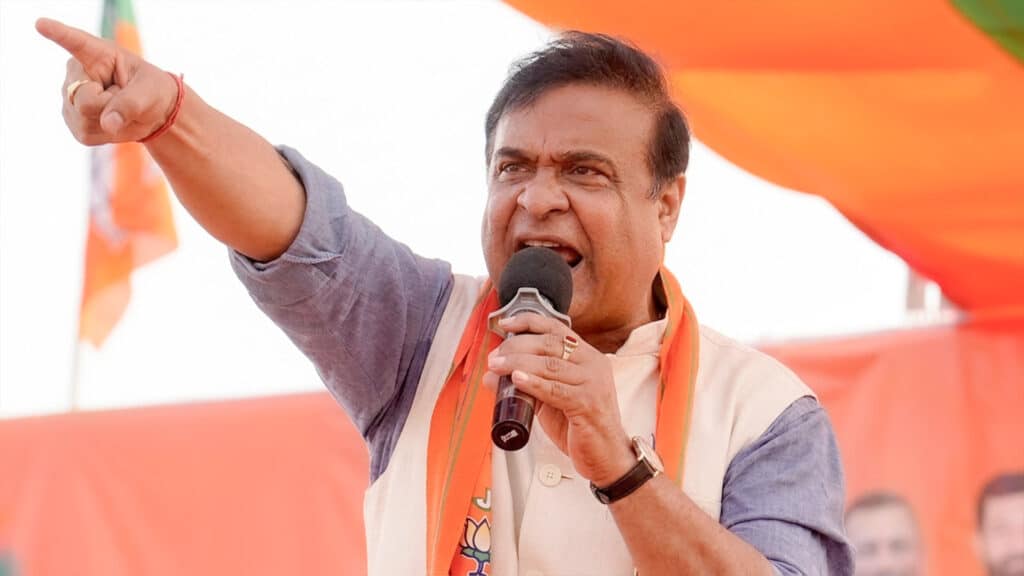
Assam Chief Minister Himanta Biswa Sarma has issued a strong warning ahead of the 2026 West Bengal Assembly elections, stating that strict action will be taken against those involved in violence targeting BJP candidates. Referring to a recent attack on a BJP candidate, Sarma said that such incidents would not be overlooked. He asserted that once the BJP comes to power, those responsible would be identified and held accountable. He further stated, “After May 4, when we form the government, we will track down those who attack our BJP candidates and ensure they are held accountable.” The Chief Minister emphasized the need for peaceful elections and reiterated that the BJP will not tolerate any form of electoral violence. He cautioned that any attempt to disrupt the democratic process through intimidation or aggression would face serious consequences.
BJP’s candidate stops vehicle with sealed EVMs & TMC flags

During the ongoing elections in West Bengal, BJP candidate Chandana Bauri reportedly stopped a vehicle that was allegedly transporting sealed EVM cases and carrying TMC flags. The incident took place in the Saltora area, where Bauri intercepted a Bolero vehicle marked “on election duty.” Suspicion arose among BJP supporters present at the scene after the vehicle was seen carrying sealed EVM boxes along with TMC party flags, leading to a tense exchange. Bauri, along with her supporters, proceeded to inspect the vehicle as a crowd gathered and police personnel arrived to bring the situation under control. The episode quickly escalated, reflecting the heightened political atmosphere in the region. Following the incident, the BJP has called for an investigation, questioning the presence of party symbols on a vehicle allegedly involved in official election duty. The party has urged the Election Commission of India to look into the matter and ensure transparency and fairness in the electoral process.
Suspected Bangladeshi built 50 illegal godowns in Mankhurd
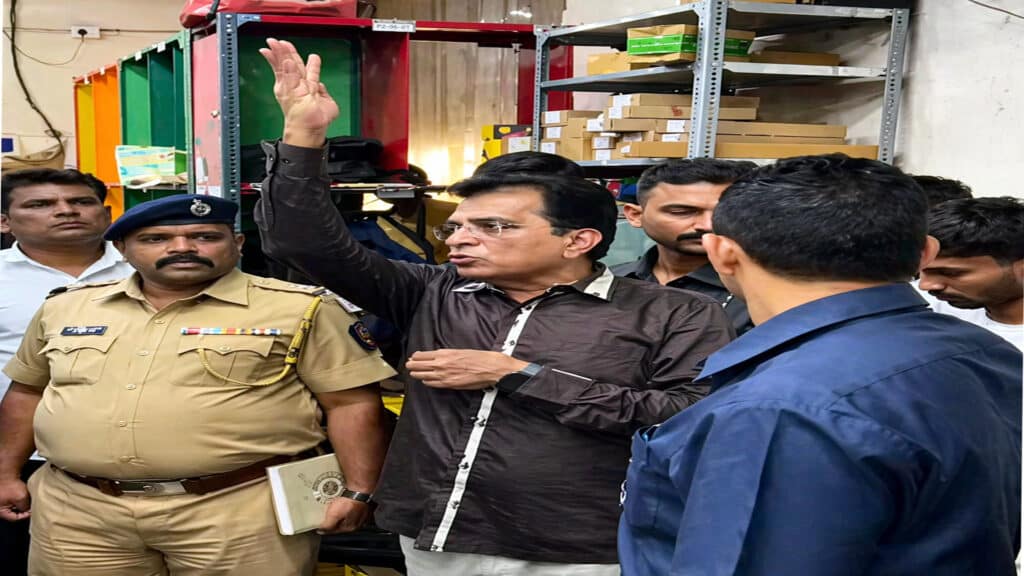
BJP leader Kirit Somaiya has alleged that a large portion of government land in Mumbai’s Mankhurd area has been illegally encroached upon, claiming unauthorized construction worth around ₹500 crore. He stated that nearly 50 illegal warehouses have been built on approximately 40 acres of land belonging to the Children Aid Society, a government institution. Somaiya has called for strict action against those responsible, urging authorities to investigate the matter and demolish the illegal constructions. He also raised concerns over misuse of public land and demanded accountability from the encroachers. However, the allegations made by Somaiya are yet to be independently verified by the concerned authorities.
Conquering the 22 Yards: The Journey of Sachin Tendulkar
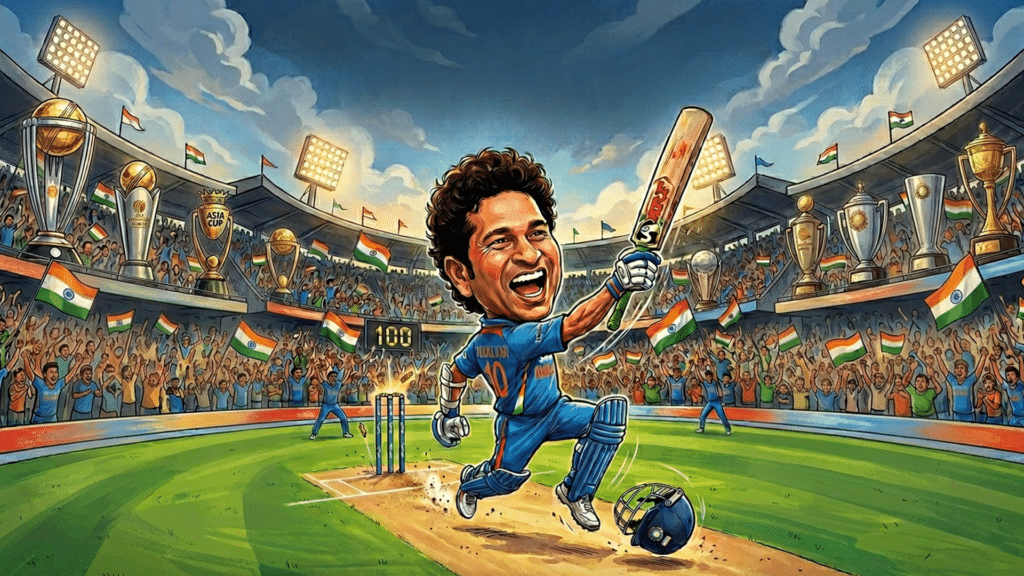
There are stories within stories that are not merely tales of success, but become timeless sources of inspiration that transcend eras. Some names define an entire generation. In the history of Indian cricket, one such name is Sachin Tendulkar. On those 22 yards, that small boy did not just change the game. He changed the thoughts, beliefs, and dreams of millions of people. His journey stands as a reminder that greatness is not always born in extraordinary circumstances; sometimes, it grows quietly within ordinary beginnings and reveals itself through persistence and unwavering passion. Growing up in a very ordinary environment in Mumbai, Sachin Tendulkar’s childhood may have seemed simple on the surface, but within him was an extraordinary passion. The bat was not just a sporting tool for him; it was the first step toward his dream. From a very young age, he developed a deep connection with cricket. This journey was guided in the right direction by his coach Ramakant Achrekar. Achrekar’s strict discipline, regular practice, and structured lifestyle instilled a strong sense of determination within Sachin. It is said that Achrekar encouraged Sachin to play multiple innings in a single day on different grounds so that he could learn to maintain focus even in exhaustion. These very lessons later became the foundation of Sachin’s extraordinary patience and concentration. About Sachin, the great West Indian cricketer Brian Lara once said, “Sachin is a genius. I’m a mere mortal.” This was not just a description of Sachin’s talent, but also a recognition of his uniqueness and the heights of his dedication and practice. His childhood was not filled with shortcuts or comfort, but with discipline, repetition, and an early understanding that dreams demand sacrifice. In 1989, at just 16 years of age, Sachin made his international cricket debut. Facing a strong bowling attack like Pakistan’s, the calmness and courage he showed at the crease reflected a maturity beyond his age. That young boy proved right then that he had not come merely to play; he had come to write history and inspire a new era. As time passed, Sachin Tendulkar’s name earned respect not just in India but across the world. 200 Test matches, 463 One Day Internationals, and more than 34,000 international runs… These are not just statistics; they are reflections of immense dedication. Along with that, 100 international centuries stand as an unmatched achievement in the cricketing world even today. But Sachin’s greatness was not limited to records alone. There was a unique beauty in his batting. His cover drive, straight drive, or pull shot—each stroke was like a piece of art. He showed that cricket can also be an art form. Every innings he played carried a sense of purpose, and every performance added a new chapter to his growing legacy. During the 1990s, the Indian cricket team went through a turbulent phase. In those times, whenever the team was in trouble, one name brought hope to people’s minds—‘Sachin’. Fans believed, “As long as Sachin is at the crease, hope is alive.” This belief elevated him from just a player to something far more special. However, this journey was never easy. Injuries, failures, and criticism all stood as obstacles in his path. In particular, the tennis elbow problem created a major crisis in his career. Many thought it might be the end. But Sachin proved that a true champion never gives up easily. He returned stronger than before. His comeback was not just about regaining form; it was about proving that determination can overcome even the toughest challenges. It showed the world that setbacks are not the end of the road but a part of the journey toward greatness. The 2011 World Cup victory was the highest peak of Sachin’s long cricketing journey. It was not just a trophy win; it was the fulfillment of a dream. The entire country felt at that moment, “This victory is for Sachin.” When his teammates lifted him on their shoulders, that scene was not just a cricketing moment—it was a symbol of national pride. It represented years of dedication, countless sacrifices, and a dream that had finally come true. That victory united millions of hearts and created a memory that would be cherished forever in the history of Indian cricket. Sachin Tendulkar’s personality was as great as his achievements. He was always humble, disciplined, and responsible. He never showed arrogance in victory, and never lost confidence in defeat. These qualities made him truly great. He became an inspiration for millions of young people. His life showed that there is no substitute for hard work, dedication, and patience to achieve dreams. Success does not come suddenly; it comes as a result of continuous effort and belief. His calm demeanor and respectful attitude made him not just a sporting icon, but also a role model admired across generations. Sachin’s contribution was not limited only to cricket. He changed the thinking of an entire generation. Watching him play, many boys and girls identified their own dreams. He showed that even a small beginning can lead to a huge destination. Even after retirement from cricket, Sachin’s influence remains unchanged. Even today, his name evokes a special feeling in people’s hearts. His achievements, his ideals, and his memory have established him as an immortal personality in the hearts of Indians. His journey continues to inspire people not just to dream, but to pursue those dreams with sincerity and dedication. This is not just the story of a cricketer. This is the story of a small boy who dreamed and turned that dream into reality. It is the story of belief, patience, and unbreakable determination. Through those 22 yards, that small boy did not just conquer the world; he conquered the hearts of millions. His story reminds us that true success is not measured only by records and achievements, but by the impact one leaves on the lives of others. It is a legacy built not just on talent, but on character, discipline, and an
Panchayats and the Unfinished Gandhian Republic
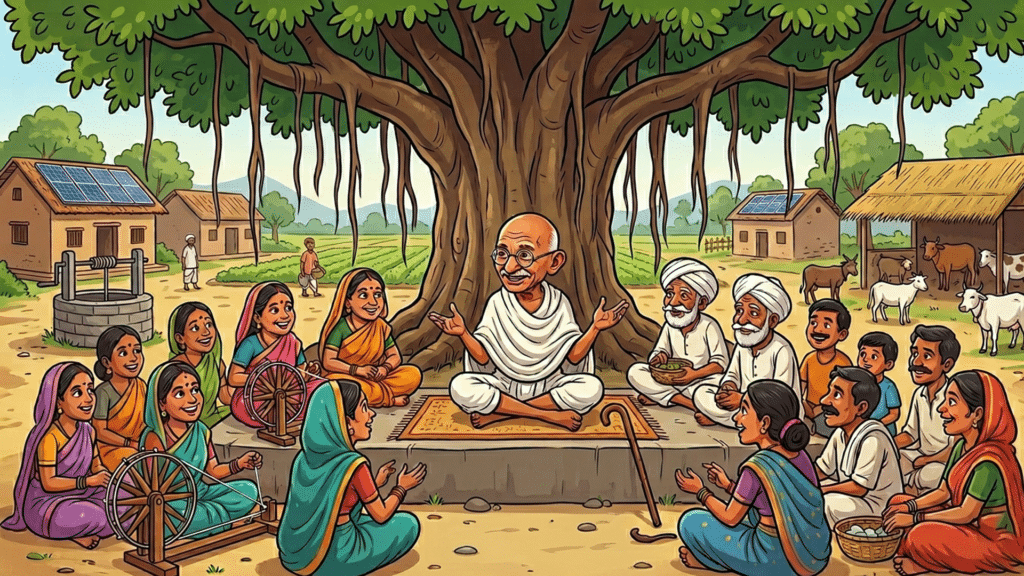
On Panchayati Raj Day, India celebrates the constitutional idea of decentralised governance as a triumph of democratic deepening. Yet, beneath the ceremonial affirmations of grassroots empowerment lies a more unsettling philosophical truth: India’s Panchayati Raj institutions are not truly autonomous republics in the Gandhian sense. They are, at best, delegated administrative extensions of the State that are structured, supervised and ultimately constrained by higher tiers of government. This gap between design and imagination becomes clearer when one returns to the original moral architecture of the idea itself, as envisioned by Mahatma Gandhi. What India has institutionalised is decentralisation; what Gandhi envisioned was swaraj rooted in the moral sovereignty of the village. The difference is not merely semantic. It is a difference between administration and autonomy, between participation and self-rule, and ultimately between a state managing its peripheries and a society governing itself. The Gandhian Village For Gandhi, the village was not a peripheral administrative fragment of a larger political order; it was the foundational unit of civilisation itself. In his moral and political imagination, India was not to be organised as a centralised nation-state that gradually delegates authority downward, but as an organic constellation of village republics, each one complete in itself, yet linked to others through ethical and economic interdependence rather than hierarchical command. This conception inverted the dominant logic of modern statecraft. In most modern political theory, sovereignty resides at the apex and is progressively diffused through tiers of administration. Gandhi’s imagination, however, began at the base. The village was not the endpoint of governance but its origin. It was the primary site where human beings lived, worked, resolved conflicts, and negotiated the terms of collective existence. Therefore, it was also the most legitimate site of political authority. His ideal village republic was not romantic pastoralism but a tightly reasoned moral-political structure. Each village was envisioned as a “complete republic,” capable of sustaining itself materially, regulating its internal order, and adjudicating disputes without reliance on distant institutions. Economic life was to be localised to the extent possible, with production aligned to community needs rather than abstract market forces. Justice was to be restorative and participatory, embedded in the lived moral consciousness of the community rather than external legal coercion. It is important to understand that this was not romanticisation of rural life. Gandhi was not suggesting that villages were inherently harmonious or free of conflict. On the contrary, he was fully aware of their embedded inequalities and social hierarchies. His argument was not descriptive but normative: that political life should be reorganised in such a way that power remains as close as possible to the human scale, where individuals can meaningfully participate in shaping the conditions of their existence. At the core of this vision was a radical critique of concentrated sovereignty. For Gandhi, the modern state, with its distant bureaucracies, impersonal laws and centralised coercive capacity, inevitably alienated people from the processes that governed their lives. Swaraj, therefore, was not merely the transfer of power from colonial rulers to indigenous elites; it was a fundamental restructuring of power itself. It required the dissolution of excessive centralisation and the relocation of authority into the ethical and participatory capacities of local communities. In this framework, the village was not an administrative convenience for governance efficiency. It was a moral unit. The legitimacy of authority did not flow from constitutional design or statutory delegation but from collective ethical discipline, what Gandhi often implied as self-restraint, mutual accountability and voluntary cooperation. Governance, in this sense, was not something imposed upon the community but something continuously generated by it. Representation, as understood in modern liberal democracies, was insufficient for Gandhi. He was deeply sceptical of the idea that periodic electoral participation could substitute for continuous moral engagement in public life. Participation had to be direct, sustained and rooted in everyday existence. Only then could governance reflect the lived reality of the governed. Crucially, Gandhi did not envision the village republic as an isolated or autarkic entity cut off from the wider world. His model was not one of absolute separation but of layered interconnection. Villages would remain self-contained in governance and largely self-reliant in economic terms, but they would coordinate with other villages through voluntary associations rather than hierarchical compulsion. The higher structures of organisation, in this sense, were meant to be coordinative, not commanding. The relationship between the village and any larger political formation was therefore fundamentally different from that of modern federal or unitary systems. The village was not a subordinate administrative unit within a pyramid of authority; it was the primary locus of sovereignty, with any larger aggregation of power being derivative and functional rather than foundational. This is what made Gandhi’s vision structurally radical: it did not merely decentralise power within an existing state framework. It questioned the necessity of the state as the primary bearer of sovereignty itself. The Constitutional Panchayat Post-independence India, while deeply influenced by Gandhian rhetoric, chose a markedly different institutional path. The idea of village governance was certainly acknowledged, but it was absorbed into the architecture of a modern constitutional state whose logic remained fundamentally centralised. The culmination of this process was the constitutionalisation of Panchayati Raj through the 73rd Amendment, which formally recognised local self-government institutions as part of India’s democratic structure. On paper, this represented a landmark shift. The amendment institutionalised a three-tier system of governance, placing Gram Panchayats at the base, Panchayat Samitis at the intermediate level, and Zilla Parishads at the district level. These bodies were to be elected regularly, endowed with defined functional responsibilities, and strengthened through provisions such as reservations for Scheduled Castes, Scheduled Tribes and women. In principle, this created one of the most extensive frameworks for grassroots democracy in the world. Yet, the philosophical character of this arrangement is fundamentally different from the Gandhian conception it is often associated with. What India created was not sovereignty at the village level, but structured delegation within a constitutional hierarchy. Panchayats do not possess inherent authority derived