
Cash bag thrown during ED raids linked to Bhagwant Mann aide
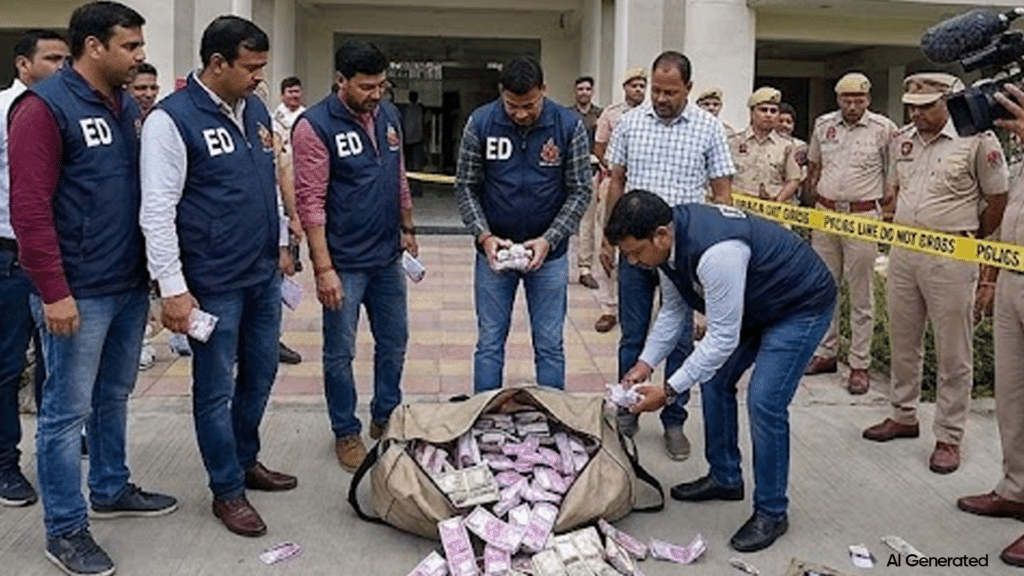
The Enforcement Directorate (ED) carried out raids across multiple locations in Punjab’s Mohali and Chandigarh on Wednesday as part of an investigation into alleged financial irregularities. The operation sparked dramatic scenes at a residential high-rise after bags reportedly containing cash were seen being thrown from an apartment window during the searches. According to sources, the apartment under scrutiny is linked to an IT professional believed to be close to an aide of Punjab Chief Minister Bhagwant Mann. Residents and security staff at the complex allegedly witnessed bags being tossed from the upper floors, apparently in an attempt to dispose of cash before investigators could seize it. Videos and photographs circulating online showed currency notes scattered across different parts of the residential complex, attracting large crowds of onlookers. ED officials, along with local police, quickly cordoned off the area and recovered bags as well as cash strewn around the premises as part of the ongoing probe. The raids are reportedly linked to suspected financial misconduct and irregular money transactions being examined by central agencies. While the ED has not officially disclosed the amount of cash recovered, sources said investigators are scrutinising financial records, digital data, and the network of individuals associated with the property. The incident has intensified political tensions in Punjab, with opposition parties demanding clarity over the alleged links between the accused individuals and those close to the state government. The ruling Aam Aadmi Party has not yet issued a formal response to the allegations. Officials said the investigation is still underway, and further searches or questioning may take place based on the evidence gathered during the raids.
“Indian Muslims can rip India into pieces”: Altab Hossain Molla
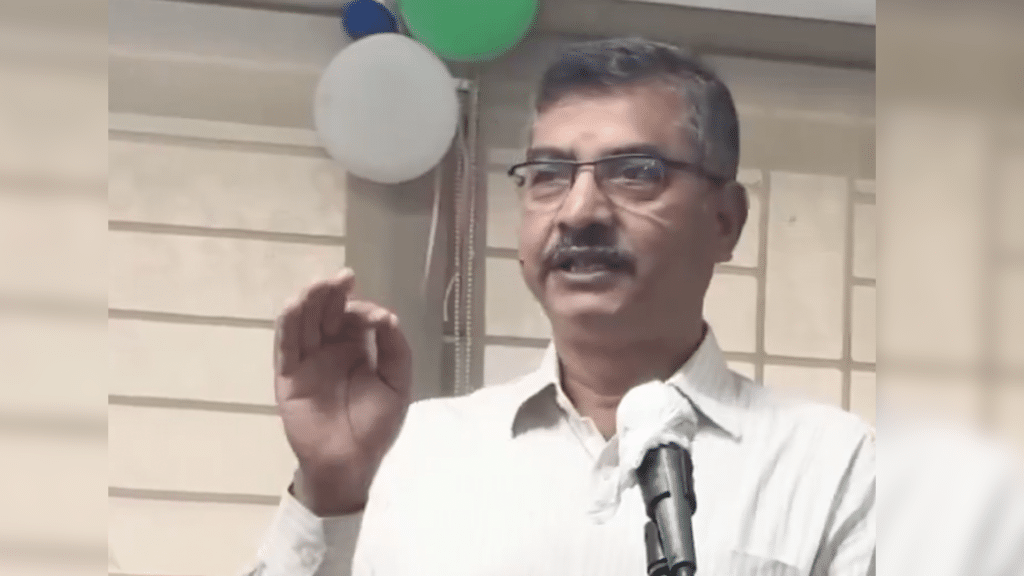
A video of Altab Hossain Molla, a leader of the Bangladesh Nationalist Party, has gone viral after he allegedly claimed during a public speech that if Muslims in India unite, they could “break India into pieces.” The clip shows Molla addressing a gathering from a stage, where he appears to make remarks that many have described as inflammatory and capable of fuelling communal tensions. During the speech, he also referred to senior BJP leader Suvendu Adhikari while commenting on the changing political situation in West Bengal. According to the video circulating online, Molla suggested that Indian Muslims have the strength to challenge India if they stand united and implied that such a development could take place in the future. His remarks have drawn criticism on social media, with several users calling the statements provocative. The comments come amid intense political discussions surrounding West Bengal following recent elections and speculation over possible challenges for the ruling Trinamool Congress. Molla’s references to West Bengal politics and Suvendu Adhikari have further intensified reactions online.
“BJP used tantra-mantra to win Bengal elections”: Tejashwi Yadav

Rashtriya Janata Dal leader Tejashwi Yadav has claimed that the BJP’s massive victory in the 2026 West Bengal Assembly elections was the result of “tantra-mantra” and the party’s alleged control over the system. Reacting to the election results, Tejashwi Yadav suggested that the BJP’s sweeping win was not purely political, but driven by what he described as “tantra-mantra” and institutional influence. His remarks came soon after the BJP secured a historic victory in West Bengal, ending the Trinamool Congress’ 15-year rule in the state. The BJP’s performance is being seen as a major political shift in Bengal. The party won more than 200 seats in the 294-member Assembly, handing a crushing defeat to the Trinamool Congress. Political observers view the result as a significant breakthrough for the BJP in eastern India and a major setback for opposition parties ahead of future national elections. Tejashwi Yadav’s comments quickly drew reactions from political leaders and social media users. BJP leaders accused him of disrespecting the democratic mandate of Bengal’s voters, while several party supporters mocked his remarks online, calling them an attempt to justify the opposition’s repeated electoral setbacks. The outcome of the 2026 West Bengal Assembly elections is expected to significantly reshape the political landscape in eastern India, with the BJP emerging as a dominant force in a state where it once had limited influence.
The timeless legacy of Kobiguru Rabindranath Tagore
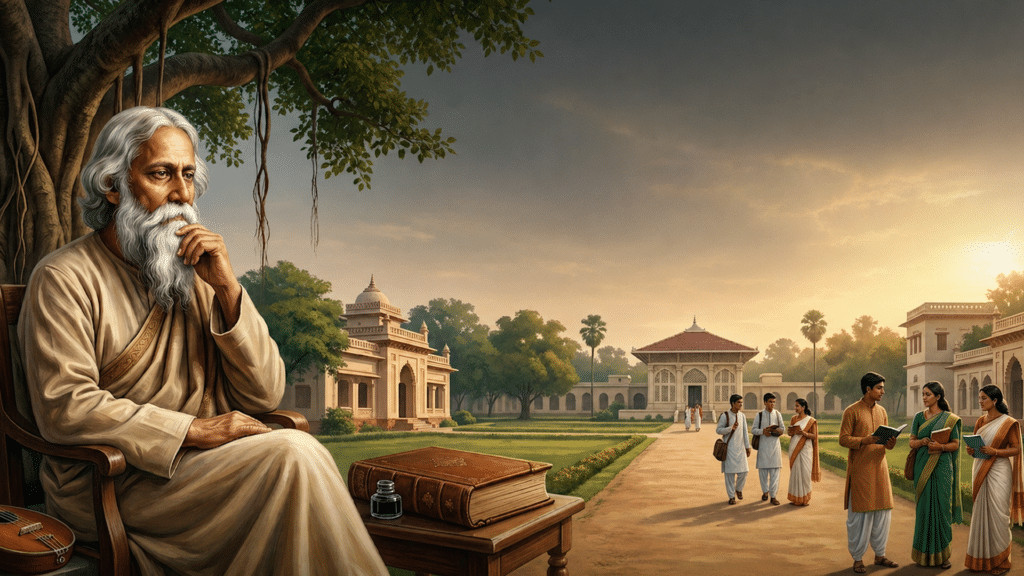
“Jodi tor daak shune keu na ashe, tobe ekla cholo re…” — these immortal words are not merely a lyrical composition; they are the eternal call of courage, individuality, and moral conviction. At a time when fear silences society and collective conscience collapses before injustice, the voice that teaches humanity to walk alone with truth and dignity belongs to the world-renowned philosopher, poet, and visionary Rabindranath Tagore. He was not only a literary genius but also the radiant flame of modern Indian consciousness who transformed India’s cultural and intellectual identity into a universal force before the world. Rabindranath Tagore was far beyond the boundaries of a poet or novelist. He was a civilizational thinker, a philosopher of humanity, a spiritual reformer, and a creator whose thoughts transcended the limitations of geography, religion, language, and time. His life and works were devoted to discovering harmony between man and nature, reason and spirituality, nationalism and universalism, individuality and collective welfare. Even today, in an age dominated by materialism and division, Tagore’s philosophy shines like an eternal lamp guiding humanity toward freedom, compassion, and enlightenment. The Extraordinary Fusion of Tradition and Modernity Tagore’s personality represented a rare synthesis of ancient Indian wisdom and modern intellectual consciousness. He inherited the spiritual depth of the Upanishads while simultaneously embracing the rationality and liberalism of modern Western thought. Unlike many thinkers of his time, he never believed that tradition and progress were enemies of one another. Instead, he viewed civilization as a flowing river where the old and the new must coexist harmoniously. His intellect possessed the calmness of a sage and the rebellious spirit of a reformer. Beneath his serene appearance existed a revolutionary mind that challenged orthodoxy, blind nationalism, social inequality, and intellectual slavery. He refused to imprison himself within rigid political or religious identities. For him, humanity itself was the greatest religion. This universal vision is reflected throughout his writings. He believed that every human being carries within them a divine spark, and therefore no race, caste, nation, or religion has the right to dominate another. In a world increasingly fragmented by hatred and intolerance, Tagore’s ideology remains profoundly relevant. He once envisioned a world: “Chitto jetha bhoyshunyo, uccho jetha shir,Gyan jetha mukto, jetha griher prachir…” These lines from Gitanjali are not merely poetry; they are a manifesto for a liberated civilization. Tagore dreamed of a society where fear could not suppress truth, where knowledge would remain free, and where humanity would rise above narrow divisions. Tagore’s Philosophy of Humanism The foundation of Tagore’s ideology was humanism. Unlike political ideologies that divide people into categories, Tagore believed in the spiritual unity of mankind. According to him, the ultimate purpose of civilization was not domination or material success, but the realization of harmony between individuals and the universe. His humanism emerged from the ancient Indian concept of “Vasudhaiva Kutumbakam” — the world as one family. However, Tagore did not merely repeat this ideal philosophically; he transformed it into a living cultural force through literature, education, music, and art. For Tagore, patriotism was important, but it should never become blind fanaticism. He criticized aggressive nationalism because he feared it could destroy human values. During an era when nationalism was becoming increasingly militant across the world, Tagore warned humanity against reducing civilization into a battlefield of ego and hatred. He believed that love, empathy, and freedom formed the true foundation of human progress. This is why his literature constantly celebrates human dignity, emotional liberation, and spiritual awakening. His famous line: “Seemar majhe, asheem, tumi bajao apon shur…” beautifully expresses his philosophical belief that the infinite resides within the finite. Human life may appear limited, but within every individual exists an eternal connection with the universal spirit. The Ocean of Creativity Rabindranath Tagore’s creative brilliance remains unparalleled in literary history. He was not confined to one form of artistic expression; instead, he conquered almost every field of creativity with astonishing mastery. Poetry, music, novels, short stories, essays, drama, painting, education, and philosophy — every sphere became illuminated through his genius. Through more than 2,000 songs, popularly known as Rabindra Sangeet, he gave voice to every shade of human emotion — love, devotion, sorrow, hope, separation, patriotism, and spiritual longing. His music was not merely artistic entertainment; it was emotional philosophy expressed through melody. Similarly, his poetry transformed ordinary language into spiritual experience. In his verses, nature became alive with divine beauty. Rivers, flowers, clouds, rain, dusk, and dawn were not merely physical elements; they were symbols of human consciousness and cosmic unity. His novels and stories explored the psychological and social complexities of Indian society with remarkable depth. In Gora, Tagore examined identity, nationalism, religion, and social reform through an intellectual lens rarely witnessed in Indian literature before him. In stories like Kabuliwala, he portrayed universal human emotions that transcend borders and cultures. The relationship between a father and daughter in the story becomes symbolic of humanity itself — pure, emotional, and universal. Literature as Spiritual Liberation For Tagore, literature was not merely a means of storytelling. It was a pathway toward inner awakening. He believed that art should liberate the human mind from ignorance, fear, and emotional imprisonment. Unlike writers who focused only on political revolution, Tagore emphasized spiritual revolution. According to him, external freedom has little meaning if the human soul remains enslaved by greed, hatred, and prejudice. This spiritual dimension of his ideology appears repeatedly in his works. His poetry often dissolves the boundaries between the human and the divine, suggesting that true freedom lies in realizing one’s unity with existence itself. His deeply philosophical line: “Moron re, tuhu momo Shyam shoman…” reveals his fearless understanding of death. For Tagore, death was not destruction but transformation — a gateway into eternity. Such spiritual courage gave his literature extraordinary depth and universality. Tagore and Education One of Tagore’s greatest contributions to modern civilization was his philosophy of education. He strongly opposed mechanical and colonial systems of learning that transformed students into mere machines of