
DMK might give outside support to AIADMK government

Tamil Nadu’s political landscape has drawn significant attention amid speculation that the Dravida Munnetra Kazhagam (DMK) could extend outside support to an AIADMK-led government if the election results produce a fractured mandate. Although no official confirmation has emerged, the possibility has sparked widespread debate over coalition politics, power-sharing, and post-election strategies in the state. Political analysts believe such a situation could arise if no alliance secures a clear majority, forcing parties to explore alternative arrangements to ensure government formation and stability. The speculation surrounding possible DMK support to the AIADMK has fueled discussion over whether the state’s two long-time political rivals could indirectly cooperate to avoid prolonged uncertainty or prevent smaller parties from gaining disproportionate influence. The DMK and the AIADMK have historically dominated Tamil Nadu politics and have traditionally positioned themselves as fierce electoral opponents with contrasting political ideologies and governance models. As a result, even the suggestion of indirect cooperation between the two parties has generated considerable public and political interest. Leaders from both parties have so far refrained from officially acknowledging any such discussions, while several senior members have publicly dismissed the rumours. However, with expectations of a closely contested election, political circles continue to speculate about possible post-poll equations and strategic alignments. Observers suggest that outside support arrangements are sometimes considered in tightly contested scenarios to maintain political stability without entering into a formal alliance. If such a development were to materialise, it could mark a major shift in Tamil Nadu’s political dynamics and influence future alliance strategies in the state. The ongoing speculation has also reignited discussions around political pragmatism, ideological flexibility, and electoral survival in an increasingly competitive environment. With parties closely monitoring voter sentiment and evolving alliance patterns, attention remains fixed on how the DMK and AIADMK navigate the state’s uncertain post-election landscape.
TMC goons sends death threat to BJP worker in Bhabanipur

A political controversy has erupted in West Bengal after a BJP worker from Bhabanipur allegedly received a threatening parcel containing a white saree and a handwritten warning note. The incident has intensified allegations of political intimidation and added to the already tense atmosphere in the state. According to BJP worker Rita Datta, the parcel was delivered to her residence in Bhabanipur. Inside, she reportedly found a white saree traditionally regarded in many Indian communities as a symbol associated with widowhood along with a handwritten note that allegedly read, “Beware, late Suvendu Adhikari in two days.” The message was widely interpreted as a threat aimed at senior BJP leader and Leader of Opposition Suvendu Adhikari. The BJP accused individuals linked to the Trinamool Congress (TMC) of sending the parcel to intimidate party workers and supporters. Party leaders described the incident as an example of political intimidation and demanded immediate action from the police, along with stronger protection for BJP workers in the state. Meanwhile, leaders from the Trinamool Congress rejected the allegations, claiming the BJP was attempting to politicise the issue for attention. TMC representatives urged authorities to complete a proper investigation before any conclusions are drawn. Police officials have reportedly begun examining the parcel, the handwritten note, and other evidence related to the case. Investigators are also expected to review CCTV footage and question individuals who may have information about the delivery. The incident has once again highlighted the intense political rivalry in West Bengal, where clashes, threats, and allegations of intimidation between competing political parties have frequently surfaced. Opposition leaders have called for strict action against those responsible, while both political camps continue to exchange accusations over the matter.
Illegal migrant gets Voter ID, PAN, Aadhar by bribe in Karnataka
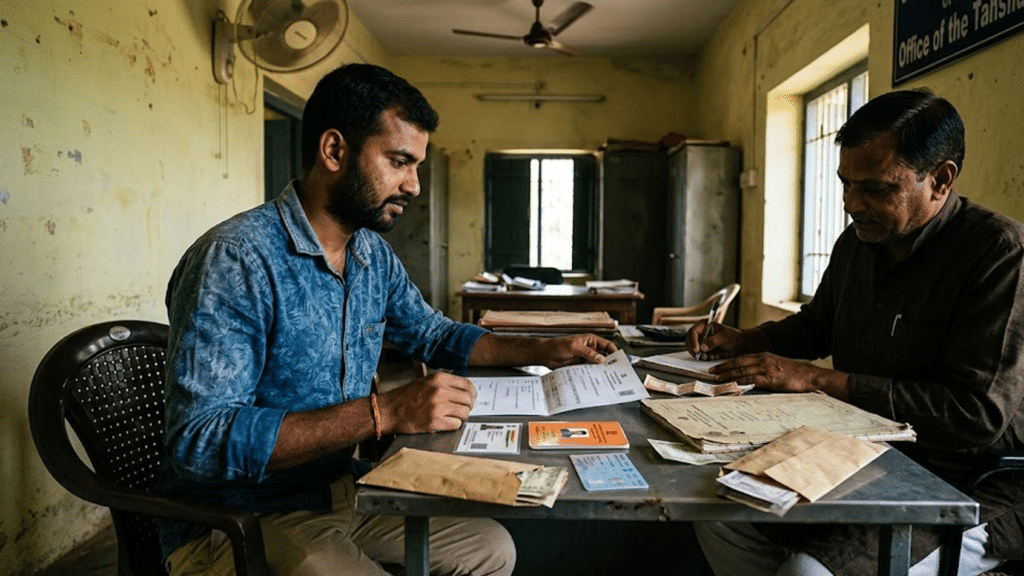
A major identity fraud case has emerged from Karnataka, where authorities have uncovered an alleged racket that helped a Bangladeshi illegal migrant obtain multiple Indian identity documents and secure a bank loan through forged credentials and bribery. The incident has sparked serious concerns over gaps in India’s identity verification and authentication systems. According to investigators, the accused allegedly paid just ₹1,500 to facilitators who arranged a Voter ID card, PAN card, and two separate Aadhaar cards. Officials suspect that forged paperwork and manipulated biometric data were used to bypass verification procedures and obtain the documents illegally. The case took a more serious turn after reports claimed that one of the Aadhaar cards was remotely issued to an associate based in Bangladesh. If confirmed, the development could expose significant weaknesses in the biometric authentication and document issuance mechanisms designed to protect India’s digital identity infrastructure. Authorities further stated that the accused allegedly used these fraudulently obtained documents to secure a bank loan worth ₹4.5 lakh, raising questions over lapses in Know Your Customer (KYC) compliance and verification checks carried out by financial institutions. Police and investigative agencies are now probing the larger network behind the operation, including middlemen, document forgers, and officials who may have assisted in creating or approving fake identities. Investigators are also examining whether similar methods were used to provide Indian documents to other illegal migrants. The incident has intensified concerns over document security, illegal infiltration, and the effectiveness of India’s identity verification systems, particularly as Aadhaar-linked authentication remains central to banking, welfare schemes, and access to public services. Authorities are expected to conduct a detailed audit of all records and documents connected to the accused as the investigation progresses.
Nationalism, India’s Sovereignty and Civilizational Spirit
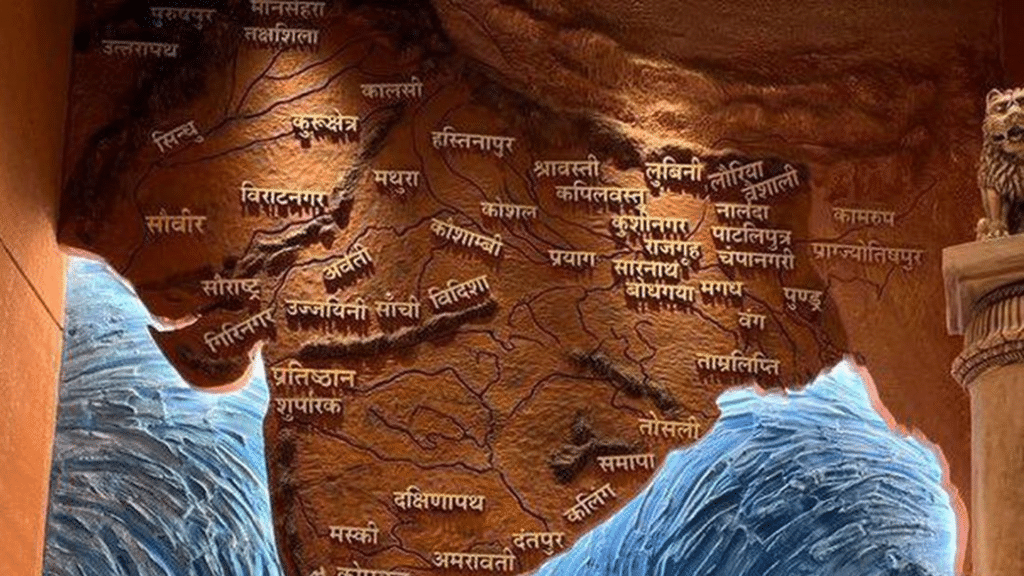
Just as countless stars together illuminate the night sky, and innumerable waves together form the vastness of the ocean, a nation is built through the collective heartbeat of millions bound by love for their motherland. Nationalism is not a cold political doctrine confined to textbooks and speeches; it is an invisible yet powerful emotion flowing through the blood of a people and rooted deeply in the soil they call home. It is the sacred thread that binds strangers into a shared destiny and transforms diversity into unity. For India, nationalism has never merely been a political slogan. It has been a civilizational force, a moral awakening, and a spiritual consciousness that has guided generations through struggle, sacrifice, and resurgence. The fading pages of history still echo with the fire of 1857, when voices from every corner of the subcontinent rose against colonial oppression. From Mangal Pandey to Rani Lakshmibai, there emerged a collective cry for freedom long before the modern map of India was fully imagined. Their vision was not limited to territory alone; it was a yearning to free the sacred dust of their homeland from the chains of foreign domination. That historic struggle revealed an eternal truth: whenever Indians rise above narrow identities and embrace a common national spirit, the nation becomes invincible. In today’s age of globalization, cultural fragmentation, geopolitical uncertainty, and ideological conflicts, nationalism remains more relevant than ever before. It stands as the guiding force that preserves India’s unity, safeguards its sovereignty, and inspires its people toward collective progress. The Relevance of Nationalism in Contemporary India Modern India is one of the most diverse nations on Earth. Languages change every few hundred kilometers, traditions differ from region to region, and faiths coexist within the same social fabric. Such extraordinary diversity is both India’s greatest strength and its greatest challenge. In this complex environment, nationalism acts as the unifying force that transcends divisions and nurtures a common identity. Nationalism teaches citizens to see themselves first as Indians before identifying through caste, religion, region, or language. It creates emotional integration in a country where differences could otherwise become sources of conflict. At a time when sectarianism, regionalism, and identity politics often attempt to divide society, nationalism reminds citizens that the destiny of every Indian is intertwined with the destiny of the nation itself. The relevance of nationalism has also grown in the economic sphere. In a rapidly globalized world dominated by international corporations and foreign interests, economic self-reliance has become essential. A strong national consciousness encourages citizens to support indigenous industries, local innovation, and domestic production. The rise of self-reliant economic initiatives reflects the growing realization that true national strength depends not only on military capability but also on economic independence. Furthermore, India’s expanding role in global politics requires a confident and united population. As India emerges as a major geopolitical power, national unity becomes indispensable for maintaining internal stability and projecting strength abroad. A nation divided internally cannot lead internationally. Nationalism therefore becomes the moral energy that enables India to stand tall among the leading nations of the world. Nationalism Through the Lens of History The roots of Indian nationalism extend far deeper than the modern freedom movement. Since ancient times, India has existed as a cultural and spiritual civilization connected by shared philosophies, sacred traditions, and civilizational values. Though politically fragmented into numerous kingdoms, the idea of Bharatvarsha remained alive in the collective imagination of the people. Pilgrimage routes stretching from the Himalayas to the southern seas, common epics like the Ramayana and Mahabharata, and shared cultural practices created a sense of civilizational unity long before the rise of modern nation-states. This historical continuity laid the foundation for modern Indian nationalism. History repeatedly demonstrates that whenever this sense of unity weakened, foreign powers found opportunities to invade and exploit the land. The colonial period particularly exposed the dangers of disunity. The British Empire strengthened its rule through policies of division, encouraging communal and regional differences to weaken collective resistance. However, the freedom struggle transformed nationalism into a mass movement. People from every religion, caste, and linguistic background united under the common dream of independence. Leaders such as Mahatma Gandhi, Subhas Chandra Bose, and Sardar Vallabhbhai Patel inspired millions with the belief that India was not merely a geographical territory but a sacred collective identity worth sacrificing for. The success of the independence movement proved that nationalism possesses the power to transform ordinary individuals into extraordinary patriots. It taught generations that unity is the greatest strength of a civilization. Nationalism as the Guardian of Cultural Identity India possesses one of the oldest and richest civilizations in human history. Its literature, philosophy, art, music, architecture, and spiritual traditions have influenced cultures across the world for centuries. Yet in the age of rapid globalization, cultural erosion has become a serious concern. Nationalism plays a crucial role in preserving cultural identity. It encourages citizens to take pride in their heritage instead of blindly imitating external influences. True nationalism does not reject global engagement; rather, it ensures that engagement occurs without losing one’s civilizational roots. A culturally confident nation can interact with the world while maintaining its originality and dignity. Nationalism strengthens this confidence by reminding people of the intellectual and spiritual greatness of their ancestors. It inspires younger generations to preserve traditional values while embracing modernity responsibly. Cultural nationalism also promotes social harmony. When people recognize that they are inheritors of a shared civilizational legacy, social divisions gradually weaken. Citizens begin to understand that the prosperity of one community contributes to the prosperity of the nation as a whole. In this sense, nationalism acts like a binding force that connects millions of diverse individuals into a larger national family. It teaches that personal ambitions and regional interests must ultimately align with the greater good of the nation. Nationalism and the Protection of Sovereignty Every sovereign nation depends upon the loyalty and commitment of its citizens for survival. Military power alone cannot protect a country unless supported by a