
Ananya Pandey trolled over Bharatnatyam fusion dance

Actor Ananya Panday is facing widespread online criticism over a Bharatnatyam-inspired fusion dance sequence in the upcoming film Chand Mere Dil. Clips from the performance have gone viral across social media platforms, triggering debate over the portrayal of the classical Indian dance form. Many users criticised the choreography and styling of the sequence, arguing that it strays too far from traditional Bharatnatyam and relies heavily on fusion elements. Critics claimed the performance lacked the discipline, precision, and authenticity associated with the classical dance style, while some described the presentation as disrespectful to Bharatnatyam’s cultural and artistic roots. The sequence features Ananya Panday performing a stylised routine that blends classical dance movements with contemporary cinematic choreography. While a section of viewers appreciated the modern interpretation and experimental approach, others expressed disappointment, saying classical art forms should be handled with greater sensitivity and respect in mainstream cinema. The controversy has also reignited broader discussions online about the adaptation of Indian classical art forms in films and music videos. Supporters of fusion performances argued that experimentation helps introduce traditional dance styles to younger audiences, while critics maintained that excessive modernisation often dilutes the essence of the original art form. So far, neither Ananya Panday nor the makers of Chand Mere Dil have issued an official response to the backlash.
“Bakrid too can be observed virtually on computers”: Nitesh Rane
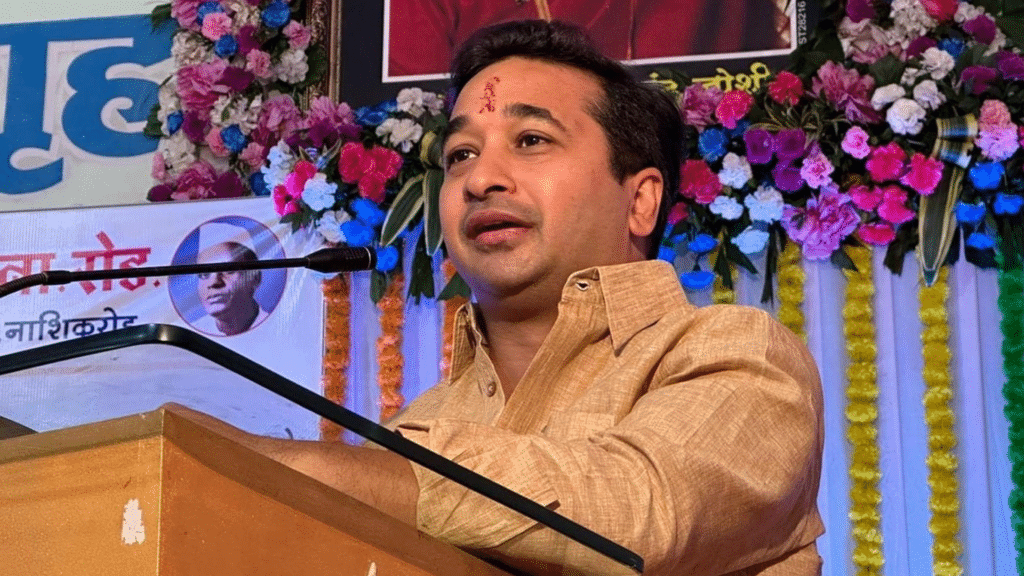
Maharashtra minister Nitesh Rane came under criticism after suggesting that Bakrid could be celebrated “virtually” if Hindus are repeatedly encouraged to observe dry Holi and cracker-free Diwali in the name of environmental protection. His remarks came following the Devendra Fadnavis government’s crackdown on illegal encroachments in Mumbai’s Bandra area. Speaking to reporters, Rane questioned what he described as a selective approach towards environmental concerns during religious festivals. He said Hindus are often urged to avoid firecrackers during Diwali and conserve water during Holi, but similar appeals are rarely made ahead of Bakrid. Referring to the practice of animal sacrifice during the festival, he remarked that Bakrid too could be observed virtually by showing goat sacrifices on computer screens instead of carrying out actual sacrifices. Rane further stated that environmental and animal rights regulations should apply equally to all communities. He warned that any animal sacrifice conducted without adhering to legal and civic norms would invite action from authorities. His comments drew sharp reactions from opposition leaders and critics, who accused him of attempting to create communal divisions and target a particular community. The remarks have once again reignited debate in Maharashtra over religious practices, environmental concerns, and the politics surrounding festival celebrations.
IS INDIA READY FOR AI JUDGES?

The judiciary in India is far more than a mere institutional mechanism for the application of laws. It represents the moral and constitutional conscience of the nation. From adjudicating petty criminal disputes to interpreting the most intricate constitutional questions, the Indian judiciary performs responsibilities of immense gravity and consequence. Its role extends beyond technical legal interpretation; it safeguards liberty, preserves constitutional morality, and maintains the delicate balance between the State and its citizens. Consequently, whenever society stands at the threshold of transformative technological change, the implications of such change upon the judiciary become a matter of profound importance and public concern. In contemporary times, the rapid evolution of Artificial Intelligence has generated intense debate across legal and academic circles regarding its possible role within judicial institutions. As algorithms become increasingly sophisticated, a compelling question emerges: can Artificial Intelligence ever replicate the depth of judgment that lies at the very heart of justice? More importantly, can machines comprehend the ethical and human dimensions that judicial decision-making inevitably demands? Judging in India is not a purely technical or mechanical exercise. It is deeply rooted in the spirit and philosophy of the Constitution of India. Constitutional guarantees embodied under Article 14 and Article 21 ensure equality before the law, procedural fairness, and the protection of life and personal liberty. Over the decades, the judiciary has interpreted these provisions expansively, transforming them into powerful safeguards against arbitrariness and injustice. In the landmark judgment of Maneka Gandhi v. Union of India, the Supreme Court emphatically declared that legal procedures cannot be arbitrary, oppressive, or mechanical; they must be “just, fair, and reasonable.” This constitutional philosophy presents a formidable challenge for Artificial Intelligence systems, which fundamentally operate through data processing, pattern recognition, and probabilistic analysis rather than moral understanding or human consciousness. Unlike human judges, Artificial Intelligence possesses neither lived experience nor emotional intelligence. It cannot appreciate the subtleties of human suffering, social realities, or moral dilemmas in the manner expected of a constitutional court. Judicial adjudication often requires an understanding of circumstances that transcend the literal wording of statutes. Courts are frequently called upon to weigh compassion against legality, equity against rigidity, and constitutional morality against procedural technicalities. Such nuanced balancing cannot easily be reduced to mathematical calculations or algorithmic outputs. The Indian judiciary has repeatedly emphasized that justice is not merely about procedural compliance but about ensuring substantive fairness. In A.K. Kraipak v. Union of India, the Supreme Court reinforced the foundational principles of natural justice, particularly the necessity of ensuring that every individual receives a fair hearing. The principle of audi alteram partem — the right of every person to be heard — is not confined to procedural ritualism. Rather, it embodies the broader ideals of empathy, reasoned consideration, and impartial evaluation. A judge must not only hear arguments but also understand their emotional, social, and ethical implications. Artificial Intelligence, despite its computational sophistication, lacks the capacity for empathy and humane understanding that such constitutional adjudication demands. Nevertheless, it would be intellectually dishonest to dismiss Artificial Intelligence entirely or to overlook its potential contributions to the administration of justice. India has already begun cautiously integrating AI-assisted technologies within its judicial framework. Various digital tools presently aid judges in legal research, document analysis, translation, and case management. In a judicial system burdened by staggering pendency and procedural delays, such technological assistance offers a genuine possibility for improving efficiency and accessibility. The prospect of quicker legal research, streamlined administration, and enhanced case management inspires hope for a more responsive and effective justice delivery system. At present, however, the dominant judicial consensus in India remains clear and unambiguous: Artificial Intelligence may assist judicial functioning, but it cannot replace judicial decision-making itself. This distinction is of immense constitutional significance. Technology may function as an auxiliary instrument, but the ultimate authority to determine rights, liberties, and liabilities must remain vested in human judges. Such an approach preserves the independence of the judiciary, a constitutional aspiration reflected under Article 50 of the Constitution, which envisages the separation of the judiciary from executive influence and external pressures. Judicial decision-making is rarely straightforward. It involves a delicate interplay between statutory interpretation, factual analysis, precedent, discretion, and constitutional morality. Courts have consistently emphasized that judicial discretion must be exercised cautiously, rationally, and with profound sensitivity to context. Artificial Intelligence systems, however, rely predominantly upon historical datasets and predictive models. While such systems may identify patterns with remarkable efficiency, they remain fundamentally constrained by the limitations of the data upon which they are trained. They struggle to accommodate extraordinary human circumstances, evolving social values, or unforeseen factual complexities. Moreover, justice occasionally demands a conscious departure from precedent in order to advance constitutional values and societal progress. The transformative role played by constitutional courts often requires creativity, moral courage, and philosophical interpretation. Artificial Intelligence lacks the independent moral reasoning necessary to undertake such evolution. A compelling illustration of this limitation can be found in sentencing jurisprudence, particularly in cases involving capital punishment. In Bachan Singh v. State of Punjab, the Supreme Court evolved the celebrated “rarest of rare” doctrine governing the imposition of the death penalty. Such decisions require judges to balance aggravating and mitigating circumstances while considering moral, social, psychological, and humanitarian factors. These are not questions that can be resolved through algorithmic precision alone; they require profound human introspection and ethical judgment. Another deeply troubling concern relates to algorithmic bias. Artificial Intelligence systems learn from historical data, and such data may itself reflect pre-existing societal inequalities and prejudices. Consequently, there exists a substantial risk that AI systems may inadvertently perpetuate or even amplify discrimination. This directly conflicts with the constitutional guarantee of equality enshrined under Article 14. The Supreme Court has repeatedly affirmed that arbitrariness is antithetical to the rule of law. If AI-generated outcomes become opaque, discriminatory, or inconsistent, they would fundamentally undermine constitutional principles of fairness and equal protection. Transparency presents an equally serious challenge. Judicial decisions are expected to be reasoned and publicly accountable so that citizens may understand the basis of
“India will buy oil based on national interest”
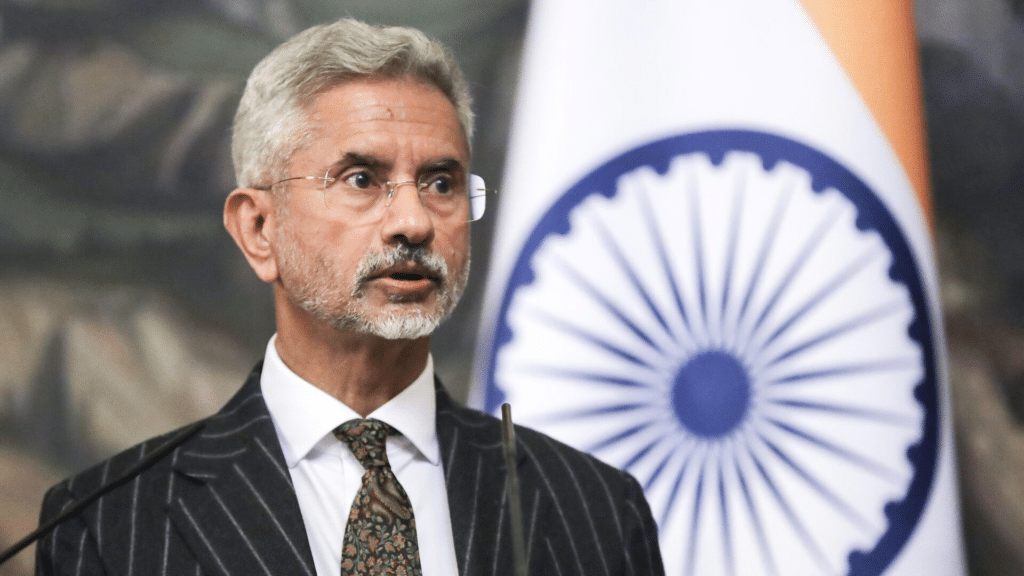
India’s External Affairs Minister Subrahmanyam Jaishankar said that India’s energy policy will continue to be driven entirely by national interest. He stressed that decisions on oil purchases will depend on factors such as affordability, reliability, and long-term energy security, rather than pressure or opinions from other countries. Jaishankar made the remarks while responding to comments from the United States regarding global oil supplies. He said India’s primary responsibility is to ensure stable and affordable energy access for its 1.4 billion citizens. According to him, energy policy cannot be dictated by external geopolitical considerations when the country’s economic stability and public welfare are involved. The minister also explained that India will continue to evaluate all available options for oil imports, including supplies from Russia, based solely on what best serves India’s interests. He noted that pricing, supply reliability, and the country’s long-term energy requirements remain key considerations in New Delhi’s decision-making process. Reaffirming India’s strategic autonomy, Jaishankar said the country’s foreign policy is guided by national priorities rather than external approval. He emphasized that ensuring energy security for the people of India remains a critical priority amid global uncertainties and fluctuations in the international energy market.
“Cockroaches disrupt established order “: Kumar Vishwas
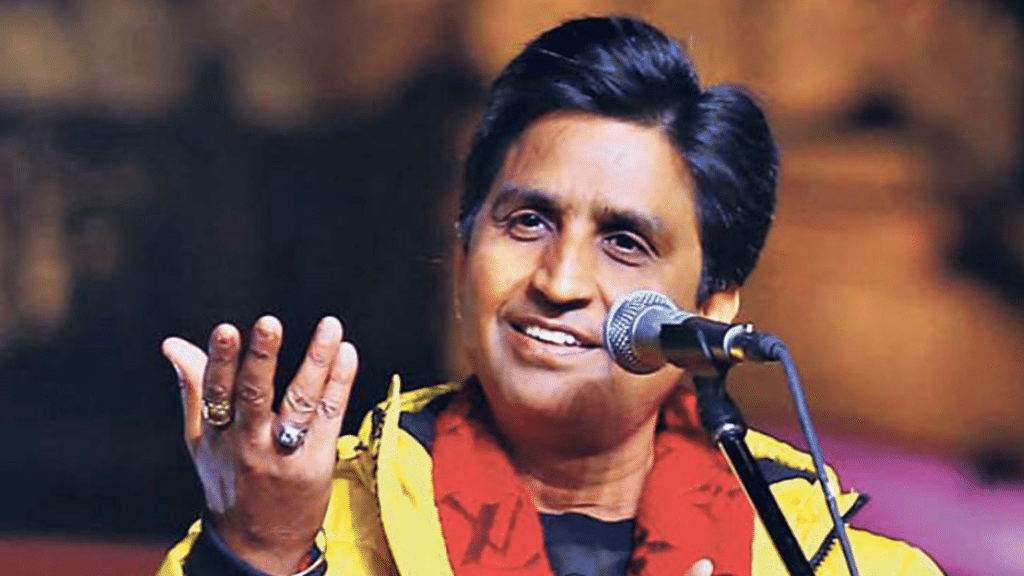
Poet and former politician Kumar Vishwas recently took a swipe at the satirical online collective known as the “Cockroach Janta Party” (CJP) during an interview, using the metaphor of cockroaches to describe forces that, according to him, flourish in disorder and decay. Recalling a lesson from his mother, Vishwas said cockroaches prefer dark and dirty places and gradually damage decorative objects and well-functioning systems. Drawing a parallel with the controversial online group, he alleged that such elements attempt to weaken institutions and create disruption in society. He further remarked that if “cockroaches” have emerged, then “HITs” referring to insecticide sprays used to eliminate pests — have also risen in the country. Vishwas claimed that many such “HITs” are active across India, including in Bengal, and concluded his remarks by saying, “Cockroaches will be taken care of.” The comments come as the “Cockroach Janta Party,” a satirical social media movement, continues to gain attention online and spark widespread discussion across digital platforms.