
Kerala police busts massive fake degree certificates
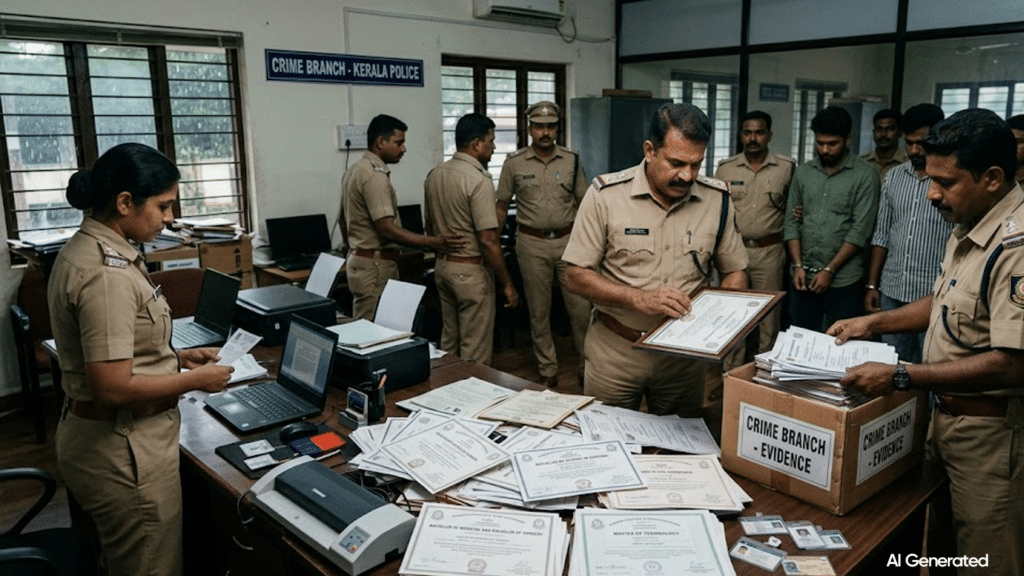
The Kerala Police have uncovered a massive fake degree racket operating across multiple states, exposing a highly organised network involved in producing and selling forged academic certificates across India. During the investigation, officials seized more than one lakh counterfeit certificates linked to 22 universities. Investigators believe the syndicate may have circulated over 10 lakh fake degrees over the years. So far, eleven people have been arrested in connection with the case. According to the police, the racket specialised in forging medical, nursing, engineering, and postgraduate degrees. These fake certificates were allegedly sold for amounts ranging from ₹75,000 to ₹1.5 lakh. Authorities suspect that many buyers used the forged qualifications to secure jobs, gain admission into educational institutions, and obtain visas for foreign countries, including the United States, the United Kingdom, several European nations, and the UAE. The investigation reportedly began after police tracked suspicious courier shipments moving from Malappuram to Bengaluru and later to Sivakasi in Tamil Nadu. Subsequent raids led to the recovery of fake mark sheets, counterfeit university seals, computers, printers, and other equipment believed to have been used in manufacturing the forged certificates. Police officials said the network had operatives spread across several states, including Kerala, Tamil Nadu, Karnataka, Maharashtra, Andhra Pradesh, Goa, Delhi, and West Bengal. The case has raised serious concerns over the verification of educational documents, particularly in critical sectors such as healthcare and engineering, where fake qualifications could pose major risks to public safety. The Kerala Police said the investigation is still underway and efforts are continuing to identify and arrest others linked to the racket. Authorities are also examining how extensively the forged certificates were used across India and abroad.
Protests in Kolhapur as Hindus demand boycott of Gokul dairy
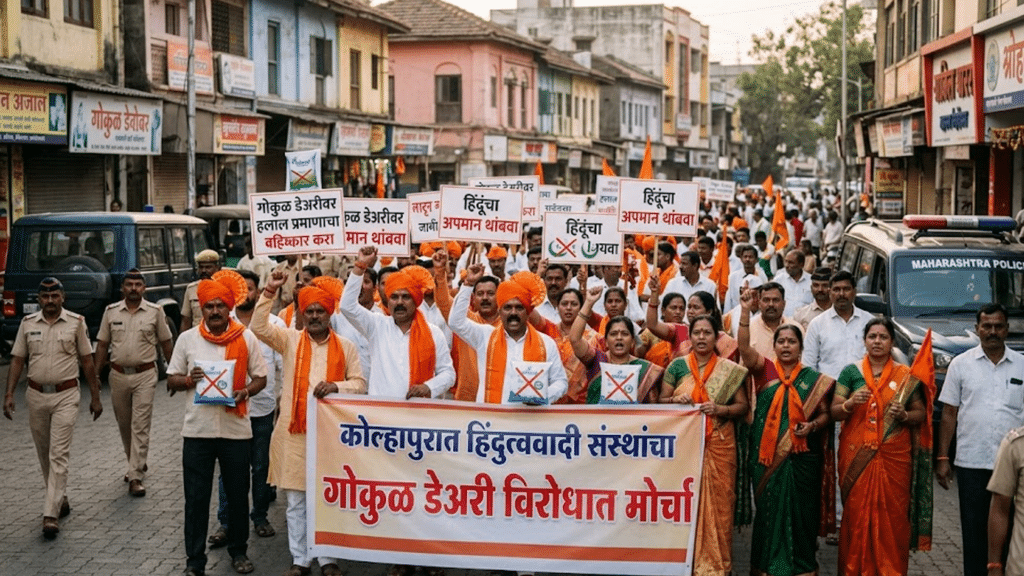
Protests broke out in Kolhapur after several Hindu organisations called for a boycott of Gokul Dairy products over the cooperative’s Halal certification. The groups argued that such certification was unnecessary for milk and dairy products sold within India and appealed to consumers to avoid purchasing “Halal-certified” items. The agitation intensified after images of a Halal certificate linked to Gokul Dairy circulated on social media. Protesters questioned why the cooperative required the certification despite having a strong domestic market and alleged that religion-based certification practices were being unnecessarily promoted. Demonstrators also submitted memorandums to local authorities and warned of larger protests if the certification was not withdrawn. In response, Gokul Dairy clarified that the Halal certification was obtained in 2018 solely for export purposes. The cooperative stated that several Gulf and Muslim-majority countries require Halal certification for imported food products, making it necessary for international trade. The dairy further stressed that the certification does not affect products sold in the Indian market and does not alter the nature or quality of its domestic offerings. Gokul Dairy said the move was purely a business and export compliance requirement and maintained that it has been transparent about the certification process.
Strait of Hormuz: The Lifeline Holding the Global Economy Hostage
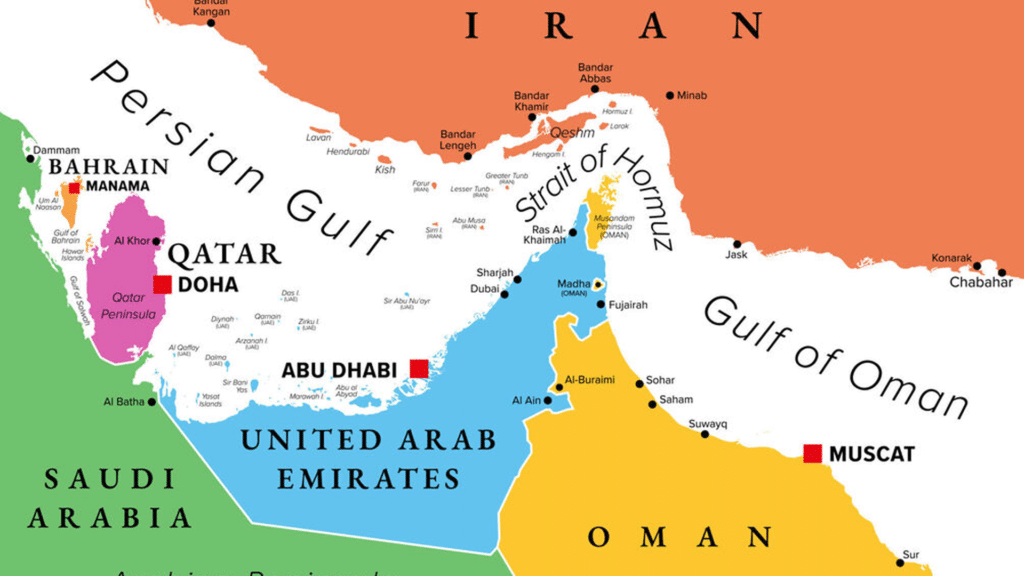
In an age dominated by artificial intelligence, cyber warfare and satellite-guided missiles, it is easy to assume that geography has lost much of its importance. Yet every few years, the world is reminded that physical geography continues to shape international politics as powerfully as it did centuries ago. Few places demonstrate this reality more clearly than the Strait of Hormuz, a narrow stretch of water connecting the Persian Gulf to the Gulf of Oman and the Arabian Sea. On a map, it appears almost insignificant. In reality, it is one of the most strategically important waterways on Earth. Whenever tensions rise in the Middle East, attention inevitably returns to Hormuz. Oil traders monitor developments by the minute. Governments prepare contingency plans. Naval forces increase patrols. Energy markets become volatile. The reason is simple: the Strait of Hormuz serves as the principal maritime gateway for some of the world’s largest energy producers. Saudi Arabia, Iraq, Kuwait, Qatar, Bahrain and the United Arab Emirates all rely heavily on this route to export oil and natural gas to international markets. Any disruption, whether real or anticipated, immediately reverberates across the global economy. The significance of the Strait of Hormuz extends far beyond the Middle East. It affects fuel prices in India, manufacturing costs in China, inflation rates in Europe and energy security calculations in Washington. The strait has become a geopolitical pressure point where regional rivalries, great-power competition, military strategy and global economic interests converge. Understanding Hormuz is therefore not simply a matter of understanding the Middle East; it is a matter of understanding how the modern global economy functions. The World’s Most Important Energy Chokepoint The geography of the strait explains much of its importance. At its narrowest point, the Strait of Hormuz is only around 33 kilometres wide, with designated shipping lanes occupying an even smaller portion of that space. Despite its limited size, it carries a staggering volume of global energy exports. According to various international energy assessments, roughly one-fifth of the world’s petroleum consumption passes through the strait. Every day, millions of barrels of crude oil and refined petroleum products travel through these waters. Qatar, one of the world’s leading exporters of liquefied natural gas, also depends heavily on the route. There are few alternative pathways capable of handling comparable volumes. The strategic importance of Hormuz became especially evident during the twentieth century. As oil emerged as the lifeblood of industrial economies, the Persian Gulf transformed from a regional waterway into a central artery of the global economic system. Western powers increasingly viewed stability in the Gulf as a vital national interest. During the Cold War, ensuring uninterrupted energy flows became a cornerstone of international security policy. The region’s importance was reinforced by rapid industrialisation in Asia, which dramatically increased global demand for energy imports. The vulnerability of the Strait of Hormuz was exposed during the Iran-Iraq War of the 1980s. As the conflict intensified, both sides began targeting commercial shipping in what became known as the “Tanker War.” Oil tankers were attacked, insurance premiums surged and fears of wider disruption spread throughout international markets. The United States eventually intervened to protect maritime traffic, escorting Kuwaiti tankers and expanding its naval presence in the region. The episode demonstrated that even limited disruptions in the Gulf could produce global consequences, a lesson that continues to shape policy decisions today. Iran, Military Strategy and the Politics of Deterrence No country has a greater influence over the Strait of Hormuz than Iran. Occupying the northern coastline overlooking the waterway, Iran possesses a unique geographical advantage. This location provides Tehran with significant leverage during periods of regional tension. Iranian leaders have periodically threatened to restrict or close the strait in response to sanctions, military pressure, or perceived threats from foreign powers. These statements are rarely intended as mere rhetoric. They serve as strategic reminders of Iran’s ability to influence one of the world’s most critical energy corridors. Iran’s military doctrine has long focused on asymmetric warfare. Rather than attempting to compete directly with larger military powers, Tehran has invested heavily in capabilities designed to complicate naval operations in the Gulf. These include fast attack boats, anti-ship missiles, naval mines, drones and coastal defence systems. Military analysts generally agree that while Iran would struggle to permanently close the Strait of Hormuz, it could create significant disruptions to commercial shipping. Even temporary interruptions could trigger sharp increases in oil prices and generate substantial economic uncertainty. At the same time, closing Hormuz would come with enormous risks for Iran itself. The country relies heavily on maritime trade and energy exports. A prolonged closure would likely provoke a strong international response involving regional powers, the United States, and potentially broader multinational coalitions. This creates a strategic paradox. Iran benefits from maintaining the perception that it can disrupt the strait, but it faces severe consequences if it attempts to exercise that capability fully. The result is a constant balancing act between deterrence and escalation. Why a Crisis in Hormuz Matters to the Entire World The United States has spent decades building a substantial military presence in the Gulf precisely because of these concerns. The U.S. Navy’s Fifth Fleet, headquartered in Bahrain, plays a central role in safeguarding maritime traffic and maintaining freedom of navigation. American policymakers have consistently viewed the uninterrupted flow of energy through Hormuz as a strategic priority. This commitment has survived multiple administrations, reflecting a broad consensus that instability in the Gulf threatens global economic stability. However, the Strait of Hormuz is no longer solely an American concern. China’s rapid economic rise has transformed Beijing into one of the world’s largest energy importers. A significant portion of Chinese oil imports originates in the Gulf region. India faces a similar challenge. As one of the fastest-growing major economies in the world, India depends heavily on imported energy. Japan and South Korea are also highly reliant on Gulf energy supplies. Consequently, any major disruption in Hormuz would affect not only Western economies but much of Asia
Uniform Civil Code in Assam. A step in the Right Direction?
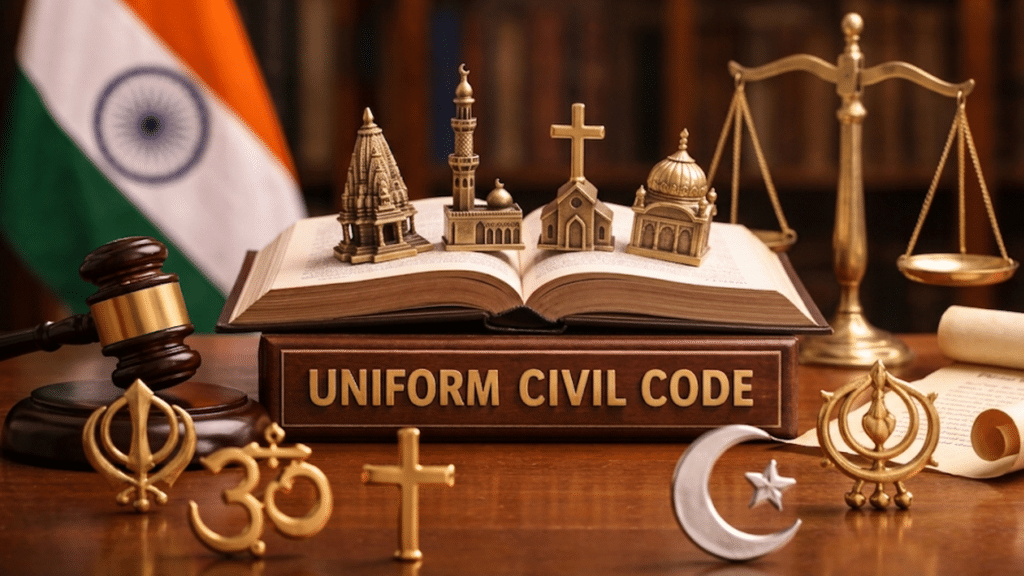
Assam just became a part of a rather rare club. On 27th of May, 2026, The Assam Legislative Assembly adopted the Uniform Civil Code Bill, making Assam the first state in the North East and the third state in the country to adopt such a legislation. Apart from Uttarakhand and Gujarat, Assam has now become one of the few states that has acted upon Uniform Civil Code. What is Uniform Civil Code (UCC)? Where does the concept of UCC emanate from? These are common questions that have garnered renewed interest. Before addressing the discourse around UCC, it would be trite to get an overview of how our forefathers drafted the Constitution of India. At the outset, the relevant parts to understand the debate around UCC are primarily, Part III and Part IV of the Constitution. Part III of the Constitution enumerate the Fundamental Rights. Whereas, Part IV contains the Directive Principles of State Policy (DPSP). On the surface, it is simple to understand the distinction between both these parts. In the ever-green words of Granville Austin, Fundamental Rights and Directive Principles Act as the “conscience of our Constitution”. In the landmark case of Kesavananda Bharati (1973), the Apex Court had also remarked, that Fundamental Rights and Directive Principles aim at the same goal of bringing about a social revolution and establishment of a welfare state and they can be interpreted and applied together. They are supplementary and complimentary to each other. It can well be said that directive principles prescribed the goal to be attained and the Fundamental Rights lay down the means by which that goal is to be achieved. Part III of the Constitution is ordinarily the most essential for the common man to know. Perhaps, it needs no further divulgence, as it is one of the most commonly spoken about topics. What makes them inalienable, is the fact that these are justiciable rights. Therefore, the Fundamental Rights which are guaranteed to Indian citizens, can be enforced through the Court of Law and any law in its derogation becomes inherently void. However, very interestingly, our forefathers who drafted the Constitution drew a distinction. Our Constitution was never supposed to be static. In a very simple sense, the aspirations of Bharat, which perhaps could not have been made enforceable at its nascent stage, was included in Part IV of the Constitution. DPSPs enumerate the vital goals the State must consider when making laws and policies. Distinctively from Fundamental Rights, these were non-justiciable rights. In simple terms, you cannot sue the government in court for not implementing them. However, they captured the aspirational side of the Constitution. Once the Distinction of DPSP and Fundamental Rights is clear, one can dive a little deeper into what actually were these aspirational values enumerated by our forefathers. Article 44 of the Constitution of India has always aspired that a Uniform Civil Code must be adopted. The Constitutional text unequivocally clarifies, that the State shall endeavor to secure for the citizens a uniform civil code throughout the territory of India. In simple terms, it envisions a single, secular set of law applicable to all citizens in personal matters such as marriage, divorce, custody, inheritance and so on. The goal is simple – reduce personal laws and push for a unified and codified law on personal matters. In the case of Sarla Mudgal (1995), even the Apex Court had sought for a fresh look at Article 44 of the Constitution. The Government was asked to file an affidavit on record, indicating the steps taken and efforts made towards securing a Uniform Civil Code. Along similar lines, in the case of John Vallamatton (2003), a three-judge bench of the Supreme Court had, on record, expressed regret for non-enactment of Uniform Civil Code, while observing that Article 44 is based on the premise that there is no necessary connection between religion and personal law in a civilized society. Two common questions plague the discourse around Uniform Civil Code. Firstly, if at all the Constitutional text unequivocally aspires for there to be a Uniform Civil Code, why is it always met with resistance? Secondly, and on the flip side, if at all the Constitutional text unequivocally aspires for there to be a Uniform Civil Code, why have only a handful of States endeavored to implement it? The adoption of Uniform Civil by the Government of Assam could be used as an example to reflect this conundrum. In my simple understanding, the conundrum exists owing to the fact that Indian Citizens have been assured with a strong sense of Religious Autonomy. Article 25 of the Constitution of India, which, in distinction to Article 44, is a justiciable Fundamental Right, ensuring that all persons are equally entitled to freedom of conscience and the right freely to profess, practice and propagate religion. This protection is in direct cohorts with Uniform Civil Code, which threatens curbing religious autonomy to assure uniformity. More importantly, amidst polarizing times, it has become tough to ensure unbiased and absolute secularism. Opponents consistently argue, UCC has been used as a tool of imposition, rather than uniformity. For Example, AIMIM chief, Asaduddin Owaisi was quick to allege that the State Government of Assam was guilty of imposing Hindu marriage customs on Muslims, through its UCC norms. His qualm was owing to the fact that the UCC norms in Assam exclude the Tribal Population from the garb of UCC, but does not extend the same benefit to Muslims. Owaisi further exclaimed, “In Hinduism, there is a list of prohibited relationships with whom you cannot marry. But among Muslims, marriages take place with… Who are you to stop us? Why are you enforcing that religious law on us?” On the other hand, the Chief Minister of Assam was quick to defend the legislation and pointed out that it was a vital step for gender justice, equal property rights, and modern legal reform. He argued that the concept of a Uniform Civil Code was not a new idea introduced by the
Rishabh Pant officially steps down as LSG captain
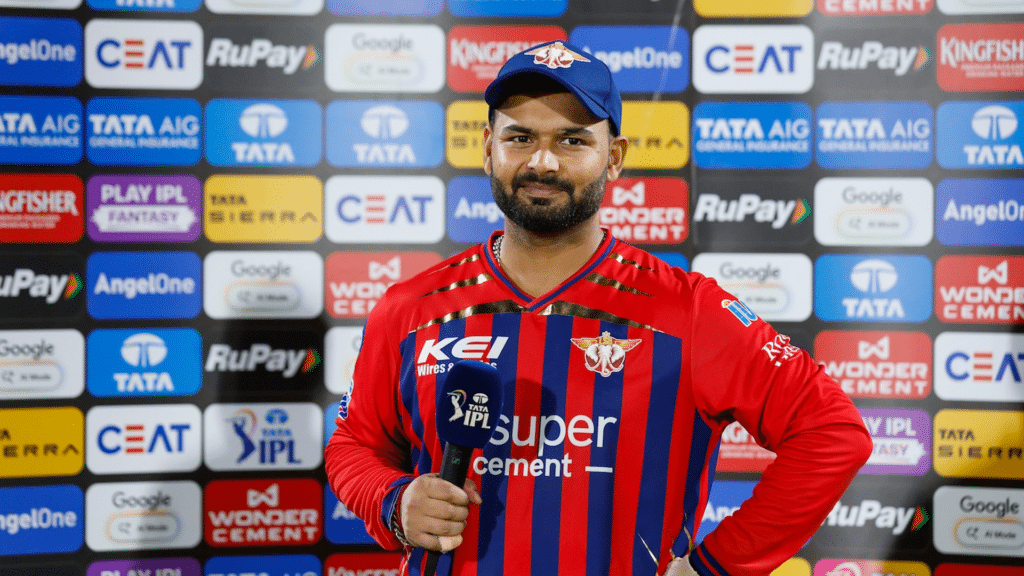
Rishabh Pant has officially resigned as captain of Lucknow Super Giants following the team’s disappointing IPL 2026 campaign. The decision comes after LSG endured two underwhelming seasons in succession, with the franchise finishing at the bottom of the points table this year. Reports suggest the franchise accepted Pant’s decision to step down immediately amid mounting pressure after a disastrous season. When Pant was appointed captain, expectations were high, but the team struggled throughout the campaign with inconsistent performances, tactical criticism, batting failures, and concerns over squad balance. Sources close to the franchise indicate that the LSG management is now preparing for significant changes ahead of the next IPL season. Senior figures within the setup, including Tom Moody, are expected to play a key role in rebuilding the squad and reshaping the team’s leadership structure. Pant’s resignation marks a major moment for the franchise, which began the season with hopes of securing a playoff berth but instead suffered one of its poorest campaigns since entering the IPL. Speculation has already begun over who could succeed Pant as captain and what changes the franchise may pursue during the upcoming transfer and auction window. Despite the disappointing campaign, Pant remains one of India’s most prominent cricketers. Attention is now likely to shift toward his individual performances and how both he and LSG respond ahead of IPL 2027.
“Pak was created on Islamic principles”: Arfa Khanum Sherwani

Indian journalist Arfa Khanum Sherwani said that Pakistan, as a country founded on Islamic principles, should not recognise Israel. Her remarks came amid ongoing discussions surrounding the Abraham Accords and the possibility of Pakistan establishing diplomatic ties with Israel. Sherwani argued that Pakistan’s foundation as an ideological Islamic state makes recognition of Israel incompatible with the principles on which the country was created. Her comments quickly gained attention online, drawing strong reactions and intense discussion across social media platforms. Critics accused Sherwani of taking a contradictory position, arguing that while she has consistently advocated secularism in India, she appeared to support a religion-based national identity in the case of Pakistan. Supporters, however, defended her remarks as an observation about Pakistan’s historical and ideological foundations rather than an endorsement of theocratic politics. The controversy also coincided with recent remarks by Khawaja Asif, Pakistan’s Defence Minister, who reiterated that Islamabad would not recognise Israel, saying such a move would be contrary to Pakistan’s ideological beliefs. The discussion has since expanded into broader conversations around nationalism, secularism, religious identity, and the contrasting constitutional foundations of India and Pakistan, with opinions remaining sharply divided online.