
CJP’s Abhijeet Dipke to lead Jantar Mantar protest

Abhijeet Dipke, founder of the Cockroach Janta Party (CJP), is set to return to India from the United States on June 6 to lead a protest at Jantar Mantar over the NEET-UG 2026 paper leak controversy. In a video shared on social media, Dipke called on students and supporters to gather in Delhi and demand accountability from the government regarding alleged irregularities in the examination process. He also demanded the resignation of Union Education Minister Dharmendra Pradhan over the issue. According to Dipke, the NEET-UG 2026 controversy has impacted more than 2.28 million students across the country. He stated that the protest would be conducted peacefully and within legal and constitutional limits. As part of the plan, supporters are expected to receive him at the airport upon his arrival before proceeding to a police station to seek official permission for the demonstration at Jantar Mantar. The announcement comes amid growing public concern over repeated controversies surrounding major competitive examinations. Dipke alleged that recurring issues involving exams such as NEET, CUET, CBSE, and SSC GD have created uncertainty and anxiety among students about their future. The Cockroach Janta Party, led by Dipke, has gained significant attention online for raising issues related to unemployment, examination controversies, and governance. However, some of the party’s social media accounts were reportedly blocked in India, following which Dipke approached the Delhi High Court seeking relief.
Over 200 illegal stalls demolished in major overnight drive in Dum Dum station

A major anti-encroachment drive was conducted at Dum Dum Junction railway station as railway authorities, along with police and Railway Protection Force (RPF) personnel, removed more than 200 unauthorized stalls and cleared encroaching hawkers from the station premises. The operation was carried out during the night of May 30–31, 2026, with the aim of improving passenger movement and enhancing safety at the busy railway hub. Officials said the unauthorized stalls and hawkers had been causing congestion near platforms, entry points, and pedestrian pathways for a considerable period. Teams comprising railway officials, police personnel, and RPF staff worked through the night to dismantle temporary structures and remove vendors operating without permission. Visuals from the drive showed bulldozers and workers clearing the encroachments while security personnel supervised the operation. According to railway authorities, the initiative was undertaken to ensure smoother access for commuters and reduce overcrowding within the station premises. Dum Dum Junction railway station serves thousands of passengers every day and functions as an important transit point connecting suburban rail services, long-distance trains, and the metro network. The drive has received mixed reactions from the public. Many commuters welcomed the move, saying it would help ease congestion and create more space for passengers. At the same time, concerns were raised about the impact on the livelihoods of small vendors who depended on the area for income. Railway authorities stated that regular monitoring will continue to prevent fresh encroachments and maintain order and accessibility within the station premises.
“Ashamed to live in a country where democratic foundations are being destroyed”: MP Kapil Sibal
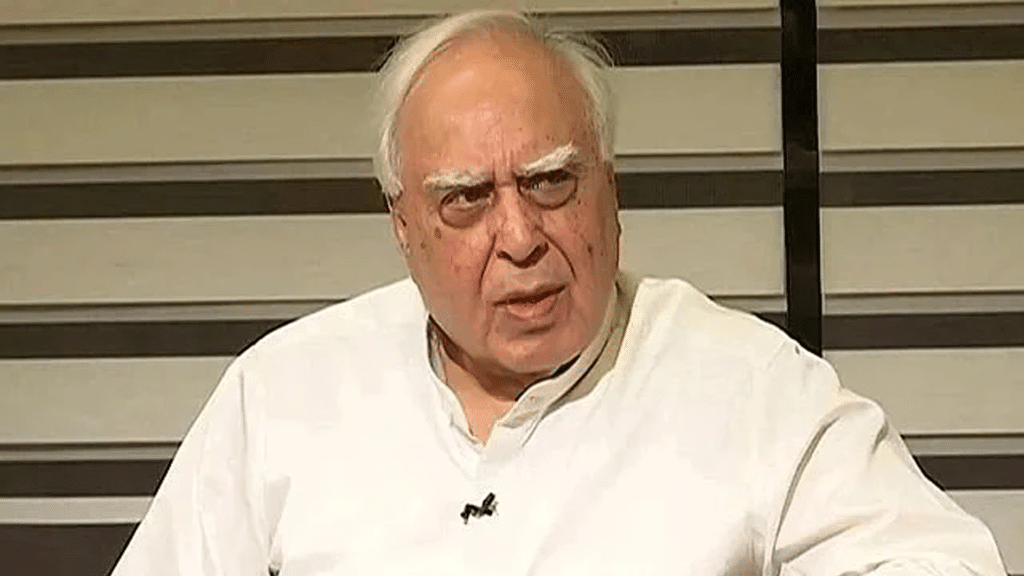
Rajya Sabha MP and senior advocate Kapil Sibal made strong remarks on Sunday while reacting to the alleged assault on Trinamool Congress MPs in West Bengal. He said he felt “ashamed to live in a country where the basic foundations of democracy are being weakened.” His comments came amid rising political tensions in West Bengal following reports of attacks on Trinamool Congress leaders, including MP Abhishek Banerjee during a visit to Sonarpur. Speaking to the media, Sibal alleged that the attack on the MPs was pre-planned and questioned the role of the police and security personnel present at the scene. He claimed that adequate security arrangements were not made for Banerjee despite prior knowledge of his visit. According to Sibal, the incident reflects a growing intolerance toward democratic values and differing political opinions in the country. The remarks sparked sharp reactions from BJP leaders, who accused Sibal of exaggerating the situation and attempting to portray India’s democratic institutions negatively for political purposes. BJP leaders also alleged that he was selectively criticizing incidents in West Bengal while ignoring violence reported in other parts of the country. The controversy comes at a time of heightened political unrest in West Bengal, where allegations of post-election violence and attacks on leaders from both ruling and opposition parties continue to dominate political discourse. Trinamool Congress leaders have accused BJP workers of being involved in the attacks, while BJP leaders have denied the allegations and countered that TMC supporters have also engaged in violence.
Madhavdeva: The Pole Star of the Neo-Vaishnavite Movement
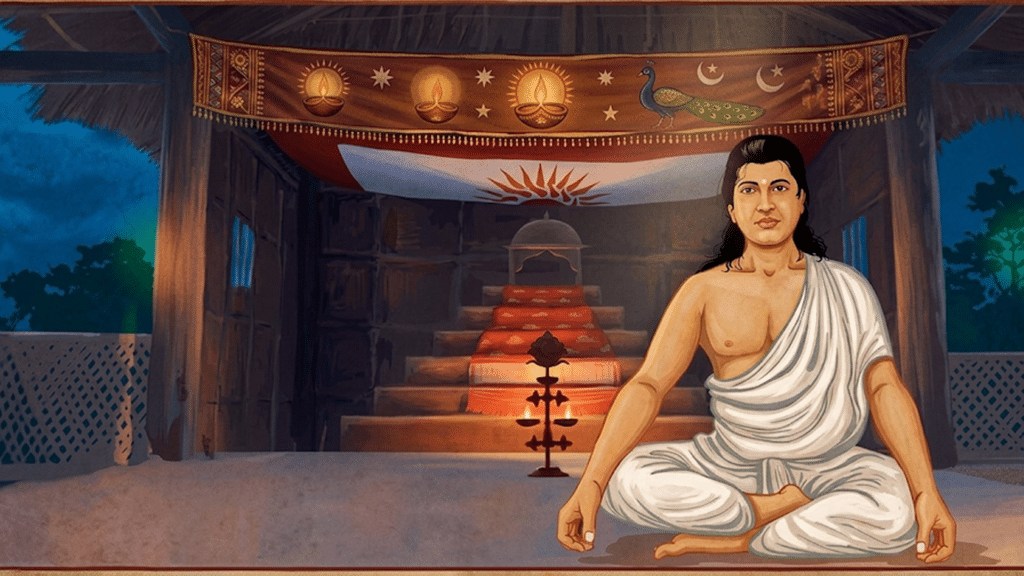
In the long and illustrious tapestry of Indian spiritual history, few figures shine as brightly or as consistently as Sri Sri Madhavdeva. While the Neo-Vaishnavite movement in 16th-century Assam is inextricably linked to the visionary genius of Srimanta Sankardeva, it was the intellectual rigor, administrative foresight, and absolute devotion of Madhavdeva that solidified this movement into a permanent, living institution. He was not merely a disciple; he was the primary architect of the structural integrity of the faith and the most profound interpreter of its philosophical depth. To understand the evolution of Assamese identity is to understand the life and works of Madhavdeva. The ‘Manikanchana Sangyoga’: The Metaphysics of a Divine Union The term ‘Manikanchana Sangyoga’—the meeting of a jewel and gold—is the most apt metaphor in the history of religion. In 1522 AD, at the village of Belguri, the encounter between the established, intellectual, and charismatic Sankardeva and the young, skeptical, and devoutly Shaktist Madhavdeva took place.This union was a cosmic alignment. Madhavdeva, initially a devout Shaktist, engaged in a vigorous theological debate with Sankardeva regarding the nature of divinity. Sankardeva’s arguments, anchored in the essence of the Bhagavata Purana, dismantled the narrow rituals of the then-dominant practices and revealed the singular, non-dualistic beauty of Bhakti. Madhavdeva’s surrender was not an act of weakness but a realization of Truth. He brought to the movement a refined, critical, and analytical mind. Where Sankardeva provided the ‘What’ and the ‘Why,’ Madhavdeva codified the ‘How.’ He ensured that the movement could survive beyond the physical presence of its founders, creating a robust administrative backbone through the Satra (monastery) system. Literary Genius: The Lyrical Essence of Devotion Madhavdeva’s contribution to Assamese literature is marked by an unparalleled emotional intensity. While Sankardeva’s literary output is vast, Madhavdeva’s work is characterized by the intimacy of personal devotion. The Magnum Opus: Namghosa The Namghosa is the ‘Veda of the common Assamese.’ Unlike many complex theological texts, the Namghosa speaks directly to the human heart. It is a synthesis of the most profound Vedantic philosophy simplified for the devotee. As recorded in the critical edition of the text, Madhavdeva’s opening verse sets the tone for the entire work:“Muktito nisprha yito / sehi bhakataka namo / rasamay māngoho bhakati / samasta mastaka mani / nija bhakatara basya bhajo hena Deva Yadupati “(I bow low to that devotee who is indifferent even to salvation. I pray for that devotion which is full of sweet joy. I worship such a Lord Yadupati, who is the crown-jewel of all heads and yet is subservient to His own devotee.) This verse reflects a state of prapatti (absolute surrender) that is the hallmark of his philosophy. Madhavdeva utilized the ghosa (refrain) structure to create a rhythmic, meditative quality that allowed even the unlettered villager to internalize complex spiritual truths through constant recitation. The Philosophical Depth of Bhakti Ratnavali In Bhakti Ratnavali, Madhavdeva meticulously distills the essence of devotion. He argues that devotion is not an emotional outburst but a disciplined intellectual and spiritual pursuit. He classifies the stages of Bhakti and emphasizes that the ultimate goal is the cessation of the ego. His ability to translate the abstract concepts of Mukti (liberation) into the tangible reality of daily service to the Divine is his greatest literary triumph. Borgeet: The Language of the Soul Madhavdeva’s Borgeet (devotional songs) are masterpieces of lyrical beauty. He mastered the ‘Bhatima’ and ‘Jhumura’ forms, focusing heavily on the childhood exploits (Bal-leela) of Krishna. Through these songs, he humanized the Divine, allowing the devotee to relate to Krishna as a child, a friend, and a companion, thereby bridging the gap between the finite human and the infinite Divine. The Institutionalization of Faith: The Satra System Perhaps the most significant legacy of Madhavdeva is the institutionalization of the Eka-Sharana Nama Dharma. He realized that for a movement to outlast its pioneers, it required a physical and social anchor. He developed the Satra into a multifaceted institution that acted as: The Guru-Shishya Tradition: A Paradigm of Renunciation Madhavdeva redefined the Guru-Shishya relationship. He was the ideal disciple, exemplifying the concept of ‘Guru-ninda’—total avoidance of any criticism or deviation from the master’s teachings. However, his leadership style was not authoritarian. He led through humility and example.He remained a lifelong celibate, choosing to renounce familial ties to dedicate his existence fully to the mission. This lifestyle of extreme renunciation served as the moral compass for the entire order of monks (bhakats) who followed him. He instilled a sense of purpose that transcended personal ambition—the mission was greater than the individual. Modern Relevance: A Moral Compass for the 21st Century In an era defined by hyper-individualism and fragmented social discourse, the teachings of Madhavdeva offer a necessary corrective.The Philosophy of Inclusion: His movement was one of the first in India to integrate the marginalized into the spiritual mainstream. In modern society, his message of Samata (equality) remains the most potent tool against the forces of division.The Ethics of Utility: Madhavdeva believed that every individual has a role to play in the service of society. He taught that personal development is only meaningful when it contributes to the collective well-being.Rationality in Faith: His literature is devoid of empty ritualism. In a world increasingly suspicious of blind faith, his approach of ‘Reasoned Devotion’ provides a bridge between spirituality and intellectual honesty. The Enduring Legacy To quantify Madhavdeva’s influence is to quantify the survival of a culture. He was the guardian of the Assamese language and the protector of its intellectual heritage. When we read his works today, we are not just reading religious texts; we are connecting with the foundational values that have allowed Assamese society to maintain its distinct character through centuries of upheaval.His life was a seamless blend of the ascetic and the administrator, the poet and the reformer. He did not seek power; he sought the perpetuation of Truth. He was the calm during the storm, the steady hand that ensured the movement started by Sankardeva did not vanish, but flourished into