
How ‘The Wealth of Nations’ Influenced Modern Capitalism

The influence of the Wealth of Nations runs through the entire history of modern capitalism — but it’s a messy, contested, and often ironic story. Here’s how it played out across time.
Rethinking World Environment Day in the age of Green Finance
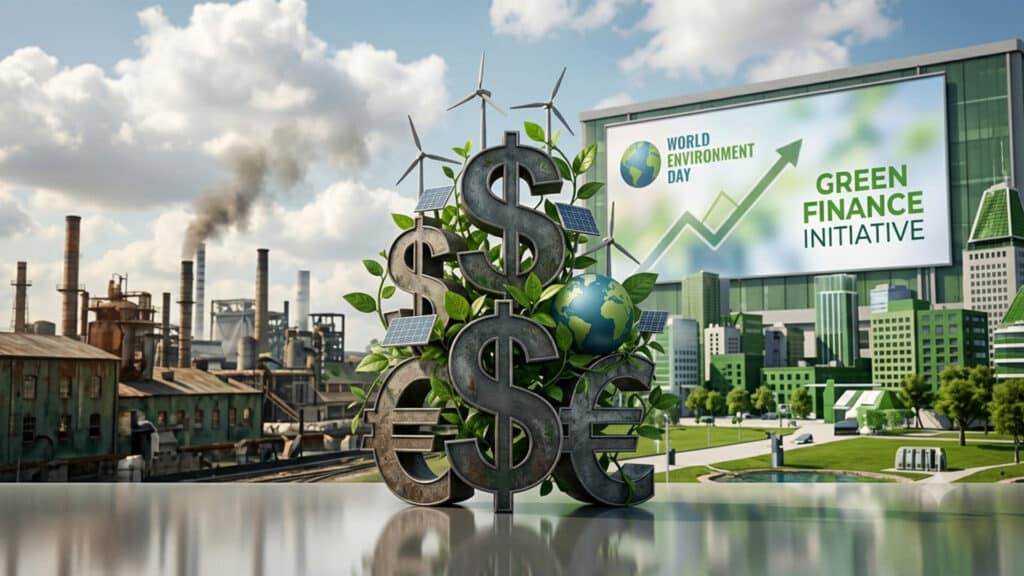
Every year on June 5, World Environment Day arrives with a familiar flurry of global campaigns, corporate press releases, and localized tree-planting drives. Historically framed around individual accountability shunning plastic straws, turning off idle taps or switching to LED bulbs the modern environmental crisis has outgrown these micro-gestures. As global temperatures edge perilously close to irreversible climate tipping points, the discourse has fundamentally shifted from individual lifestyle modifications to systemic macroeconomic restructuring.At the center of this industrial transition lies the global carbon market: a complex financial architecture designed to put a price on pollution through carbon credits and offsets. Concurrently, a new breed of climate actors has emerged ultra-high-net-worth industrialists, specifically Indian billionaires, who are aggressively positioning themselves as captains of this green transition. This World Environment Day, evaluating our ecological future requires analyzing the mechanics, pitfalls, and structural potential of carbon financing, viewed through the lens of India’s economic titans. Deconstructing the Carbon Architecture: Credits vs. Offsets To understand the financialization of environmental stewardship, one must first demystify the core instruments of the carbon market. Though frequently used interchangeably in public discourse, carbon credits and carbon offsets operate on distinct regulatory, financial, and conceptual planes. The Compliance Market (Carbon Credits) Carbon credits function under a “cap-and-trade” or emission trading system (ETS), heavily regulated by governmental or international jurisdictions. Under this regime, an absolute limit (or cap) is placed on the total volume of greenhouse gases that specific industrial sectors can emit. This cap is subdivided into tradeable permits, or carbon credits, each representing the right to emit one metric tonne of carbon dioxide equivalent.Entities that reduce their emissions below their allocated threshold can sell their surplus credits to underperforming industrial peers (Singh, 2023). Crucially, the regulatory cap decreases systematically over time, driving up the financial penalty for pollution and organically incentivizing industrial decarbonization. The Voluntary Market (Carbon Offsets) In contrast, carbon offsets populate the Voluntary Carbon Market (VCM). Offsets are project-based instruments generated by activities that either prevent carbon from entering the atmosphere (avoidance projects, such as building a solar array instead of a coal plant) or actively extract existing carbon from the air (removal projects, such as reforestation or direct air capture).Corporations, philanthropists, and individuals buy these verified emission reduction units voluntarily to counterbalance their own unavoidable carbon footprints. Here, the underlying philosophy is compensatory: an emission generated in New York or Mumbai is theoretically neutralized by a forest planted in the Western Ghats. The Credibility Crisis: The Additionality ProblemWhile the structural design of carbon financing is mathematically elegant, its execution faces a profound crisis of ecological integrity. Academic meta-analyses expose systemic flaws within the VCM, warning that the market is at a critical inflection point. Recent evaluations indicate that less than 16% of global offset credits reflect genuine, verifiable emission reductions, driven largely by overcrediting across baseline projects like traditional clean cookstoves. The structural vulnerability of the voluntary market rests on three methodological requirements: Additionality: A project is only valid if it can prove that its carbon-reducing activities would not have occurred under a business-as-usual scenario without the influx of carbon finance. If a wind farm is already financially viable and legally mandated, selling offsets from it yields zero additional benefit to the atmosphere, effectively allowing the buyer to emit more greenhouse gases without an equivalent reduction elsewhere. Permanence: Carbon sequestered via biological means (such as forestry) must remain locked away indefinitely. If an offset-funded forest burns down in a wildfire a decade later, the sequestered carbon is instantaneously re-released, nullifying the initial offset and compounding atmospheric warming. Leakage: This occurs when a conservation project protects a specific tract of forest from logging, only for the timber companies to move their operations to an adjacent, unprotected plot. The net atmospheric benefit remains zero. Because of these loopholes, critics frequently label voluntary offsets as modern-day eco-indulgences financial instruments that allow corporations to purchase a clean conscience and “Net Zero” branding while maintaining fossil-fuel-reliant operations. The Indian Dynamic: Billionaires and the Green Paradigm Shift As the world’s second-largest issuer of voluntary carbon credits, India sits at the epicenter of this environmental-financial nexus. The country faces a delicate policy dilemma: it must rapidly decarbonize to meet its international climate commitments while sustaining robust economic growth to lift millions out of poverty. Stepping into this vacuum are India’s prominent industrialists. Figures like Mukesh Ambani (Reliance Industries) and Gautam Adani (Adani Group), who built their fortunes on fossil fuels, petrochemicals, and heavy infrastructure, are orchestrating pivot strategies toward green energy. This shift reflects an intersection of corporate survival, international regulatory pressure, and green market capitalism. Reliance Industries: The Gigafactory Strategy Mukesh Ambani has committed over $75 billion to transform Reliance Industries from an oil-to-chemicals conglomerate into a green energy powerhouse. Centered around the Dhirubhai Ambani Green Energy Giga Complex in Jamnagar, Gujarat, the strategy relies on capital scale: building massive gigafactories dedicated to photovoltaic solar panels, green hydrogen, energy storage, and fuel cells. Ambani’s environmental strategy is primarily internal and compliance-driven: by aiming to achieve operational Net-Zero by 2035, Reliance seeks to eliminate its exposure to future domestic carbon regulations while lowering the carbon intensity of its export products. This shields the firm against upcoming international penalties like the European Union’s Carbon Border Adjustment Mechanism (CBAM). Adani Group: Capital Mobilization and Complex Legacies Simultaneously, Gautam Adani has pledged more than $70 billion through Adani Green Energy to construct the world’s largest renewable energy park in Khavda, Gujarat. Spanning over 500 square kilometers, this single facility is engineered to generate 30 gigawatts of wind and solar power. Yet, this massive buildout highlights the contradictions of private-sector-led environmentalism. Even as Adani builds out ultra-scale solar installations, the conglomerate concurrently manages extensive thermal power infrastructures and heavy fossil fuel investments, such as the highly contested Carmichael coal mine project in Australia. This coexistence of green and brown capital underscores a broader structural reality: private titans often operate on diverse financial horizons, utilizing highly profitable fossil fuel portfolios to generate the liquidity required to capture