
Zojila Tunnel achieves 13.15 km highest bi-directional road tunnel
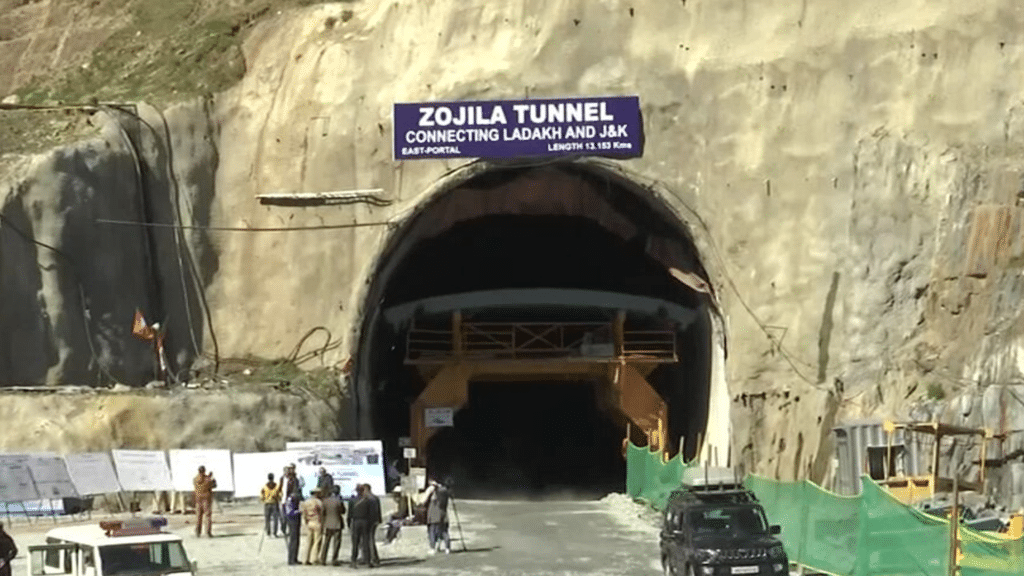
The Zojila Tunnel project has reached a major milestone with the successful breakthrough of a 13.15-kilometre section of the tunnel. The achievement brings India closer to completing the ambitious project, which is set to become the world’s longest single-tube bi-directional road tunnel at the highest altitude. The breakthrough marks a significant step toward ensuring seamless, year-round connectivity between the Kashmir Valley and the Ladakh region. Currently, the Zojila Pass remains closed for several months each year due to heavy snowfall and harsh weather conditions, often disrupting travel and transportation. Once operational, the tunnel will provide an all-weather route, allowing uninterrupted movement between the two regions. The project is expected to substantially reduce travel time, improve road safety, and enhance the movement of people, goods, and essential services. It forms a key part of India’s broader effort to strengthen infrastructure and connectivity in the Himalayan region. Officials have hailed the breakthrough as a landmark engineering achievement, reflecting the scale and complexity of the project. Upon completion, the tunnel is expected to boost tourism, support trade and economic activity, and contribute to the overall development of Ladakh and surrounding areas. It will also play a crucial role in improving accessibility and quality of life for residents while strengthening strategic connectivity in the region.
The Undying Flame of Bhagwan Birsa Munda
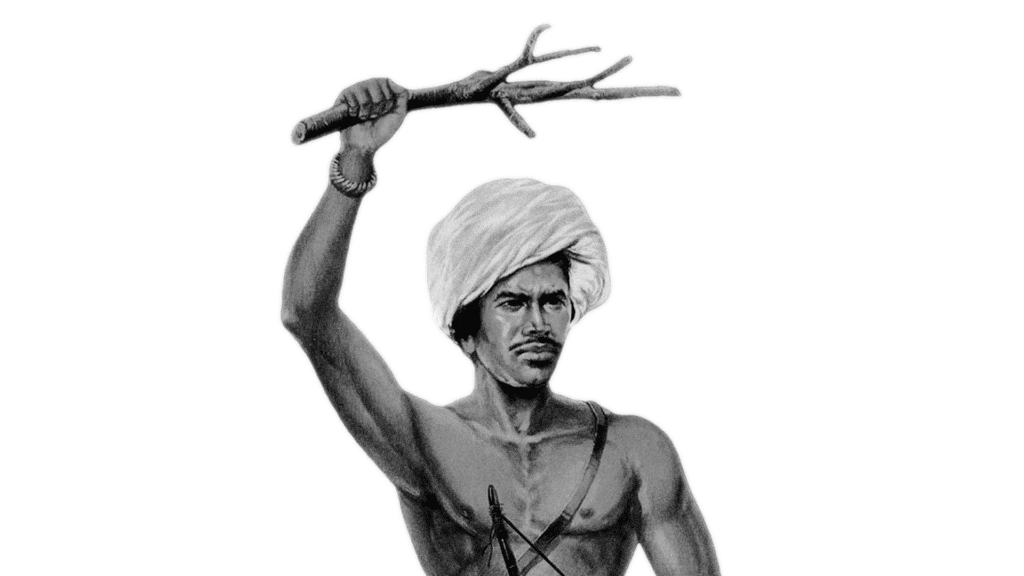
In the grand tapestry of India’s freedom struggle and the fierce resistance movements that rose against foreign exploitation, Bhagwan Birsa Munda stands out as an exceptionally luminous star. Within a short, meteoric lifespan of just twenty-five years, this young tribal youth shook the very foundations of the global British Empire. Yet, reducing his memory to that of a conventional armed revolutionary does an injustice to his expansive legacy. He was simultaneously a visionary social reformer, a radical spiritual guru, an organic intellectual, and the ultimate savior of his people’s ancestral culture. Spanning from the deep, whispering sal forests of Chotanagpur to the high-arched Central Hall of the Indian Parliament, his glorious saga remains a thrilling, emotionally charged epic of defiance that continues to challenge modern ideas of rebellion, faith, and indigenous sovereignty. Birth, Childhood, and the Imperial Threat to Identity The story begins on November 15, 1875, in a small, remote hamlet named Ulihatu, nestled in the present-day Khunti district of Jharkhand. Born to Sugana Munda, a poor agricultural laborer, and his resilient wife Karmi Hatu, the infant was welcomed into a world already fractured by colonial greed. According to an ancient, beautiful tradition of the Munda tribe, a child is intricately bound to time at birth; they are named after the specific day of the week on which they enter the world. Because his first breath occurred on a Thursday—known as Birspatibar in the local dialect—the boy was given the name Birsa. Due to the crushing economic hardships facing his immediate family, the young boy was soon sent to live with his maternal uncle at Ayubhatu, a move that exposed him to different landscapes but the same underlying tribal suffering.Birsa’s early childhood was defined by a delicate balance between absolute material poverty and a rich, immersive natural freedom. Growing up in the boundless territory of the wilderness, he spent his days grazing sheep, untamed and deeply attuned to the rhythms of the earth. He possessed a sharp, inquisitive mind and discovered a profound love for music, becoming an exceptionally skilled player of the tuila (a traditional one-stringed instrument) and the bamboo flute. His melodies would echo through the forest clearings, capturing the attention of elders and peers alike. However, this idyllic pastoral life could not remain insulated from the dark, expansive shadows of historical forces.At that exact historical juncture, a dual mechanism of subjugation was sweeping across the entire Chotanagpur region: the aggressive, legalistic expansion of the British government and the highly organized, heavily funded network of foreign Christian missionaries. The British authorities sought to completely dismantle the indigenous way of life to extract timber and revenue, while the missionaries viewed the economic vulnerability of the tribes as prime soil for mass spiritual conversion. Converting impoverished tribal families by alluring them with the promises of modern education, institutional protection, and basic healthcare had become a highly efficient, regular occurrence that threatened to erase centuries of cultural continuity in a single generation.Recognizing the young boy’s rare, luminous intelligence, Birsa’s family and well-wishers realized he needed formal schooling. He was eventually enrolled at a reputable German Mission School located in the bustling town of Chaibasa. However, this access to literacy came with a devastating cultural price tag—a strict institutional condition that required his complete renunciation of his ancestral faith and mandatory conversion to Christianity. Consequently, the young tribal boy was forced to alter his spiritual identity, and he was registered under the new, Westernized moniker of ‘Birsa David’.It was during his formative years within the rigid walls of this mission school that Birsa’s intense, unyielding sense of self-respect was fully awakened. As he mastered the tools of reading and writing, he also began to critically analyze his surroundings. He listened with growing anger as the foreign missionaries routinely used their pulpits to fiercely, bitterly criticize Jharkhand’s traditional tribal customs, mocking their ancient religious rites and systemic social structures as primitive, demonic, and uncivilized.This overt colonial mindset, clashing violently with his deep, unsevered love for his ancestral roots, triggered a profound, agonizing mental conflict within the young student. He saw through the philanthropic facade, realizing with absolute clarity that under the guise of providing modern education, a systematic geopolitical conspiracy was being hatched to alienate indigenous youths from their own heritage, thereby breaking their psychological will to resist land theft.The turning point arrived when Birsa boldly and publicly challenged a missionary teacher who had insulted the Munda community. This act of defiance led to his immediate expulsion from the school. Without a shred of regret, the young man permanently renounced Christianity, cast away the alien name ‘David’, and walked back out into the forests, fully committed to returning to the pure, unadulterated religion and culture of his proud ancestors. This decisive rupture altered the entire course of his life and molded a brilliant student into an uncompromising, deeply conscious freedom fighter. The Rise of the ‘Birsaight’ Faith and Social Renaissance By the year 1895, at the exceptionally young age of just twenty, Birsa Munda realized that a physical war against an armed colonial occupier could never succeed if the native society remained fractured, demoralized, and weakened from within. He understood that political liberation is entirely dependent upon a foundational psychological and spiritual renaissance. To combat the dual threats of cultural erasure by missionaries and economic destruction by landlords, he initiated an unprecedented, highly radical spiritual revolution. He synthesized his deep understanding of traditional Munda cosmology with his observations of external faiths to birth a dynamic new religious sect, which his followers proudly named the ‘Birsaight’ faith.The core tenets of this new spiritual path were remarkably progressive, fiercely independent, and deliberately designed to dismantle both internal social decay and external manipulation: The Radical Shift to Monotheism: Birsa forcefully ordered a complete departure from complicated polytheistic rituals, expensive animal sacrifices, and the paralyzing fear of malevolent spirits. Instead, he urged his people to direct their collective consciousness toward a single, omnipotent creator: Singbonga, the supreme deity historically symbolized by the life-giving Sun. This
Liton Das slams Muhammad Yunus for not allowing them to play T20 WC in India

Bangladesh T20 captain Litton Das has publicly criticized interim leader Muhammad Yunus and the decision-makers behind Bangladesh’s withdrawal from the 2026 ICC Men’s T20 World Cup matches in India, rejecting claims that security concerns justified the move. Das stated that players had previously toured Pakistan under extremely tight security arrangements and suggested that safety was being used as an excuse rather than a genuine reason for pulling out of the tournament. His remarks have reignited debate over Bangladesh’s controversial exit from the World Cup. Earlier this year, the Bangladesh Cricket Board declined to send the team to India for its scheduled fixtures, citing security concerns and requesting that its matches be shifted to Sri Lanka. The International Cricket Council rejected the request, maintaining that there was no overall threat to the team and eventually replaced Bangladesh with Scotland national cricket team after the board failed to confirm participation. Das has also disputed claims that the players jointly supported the withdrawal, insisting that the squad was not given a meaningful choice in the matter. His comments have intensified scrutiny of the decision, which resulted in Bangladesh missing its first T20 World Cup after qualifying for the tournament. The controversy continues to cast a shadow over Bangladesh cricket, with questions persisting over whether political considerations, rather than player welfare, ultimately drove the decision to forgo participation in one of the sport’s biggest events.