
South Africa’s The Star sends hidden menstruation message
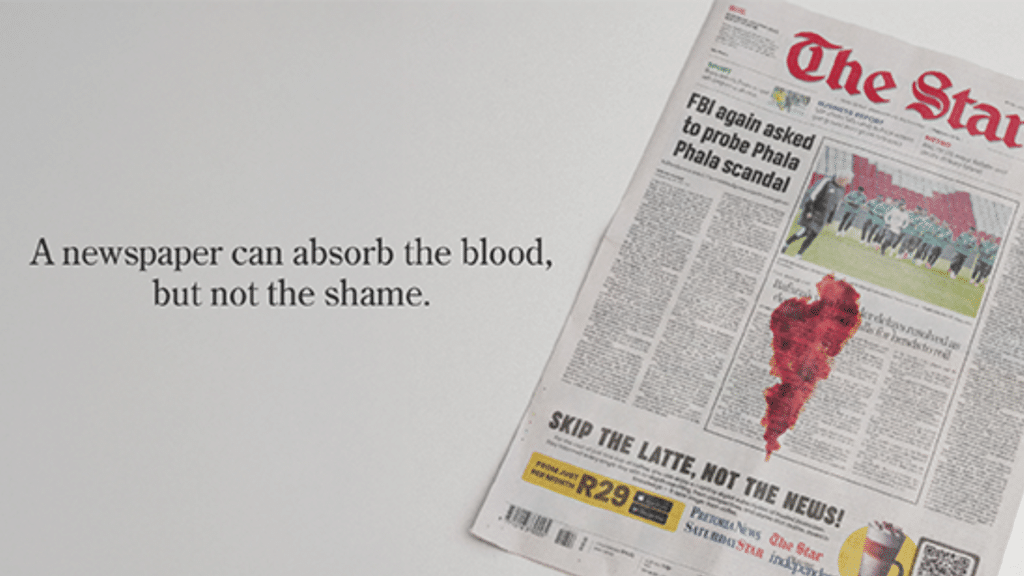
South African newspaper The Star has attracted international attention with a bold awareness campaign that featured what appeared to be menstrual blood stains on its front page. Many readers initially believed the marks were a printing error, but they were deliberately included as part of the newspaper’s “Period Paper” campaign aimed at challenging stigma around menstruation and highlighting period poverty. The campaign was developed in partnership with the Menstruation Foundation and advertising agency Joe Public. Through the initiative, the organizations sought to shed light on the struggles faced by girls and women who lack access to essential menstrual hygiene products. Similar blood-stain designs also appeared in related publications, including The Mercury and Cape Times, creating the impression that blood had seeped through the pages. At the heart of the campaign was a message intended to spark conversation about the shame and stigma often associated with menstruation. Organizers emphasized that while a newspaper can absorb blood, it cannot erase the social taboos and embarrassment many people continue to face when discussing periods. The campaign also focused on raising awareness about period poverty, a problem that forces some girls to rely on makeshift alternatives such as newspapers, cloths, or rags during menstruation because they cannot afford sanitary products. While many praised the campaign for drawing attention to an important issue, others criticized it for using imagery they considered too graphic. Despite the mixed reactions, the initiative succeeded in generating widespread discussion about menstrual health, access to hygiene products, and the importance of ensuring dignity and support for those affected by period poverty.
Centre approves ₹13,000 crore greenfield airport at Great Nicobar Island

The Centre has approved a ₹13,000 crore investment for the construction of a greenfield airport at Great Nicobar Island, marking a significant step in India’s efforts to strengthen infrastructure and strategic capabilities in the Indo-Pacific region. The airport will be developed as a dual-use facility, catering to both civilian and military operations under the broader Great Nicobar development project. Officials said the project is aimed at enhancing regional connectivity, supporting economic growth and reinforcing India’s strategic presence in a geopolitically important maritime zone. The proposed airport is expected to be completed within the next five years. Once operational, it will improve access to the remote island territory, facilitate tourism and trade, and provide critical support for disaster relief and emergency response operations in the region. Given Great Nicobar’s location near key international shipping routes, the airport is also expected to strengthen India’s defence preparedness and surveillance capabilities in the Indian Ocean Region. The project forms part of a larger plan to transform Great Nicobar into a major hub for infrastructure, logistics and maritime activities. The development is seen as a key component of India’s long-term vision to improve connectivity in the Andaman and Nicobar archipelago while advancing strategic and economic interests in the Indo-Pacific.
First made-in-India C-295 aircraft completes maiden test flight
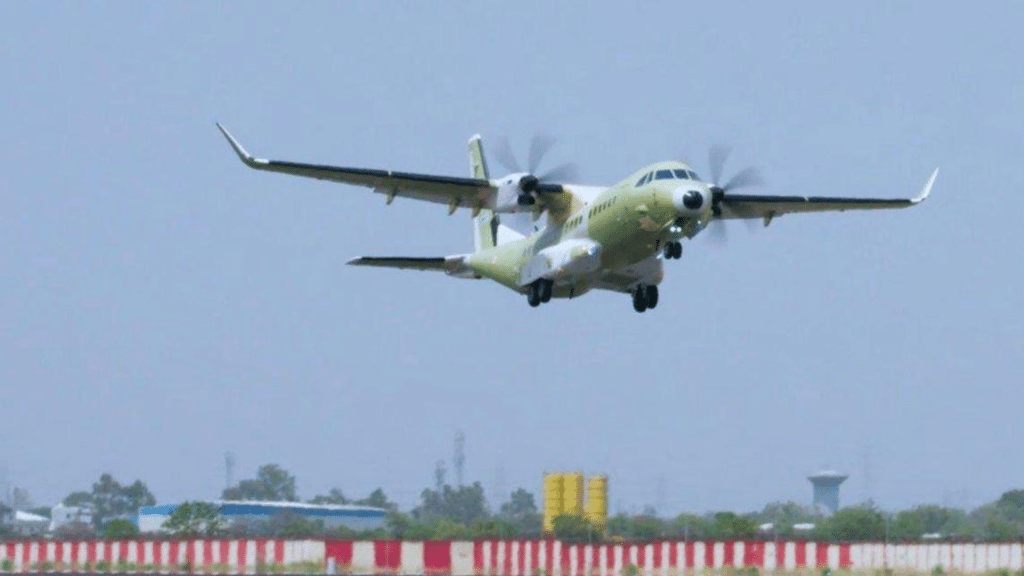
India’s first Made-in-India C-295 military transport aircraft has successfully completed its maiden test flight, marking a major milestone for the country’s defence manufacturing sector and the government’s Make in India initiative. The aircraft took off from the Tata-Airbus Final Assembly Line facility in Vadodara, Gujarat, where it was manufactured through a partnership between Tata Advanced Systems and Airbus. The successful test flight highlights India’s growing capabilities in aerospace and defence production. The C-295 programme is intended to replace the Indian Air Force’s ageing Avro transport fleet. Under the agreement, India will acquire 56 aircraft. The first 16 are being delivered in fly-away condition from Spain, while the remaining 40 are being manufactured at the Vadodara facility. Officials have hailed the maiden flight as a significant step towards achieving greater self-reliance in defence production. The project is expected to strengthen India’s aerospace ecosystem, generate employment opportunities, and boost the participation of domestic suppliers and manufacturers. The C-295 is a versatile military transport aircraft capable of carrying troops, equipment, and cargo, as well as supporting humanitarian and disaster-relief operations. Its induction into the Indian Air Force is expected to enhance the country’s airlift capabilities and operational readiness.
Shakira lights up Mexico City at FIFA World Cup 2026

The FIFA World Cup 2026 officially kicked off on June 11 with a spectacular opening ceremony in Mexico City, featuring fireworks, massive card stunts, and vibrant cultural performances that celebrated both football and Mexican heritage. Global music star Shakira headlined the event with a performance of the tournament’s anthem, “Dai Dai,” while Burna Boy added to the excitement with his appearance during the ceremony. The stadium was transformed into a colorful spectacle, blending music, dance, and visual effects to mark the beginning of football’s biggest tournament. Thousands of fans inside the venue joined the celebrations, while millions more watched from around the world. Fireworks illuminated the night sky as performers showcased cultural elements reflecting Mexico’s rich traditions. Large-scale card stunts and carefully choreographed displays captivated the audience ahead of the tournament’s opening match. The grand ceremony set the stage for a month-long football festival, with teams from across the globe competing for the sport’s most prestigious trophy. Fans worldwide are eagerly anticipating the action as the FIFA World Cup 2026 gets underway.
Modi slams Cong over ‘Hindu rate of growth’ remark
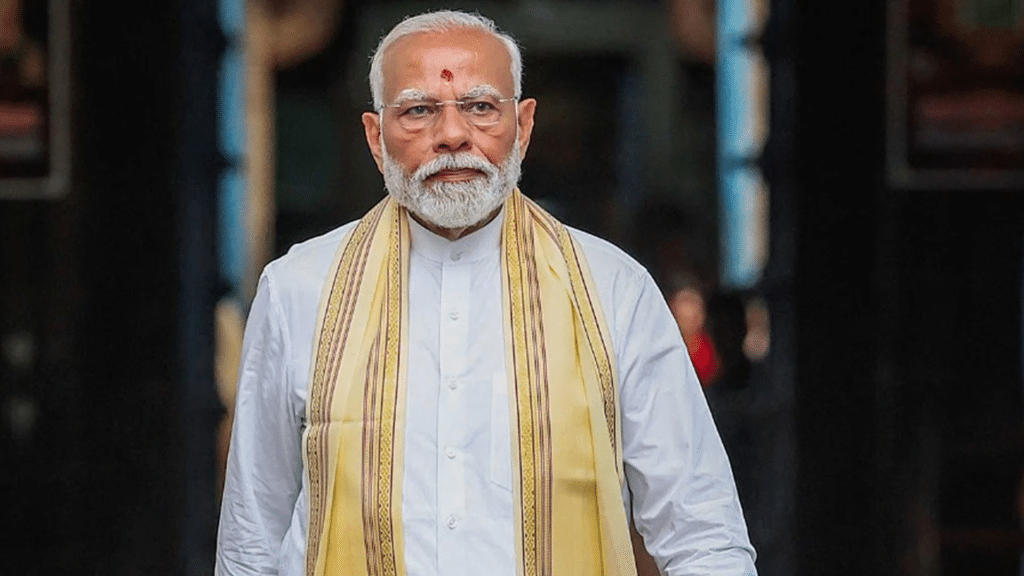
Prime Minister Narendra Modi on Wednesday criticized the term “Hindu rate of growth,” arguing that it unfairly associated India’s sluggish economic performance in the decades after Independence with Hinduism. Speaking at an event, he said the phrase was an insult to Hindus and suggested that it should instead be referred to as the “Congress growth rate,” holding the Congress party responsible for the country’s economic policies and growth trajectory during that period. The term “Hindu rate of growth” was coined by economists to describe India’s relatively low annual economic growth, particularly between the 1950s and 1980s. Over the years, the phrase has sparked debate, with critics arguing that it wrongly links economic outcomes to a religion rather than to policy decisions and governance. Modi said the term reflected what he described as the Congress party’s mindset and accused it of disrespecting Hindu traditions and culture. He maintained that the economic challenges of that era were the result of policy choices and administrative failures, not Hindu beliefs or values. The remarks come amid ongoing political sparring between the BJP and the Congress over issues ranging from history and governance to economic policy. The Congress party had not responded to Modi’s comments at the time of writing.