
“No European country has been attacked with Indian weapons”: Jaishankar
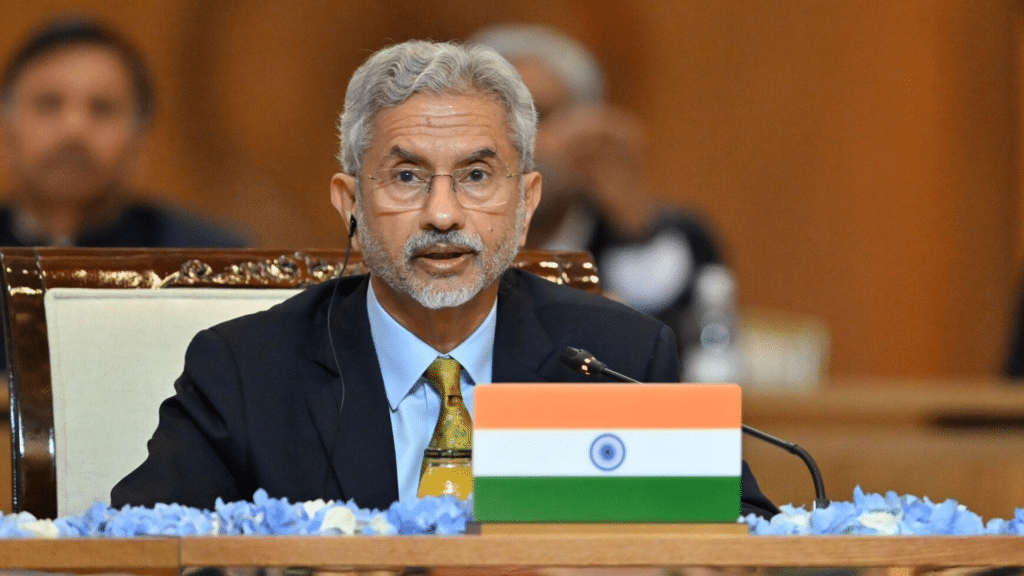
India’s External Affairs Minister S. Jaishankar strongly defended the country’s oil import policy, delivering a sharp response to criticism over New Delhi’s continued energy ties with Moscow. He stressed that India’s decisions are guided by national interests and energy security requirements rather than external pressure. Highlighting India’s responsible approach to defense exports, Jaishankar noted that no European nation has ever been attacked using Indian-made weapons. His remarks appeared to draw a contrast with countries that have supplied arms or military assistance to states perceived as hostile to India’s interests. India has consistently maintained that securing affordable and reliable energy supplies remains a key priority for its economy and population. Since the outbreak of the Russia-Ukraine conflict, New Delhi has faced scrutiny from several Western countries over its purchases of discounted Russian crude oil. Indian officials, however, have repeatedly pointed out that many European nations continued various forms of trade with Russia during the conflict. Jaishankar’s comments also reflected India’s long-standing policy of strategic autonomy, under which the country seeks to maintain balanced relations with major global powers while pursuing its own national priorities. The government has reiterated that its foreign policy and economic decisions are based on India’s interests rather than external expectations. The remarks have renewed discussions on global energy security, defense exports, and the standards applied to emerging powers such as India in an increasingly complex geopolitical landscape.
“Fakeness won’t work anymore”: Shahid Kapoor’s apparent swipe at Anupama Chopra

Bollywood actor Shahid Kapoor has reignited conversations around authenticity, public relations, and industry narratives after making candid remarks about the growing importance of being genuine in the social media age. Speaking during an interview with Anupama Chopra for The Hollywood Reporter India, Kapoor said that audiences today can easily identify “fakeness,” insecurity, and manufactured success stories, arguing that carefully curated images no longer resonate with viewers. The actor emphasized that celebrities should focus on being authentic rather than projecting a polished or artificial persona. His comments come at a time when Bollywood is witnessing intense debates over image management, social media narratives, and the influence of public relations campaigns on audience perception. Many observers have interpreted Kapoor’s remarks as a subtle response to Chopra’s recent assertion that the online backlash against actress Alia Bhatt was part of a “paid negativity campaign.” Chopra had raised concerns about the scale of trolling directed at Bhatt following her Cannes appearance and the promotional buzz surrounding her upcoming projects, suggesting that some of the criticism appeared orchestrated. While Kapoor did not directly mention Chopra or Bhatt, his insistence that audiences can now see through “manufactured” narratives has fueled speculation across social media and entertainment circles. The comments have once again brought industry favoritism, celebrity PR strategies, and the authenticity of online discourse into the spotlight, with fans and critics divided over whether Kapoor was making a broader observation about Bollywood or subtly challenging recent claims about coordinated negativity campaigns. As discussions continue to trend online, Kapoor’s remarks have added another layer to the ongoing debate over how stars, critics, and audiences navigate influence, perception, and credibility in the digital era.
Kane Williamson announces retirement from international cricket

New Zealand cricket legend Kane Williamson has announced his retirement from international cricket, bringing the curtain down on a remarkable 16-year career that cemented his place among the country’s greatest players. Williamson confirmed his decision on Thursday, saying he was grateful to leave the international game on his own terms after years of representing New Zealand across all three formats. The veteran batter made his international debut in 2010 and quickly established himself as a key figure in New Zealand’s batting lineup. Over the course of his career, he amassed runs consistently in Tests, One-Day Internationals, and T20 Internationals, becoming New Zealand’s highest run-scorer in international cricket. As captain, Williamson guided the Black Caps through one of the most successful eras in the team’s history. Under his leadership, New Zealand reached several major ICC tournament finals, including the 2019 Cricket World Cup final. One of the defining achievements of his captaincy came in 2021 when he led New Zealand to its first major ICC title by defeating India in the ICC World Test Championship Final 2021. Widely admired for his calm demeanor, sportsmanship, and consistency with the bat, Williamson earned respect from teammates, opponents, and cricket fans around the world. Reflecting on his career, Williamson thanked his family, teammates, coaches, and supporters, describing the opportunity to represent New Zealand as the greatest privilege of his life. His retirement marks the end of an era for New Zealand cricket, with Williamson leaving behind a legacy that will be remembered as one of the finest in the nation’s sporting history.
Raghava Lawrence confirms entry into politics
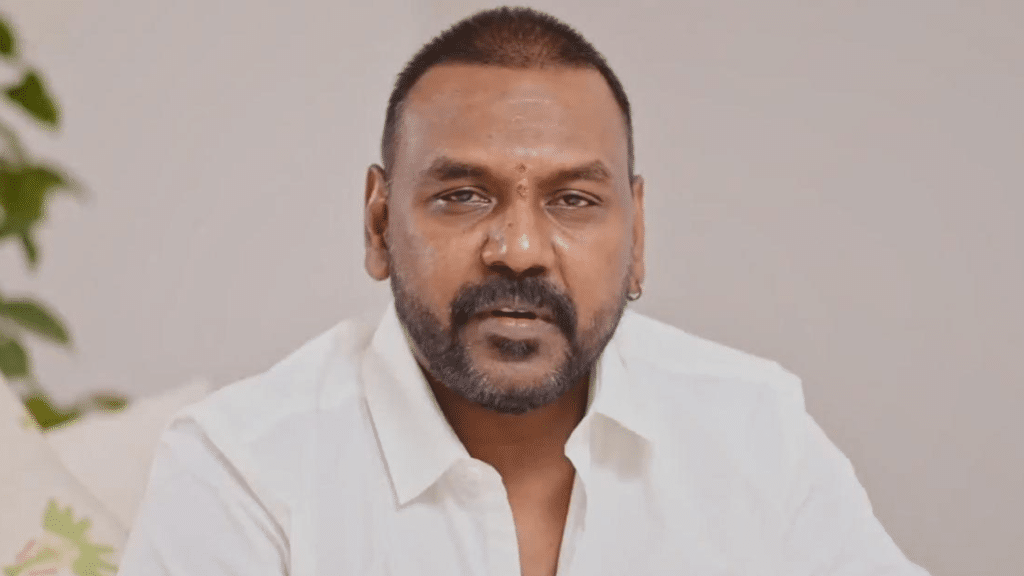
Actor, choreographer and filmmaker Raghava Lawrence has officially announced his entry into politics, bringing an end to speculation about his future plans. Sharing a statement on social media, Lawrence described the move as a significant turning point in his life and said that changing circumstances had led him to take this decision. Lawrence stated that he had never imagined entering politics and was never driven by ambitions of power, wealth, or political office. Instead, he said his primary focus had always been on serving society and supporting leaders who he believed could bring positive change. However, recent developments prompted him to take a more direct role in public life through politics. As he begins this new chapter, Lawrence has sought the guidance and support of the public. In a video message, he spoke about his views on politics, the lessons he has learned through his social service activities, and the experiences that influenced his decision. He emphasized that his goal is to contribute to society on a larger scale and work towards meaningful change. His announcement comes amid growing discussions about his potential role in Tamil Nadu politics. While there has been speculation about which political party he may join, Lawrence has not yet revealed any political affiliation. Widely known for his achievements in cinema as an actor, dancer, choreographer, and filmmaker, Lawrence has also earned recognition for his philanthropic work and community initiatives. His entry into politics has generated considerable interest among fans and political observers, who are keen to see how he navigates his new role in public life.
“AFSPA to be lifted from entire northeast”: Amit Shah
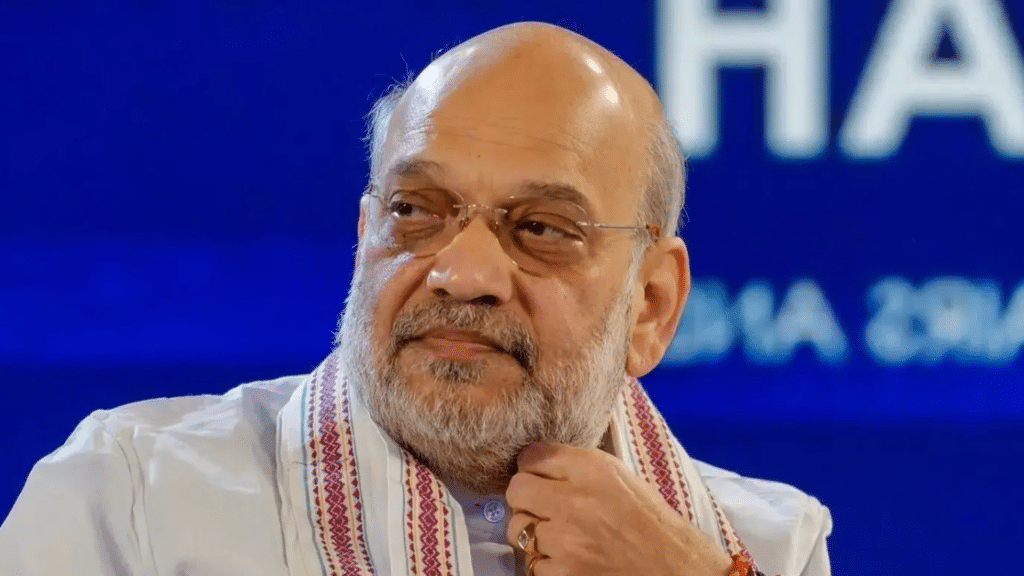
Union Home Minister Amit Shah has said that the Armed Forces (Special Powers) Act (AFSPA) is likely to be withdrawn from most of the Northeast by next year, with only one or two states expected to remain under its provisions. His remarks come as the Centre points to significant improvements in the region’s security situation and the success of ongoing peace initiatives. Speaking about the government’s efforts in the Northeast, Shah highlighted the sharp decline in insurgency-related violence and the progress made through peace accords signed with various groups in recent years. He said the gradual rollback of AFSPA from several areas reflects increasing stability, economic development, and a return to normalcy across the region. According to Shah, the government’s emphasis on dialogue, infrastructure development, and coordinated security measures has created conditions that support the phased withdrawal of the law. He also expressed confidence that security conditions will continue to improve in the remaining AFSPA-covered areas, making further relaxations possible in the future. AFSPA grants special powers to the armed forces in regions designated as “disturbed areas,” including the authority to conduct searches, make arrests without warrants, and use force under specific circumstances. While supporters argue that the law is essential for tackling insurgency and maintaining order, critics have long called for its repeal, citing concerns over human rights and accountability. In recent years, the Centre has reduced the extent of AFSPA in several northeastern states, including parts of Assam, Nagaland, Manipur, and Arunachal Pradesh, following assessments of the evolving security landscape. Shah’s comments underscore the government’s optimism about the Northeast’s future and its belief that sustained peace and development are taking root across much of the region. If the plan materialises, it would mark one of the most significant reductions in AFSPA’s footprint in the Northeast since the legislation was first introduced decades ago.
Anne Frank: History Through a Young Girl’s Eyes
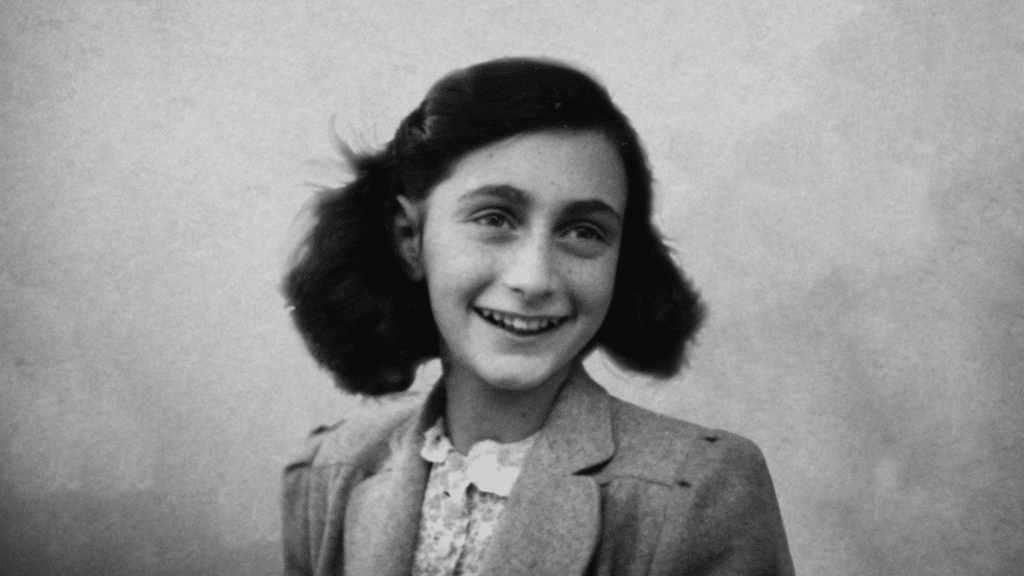
More than eighty years after her death, Anne Frank remains one of the most powerful voices of the twentieth century. Through a diary written while hiding from Nazi persecution, she transformed one of history’s greatest tragedies into a deeply human story that continues to educate, inspire and challenge readers around the world. A Birthday Gift That Changed History On 12 June 1942, a thirteen-year-old Jewish girl received a red-and-white checkered diary as a birthday present. At first glance, it seemed like an ordinary gift. Teenagers around the world had long used diaries to record their thoughts, dreams, friendships and frustrations. There was little reason to believe that this particular notebook would one day become one of the most influential books in modern history. The young girl was Anne Frank. Today, Anne Frank’s name is recognized across continents. Her diary has been translated into dozens of languages, adapted into films and stage productions and taught in classrooms around the world. For many people, her story serves as their first introduction to the Holocaust. Yet Anne Frank’s legacy is not simply that of a victim. She remains important because she transformed a vast historical tragedy into a deeply personal narrative. Through her writing, readers encounter not statistics or military campaigns but the hopes, fears and experiences of a single young girl living through one of humanity’s darkest chapters. Her diary reminds us that behind every historical catastrophe are ordinary people whose lives are forever altered by extraordinary events. Growing Up in the Shadow of Nazism Annelies Marie Frank was born on 12 June 1929 in Frankfurt, Germany, to Otto and Edith Frank. Her early childhood coincided with a period of significant political and economic turmoil. Germany was still struggling with the aftermath of the First World War. Economic instability, social unrest and political polarization created an atmosphere in which extremist ideologies flourished. One of the movements that gained momentum during this period was Adolf Hitler’s Nazi Party. Promising national renewal and economic recovery, the Nazis steadily expanded their influence. When Hitler became Chancellor in 1933, the situation for German Jews deteriorated rapidly. The Nazi regime implemented a series of discriminatory laws designed to isolate Jewish citizens from public life. Jewish professionals lost jobs, businesses faced restrictions and social discrimination became increasingly common. The Frank family quickly realised that remaining in Germany posed serious risks. Like many Jewish families, they sought safety elsewhere. Otto Frank relocated his family to Amsterdam in the Netherlands, hoping to escape the growing anti-Semitism in Germany. For several years, life improved. Anne attended school, made friends and adapted well to her new surroundings. She was energetic, intelligent and outgoing. Teachers remembered her as a talkative student with a lively personality and a strong sense of curiosity. For a time, it seemed that the Franks had found refuge. History, however, had other plans. The Nazi Occupation of the Netherlands In May 1940, German forces invaded the Netherlands. The Dutch military was quickly overwhelmed and the country fell under Nazi occupation. The safety the Frank family had sought vanished almost overnight. At first, the changes appeared gradual. New regulations restricted Jewish participation in public life. Jewish citizens were required to register with authorities. Businesses changed ownership. Public spaces became increasingly segregated. Over time, the restrictions intensified. Jewish children were forced to attend separate schools. Jews were prohibited from visiting parks, cinemas and other public venues. Curfews limited movement. The wearing of the yellow Star of David became compulsory. Everyday life became a constant reminder of exclusion. For Anne, these changes were deeply personal. Activities she once enjoyed became inaccessible. Friendships became more difficult to maintain. Opportunities disappeared. The gradual nature of these restrictions is one of the most important lessons of Anne’s story. The Holocaust did not begin with concentration camps. It began with discrimination, isolation and the systematic removal of rights. Anne witnessed these changes firsthand. By 1942, the threat facing Dutch Jews had become impossible to ignore. Into Hiding: Life Inside the Secret Annex The turning point came in July 1942 when Anne’s older sister, Margot, received a summons ordering her to report for deportation. The Frank family understood what this likely meant. Rather than comply, they disappeared. Their hiding place was located behind Otto Frank’s business premises in Amsterdam. Hidden behind a movable bookcase, the concealed rooms would later become famous as the Secret Annex. Life inside the Annex was difficult. The space was small, crowded and isolated. Anne lived there with her parents and sister, alongside Hermann and Auguste van Pels, their son Peter, and later a dentist named Fritz Pfeffer. Silence became a matter of survival. During business hours, the occupants had to move carefully and avoid making noise. Workers in the building below could unknowingly expose them. Even routine activities carried risks. The residents depended entirely on a small group of Dutch helpers who supplied food, books, news and other necessities. These individuals risked their own lives to protect those in hiding. Fear was a constant presence. Every unexpected sound could signal discovery. Every siren could indicate danger. Yet life continued. The residents celebrated birthdays, shared meals, discussed current events and occasionally argued over trivial matters. Within the confines of the Annex, ordinary human relationships persisted despite extraordinary circumstances. Writing in the Dark It was during this period that Anne began keeping her diary. Addressing it as “Kitty,” she treated the diary like a trusted friend. It became a space where she could express thoughts she felt unable to share with others. Anne wrote about family tensions, loneliness, aspirations and fears. She described life in hiding with remarkable honesty and insight. Her entries reveal a young person attempting to understand both herself and the world around her. One of the most striking aspects of Anne’s writing is its maturity. Although she began the diary at thirteen, her observations often display wisdom beyond her years. She reflected on human nature, morality, identity and the effects of war. As time passed, her writing became increasingly
South Korea stage comeback to seal 2-1 win over Czechia

South Korea began their FIFA World Cup 2026 campaign on a positive note, coming from behind to defeat Czechia 2-1 in their Group A encounter in Guadalajara. After trailing at halftime, the Taegeuk Warriors produced a spirited second-half display to turn the match in their favour and collect all three points from their opening fixture of the tournament. Czechia took the lead in the first half and appeared to be in control, but South Korea responded strongly after the break. Midfielder Hwang In-Beom inspired the comeback by scoring the equaliser before setting up Oh Hyeon-Gyu for the decisive goal. South Korea dominated much of the second half and defended resolutely to prevent Czechia from finding a way back into the contest. The victory provides an important early boost for South Korea in Group A and underlines the team’s resilience under pressure. Hwang In-Beom’s influential performance and Oh Hyeon-Gyu’s match-winning strike will give the side plenty of confidence as they prepare for their upcoming World Cup fixtures. With momentum on their side, South Korea will be aiming to build on this strong start and strengthen their position in the group.
Mexico kick off World Cup 2026 with 2-0 victory over South Africa

Mexico made an impressive start to their FIFA World Cup 2026 campaign with a 2-0 victory over South Africa in their Group A opener at the iconic Estadio Azteca. Backed by a passionate home crowd, the co-hosts took the lead early when Julián Quiñones capitalised on a defensive mistake to score in the ninth minute. Mexico remained in control throughout the match and extended their advantage in the second half, with veteran striker Raúl Jiménez heading home to secure the win. The encounter was also marked by disciplinary issues, with three players shown red cards. South Africa were reduced to nine men after Sphephelo Sithole and Themba Zwane were sent off, while Mexico’s César Montes received a late red card in stoppage time. Despite the heated nature of the contest, Mexico maintained their composure and comfortably saw out the victory. The result gave Javier Aguirre’s side a perfect start to the tournament, earning three valuable points and boosting confidence ahead of their upcoming fixtures.