
“Earlier 70% drugs came from Pak, now 70% comes from Gujarat”: Arvind Kejriwal
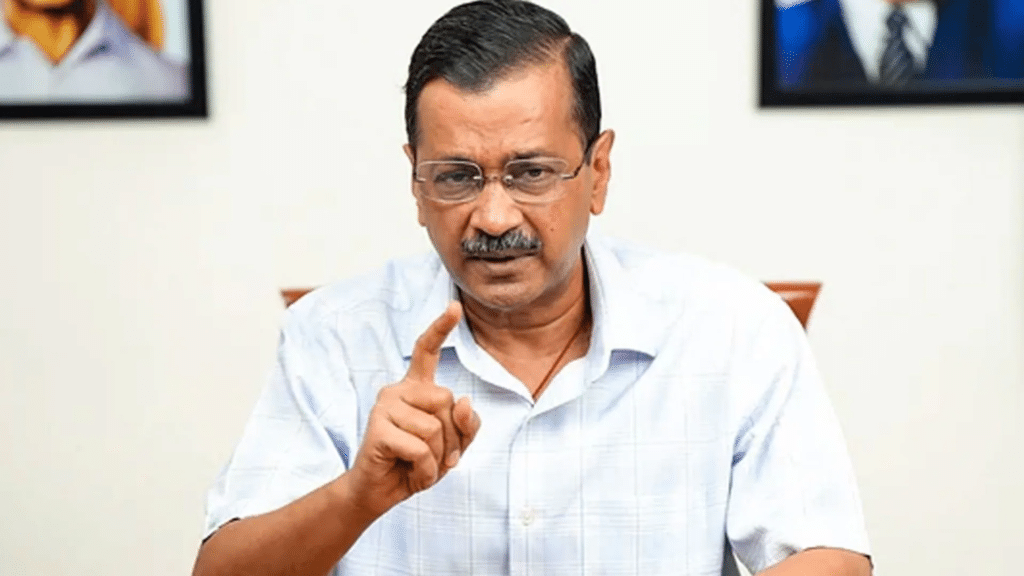
Aam Aadmi Party (AAP) national convenor and former Delhi Chief Minister Arvind Kejriwal claimed that the primary route through which drugs enter Punjab has changed over the years, alleging that narcotics are now being routed through Gujarat rather than across the border from Pakistan. Speaking at a traders’ rally in Jalandhar, Kejriwal said that while a majority of drugs previously entered Punjab from Pakistan, the situation has now shifted significantly. He alleged that Gujarat has become the main gateway for drug trafficking and accused the Bharatiya Janata Party (BJP) of failing to effectively tackle the issue. During his address, Kejriwal also targeted the BJP over its handling of crime and law enforcement. Referring to jailed gangster Lawrence Bishnoi, he controversially described him as the BJP’s “damaad” (son-in-law), implying that the party has been overly lenient toward individuals linked to criminal networks. The AAP leader further argued that the central government has not taken adequate steps to curb drug smuggling and claimed that the narcotics problem continues to pose a serious challenge for Punjab. He called for stronger measures against trafficking syndicates and those involved in the illegal drug trade. Kejriwal’s remarks come amid continued political debate over drug trafficking and law-and-order concerns in Punjab, with rival parties frequently accusing each other of failing to address the issue. At the time of his comments, there was no immediate response from the BJP to the allegations made during the rally. His statements are expected to add to the political contestation surrounding drugs and public safety ahead of upcoming elections, where the issue is likely to remain a major point of discussion among political parties and voters alike.
“India’s history is defined by resistance to enslavers”: RSS Chief Mohan Bhagwat
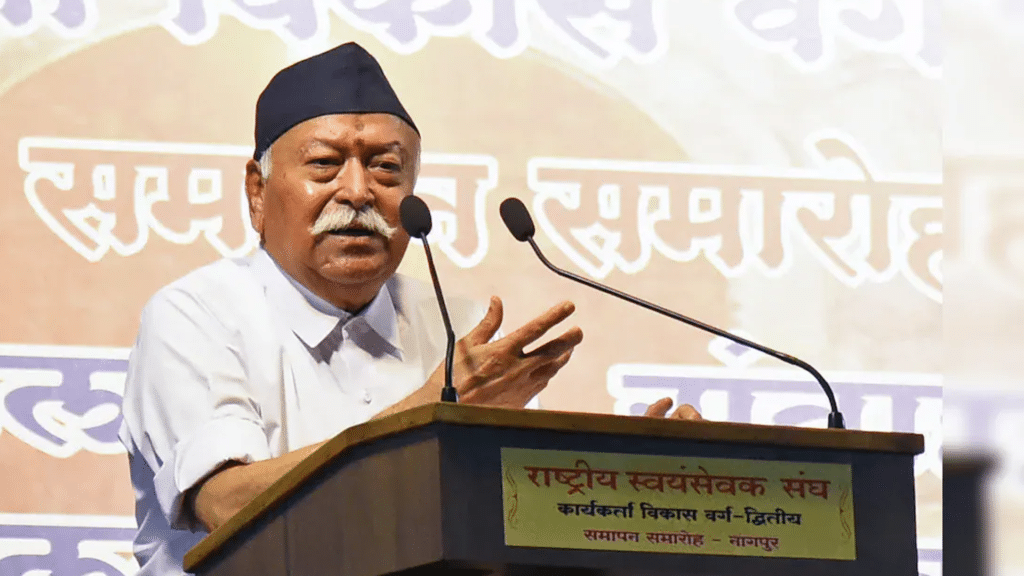
Rashtriya Swayamsevak Sangh (RSS) chief Mohan Bhagwat said that India’s history should be viewed as a history of continuous resistance against those who sought to subjugate the country, rather than as a history of slavery. He made the remarks while addressing events in Udaipur marking the 450th anniversary of the Battle of Haldighati. Bhagwat stated that although India experienced repeated invasions and periods of foreign rule, its people consistently resisted attempts to dominate them. According to him, the nation’s historical journey is characterized by resilience, courage and a determination to preserve its cultural identity and civilizational values. Emphasizing his view of Indian history, Bhagwat argued that it should not be remembered primarily as a story of subjugation. Instead, he said it reflects centuries of struggle by individuals and communities who worked to defend their freedom, traditions and way of life. He added that this spirit of resistance remained alive throughout different eras and helped safeguard India’s identity despite external challenges. The RSS chief made these observations during commemorative events dedicated to the Battle of Haldighati, fought in 1576 between Maharana Pratap and the Mughal forces led by Man Singh I. The battle continues to be remembered as a symbol of valor, determination and resistance in Indian history. The anniversary programmes were attended by scholars, community leaders and other dignitaries who reflected on Maharana Pratap’s legacy and his role in defending Mewar. Bhagwat said the life and struggle of Maharana Pratap exemplify the broader theme of resistance that runs through Indian history, describing the nation’s past as a story of perseverance, self-respect and the enduring effort to protect its culture, identity and freedom.
Suvendu Adhikari announces recruitment of 1,000+ Gorkha youths into state forces
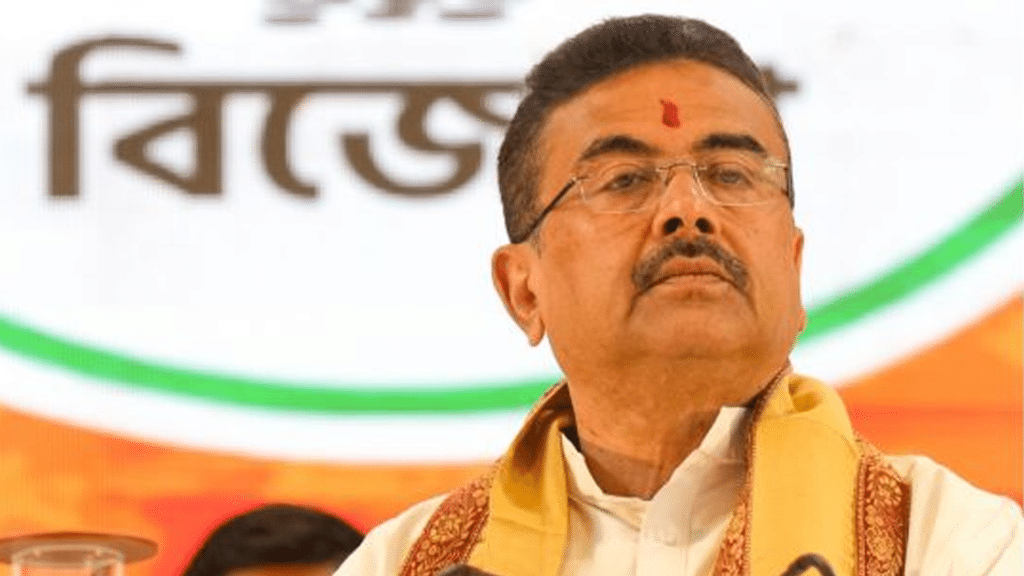
West Bengal Chief Minister Suvendu Adhikari has stated that the Eastern Frontier Rifles (EFR) will be made operational again, alongside a plan to recruit more than 1,000 Gorkha youths into state security forces, including the EFR and the West Bengal Police. The initiative is aimed at addressing long-standing demands of the Gorkha community, which has been seeking greater representation and employment opportunities in state security services. The Bharatiya Janata Party (BJP) has described the move as a necessary correction of what it calls a prolonged gap in implementation under the All India Trinamool Congress government. As part of the plan, the EFR is expected to be strengthened through increased recruitment, with Gorkha youths playing a larger role in its functioning. The proposal is also being projected as a step to generate employment opportunities for young people in the Darjeeling hills and nearby regions. Adhikari said that greater inclusion of Gorkha personnel would improve the efficiency and reach of the EFR, while also addressing local aspirations for representation in state security institutions. The announcement has triggered political discussion in the state, with the BJP defending the move as corrective, while the ruling Trinamool Congress has not yet issued a detailed response. The development is expected to fuel further debate in West Bengal over recruitment policies, regional representation, and the structure and functioning of state police forces going forward.
PM Modi & Mark Carney move to restore diplomatic services
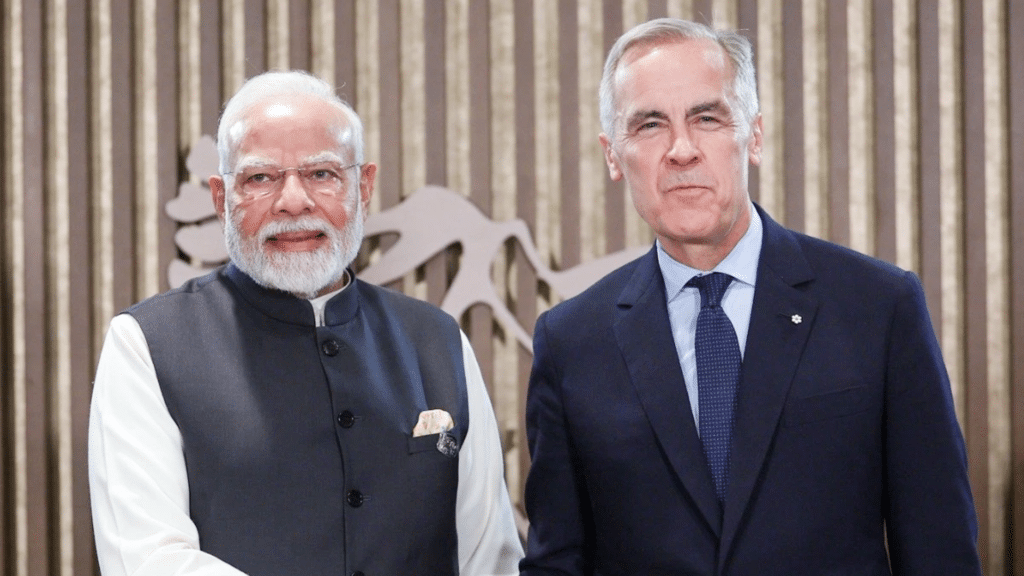
At the ongoing G7 Summit, Indian Prime Minister Narendra Modi and Canadian Prime Minister Mark Carney met to address the strained relations between the two countries and explore steps toward rebuilding diplomatic engagement. During the talks, both leaders agreed to resume regular diplomatic services, including the appointment of high commissioners, marking an important move toward restoring formal communication channels after a prolonged period of tensions. The discussions also covered a wide range of areas of cooperation, such as trade, investment, clean energy, artificial intelligence, security cooperation, counter-terrorism efforts, and issues related to transnational repression. Both sides emphasized the need to rebuild trust and reopen structured dialogue, following a phase in which relations had significantly deteriorated during the tenure of former Canadian Prime Minister Justin Trudeau. Officials from both countries described the meeting as a positive signal of renewed willingness to engage constructively, with a focus on strengthening economic and strategic ties amid evolving global challenges. The meeting is being viewed as an initial step that could pave the way for further diplomatic engagement and high-level exchanges between India and Canada in the coming months.
“We’re the most famous on Instagram”: Giorgia Meloni to PM Modi
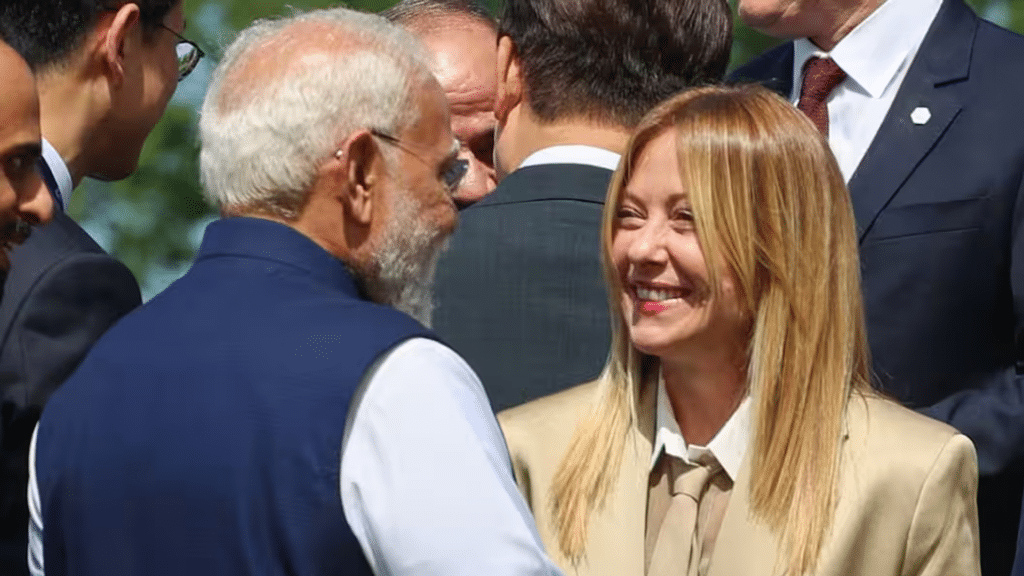
At the ongoing G7 Summit, a light-hearted moment between Italian Prime Minister Giorgia Meloni and Indian Prime Minister Narendra Modi once again drew attention online and revived the popular “Melodi” trend. During their interaction, Meloni warmly greeted PM Modi and remarked, “It is nice to see you. We are the famous people on Instagram,” highlighting their strong presence and popularity on social media, where their interactions often attract widespread engagement. The exchange followed a gesture from PM Modi, who gifted her Melody toffee a reference that has previously gone viral and contributed to the recurring “Melodi” meme, a playful blend of their names that frequently circulates on platforms like Instagram. The brief, friendly conversation added a lighter touch to the formal proceedings of the summit and quickly spread across social media, with users sharing clips and commentary about the leaders’ online popularity and repeated viral moments. The “Melodi” trend first emerged after earlier interactions between the two leaders at previous G7 meetings and has since become a recurring internet phenomenon, resurfacing whenever Modi and Meloni appear together at international events.
The Unconquerable Chapter of History
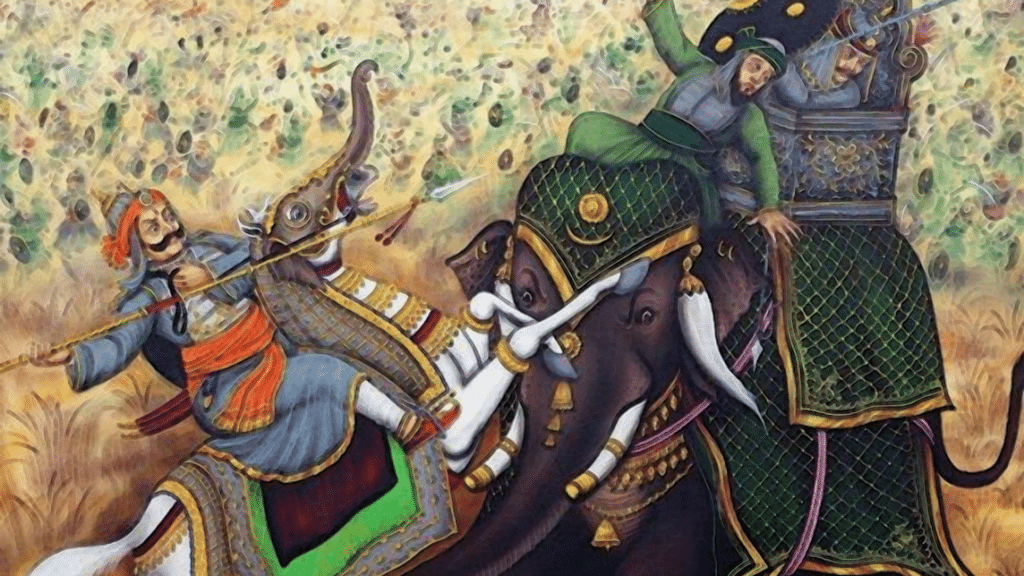
The comprehensive history of the Indian subcontinent is not merely a dry record of imperial rises and falls, calculated political treaties, or territorial conquests written by the pens of court chroniclers; it is, in its truest essence, an uninterrupted, living saga of sacrifice, uncompromising self-respect, and unparalleled valor. Among the monumental stalwarts whose names will shine forever like eternal stars in the firmament of this historical struggle, Maharana Pratap Singh (1540–1597), the sovereign ruler of Mewar, stands paramount. In sixteenth-century India, when one powerful kingdom after another bowed down before the relentless expansionist policies and overwhelming military might of the Mughal Empire, Maharana Pratap stood tall as a solitary challenger at such a critical geopolitical juncture. He was not just a regional ruler protecting his ancestral borders, but rather a perennial, universal symbol of absolute freedom and national self-respect. Going against the conventional, opportunistic currents of his contemporary history, the profound ethical and political ideals he established continue to provide deep intellectual inspiration to human society today. His resistance represents a philosophical refusal to allow individual and cultural identity to be absorbed by an overarching imperial monolith, making his life a brilliant case study in ideological fortitude. Historical Background and the Tradition of Mewar Maharana Pratap was born on May 9, 1540, within the formidable ramparts of the Kumbhalgarh Fort in Mewar. His father was Rana Udai Singh (II) and his mother was the deeply pious and principled Rani Jaiwanta Bai. The soil of Mewar possessed a unique, fiercely independent historical legacy that heavily influenced young Pratap. As the direct successor to heroic men like Bappa Rawal, Rana Sanga (Rana Sangram Singh), and other legendary figures who had repeatedly defended their land, Pratap imbibed the value of freedom and the lessons of intense patriotism from his very childhood. He was raised on stories of defiance and sacrifice, ensuring that the defense of Mewar’s honor became his life’s sole mission. The specific period of his ascension to the throne in the year 1572 was arguably the most critical and perilous time in the long history of Mewar. The ambitious Mughal Emperor Akbar was then aggressively intensifying his military and diplomatic campaigns to establish an unchallenged, centralized rule over the entire Indian subcontinent. Seeing the writing on the wall, almost all the powerful kings of Rajputana had gradually accepted Mughal suzerainty, choosing comfort over conflict, and had established deep matrimonial and political alliances with the Delhi court. But Maharana Pratap realized with profound clarity that accepting Mughal subjugation did not just mean surrendering geographic territory or paying a yearly financial tribute; it fundamentally meant sacrificing one’s own culture, ancestral tradition, and national self-respect. Immediately after his coronation, the epic struggle of history began in earnest—a struggle that would time and again completely shatter imperial arrogance and rewrite the rules of medieval Indian warfare. The Symbol of Uncompromising Consciousness The entire life of Maharana Pratap was a living, breathing testament to the concept of absolute ‘self-respect’. Recognizing Pratap’s strategic importance, Akbar sent high-level, highly sophisticated diplomatic delegations four distinct times to bring Pratap under his subordination without resorting to total war. These diplomatic missions were led successively by some of the empire’s most brilliant statesmen: Jalal Khan, Raja Man Singh, Raja Bhagwant Das, and Raja Todar Mal. Akbar went so far as to offer Pratap the governance of half of India if he merely accepted Mughal sovereignty and walked into the imperial court. For an ordinary politician or opportunistic ruler, this proposal was extremely tempting and practically irresistible, ensuring immense wealth and safety. However, Pratap was not a mere politician; he was a visionary philosopher-king. He understood that a crown of thorns earned through freedom is a thousand times better than a golden cage of comfortable servitude. His ideals were never limited only to repelling the enemy on the battlefield; behind his martial prowess lay a high humane philosophy and a strict code of wartime morality. A unique and profound example of this ethical framework is found in a well-documented historical event. In 1580, Maharana Pratap’s son, Kunwar Amar Singh, attacked the camp of the prominent Mughal commander Abdul Rahim Khan-i-Khanan and captured the women of his family as prisoners of war. When Pratap came to know about this action, he became extremely angry with his son. He heavily rebuked Kunwar Amar Singh and famously said: “Our war is against imperialist policies and military forces, not against any innocent woman or child. Even if they belong to the enemy side, protecting the dignity of women is the foremost duty of Rajput dharma and human morality.” He immediately arranged to return the Mughal women to their respective camps with the utmost respect, honor, and guaranteed physical safety. This profound incident proves conclusively that Pratap was not just a sword-wielding warrior driven by hatred, but rather a rare personality guided by deep universal principles and human values. New Horizons of Martial Arts: The Dawn of Guerrilla Warfare From the strict perspective of military history and tactical analysis, Maharana Pratap must be considered one of the foremost pioneers and architects of the ‘guerrilla warfare method (Guerrilla Warfare)’ in the entire Indian subcontinent. Many times due to Eurocentric or simplified historical errors, this tactical credit is given solely to Chhatrapati Shivaji Maharaj. However, realistically speaking, decades before the birth of Shivaji, Maharana Pratap had already successfully developed and applied this asymmetric method of warfare on a massive scale. After the brutal and bloody Battle of Haldighati in 1576, when he realized that it was mathematically impossible to win through conventional, frontal warfare in an open field against the modern artillery, muskets, and massive cavalry of the Mughals, he revolutionized his strategy. He began using the inaccessible mountain passes, dense forests, and natural secret caves of the Aravalli mountain range as his primary military bases. His small, highly mobile, and swift troops disrupted the massive Mughal supply lines, launched devastating sudden ambushes, and immediately disappeared back into the thick jungle terrain. This brilliant strategy pushed the Mughal