
Resistance in the Enclaves: Goa’s Liberation from Portugal
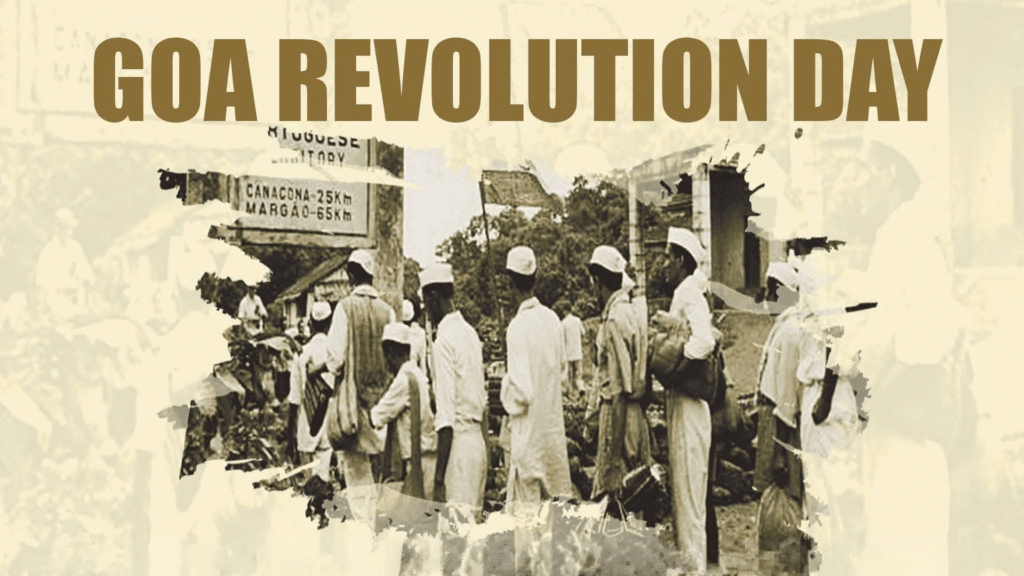
While the story of India’s independence predominantly highlights the struggle against the British Raj, the lowering of the Union Jack in 1947 did not signal the end of colonial presence on the subcontinent. Deeply entrenched enclaves remained, most notably the territories of Goa, Daman, and Diu, which persisted under Portuguese long after India emerged as a sovereign power. The odyssey to reclaim these lands represents one of the most compelling chronicles of the post-independence era. Central to this narrative is Goa Revolution Day, observed yearly on 18 June to commemorate the 1946 uprising that pivoted the discourse from mere civil rights to a total demand for the dissolution of the Portuguese Raj in India. This annual observance transcends regional pride; it honors the fortitude of those who confronted centuries of foreign hegemony, paving the way for the eventual integration into the Indian Union in 1961. It remains a poignant testament to the sacrifices of activists, students, and citizens who faced the specter of incarceration and exile in their relentless pursuit of liberty. FOUR CENTURIES OF IBERIAN HEGEMONY Portuguese dominance began in 1510, when the commander Afonso de Albuquerque wrestled control of the region from the Bijapur Sultanate. Over the ensuing four hundred years, Goa was transformed into the administrative heart of the Estado da Índia, serving as a critical cornerstone of Lisbon’s maritime empire in Asia. Throughout this tenure, the colonial administration exerted a profound influence on Goan social and cultural structures. However, this governance was characterized by an authoritarian rigidity; political dissent was systematically quelled, and the territory’s destiny remained firmly dictated by the metropole. As the twentieth century dawned, the success of the broader Indian nationalist movement began to resonate within the enclave. Unlike the British, who had introduced incremental representative reforms, the regime of the Portuguese dictator António de Oliveira Salazar remained intransigent. By the mid-1900s, this refusal to contemplate decolonization catalysed a growing fervor for democratic self-determination among the populace. THE AWAKENING OF NATIONAL CONSCIOUSNESS The seeds of the liberation movement were sown early in the century by intellectuals who looked toward the wider struggle for Indian independence. Foremost among these pioneers was Tristão de Bragança Cunha, widely revered as the “Father of Goan Nationalism,” who challenged the prevailing colonial identity by asserting the region’s inherent Indian heritage. Cunha’s critiques of imperial policy aimed to forge a distinct national consciousness. Despite the proliferation of reformist organizations, the state responded with severe censorship and imprisonment, attempting to extinguish the embers of dissent before they could ignite a widespread conflagration. THE CATALYST: 18 JUNE 1946 The watershed moment in this long-dormant struggle arrived on 18 June 1946, a date that would eventually be etched into the state’s collective identity as the beginning of the end for foreign rule. The impetus was provided by the arrival of the socialist leader Ram Manohar Lohia. Confronted by a repressive atmosphere where even public gatherings were a crime, Lohia chose to openly challenge the colonial edicts in the town of Margao. His address was an electric call to arms, urging the populace to reject centuries of institutionalized silence. Though the authorities acted swiftly to incarcerate Lohia and local organizers, the gambit backfired spectacularly. Rather than suppressing the movement, the arrests galvanized a wave of civil disobedience that rippled across the territory. For many, this was the definitive turning point when isolated political theory evolved into a genuine, unstoppable mass movement for national liberation. A NEW ERA OF RESISTANCE The fervor unleashed in 1946 sustained a new generation of patriots. Groups like the Goa National Congress campaigned for integration with the Indian motherland, while other clandestine factions worked to erode the foundations of Portuguese authority from within. The response from Lisbon was predictably harsh, characterized by surveillance, summary detentions, and the forced exile of prominent leaders. Nevertheless, the successful departure of the British in 1947 only highlighted the anachronism of the Portuguese presence, intensifying the internal pressure for change. DIPLOMATIC DEADLOCK AND POST-INDEPENDENCE REALITIES Following India’s independence on 15 August 1947, the nascent nation anticipated a peaceful transfer of territory. However, the Salazar regime remained defiant, recategorizing the enclaves as “overseas provinces” to maintain a facade of domestic sovereignty. The administration of Jawaharlal Nehru initially prioritized diplomacy, hoping that international condemnation would compel a withdrawal. But the dictatorial government in Lisbon refused to negotiate, leading to a protracted and frustrating diplomatic stalemate that spanned over a decade. SATYAGRAHA AND THE COST OF FREEDOM By the early 1950s, the movement adopted the Gandhian philosophy of non-violent resistance. Large-scale Satyagraha campaigns were organized, reaching a zenith in 1954 and 1955 as volunteers from across India converged on the borders of the enclaves. Unarmed protesters, bearing the Indian tricolour, were met with lethal force. The events of August 1955, where security forces opened fire on demonstrators, resulted in multiple casualties and ignited a national outcry that fundamentally shifted India’s approach toward the “Goa question.” MILITANCY AND CLANDESTINE OPERATIONS Parallel to the peaceful marches, groups like the Azad Gomantak Dal pursued a more militant path. These underground fighters targeted colonial logistics and communications, aiming to make the occupation untenable and keeping the pressure high as the international community looked on. THE COLD WAR CONSTRAINTS As a member of NATO, Portugal leveraged its Western alliances to stymie Indian diplomatic efforts. While much of the world favored decolonization, the geopolitical tensions of the Cold War delayed the inevitable. By 1961, the persistence of this colonial relic had become an unbearable affront to Indian sovereignty. OPERATION VIJAY: THE FINAL ACT Convinced that dialogue had failed, the Indian government sanctioned military intervention. In December 1961, Operation Vijay was launched, a rapid and multi-pronged assault that caught the overmatched Portuguese forces off guard. By 19 December 1961, the Governor-General Manuel António Vassalo e Silva formally surrendered. In a whirlwind operation lasting just thirty-six hours, more than four centuries of Lusitanian rule were dismantled, marking the definitive conclusion of one of the longest colonial tenures in history. INTEGRATION AND A NEW DAWN
“Every Hindu is a potential murderer or r*pist”: DU Prof. Apoorvanand
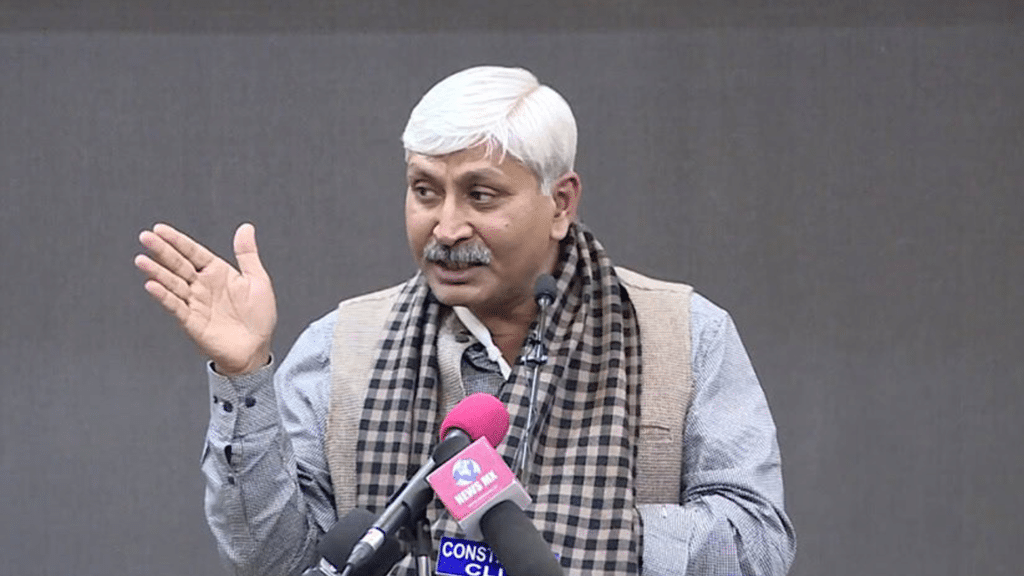
Delhi University Hindi professor Apoorvanand has come under criticism following remarks he made during an interview with Satya Hindi. His comments have generated widespread discussion online and sparked a fresh debate on religion, free speech, and public discourse in India. During the interview, Apoorvanand stated that “every Hindu is a potential murderer or rapist” of Muslim women, either “in reality or in dreams.” The remarks quickly gained attention after clips from the interview were widely circulated on social media platforms, drawing strong reactions from various sections of society. Many critics condemned the statement, arguing that it unfairly generalizes an entire religious community and risks deepening social divisions. They contended that attributing criminal tendencies to people based solely on their religious identity is inappropriate and harmful to communal harmony. Several commentators and social media users questioned the basis of the professor’s assertion and expressed concern over the impact such remarks could have on public discourse. At the same time, some supporters defended Apoorvanand’s comments, arguing that they were made in the context of a broader discussion on communal tensions, majoritarian politics, and the experiences of religious minorities in India. According to them, the professor was attempting to critique certain social and political attitudes rather than make a literal accusation against all Hindus. The controversy has reignited discussions about freedom of expression, the role of academics in public debate, and the boundaries of commentary on sensitive issues involving religion and identity. It has also raised questions about the responsibility of public intellectuals and educators when making statements that can influence public opinion and social relations. As reactions continue to pour in, the episode has become part of a wider national conversation on communal relations, religious polarization, and the challenges of discussing contentious issues in a diverse society. The debate surrounding Apoorvanand’s remarks reflects broader concerns about balancing free expression with the need to maintain respectful and constructive public discourse.
“Safety of lakhs of Indian seafarers is of utmost importance to us”: PM Modi
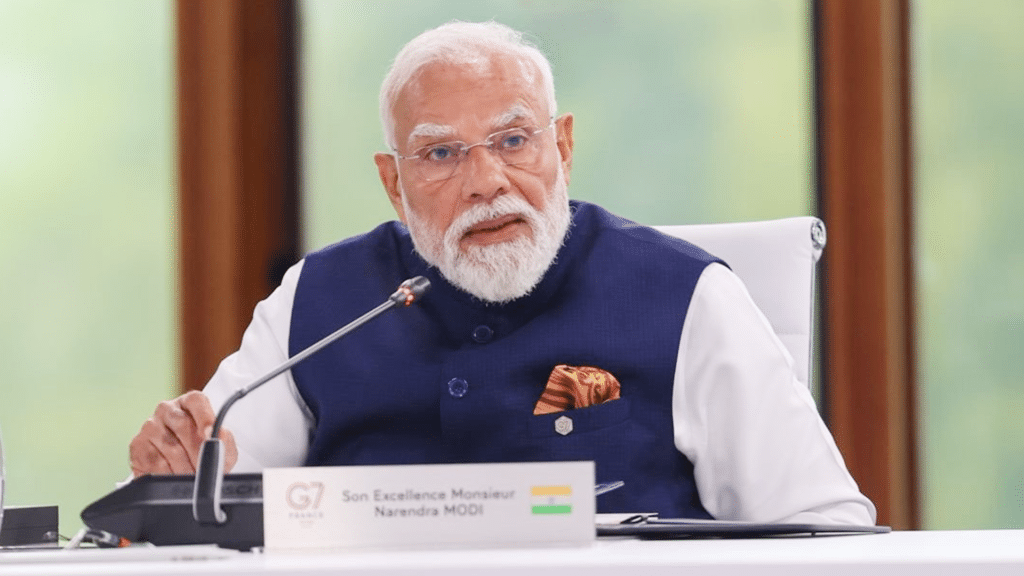
Prime Minister Narendra Modi raised the issue of maritime security and the welfare of Indian seafarers during his meeting with US President Donald Trump on the sidelines of the G7 Summit. Stressing the importance of safe sea routes, Modi said that the safety of lakhs of Indian seafarers working across the global maritime sector is of utmost importance to India. The Prime Minister noted that a large number of Indians are employed on commercial vessels and in maritime operations around the world, making secure and uninterrupted shipping routes essential for their safety and livelihoods. He emphasized that protecting Indian seafarers remains a key priority for the government. Modi also highlighted the broader impact of instability in important maritime regions, particularly in West Asia. He pointed out that disruptions in these areas can affect global trade, energy supplies, and the safety of crews operating at sea. Calling for peace and stability, he stressed the need to ensure secure maritime corridors for international commerce. During their discussions, Modi and Trump reviewed issues related to regional and global security, including challenges affecting maritime transportation. The Prime Minister underscored that the safety of seafarers is not only a humanitarian concern but also a crucial factor in maintaining the smooth functioning of global trade and economic activity. The issue has gained prominence amid recent tensions in West Asia, which have heightened concerns about the security of commercial shipping routes used to transport goods, energy resources, and other essential supplies. Given India’s significant contribution to the global maritime workforce, the welfare of Indian seafarers remains a major concern for New Delhi. Modi’s remarks reflect India’s commitment to safeguarding its citizens working overseas while supporting international efforts to promote stability, security, and freedom of navigation in key maritime regions. He reiterated that safe and secure seas are vital for both global commerce and the well-being of millions who depend on the maritime industry.
Rupert Lowe’s Rape Gang Inquiry Report: A Damning Indictment of Multiculturalism
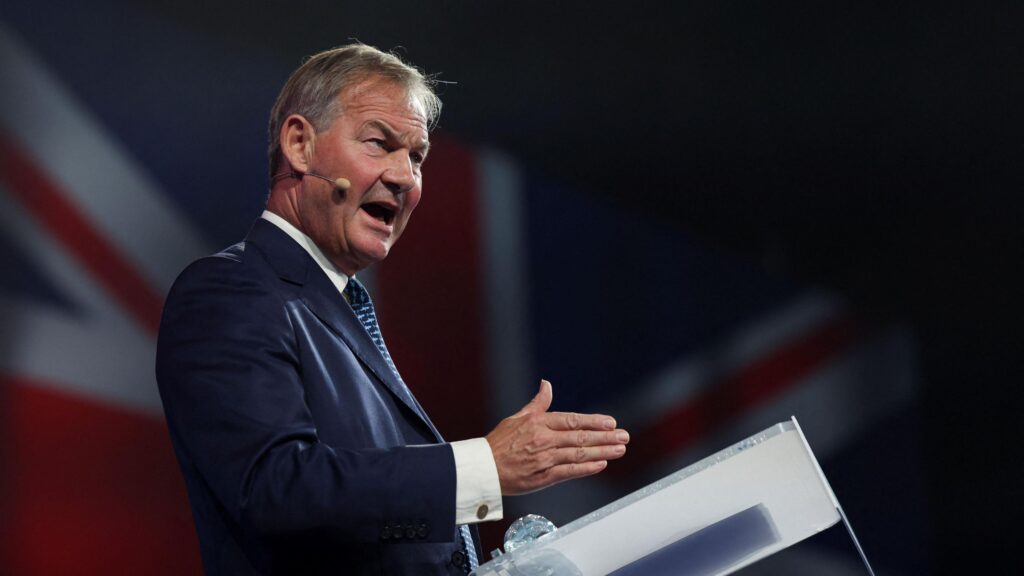
Rupert Lowe’s recent report on X is a damning indictment of multiculturalism and the large institutional failure that led to the abuse of hundreds of thousands of victims.
From Emperor to Exile: Napoleon’s Final Defeat at Waterloo
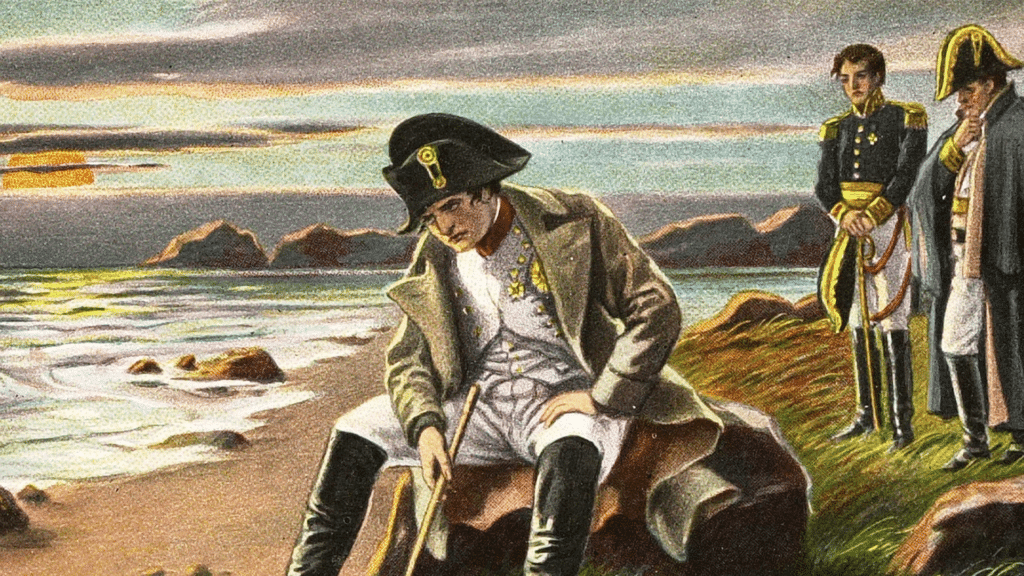
Waterloo, 18 June 1815. Napoleon I, Emperor of the French, had just been defeated by the combined armies of the Seventh Coalition. Led by the Duke of Wellington, Field Marshal Arthur Wellesley, and the Prussian Generallfeldmarshal Gebhard Leberecht von Blücher, the Coalition armies inflicted a crushing defeat which condemned Napoleon to his surrender, dissolution of his Empire, and subsequent second and definitive exile to the island of St. Helena, where he would live out the last years of his eventful life. For a decade since Napoleon crowned himself ‘Emperor of the French’ in 1804, Europe had been dominated by him and the eponymous Napoleonic wars. By 1812, His French Empire stretched from Spain to Russia, his Grande Armée was the envy of the modern world and Napoleon was the master of the continent. However, it would all come crashing down just two years later, when the Grand Armée fell to a series of crushing defeats during their ill-fated invasion of Russia and ensuing retreat. With Wellington invading from Spain across the Pyrenees and the combined armies of the Sixth Coalition bearing down on Paris, Napoleon was compelled to accept defeat and abdicate his throne. His empire in tatters, the Emperor of the French was forced into exile on the tiny island of Elba, off the coast of Italy, where he was made sovereign. A year later, he would make a triumphant return to France, overthrowing the unpopular Louis XVIII and assuming the title of Emperor of the French once again. Now remembered as ‘The Hundred Days’, Napoleon would embark on his last campaign against the Seventh Coalition, which famously declared war not on France, but on Napoleon personally. In a whirlwind campaign lasting four days, the French armies under him would fight a series of battles at Charleroi, Quatre Bras, Ligny and finally, Waterloo. The defeat at Waterloo would signal an unceremonious end for one of history’s most consequential leaders, transforming the ‘Master of Europe’ into an exiled prisoner on the remote island of Saint Helena, off the coast of western Africa. Napoleon would live out the rest of his life on the British-controlled island, dying on the 5 of May 1821 at age 51 from internal bleeding caused by stomach cancer, a disease that, in a cruel twist of fate, had also killed his father. THE BEGINNING OF THE END 4 May 1814. Napoleon I, Emperor of the French, was a defeated man. Exiled to the tiny island of Elba by the Sixth Coalition, he had been stripped of his crown and kept away from his wife Empress Marie Louise and son, the future Napoleon II. Napoleon wished to crown his son as emperor post his abdication, but Russian Tsar Alexander I demanded an unconditional abdication and Napoleon reluctantly complied on 6 April. He was escorted to his ‘prison’ where he would bide his time till his triumphant return a year later. Less than two years ago, Napoleon’s empire had stretched from northern Spain in the west to Moscow in the east, a testament to his mastery over the continent of Europe. He ended empires, dictated terms to emperors, created new nations and revived extinct ones. His armies reigned supreme on the field, his enemies were scattered and it seemed like Napoleon and France were set to dominate Europe for years to come. THE SPANISH ULCER However, not all was well. Despite Napoleon taking France to its greatest territorial extent since the reign of Charlemagne himself, it was fast sinking into decline. His conquest of Spain and Portugal, which began in 1808, had become a colossal drain of money and manpower, with the French having lost between a staggering 250,000 and 300,000 soldiers by 1812. In 1808, Napoleon sparked a Spanish revolt by installing his brother, Joseph, on the throne of Madrid. Initial French setbacks at the hands of the Anglo-Spanish forces at Bailén and Vimiero compelled Napoleon to personally lead around 130,000 French troops into Spain. Despite securing early victories and forcing a British evacuation at La Coruña, Napoleon departed in January 1809 to face a rising Austrian threat. He left the conflict, known as the ‘Peninsular War,’ to Joseph and his Marshals. While capable, these generals lacked Napoleon’s unique tactical brilliance. While Napoleon defeated the Fifth Coalition elsewhere, his forces in Spain suffered catastrophic defeats against Anglo-Spanish armies following their early successes. Allied forces persistently engaged the French across the Iberian Peninsula. Despite securing victories at Zaragoza and Ocaña, the French suffered significant losses, such as at Talavera. In 1810, Joseph initiated a third invasion of Portugal, an effort that would have severe ramifications for the French occupation. From 1810 to the 1814 fall of Toulouse, French supremacy gradually eroded. Marshal Masséna’s 65,000-man incursion into Portugal was halted at the Battle of Bussaco on 27 September 1810. The impenetrable Lines of Torres Vedras ultimately forced a French withdrawal by early 1811. By 1811, French fortunes declined further. Marshal Soult failed to relieve Badajoz following the Battle of Albuera on 16 May 1811. Meanwhile, Wellington strengthened the Allied position as the French struggled with a lack of unified command. In 1812, Wellington seized Ciudad Rodrigo and Badajoz before securing a victory at Salamanca on 22 July, which opened Madrid to the Allies and shattered French control in Spain. Despite brief territorial recoveries, Napoleon’s disastrous Russian campaign forced the withdrawal of veteran troops from the peninsula. Wellington struck decisively at the Battle of Vitoria on 21 June 1813, defeating King Joseph and Marshal Jourdan to end French occupation. Advancing across the Pyrenees, the Allies brought the war to France with victories at Nivelle and the Nive in late 1813. By 1814, Wellington’s forces penetrated southwest France, overcoming Marshal Soult at Orthez on 27 February and Toulouse on 10 April. Ironically, the Toulouse defeat for the French occurred days after Napoleon’s abdication, before news reached the front. Reflecting on his downfall, Napoleon later admitted that the Spanish invasion was one of his worst mistakes, lamenting that “it was the Spanish
“If anyone attacks India under PM Modi’s leadership, we’ll help”: Donald Trump
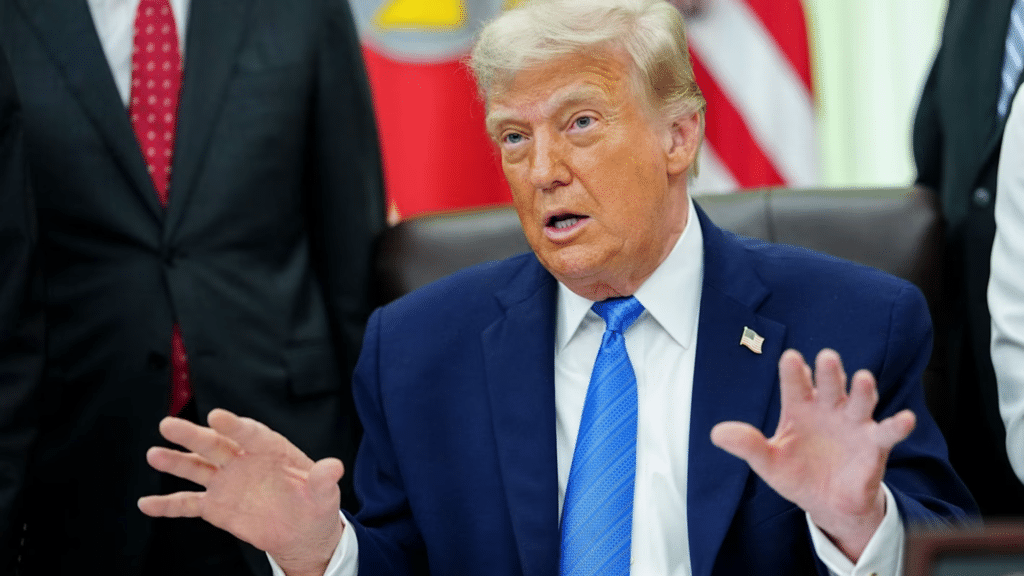
At the G7 Summit, US President Donald Trump reaffirmed Washington’s support for India, stating that the United States would stand by the country if it ever faced an attack. Speaking on the sidelines of the summit, Trump praised Prime Minister Narendra Modi’s leadership and highlighted the strong and growing partnership between New Delhi and Washington. Trump said that under Modi’s leadership, India has emerged as a significant global power and an increasingly influential player on the world stage. Emphasizing the close ties between the two nations, he noted that the United States would support India in the event of any external aggression, reflecting the strength of the bilateral relationship. The India-US partnership has expanded considerably in recent years, with cooperation spanning defence, trade, technology, and regional security. Both countries have also worked closely to promote stability and prosperity in the Indo-Pacific region, launching several initiatives aimed at strengthening strategic and economic collaboration. The US President also expressed admiration for Prime Minister Modi, describing him as a respected leader and underscoring the strong working relationship between the two governments. His remarks were widely seen as a reaffirmation of America’s commitment to maintaining close ties with India amid evolving global challenges. As India and the United States continue to deepen cooperation on a range of strategic and economic issues, Trump’s comments signal the importance Washington places on its partnership with New Delhi. The statement further highlights the growing alignment between the world’s largest and oldest democracies as they work together on key regional and global priorities.