
“Do you have the guts?”: Sreesanth throws open challenge to Harbhajan for in-ring fight
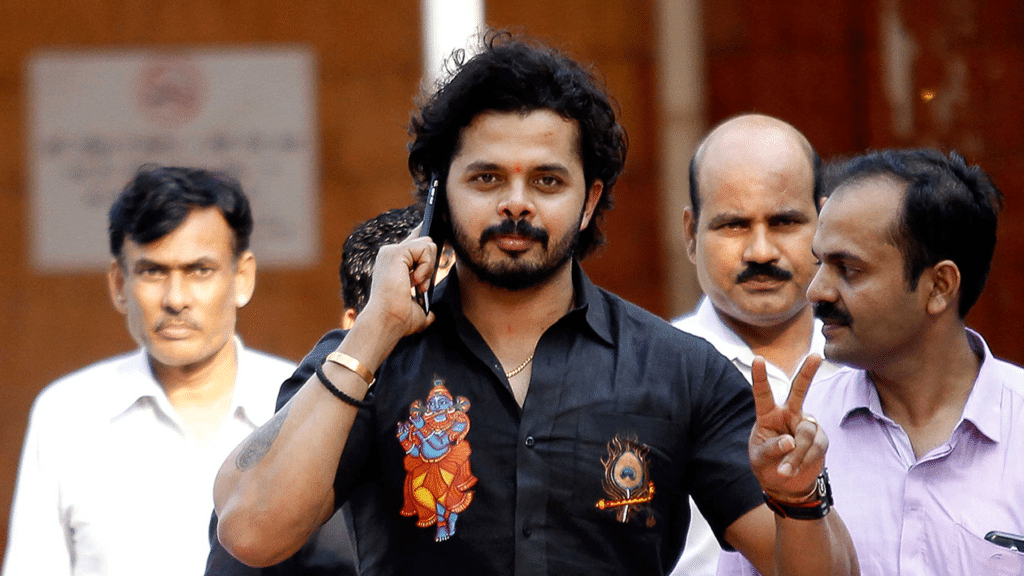
Former India pacer S. Sreesanth has once again found himself in the spotlight after publicly challenging former teammate Harbhajan Singh to an in-ring fight. Questioning Harbhajan’s willingness to accept the challenge, Sreesanth asked whether he had the “guts” to step into the ring, reigniting discussion around the long-standing rivalry between the two cricketers. The remarks have revived memories of the infamous 2008 controversy during the inaugural season of the Indian Premier League. The incident occurred after a match when Harbhajan, who was then representing the Mumbai franchise, was accused of slapping Sreesanth. The episode became one of the most controversial moments in Indian cricket and resulted in disciplinary action against Harbhajan. Although both players have since retired from international cricket and moved on with their respective careers, the incident remains a widely discussed chapter in Indian cricket history. Sreesanth’s latest challenge has once again brought their past differences into public focus, prompting fans to revisit the events that strained relations between the two former teammates. The challenge has sparked widespread debate among cricket followers, with many speculating whether Sreesanth’s comments were serious, promotional in nature, or made in a lighter vein. The remarks have also generated considerable discussion across social media platforms. As of now, Harbhajan Singh has not publicly responded to the challenge. Nevertheless, Sreesanth’s comments have rekindled interest in one of Indian cricket’s most enduring rivalries, reminding fans of a controversy that continues to be remembered nearly two decades later.
Intellectual Terrorism and Mafia Raj in India
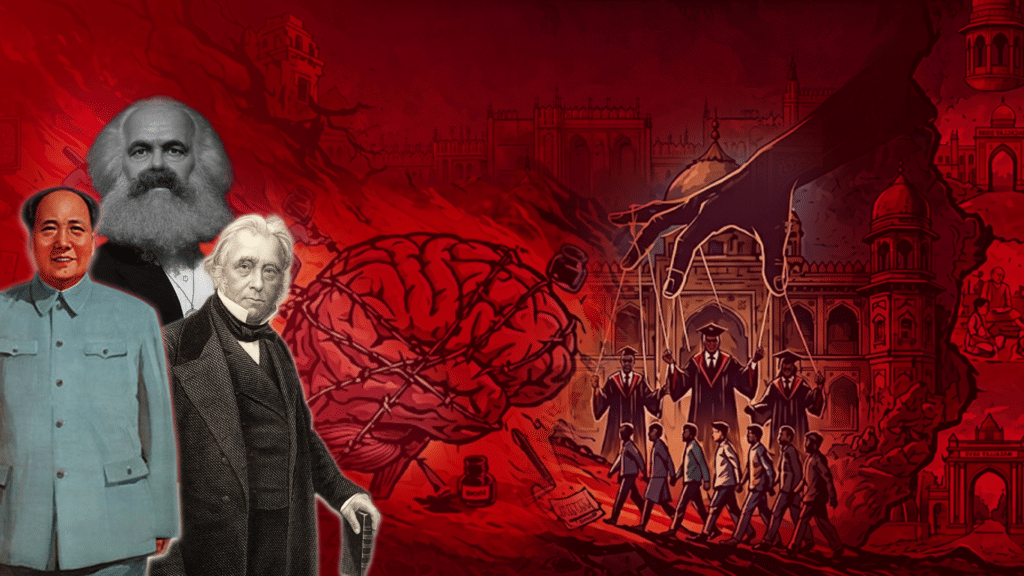
As soon as the word “terrorism” is heard, it generally conjures an image of physical violence in the minds of common people—one involving guns, bombs, blood, and physical torture. However, in the modern world of the 20th and 21st centuries, a far more dangerous, invisible, and subtle form of terrorism has evolved, which is termed “Intellectual Terrorism” or “Intellectual Mafia Raj.” Physical terrorism attacks the human body or the geographical boundaries of a nation, but intellectual terrorism attacks human thought, consciousness, history, culture, values, and collective identity. In the 20th century, the famous Italian Marxist thinker Antonio Gramsci, in his theory of “Cultural Hegemony,” stated that no ruling class can control a society for a long period solely through military or political power. To make a society completely subservient, it is indispensable to establish dominance over its cultural and intellectual institutions. When a society’s education, literature, art, media, and cinema become captive to a specific ideological group, that group gains an exclusive, monopolistic power to dictate the direction of thought for the entire society. In the Indian context, this “Intellectual Mafia Raj” is an undeclared but extremely powerful system where a section of self-proclaimed intellectuals occupying top positions in education, literature, and media systematically suppress any form of indigenous, logical, and nationalist thought that deviates from their own ideology. Just as a mafia takes the law into its own hands and permanently eliminates rivals to protect its turf in the criminal world, these intellectual mafias operate a conspiracy to professionally and socially ruin researchers, professors, or writers who hold dissenting views in the academic world. This is entirely antithetical to the most sacred concepts of democracy, ‘free thought’ and ‘freedom of speech.’ Historical Foundations and Colonial Legacy: From Macaulay to Nehruvian Socialism The roots of this ongoing intellectual terrorism in India are deeply intertwined with the British colonial era. When the British East India Company usurped the political and economic system of India, they realized that it was impossible to keep Indians subjugated for long purely through military force. This was because India possessed a thousands-of-years-old, rich tradition of knowledge, spiritual foundations, and cultural self-respect. To break this self-respect, Thomas Babington Macaulay presented his famous educational plan (Minute on Indian Education) to the British Parliament in 1835. Macaulay’s primary objective was to completely destroy India’s traditional Gurukul and indigenous education system and introduce a new educational policy through which a new class of Indians would be born, “who may be interpreters between us and the millions whom we govern; a class of persons, Indian in blood and colour, but English in taste, in opinions, in morals, and in intellect.” The British succeeded in instilling a deep inferiority complex within the minds of Indians regarding their own history, language, and culture. They drew an artificial line of division, labeling indigenous Indian knowledge as “superstition” and English knowledge as “modernity.” Although the country gained independence in 1947, the colonial shadow of Macaulay did not depart from the mindset of those at the helm of the administrative machinery. In the post-independence period, a specific socialist equation emerged on India’s political landscape. Taking advantage of the socialist and Soviet Union-leaning perspective of the country’s first Prime Minister, Jawaharlal Nehru, the control of India’s educational institutions, historical research councils, and cultural platforms passed completely into the hands of Marxist and Left-Liberal intellectuals. Particularly in the post-1970 era, when the prominent Marxist thinker Saiyid Nurul Hasan served as the Education Minister of the country, top-tier national institutions such as the NCERT (National Council of Educational Research and Training), ICHR (Indian Council of Historical Research), ICSSR (Indian Council of Social Science Research), and JNU (Jawaharlal Nehru University) were transformed into fortresses of a specific ideology under state patronage. Thus was born a post-independence “Intellectual Elite Class”, which began to apply the old British policy of ‘divide and rule’ in a new, modern, and pseudo-progressive form. Institutional Capture and Operational Blueprint of the Intellectual Mafia Raj This intellectual mafia system works in a highly planned, systematic, and institutional manner without visibly breaking any laws. A few primary aspects of its operational blueprint or methodology are discussed thoroughly below: A) Monopolistic Control over Academic Institutions and Research Councils Over the past several decades, if a meritorious student or researcher wanted to build a career in any leading university or research institution in India, their “political ideology” became more important than their merit or knowledge. From the appointment of university professors to the allocation of research fellowships, an unwritten ‘checkpoint’ controlled by this intellectual mafia group existed everywhere. If a candidate’s research paper reflected a positive outlook toward Indian culture, nationalism, or ancient heritage, they were branded as “unscientific” or “right-wing” and disqualified from the recruitment process itself. Conversely, those who depicted India as an exploitative state and society as merely a battleground of class struggle and caste conflict were easily granted promotions and international scholarships. B) Planned Distortion of History through Textbooks and the Neglect of Regionalism If one looks at the Indian history textbooks that have been taught to us for generations, a severe imbalance and Delhi-centric bias become evident. This intellectual group presented the Mughal Empire and the Delhi Sultanate in such an all-pervading and glorified manner in historical writing that the grand, glorious, and long-lasting dynasties of other regions of India were practically erased or marginalized. The history of Assam and the Northeast is the greatest living example of this. The manner in which the Ahom Kingdom completely decimated the unstoppable military might of the Mughals as many as 17 times is a unique chapter in Indian history. But was even half a page or a single paragraph ever allocated to Lachit Borphukan or the Battle of Saraighat in the national-level textbooks read by students across the country? Similarly, compared to how thoroughly the history of the grand Vijayanagara Empire of the Deccan, the naval power of the Chola Dynasty that dominated Southeast Asia, the Gajapati Dynasty of Odisha, or the good governance and resistance
“Built more houses for the poor in 12 yrs than total number of houses in France”: PM Modi
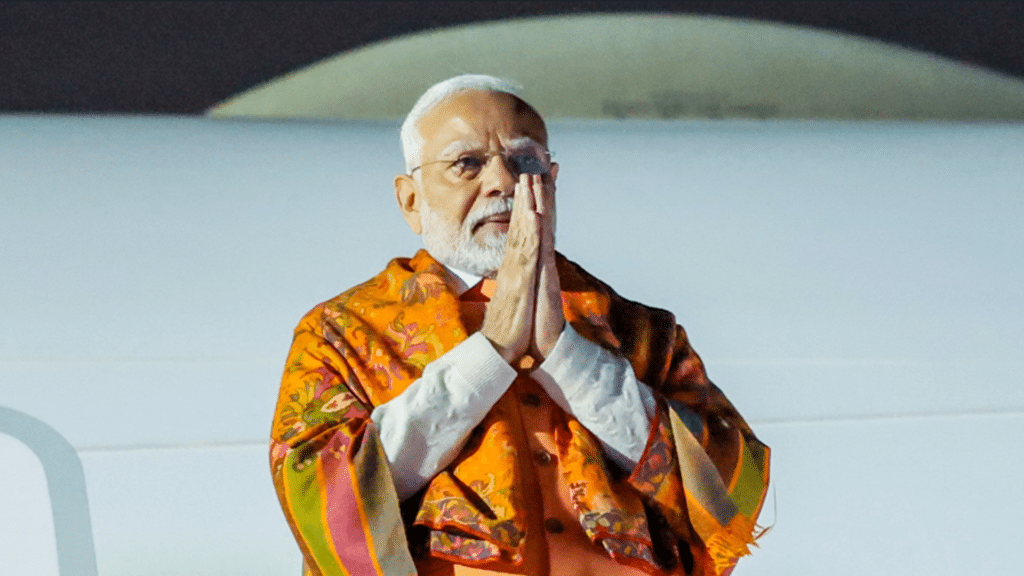
Prime Minister Narendra Modi, while addressing the Indian diaspora in Paris, highlighted the scale of India’s housing initiatives under the Pradhan Mantri Awas Yojana (PMAY). He stated that India has constructed more homes for economically weaker sections over the past 12 years than the total number of houses in France. Speaking about India’s development journey, Modi said the housing programme has transformed the lives of millions of families by providing them with permanent and secure homes. He emphasized that access to housing plays a crucial role in improving living standards and empowering low-income households. The Prime Minister cited PMAY as an example of India’s rapid infrastructure growth and its commitment to social welfare. Launched with the objective of ensuring “Housing for All,” the scheme has focused on providing affordable housing to beneficiaries across both rural and urban areas of the country. During his address, Modi also highlighted India’s achievements in infrastructure development, digital connectivity, financial inclusion, and welfare programmes. He noted that these initiatives have helped improve the quality of life for millions of citizens while contributing to the country’s economic progress. The remarks came during his interaction with members of the Indian community in France, where he outlined India’s developmental accomplishments and growing global stature. His comments on the housing programme drew attention to the scale of India’s efforts to expand access to affordable housing and improve the lives of vulnerable sections of society.
“France‑Bharat ki dosti amar rahe”: Macron sends message for PM Modi in Hindi
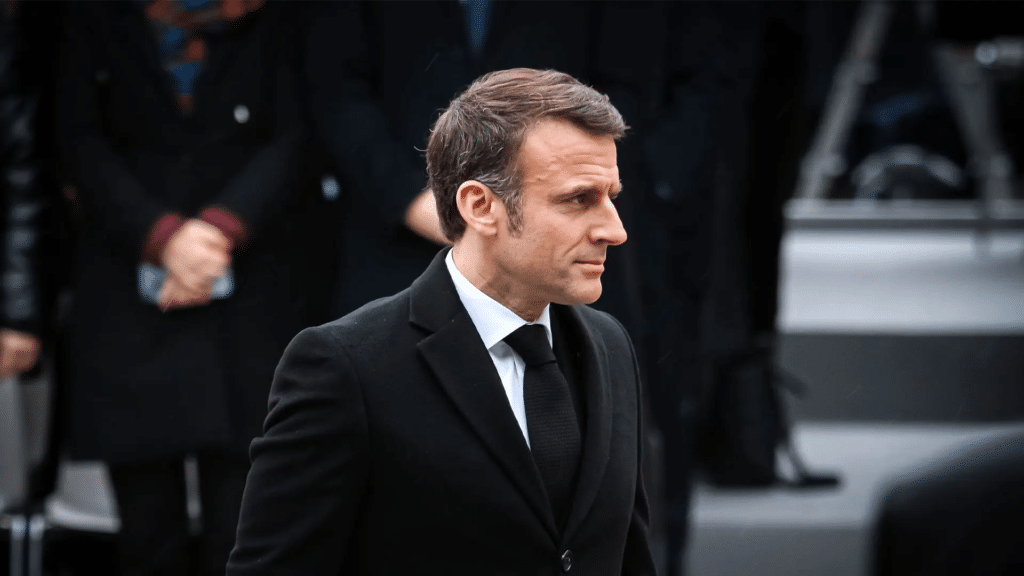
French President Emmanuel Macron delivered a farewell message in Hindi to Prime Minister Narendra Modi at the conclusion of the latter’s week-long visit to France, highlighting the strong ties between the two countries and the cordial relationship shared by the two leaders. Drawing attention across social media and diplomatic circles, Macron said, “France-Bharat ki dosti amar rahe” (“Long live the friendship between France and India”), a gesture that underscored the deepening partnership between Paris and New Delhi. During his visit, PM Modi participated in a series of high-level engagements focused on strengthening cooperation in areas such as defence, technology, trade, clean energy, and people-to-people exchanges. Macron’s decision to convey his farewell message in Hindi was widely viewed as a symbolic expression of France’s commitment to its relationship with India. Over the years, the two nations have expanded collaboration across several sectors, including defence, space, climate action, and innovation. The use of Hindi added a personal touch to the conclusion of the visit and reflected the mutual respect between the two leaders. PM Modi’s France visit also included interactions with the Indian diaspora and discussions aimed at enhancing cooperation in emerging technologies and addressing global challenges. As the visit came to an end, Macron’s message served as a reaffirmation of the enduring friendship between India and France and their shared commitment to strengthening bilateral and international cooperation in the years ahead.