
“Theatre of the absurd”: Mahua Moitra on TMC rebel faction electing Arup Roy as chairperson
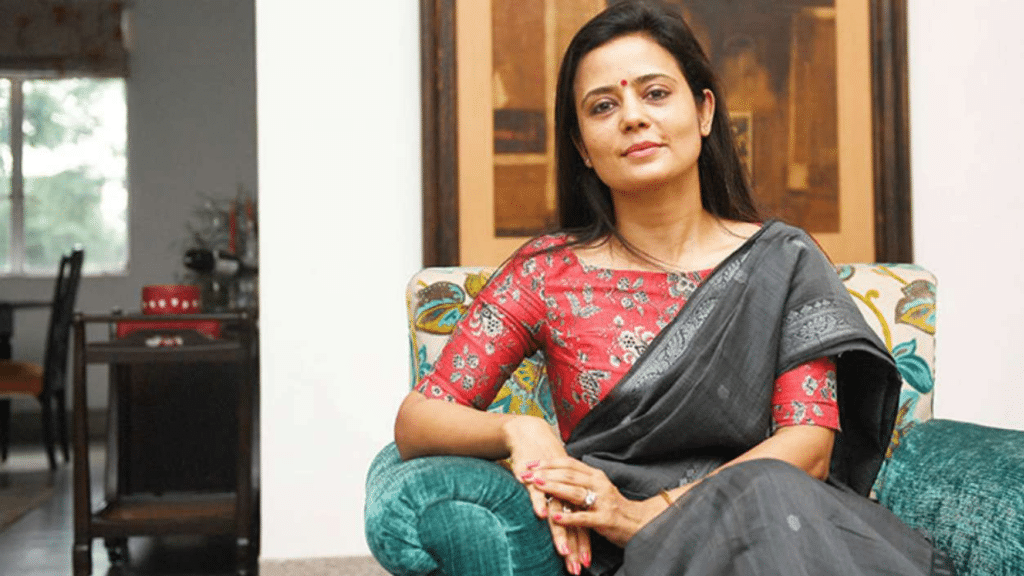
Mahua Moitra has criticised a breakaway faction of the All India Trinamool Congress, comparing its recent actions to a “play” after the group appointed Arup Roy as its leader. She strongly reacted to the decision, suggesting it reflected internal confusion and organisational disorder within the splinter group. Her remarks have added to the ongoing political tensions between the main party and dissident leaders in West Bengal. The breakaway faction has claimed it now functions as a separate organisation from the main party and formally announced Arup Roy’s appointment during a meeting. The move has drawn attention to continuing disagreements and competing leadership claims within the group. Moitra’s “play” remark quickly gained traction in political circles, highlighting the visible and increasingly public nature of the internal dispute. While the faction has defended its decisions, the Trinamool Congress leadership has not recognised the splinter structure, and tensions between the two sides continue to rise.
“It’s a very specific gaze, a patriarchal sort of vibe”: Tamannaah Bhatia on South Indian cinema
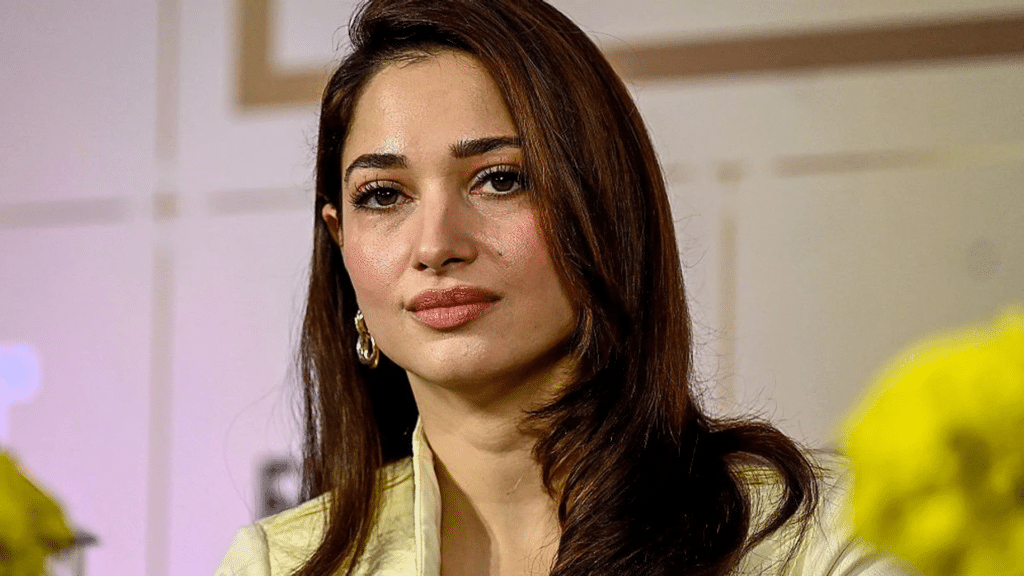
Tamannaah Bhatia has started a conversation about women in South cinema. She said that the way women are shown in these movies is based on a specific way of looking at things and a feeling that is controlled by men. She said that this is often not very nice to women. Tamannaah Bhatia talked about this in an interview. She has worked in a lot of Telugu, Tamil and Hindi films. She compared how women are shown in Indian cinema and Bollywood. She said that big commercial movies in the South often have a lot of rules about how women can be shown, especially when it comes to looking good and dancing in songs. Tamannaah Bhatia said that the way women are shown is based on a specific way of looking at things. She said it is a way of looking at things that is controlled by men. It is not very nice to women. She said that she figured this out over time while working in the movie business. People are talking about what Tamannaah Bhatia said on media and, in the movie world. They are also talking about how women’re shown in Indian movies and how this is changing. Tamannaah Bhatia also talked about how different it’s to work in Bollywood and South Indian cinema. She said that both have ways of making movies especially when it comes to balancing acting and looking good. She said that actresses who can do both tend to have careers. Tamannaah Bhatia said these things at a time when people are talking about how men and women’re shown in movies and how stories are told. Many actors and filmmakers are talking about how women’re shown in big movies.
“Won’t keep names of Mughals, Pathans in Kolkata”: Suvendu Adhikari
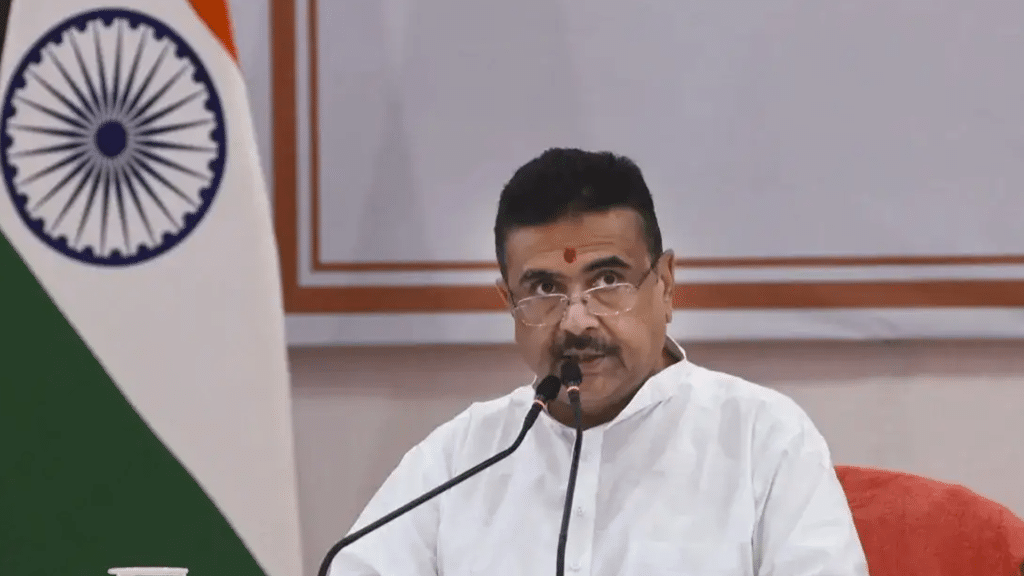
Suvendu Adhikari said that the government in West Bengal will review the names of roads across the state, including those in Kolkata, and assess whether any are linked to historical figures associated with the Mughals and Pathans. Speaking at a public event, he said that road and area names with historical associations would be examined as part of a broader review of cultural and historical references. He added that some existing names could be changed under this exercise, and indicated that future naming decisions would avoid references to Mughal and Pathan personalities. He also mentioned the name of Huseyn Shaheed Suhrawardy, saying it would be reviewed carefully. Huseyn Shaheed Suhrawardy was a prominent leader in undivided Bengal who later served as the Prime Minister of Pakistan. The remarks come amid ongoing public discussion in West Bengal about how historical figures are remembered through the naming of roads and public spaces. Such renaming debates have frequently been part of political and cultural discourse in the state. However, no official announcement has yet been made by the West Bengal government regarding any formal decision on renaming roads, and the comments are part of an ongoing discussion rather than an implemented policy.
The Aesthetic Crisis of Indian Cities
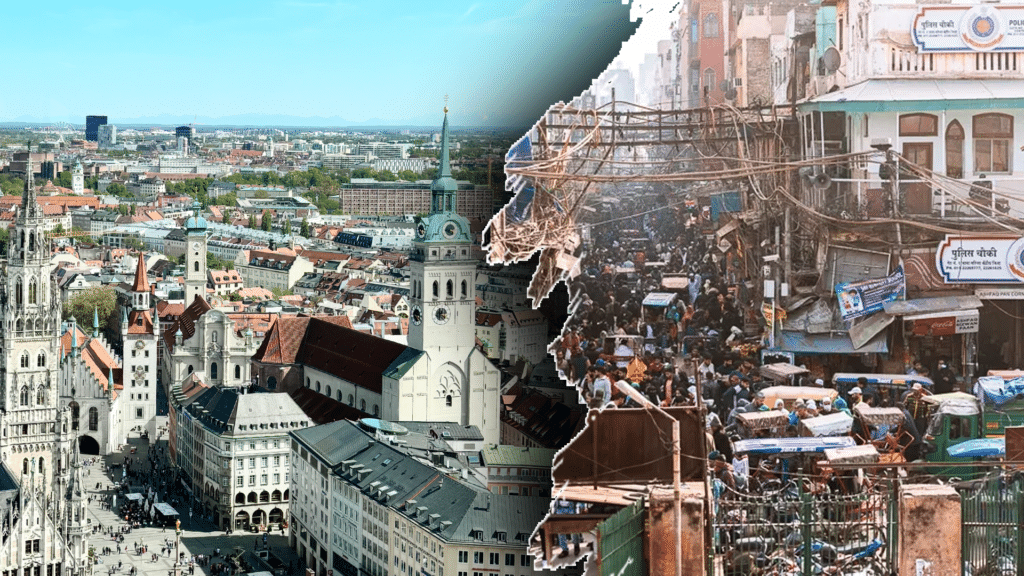
There is a moment I keep coming back to. I am standing on a ghat beside a river that has held civilization on its banks for longer than most countries have existed. The light is extraordinary. The history is crushing in the best possible way. A city of impossible antiquity is going about its morning behind me. And nobody, not one person is offering me a heritage walking tour, a curated riverside dinner, or a thoughtfully designed museum explaining what I am actually looking at. Then I think about Prague. I think about standing on the Charles Bridge at dawn, the Vltava river below catching the first pale light, the castle district silhouetted above and the feeling immediate, effortless, delivered to me by a city that had clearly practised this, I was somewhere the world had decided mattered. By nine in the morning, that bridge would be heaving with tourists from six continents. The restaurants around the Old Town Square were booked weeks in advance. The city’s Astronomical Clock drew crowds every hour on the hour as though it were a ticketed performance. Because in Prague, it essentially is. I think about Schönbrunn Palace in Vienna, the queue for tickets, the gilded state rooms, the café in the palace gardens serving apple strudel to tourists in eight languages, the Gloriette arch at the top of the hill framing the city like a painting. I think about how Vienna took an old Ferris wheel in a public park built in 1897, not remotely thrilling by modern standards and turned it into one of the most visited attractions in Central Europe simply by deciding it was significant and telling the world so, repeatedly, for a hundred years. And then I think about Patna. About Delhi. About Mumbai. And I ask myself the question that has been sitting with me ever since: why? The History Gap That Isn’t Really a Gap Let us get one thing out of the way immediately, because it is the fact that we should change everything and somehow change nothing. Indian cities are not young. They are not historically thin. They are not lacking in material. Patna known anciently as Pataliputra was one of the largest cities in the world at its peak. The Mauryan Empire, which Chandragupta built and Ashoka expanded into one of the greatest empires in human history, was administered from this city. Megasthenes, the Greek ambassador, visited Pataliputra in the 4th century BC and wrote about a city so vast and so organised that it rivalled anything in the known world. Alexander the Great’s generals sent back reports about a kingdom on the Gangetic plain so powerful that even Alexander hesitated to advance. The city that stopped a Macedonian conqueror in his tracks is today a congested, under-touristed state capital that most international travellers fly over without a second thought. Delhi contains within its boundaries the ruins of not one, not two, but seven distinct historical cities. Seven civilisations, each building on the rubble of the last. Qutub Minar, begun in 1193, predates most of Prague’s famous architecture. Humayun’s Tomb which directly inspired the Taj Mahal is a UNESCO World Heritage Site that receives a fraction of the visitors that Vienna’s Schönbrunn does in the same period. Mehrauli, one of the oldest continuously inhabited urban settlements in the world, sits in South Delhi surrounded by encroachments, neglected signage, and the general sense that nobody in charge has decided it deserves better. Mumbai is a different case, a colonial-era city rather than an ancient one, its significant architecture largely Victorian and Art Deco but it is globally significant nonetheless. The Chhatrapati Shivaji Maharaj Terminus, a UNESCO World Heritage Site, is one of the most extraordinary pieces of Victorian Gothic architecture in the world. The Marine Drive seafront is one of the most iconic urban promenades on earth. And yet Mumbai’s tourism infrastructure exists largely to serve business travellers, not leisure tourists, because nobody has ever seriously tried to position it as a destination in the way that, say, Barcelona — another modern, port-city, architecturally eclectic metropolis — has been positioned for the past three decades. Prague was founded in the 9th century. Vienna on the 10th. Budapest became a unified city only in 1873. Patna’s history begins before 600 BC. Delhi has been continuously inhabited for over three millennia. These are not comparable histories. India wins, on paper, by an enormous margin. And yet the tourists go to Prague. The Aesthetic Problem Nobody Wants to Talk About Here is where the conversation gets uncomfortable, and where honesty matters more than defensiveness. Indian cities have a problem that no amount of historical significance can paper over: they are, in large parts, very difficult to experience as a leisure tourist. Patna’s ancient glories are largely invisible. Pataliputra exists in museum cases and archaeological imagination, not in walkable streets or preserved ruins. What greets the visitor today is dense traffic, crumbling buildings beside concrete blocks, and civic neglect that makes it nearly impossible to connect the present city to the extraordinary civilisation it once housed. Delhi is more complex. The monuments exist and are often magnificent. But they sit inside a city that has never fully decided how to present itself. The streets around Old Delhi’s Mughal-era structures, the lanes behind Jama Masjid and the approach to the Red Fort are chaotic in ways that most international tourists find alienating rather than charming. This is not a comment on the people or the culture. It is a comment on infrastructure: on civic maintenance, on the absence of pedestrian planning, on the complete lack of interpretive signage that might help a visitor from Seoul or São Paulo understand what they are walking through. Mumbai has pockets of real aesthetic ambition: the art deco buildings of Marine Lines, the Gothic campus of the University of Mumbai. But these exist as islands in a sea of urban chaos, unconnected by any tourist trail and largely invisible to the international visitor