
“India’s cricket dominance is a problem”: Ian Botham

Sir Ian Botham, the former England all-rounder, has sparked controversy after stating that India’s growing dominance in world cricket is “a problem.” He made the comments during an appearance on the Stick to Cricket podcast. Botham suggested that the Board of Control for Cricket in India (BCCI) holds significant financial power within the International Cricket Council (ICC), creating an imbalance in the global structure of the game. He argued that India should contribute a larger share of its revenue to support the development of cricket in other nations. He also commented on the decline of West Indies cricket, linking it to the rise of franchise-based leagues, particularly the Indian Premier League (IPL). According to him, the growth of the IPL has weakened several national teams by shifting focus and talent toward league cricket. His remarks have triggered backlash on social media, with many users accusing him of being unfair toward India and overlooking its contribution to the global expansion of the sport. Botham has previously expressed concerns about the influence of the IPL, saying it has changed the priorities of modern cricket and reduced the emphasis on traditional formats. The comments have reignited discussions around the ICC’s revenue-sharing system and India’s central role in the financial and competitive structure of world cricket, placing both the BCCI and India at the center of renewed debate.
BJP accuses Kharge family of land grabbing in Karnataka

The Bharatiya Janata Party (BJP) has raised allegations against Congress President Mallikarjun Kharge and his son, Karnataka minister Priyank Kharge, claiming their involvement in a land-related controversy linked to the Siddharth Vihar Trust. According to BJP spokesperson Pradeep Bhandari, the trust associated with the Kharge family was allegedly used to acquire land from individuals as well as prime industrial plots in Karnataka. He further alleged that those in positions of power misused their influence in the process, with the total value of the disputed land estimated to be over ₹100 crore. The allegations have triggered a fresh political confrontation between the BJP and the Congress, with the ruling party accusing senior Congress leaders of corruption and abuse of power. The Congress party, however, has not yet issued a detailed response to the claims. The Siddharth Vihar Trust, which has previously been associated with charitable and religious activities, has now come under political scrutiny following these allegations. As the controversy gains attention, political tensions in Karnataka are expected to intensify, with both parties likely to escalate their exchanges over the issue in the coming days.
Massive 7.2, 7.5 magnitude earthquakes strike Venezuela

A powerful earthquake struck Venezuela, with tremors measuring up to 7.2 and 7.5 magnitude reported, causing severe damage across several regions. Buildings collapsed in multiple areas, including parts of Caracas, leaving residents frightened and prompting emergency response teams to rush to the affected locations to provide assistance, including rescue support and essential supplies. Authorities are currently assessing the extent of the destruction and the possible impact on communities. Concerns have been raised over the potential loss of life, with some estimates suggesting the death toll could reach up to 100,000, though the exact number of casualties has not yet been confirmed. Rescue operations remain underway as teams continue working to help those affected by the disaster.
The Esoteric Womb of Nilachal and the Mahakumbh of Tantra
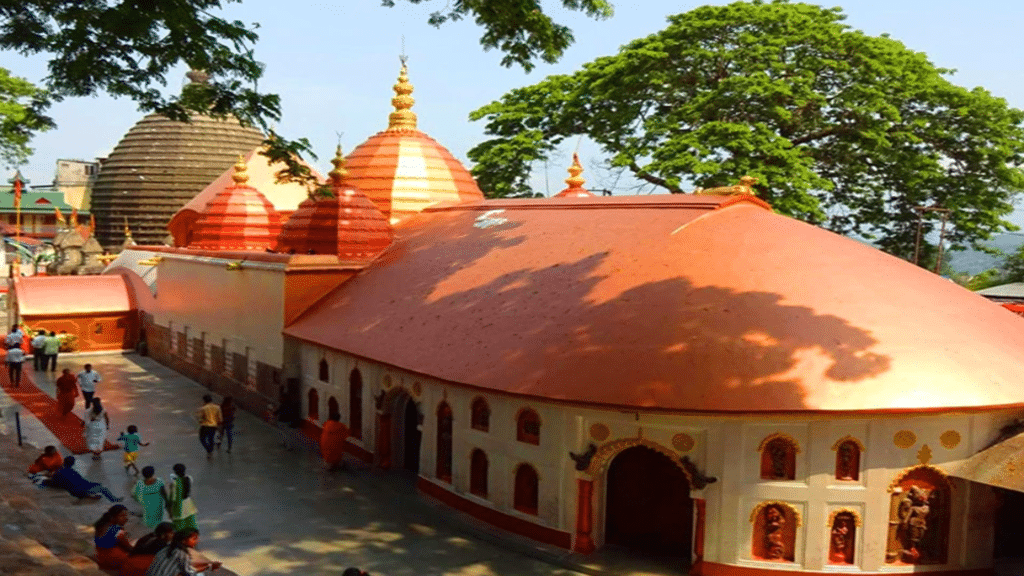
On the southern bank of the ever-flowing, mythic Brahmaputra River, right in the geographical and spiritual heart of the ancient land of Kamrup—modern-day Guwahati city—stands a mysterious, solitary hill called Nilachal. Covered in a dense, lush green canopy that seems to whisper the secrets of bygone millennia, this hill is not merely a beautiful geographical creation of nature; it is the most powerful, highly revered, and sacred epicenter of the Indian spiritual world, Sanatan Dharma, and particularly the enigmatic path of Tantra Sadhana (esoteric spiritual practice). Residing on the highest peak of this very Nilachal Hill is the supreme deity of cosmic manifestation, worshiped by Tantrikas across the globe: Mahamaya Bhagavati Kamakhya. Every single year, when the heavy monsoon winds of the traditional month of Ahaar cloud the skies of Assam and the first torrential showers quench the parched thirst of the earth, a grand spiritual transformation occurs. It is during this precise window that the world-famous ‘Ambubachi Mela’ is celebrated in this sacred shrine. Known widely as the ‘Mahakumbh of Eastern India’, this congregation is far more than just a massive gathering of devout pilgrims; hidden beneath its colorful, chaotic exterior are the primitive history of human civilization, deep-seated scientific mysteries, the absolute pinnacle of Tantra Shastra (the ancient texts of ritualistic mysticism), and a remarkably progressive celebration of womanhood and the primordial fertility of the Earth. In this extensive, comprehensive article, we will delve deep into all those known and unknown facets, the strict ritualistic grammar, and the profound mysticism of Ambubachi, exploring exactly why this festival remains an eternal riddle and a source of wonder for the entire world. Etymology, Creation-Theory, and the Precise Foundation of Astrology Behind the naming of Ambubachi and the calculated determination of its timing lies a profound mix of astronomical science, traditional mathematics, and environmental observation. This festival is never observed based on static calendar dates or days fixed by human convenience, but rather commences based entirely on the macrocosmic movements of planets and stars in the night sky. Literal Meaning and Nomenclature The word ‘Ambubachi’ is formed by the seamless combination of two distinct Sanskrit words—‘Ambu’ meaning water or life-giving fluid, and ‘Bachi’ meaning to bloom, manifest, speak, or flow. When unified, the term implies that during this specific period, the elemental power of water manifests vibrantly within the womb of the earth. In Assamese rural society, which remains deeply connected to the soil, this event is often referred to affectionately in the local dialect as ‘Ameti’, ‘Aharta’, or ‘Xathor Chuwa’ (the period of ritual uncleanness or resting of the earth). It serves as an ancient agricultural signal, warning humans that the earth is undergoing its natural rejuvenation and is preparing itself to cultivate new crops for the coming year. Astrological Calculations and Cosmic Resonance According to the traditional astronomical almanac (the Panjika) and Sanatan astrological texts, the event is triggered by a specific solar transit. In the month of Ahaar (usually corresponding to the 22nd or 23rd of the Western calendar month of June), the Sun leaves the zodiac sign of Gemini (Mithun Rashi) and enters the very first quarter (Pada) of the Ardra Nakshatra (the constellation of the celestial teardrop). In Tantra and the Puranas, Ardra Nakshatra is considered the highly potent star that specifically governs the cosmic menstruation of the Divine Feminine. Tantrikas believe that due to this specific astronomical alignment of the Sun, a massive shift in electromagnetic and spiritual energy occurs all around the globe, making the atmosphere highly charged with raw, creative potential. Puranic History: Sati’s Sacrifice and the Origin of the 51 Shaktipeeths To truly comprehend the historical weight of Kamakhya Dham and the deep reverence for Ambubachi, one must turn back the clock to one of the most tragic, dramatic, and powerful narratives found within Hindu mythology. Elaborate, vivid descriptions of this cosmic event are found in the Kalika Purana, the Devi Bhagavata, and the Shiva Purana. [Sati’s Sacrifice at Daksha’s Yajna] ──► [Shiva’s Tandava Dance] ──► [Dismemberment of the Body by Vishnu’s Sudarshan Chakra] │ ▼ [Falling of Sati’s Yoni at Nilachal] ◄── [Creation of Kamakhya Dham (The Supreme Tantric Shaktipeeth)] The Daksha Yajna and Sati’s Holy Wrath The legend begins with Prajapati Daksha, a powerful king who organized a grand sacrificial ritual (Maha Yajna). Driven by arrogance, Daksha invited all the gods, sages, and celestial beings of the universe, but deliberately chose to exclude his own son-in-law, Mahadeva Shiva, whom he despised for his ascetic, unconventional lifestyle. Sati, Daksha’s daughter and Shiva’s consort, attended the ritual uninvited, hoping to correct her father’s mindset. Instead, she was forced to listen to a barrage of insults directed at her husband. Unable to tolerate this supreme, public humiliation of the cosmic consciousness represented by Shiva, Devi Sati invoked her inner yogic fire and sacrificed her physical life by leaping into the sacrificial flames of the Yajna. Shiva’s Maha Tandava and the Sudarshan Chakra Upon receiving the devastating news of Sati’s self-immolation, Lord Shiva was driven into a state of absolute madness by grief and rage. He destroyed Daksha’s sacrifice, hoisted the lifeless body of Sati onto his shoulders, and began a catastrophic dance of destruction, the Maha Tandava, across the universe. As Shiva marched through the realms, his steps threatened to shatter the very fabric of reality. To preserve space and time and save the universe from total annihilation, the gods pleaded with Lord Vishnu to intervene. Recognizing that Shiva would not let go of the body as long as it remained intact, Lord Vishnu unleashed his celestial weapon, the ‘Sudarshan Chakra’, which silently followed Shiva and began dismembering the dead body of Sati into pieces. The Falling of the Yoni and the Sacred Geography of Assam The body of Sati was divided into exactly 51 pieces, which fell across various regions of the Indian subcontinent and neighboring lands. Wherever a piece of her body touched the earth, a sacred energy center, known today as a ‘Shaktipeeth’, was born. Among all these sites,