
Himanta Biswa lauds Marwari community’s contribution to Assam

Assam Chief Minister Himanta Biswa Sarma attended an event in Guwahati marking the 110th anniversary of Shree Marwari Databya Aushadhalaya, where he praised the Marwari community for its significant contribution to the state’s development. Addressing the gathering, Sarma highlighted the community’s role in strengthening Assam’s healthcare, education, culture, social life and public welfare sectors. He noted that the community has been making valuable contributions to the state for decades through various service-oriented initiatives. The Chief Minister also acknowledged the efforts of Marwari Hospitals, with Shree Marwari Databya Aushadhalaya as its parent organisation, and congratulated them for completing 110 years of dedicated healthcare service. Sarma said the Marwari community’s contribution extends beyond business and commerce, with their involvement in philanthropy, social service and community development playing an important role in Assam’s progress.
“BJP supporters won’t be able to walk without security if Cong returns”: Pawan Khera

Congress leader Pawan Khera made a remark during a political speech, stating that BJP supporters would not be able to walk freely without security if the Congress returned to power. The statement has drawn attention across social media and political circles, with critics accusing Khera of making a threatening remark, while Congress supporters defended it as a political comment expressing his views. The remark has added to the ongoing war of words between the Congress and the BJP, as both parties continue to clash over issues related to governance, public safety, and political accountability ahead of upcoming electoral battles.
Fascism – More than a bundle of sticks?
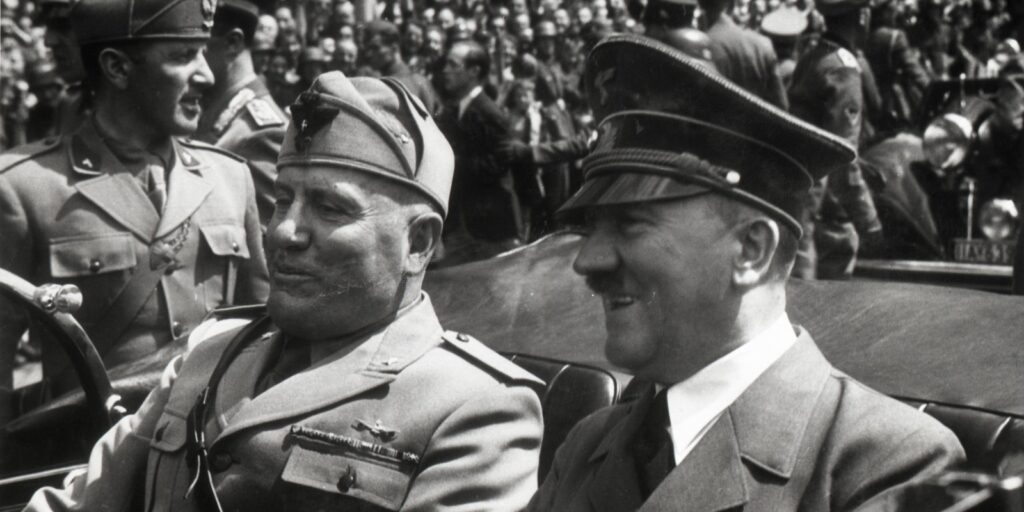
The word fascism comes from the Italian word fascio, meaning “a bundle of sticks,” which itself comes from the Latin word fasces. In ancient Rome, fasces referred to a bundle of wooden rods tied around an axe. This symbol represented the authority of Roman magistrates and was carried by their attendants, known as lictors. The bundle symbolized strength through unity—a single stick can easily be broken, but a bundle is much stronger. During the late nineteenth and early twentieth centuries, the word fasci was also used for political groups and workers’ associations in Italy. In 1919, Benito Mussolini founded the Fasci Italiani di Combattimento in Milan, which later became the National Fascist Party. Mussolini adopted the Roman fasces as the movement’s symbol to emphasize authority, unity, and national strength. Similar symbols later appeared in other fascist movements, such as the yoke and arrows used by the Spanish Falange. Defining fascism has always been difficult. Historians, political scientists, and philosophers continue to debate exactly what makes a movement or government fascist. Most scholars agree that fascist governments are authoritarian, but they also argue that authoritarianism alone is not enough to define fascism. Many authoritarian governments have existed throughout history without being fascist. Originally, fascism referred specifically to the political movement that ruled Italy under Mussolini from 1922 to 1943. Today, however, the term is also used more broadly to describe a family of similar ideologies and movements that appeared in different countries during the twentieth century. Because of these differences, scholars have tried to identify a “fascist minimum”—the essential characteristics that a movement must possess before it can accurately be described as fascist. In general, fascism is understood as a far-right ideology built around extreme nationalism, authoritarian rule, and the belief that the nation should be united under a single, powerful leader. Fascist governments reject liberal democracy, political pluralism, and individual freedoms, arguing instead that society should be organized under a one-party state capable of directing every aspect of national life. Supporters believe that such a system is better equipped to overcome economic crises, maintain social order, and prepare the nation for war. Unlike liberal or socialist ideologies, fascism sees conflict and violence as legitimate political tools. Fascists often portray war, military strength, and imperial expansion as necessary for national renewal. Economically, fascist governments generally maintained private property while allowing extensive state intervention, using protectionist and corporatist policies to achieve national self-sufficiency and strengthen the state. The experience of the First World War played a major role in the rise of fascism. The war transformed both society and government by requiring the total mobilization of people, industries, and resources. Governments gained unprecedented control over economic production and everyday life, while citizens became closely connected to the military effort. Many fascists believed that this powerful wartime state should continue after the conflict ended, providing the model for a disciplined and unified nation. Many thinkers have offered different interpretations of fascism. Mussolini himself outlined his ideas in The Doctrine of Fascism. He argued that the nineteenth century had been dominated by liberalism, socialism, and democracy, but believed the twentieth century should become the “century of authority.” According to him, the state stood above the individual, and all citizens existed primarily to serve it. He summarized this idea by declaring that “everything is in the State, nothing outside the State, nothing against the State.” Mussolini also viewed fascism as more than a political system, describing it as a spiritual and moral philosophy that united individuals within a higher national purpose. A different perspective was offered by cultural theorist Umberto Eco in his 1995 essay Ur-Fascism. Rather than defining fascism through a single ideology, Eco identified a series of recurring characteristics that often appear in fascist movements. These include a strong attachment to tradition, hostility toward modern ideas, distrust of intellectuals, and the belief that action is more important than careful reasoning. Fascist movements also encourage fear of outsiders, portray disagreement as betrayal, and frequently create conspiracy theories to unite supporters against a common enemy. Eco also argued that fascism often appeals to a frustrated middle class that feels threatened by economic or social change. It portrays enemies as both dangerously powerful and fundamentally weak, creating a permanent sense of crisis. Fascist ideology glorifies struggle and argues that peace encourages national decline. It often promotes rigid social hierarchies, rejects equality, and discourages critical thinking through simplified language and propaganda. Other scholars have emphasized different aspects of fascism. German historian Ernst Nolte described it as a reaction against Marxism, arguing that fascism developed as an opposing ideology using many of the same methods while pursuing radically different goals. Revolutionary socialist Leon Trotsky viewed fascism primarily as a tool used by capitalist elites to crush labour movements and destroy democratic freedoms during times of crisis. Meanwhile, American President Franklin D. Roosevelt argued that fascism emerges when private economic interests become so powerful that they effectively dominate democratic government. After the defeat of the Axis powers in 1945, openly fascist political parties largely disappeared. Today, the word “fascist” is often used as a political insult rather than a precise historical term. Scholars instead use labels such as “neo-fascist” or “post-fascist” to describe modern movements that share important features with earlier fascist ideologies. Because definitions vary depending on whether they focus on nationalism, authoritarianism, economics, culture, or political structure, contemporary researchers generally compare modern movements with the core characteristics identified by historical fascist regimes rather than relying on a single universal definition. Although no single definition has gained universal acceptance, most scholars agree that fascism combines authoritarian leadership, radical nationalism, rejection of liberal democracy, suppression of political opposition, and the belief that the nation can be strengthened through unity, discipline, and centralized state power. Understanding these common features allows historians and political scientists to study fascism objectively while recognizing the differences between its various historical forms. More than a century after fascism first emerged as a political movement, debates over its meaning remain as active as ever. The