
The Fall of the German Football Empire
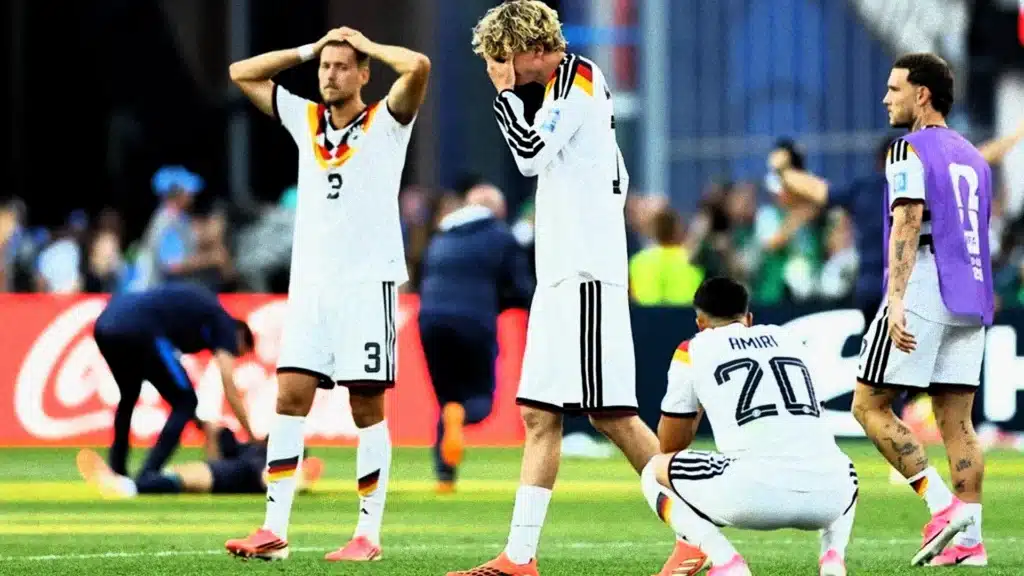
On 13 July 2014, German football reached its highest summit. Mario Götze controlled André Schürrle’s cross with sublime precision. He volleyed the ball past Argentina’s goalkeeper. Germany became world champions for the fourth time. That victory represented far more than another World Cup title. Germany looked like football’s future. The triumph crowned a fourteen-year project. After the disastrous UEFA Euro 2000 campaign, the German Football Association (DFB) rebuilt the sport from its foundations. Every professional club established academies. Youth coaching became more scientific. Technical ability received unprecedented attention. German football combined traditional discipline with modern possession play. The results were extraordinary. Germany reached four consecutive major tournament semi-finals between 2006 and 2012. They won the 2014 FIFA World Cup. Three years later, they lifted the FIFA Confederations Cup with what was essentially a reserve squad. Many believed another golden generation had already arrived. The production line appeared endless. Yet history tells a completely different story. Germany crashed out during the group stage of the 2018 World Cup. They repeated that humiliation in 2022. Now, in 2026, they have exited in the Round of 32 after losing to Paraguay. The decline has been astonishing. This was never supposed to happen. Germany possessed elite infrastructure. Their clubs remained financially stable. Their coaching standards ranked among the world’s best. Youth development continued receiving heavy investment. Nothing suggested such a dramatic collapse. Yet tournament after tournament exposed the same weaknesses. Germany controlled possession without threatening opponents. They dominated statistics while losing matches. They lacked ruthless finishers. Individual brilliance disappeared. Tactical sophistication replaced competitive instinct. The country’s greatest footballing strength slowly became its greatest weakness. Many explanations have emerged over the past decade. Some blame Joachim Löw for staying too long. Others criticise Hansi Flick or Julian Nagelsmann. Some argue Germany simply produced a weaker generation. These explanations contain elements of truth. None explains the full picture. Germany’s decline was neither sudden nor accidental. It resulted from structural complacency, changing football economics, tactical identity crises and the evolving nature of the modern game. The warning signs appeared long before the defeats. Success simply hid them. Reason 1: Systemic Complacency created Good Footballers instead of Great Ones Every football dynasty eventually faces one dangerous question: What happens after success? Great sporting nations constantly reinvent themselves. Declining nations assume yesterday’s formula will continue working forever. Germany chose the second path. The 2014 World Cup victory became the endpoint of a revolution instead of the beginning of another. After Euro 2000, German football underwent perhaps the most successful rebuilding programme in modern sporting history. Every Bundesliga club established youth academies. Coaching standards improved dramatically. Technical development became mandatory. Sports science transformed player development. The reforms produced exceptional footballers. Philipp Lahm represented intelligence and versatility. Bastian Schweinsteiger combined technique with endurance. Toni Kroos dictated matches effortlessly. Thomas Müller redefined off-the-ball movement. Manuel Neuer revolutionised goalkeeping. These players emerged from a system that successfully modernised German football. The DFB naturally believed the model had solved Germany’s historical weaknesses permanently. That assumption proved costly. Football never stands still. Every successful model eventually requires renewal. Instead, Germany continued producing the same profile of player. Academies increasingly prioritised technical consistency over individual uniqueness. Coaches emphasised positional understanding over instinctive creativity. Tactical flexibility became more valuable than specialised excellence. The results looked impressive on paper. German youngsters became technically refined. They understood complex tactical systems. They could play multiple positions. They rarely made basic mistakes. Yet something important quietly disappeared. Germany stopped producing footballers capable of deciding matches alone. The country’s academies increasingly manufactured excellent professionals rather than extraordinary talents. This difference matters enormously in knockout football. Tournament football rarely rewards perfect systems. It rewards players capable of creating something unexpected. Germany traditionally possessed those players. Not always flashy. Always decisive. By the late 2010s, that production line had slowed dramatically. Elite dribblers became rare. Creative number tens almost vanished. Natural wingers disappeared. Fearless risk-taking gave way to tactical obedience. The modern German footballer often became predictable. Technically excellent. Tactically disciplined. Physically competent. Mentally prepared. Yet rarely capable of producing genuine moments of genius. Compare Germany with other leading football nations. France constantly produces explosive attackers. Spain continues discovering gifted midfielders. Brazil never stops producing skilful dribblers. Argentina somehow always finds creative forwards. Germany increasingly produced versatile midfielders who resembled one another. The system rewarded balance. Modern football increasingly rewarded difference. No position reflected this decline more clearly than centre-forward. Germany historically enjoyed extraordinary riches in that role. Gerd Müller was the greatest forward of the world in the decade of the 70s. Rudi Völler defined an era. Jürgen Klinsmann inspired another. Oliver Bierhoff became a European champion. Miroslav Klose became the World Cup’s greatest goalscorer. Mario Gómez terrorised defenders throughout Europe. Each represented a genuine number nine. Each frightened opponents before kickoff. Each offered Germany a reliable source of goals. Then the production line stopped. Timo Werner possessed remarkable pace but lacked clinical finishing. Kai Havertz developed into an intelligent attacking player. Yet he never became a natural striker. Niclas Füllkrug emerged too late to lead an entire generation. Germany suddenly entered tournaments without a world-class centre-forward. That absence fundamentally changed their football. Possession increased. Goals declined. Crosses entered penalty areas without obvious targets. Opponents defended comfortably because Germany lacked aerial dominance. The country’s traditional attacking identity quietly disappeared. Ironically, Germany once helped define modern centre-forward football. Now they often played without one. The obsession with versatility partly created this problem. Modern German forwards learned multiple positions. They drifted wide. Dropped deeper. Linked midfield play. Pressed aggressively. Everything except consistently scoring goals. Football eventually punishes teams lacking specialists. Germany discovered this repeatedly. The academy system remained efficient. It simply solved yesterday’s problems instead of tomorrow’s challenges. Efficiency became an end rather than a means. Predictability replaced imagination. Competence replaced excellence. That subtle transformation explains why Germany continued producing good footballers while gradually losing great ones. The decline began long before tournament eliminations made it visible. Reason 2: The Bundesliga lost control of