
SP workers unveil posters depicting Akhilesh Yadav as Krishna

On July 1, Samajwadi Party workers in Varanasi marked party president Akhilesh Yadav’s 53rd birthday with a ceremony that included a havan ritual and the display of posters. The posters depicted Yadav in the form of Lord Krishna with multiple arms, shown holding books, and drew attention for their symbolic and political messaging. The celebrations were organised at various locations in the city, combining religious imagery with political expression as part of the birthday observances.
Mass celebrations in Guadalajara as Mexico reach FIFA World Cup

Mass celebrations erupted across Guadalajara and other parts of Mexico after the Mexico national football team created history by winning a FIFA World Cup knockout match for the first time, defeating Ecuador 2–0. The victory marks a major milestone as Mexico advance to the Round of 16 in the FIFA World Cup, where they will face either England national football team or DR Congo national football team, depending on upcoming results. Following the historic win, supporters poured into the streets waving flags, cheering, and celebrating a landmark moment in Mexico’s World Cup campaign. The achievement is being hailed as one of the most significant in the national team’s recent football history, with fans marking a proud new chapter for Mexican football.
Caesar’s Calendar: How One Man Rewrote Time
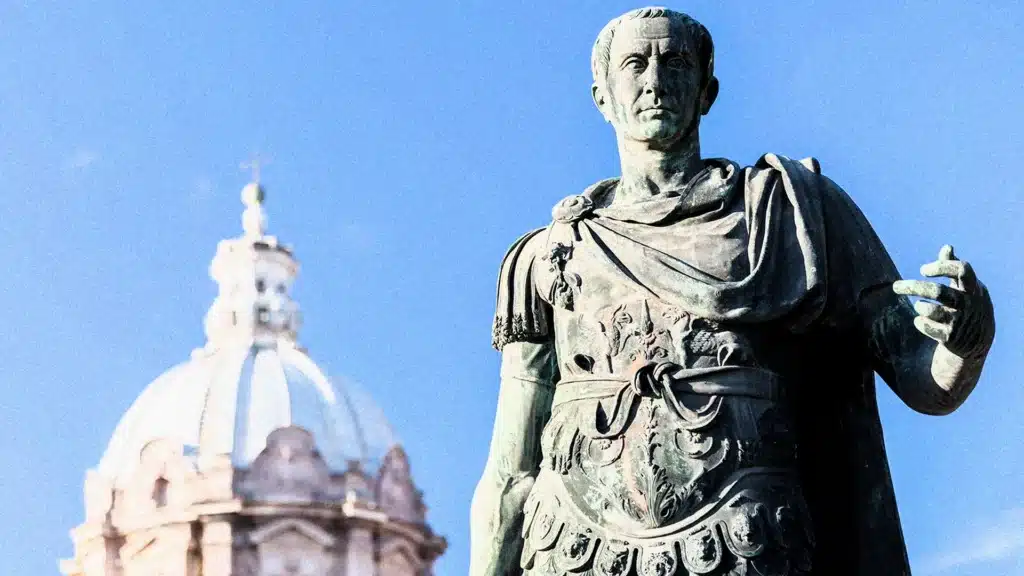
There is a popular version of this story told as trivia every year. Julius Caesar named July after himself. It is true, as far as it goes. But it is a small fragment of a far stranger story. That story involves a general who decided he could override the seasons. It involves a calendar year that lasted 445 days. It ends with a Pope deleting ten days from history. July sits at the centre of all of it. Caesar broke time. Not metaphorically, literally. He looked at a calendar three months adrift from the actual sun and decided to fix it. The year was 46 BC. His solution was to make that year 445 days long. Then he started fresh. What followed was a calendar so dominant it still structures every single day of your life. But Caesar’s reform came with a quiet anomaly buried inside it, one most people walk past every year without noticing. September means seventh month. October means eighth. November means ninth. December means tenth. Yet September is our ninth month. October our tenth. November our eleventh. December our twelfth. The numbers are wrong by exactly two. They have been wrong for over 2000 years. Nobody fixed them. To understand why, you have to go back to before Caesar, to a Rome that began its year not in January, but in March. A calendar that had drifted out of reality Long before Caesar rose to power, Rome ran on a lunisolar calendar. It tried to track the moon’s phases while keeping rough pace with the solar year. The trouble was fundamental. Twelve lunar months add up to about 354 or 355 days. The Earth takes 365.25 days to orbit the sun. Left uncorrected, the calendar slips backward through the seasons within years. Rome’s solution was to periodically insert an extra month, called intercalation. The priests responsible for this were called pontifices. They were not simply astronomers doing careful arithmetic. They were politically motivated officials. The length of the calendar year had direct political consequences. It could extend or shorten a magistrate’s term in office. It could delay elections or push back the date a tax was due. Over time the calendar drifted badly. Romans were celebrating harvest festivals before they had even started planting. By the time Caesar reached the summit of Roman politics, things were severe. The Roman civic calendar had drifted three months ahead of the actual solar year. Three months. That is not a rounding error. Spring festivals were happening in what should have been winter. The entire administrative machinery of Rome ran against a calendar no longer matching the sun. Caesar had seen a better way. During his time in Egypt, he encountered the Egyptian solar calendar. It ignored the moon almost entirely. It tracked the sun with remarkable precision. He brought back the Alexandrian astronomer Sosigenes to help design the reform. The plan was to build Rome a solar calendar — clean, predictable, and impossible to corrupt. The fix required breaking time first Caesar did not reform the calendar as a politician or a general. He did it as the Pontifex Maximus. That was the highest religious office in Rome. It gave him supreme authority over the Roman calendar. The Pontifex Maximus decided when months began and when days were added. He controlled time, officially and legally. Caesar did not simply flip a switch from the old system to the new. The calendar was three months adrift. That gap had to be closed in one decisive move. Before the new system could begin cleanly, the existing chaos had to be fully absorbed. The solution was drastic. The year 46 BC was stretched to 445 days. That is roughly 80 days longer than a normal year. The year had already been extended to 378 days through a regular intercalary month. Caesar then added 67 more days by inserting two extraordinary months between November and December. He did this by edict. The Roman state simply obeyed. Caesar looked at centuries of accumulated chaos and said: this year doesn’t count normally. We will make it enormous. Then we start fresh. Romans living through this experienced something almost unimaginable. Two extra months appeared in the calendar by decree. They were raw inserted time, not traditional months at all. Ancient sources record the bewilderment this caused. The year 46 BC became known as the Year of Confusion. It was not confusion caused by disorder. It was confusion caused deliberately, by a single man with total authority over Roman time. This moment is one of the most direct demonstrations of political power in ancient history. A single human being looked at centuries of broken timekeeping. He decided to absorb all of it in one enormous year. Then he ordered everyone to start again. The calendar that actually stuck The new system took effect on 1 January, 45 BC. Its structure was, by ancient standards, remarkably elegant. The year had twelve months. Most had 30 or 31 days. February had 28, with 29 every fourth year. That fourth year was the leap year. The genius was its simplicity. Instead of relying on priestly judgment, it used a fixed, predictable rule. No politics. No corruption. Just arithmetic. This is also where a quiet oddity was born that survives to this day. July was previously called Quintilis — the fifth month. The year had originally started in March. When January became the first month, the numbering was never corrected. September means seventh month. It is our ninth. October means eighth. It is our tenth. Those mismatches are fossils of the older Roman calendar, preserved through every reform that followed, including Caesar’s. The new calendar did not run smoothly from the start. After Caesar’s assassination, the priests made a mistake. They added the leap day every three years instead of every four. Inclusive counting was the culprit — they counted the leap year itself as the first year of the next cycle. Augustus eventually had to suspend leap years entirely