
When Green Turns Red on Guwahati’s Roads
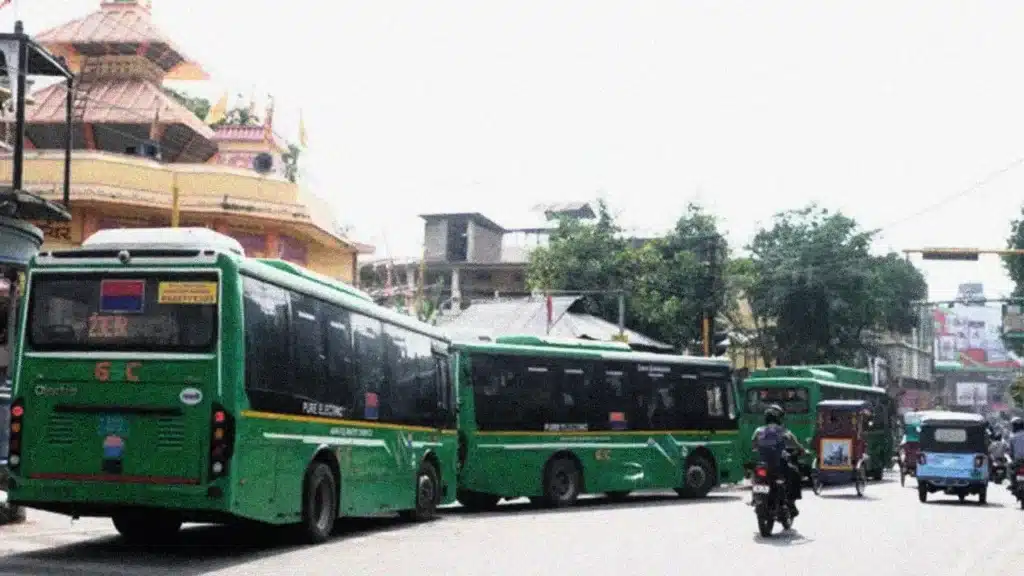
“These Green Buses have been a nightmare for us ever since they started running.” This is a common complaint. It comes from commercial and private drivers alike. It targets the ‘Green’ EV buses plying Guwahati‘s roads. Their effectiveness can certainly be debated. Over the past couple of years, the buses have become deeply divisive. They are a topic that splits opinion in Northeast India’s biggest city. The Old Guard: Diesel Giants of the Past For years, Guwahati’s streets were ruled by private buses. These were the so-called ‘Mini City Service’ buses. Decrepit and diesel-guzzling, they were a headache for everyone. Drivers created stops out of thin air. Passengers waited an eternity at designated stops. As the city expanded, these old buses could not keep pace, and they became a growing environmental burden. A Bold Promise rolls onto the Streets Against this backdrop, the Assam Government unveiled an ambitious plan. It rolled out 200 air-conditioned electric buses under the “Green Bus” initiative. Chief Minister Himanta Biswa Sarma promised cleaner air, quieter roads, and less diesel dependence. He also promised a more dignified commuting experience. The buses embodied the idea of a modern, sustainable city, and expectations soared almost overnight. Few initiatives in recent years generated this much genuine optimism. Electric buses were expected to reshape public transport entirely. Officials hoped emissions would fall while more people abandoned private vehicles. Comfortable seating, air-conditioning, and lower operating costs made the buses attractive. The Green Bus seemed destined to become a genuine success story. From Admiration to Anxiety Unfortunately, for many commuters today, feelings have shifted dramatically. The Green Bus evokes not admiration but growing anxiety. Passengers describe boarding these buses with quiet apprehension. Motorists on the road often express similar discomfort. This shift did not happen overnight, but steadily. The gap between promise and lived experience widened with each month. It’s Not the Machine, It’s the Man The problem is not the buses themselves. These vehicles remain technologically advanced and environmentally beneficial. The real problem lies behind the steering wheel, and in the institutional failure to regulate operators. Good technology cannot compensate for poor management. A bus, however advanced, is only as safe as its driver. Across Guwahati, commuters have voiced mounting concerns repeatedly. They report rash driving, abrupt lane changes, and dangerous overtaking. Buses often stop unpredictably in the middle of roads. These practices create serious traffic bottlenecks and increase collision risk. Most damagingly, they undermine public confidence in transport itself. Perhaps the greatest tragedy is this: a project meant to improve urban life now provokes fear. Three Pillars, Two Crumbling Every successful public transport system rests on three pillars. These are reliable infrastructure, professional drivers, and strict oversight. Remove even one pillar, and the whole system falters. Guwahati’s Green Bus programme fails on two of these pillars. The infrastructure remains reliable, but under-trained, stubborn drivers undermine that foundation. An inert administration seems unable to rein in reckless behaviour. No Room for Cowboy Driving Operating a full-sized electric bus is not like driving a car. These vehicles are longer, heavier, and need greater stopping distances. They operate amid dense, chaotic environments filled with pedestrians, cyclists, and two-wheelers. Schoolchildren, street vendors, and informal markets add further complexity. Such conditions demand exceptional discipline and patience from every driver. Instead, many commuters describe journeys marked by chaos. Sudden braking, aggressive acceleration, and hurried overtaking alarm passengers and pedestrians alike. Drivers often stop mid-road and simply refuse to move, forcing prolonged honking. Even when no accident occurs, the perception of danger discourages people from choosing public transport. The Irony Nobody Can Miss The irony here is genuinely impossible to ignore. The Green Bus programme aimed to encourage a specific shift. It wanted residents to abandon private vehicles for public transport. Yet if passengers feel unsafe while riding these buses, something fails. If motorists fear sharing the road with them, something fails too. The programme then defeats one of its core original objectives. Stopping Anywhere, Disrupting Everywhere Equally troubling remains the recurring issue of bus stops. Efficient urban transport depends heavily on basic predictability. Buses should stop only at clearly designated locations. When buses halt randomly in the middle of roads, chaos follows. The consequences ripple outward across the entire traffic network. Vehicles directly behind are forced into sudden, jarring braking. Motorcycles weave dangerously between lanes to avoid collisions. Traffic queues lengthen rapidly within just a few minutes. In a city already short on road space, this matters greatly. Yet such disruptive practices seem to have become disturbingly routine. Where Has Accountability Gone? This pattern raises an uncomfortable but necessary question. Where exactly is institutional accountability in this entire system? Public transport simply cannot function on good technology alone. It requires constant supervision paired with rigorous performance evaluation. It also requires consistent enforcement of clear operational standards. Without these elements, even the best buses will fail commuters. A professionally managed transport corporation should monitor driver behaviour closely. This means tracking GPS analytics and reviewing onboard camera footage. It means analysing speed data alongside genuine passenger feedback. Surprise inspections should occur without prior warning to drivers. Drivers who repeatedly violate safety norms need real consequences. These might include counselling sessions or mandatory retraining. Persistent violations should eventually lead to suspension or removal. Such patterns deserve serious investigation, not casual dismissal as isolated events. Data, Dashcams, and Discipline Technology already offers powerful tools for meaningful oversight. Modern electric buses can record speed and braking patterns automatically. Dash cameras and CCTV footage can help investigate complaints fairly. Complaint portals and QR-code feedback systems empower commuters directly. None of these represent futuristic or unrealistic ideas anymore. They are standard practices in many established transport systems worldwide. Guwahati simply needs the will to implement them properly. Equally important remains the role of active traffic enforcement. Road safety cannot depend solely on driver goodwill. Visible, consistent enforcement genuinely creates lasting discipline. Consistent penalties for dangerous driving send a clear message. When enforcement feels inconsistent, poor habits quickly become normalised. Their sheer scale