
Multiple explosions shake Emmanuel Macron’s hotel

Multiple explosions were reported in central Damascus on Tuesday during French President Emmanuel Macron’s official visit to Syria. The blasts occurred near the Four Seasons Hotel, where Macron and the French delegation were staying. At the time of the incident, Macron was meeting Syrian President Ahmad al-Sharaa. Security forces swiftly secured the area, and authorities launched an investigation into the explosions. French and Syrian officials confirmed that President Macron was unharmed and that no members of the French delegation were injured. The cause of the explosions remains unknown, and no group has claimed responsibility so far. Macron’s visit marks a significant diplomatic engagement between France and Syria, making the security incident particularly noteworthy. Authorities are expected to release further information as the investigation continues.
7/7 and the Final Chapter of Sport’s Greatest No. 7s
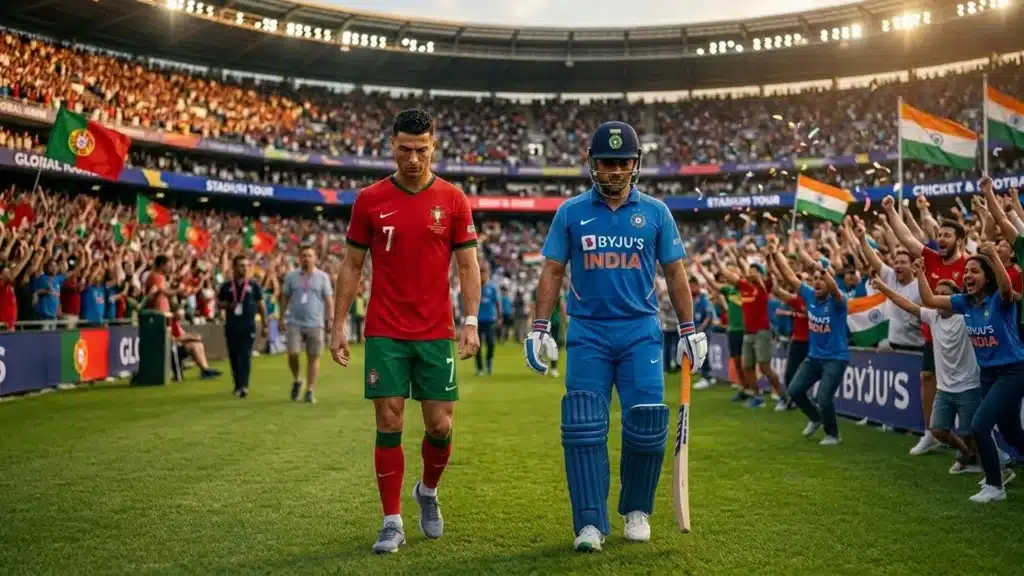
Sport occasionally gifts us dates that feel almost poetic. The seventh of July is one such date. It is the birthday of MS Dhoni, India’s greatest captain and cricket’s ultimate finisher. Millions celebrate the man who transformed Indian cricket forever. It is also the day Cristiano Ronaldo likely played his final FIFA World Cup match. Portugal’s dream ended against Spain. Perhaps Ronaldo’s own World Cup dream ended with it. Neither man received the farewell his greatness deserved. Dhoni quietly disappeared from international cricket after the 2019 World Cup. Ronaldo left the biggest stage in defeat instead of triumph. Yet neither needed a perfect ending to secure immortality. Their careers unfolded in different sports and different cultures. Their journeys still echo each other in remarkable ways. Both rose from unlikely places. Both redefined excellence. Both carried entire nations on their shoulders. Both became symbols larger than their sports. Their stories also diverged at crucial moments. One embraced silence. The other embraced the spotlight. One accepted time. The other challenged it until the final whistle. On 7 July, those two extraordinary journeys unexpectedly meet. They Were Never Supposed to Rule Their Sports Neither man was born where greatness was expected. MS Dhoni grew up in Ranchi, far from India’s cricketing establishment. The spotlight usually belonged to Mumbai, Delhi, or Bengaluru. His journey lacked elite academies or influential mentors. He worked as a railway ticket collector while chasing his dream. Every opportunity demanded patience and persistence. Cristiano Ronaldo’s story began on Madeira, far from Portugal’s footballing centre. His family lived with modest means. His parents sacrificed deeply for his ambitions. He left home as a teenager to join Sporting CP. His father died before he became the superstar he is today. He was talented but painfully skinny. Many doubted his physique could survive elite football. Neither inherited privilege. Neither enjoyed a straightforward path. They earned every opportunity through relentless work. Talent opened the first door. Discipline forced the remaining doors open. Their rise challenged assumptions about geography and background. They proved greatness could emerge from the margins. The establishment never created Dhoni or Ronaldo. Instead, Dhoni and Ronaldo forced the establishment to recognise them. The Obsessive Pursuit of Greatness Talent introduced them to the world. Obsession kept them there. Dhoni constantly reinvented himself throughout his career. He began as a fearless hitter with unorthodox technique. He endured years in domestic cricket while his contemporaries reached India before him. Later, he reinvented himself and gradually became cricket’s finest finisher. Later, he evolved into a tactical mastermind behind the stumps. His greatest strength became decision-making instead of power. Ronaldo’s transformation was even more visible. He arrived as an entertaining winger with dazzling tricks. He left as football’s most complete goalscorer. Every improvement reflected relentless discipline. His diet became legendary, his recovery routines became benchmarks. His fitness remained extraordinary into his forties. Every season demanded another reinvention. Both refused to become prisoners of natural talent. Yet they chased greatness differently. Ronaldo pursued perfection through physical excellence. Every weakness demanded correction. Dhoni pursued efficiency through simplicity. He removed unnecessary movements instead of adding new ones. One refined the body. The other refined the mind. Both eventually mastered their sports through relentless evolution. Two Different Definitions of Leadership Leadership rarely wears one face. Dhoni led with silence. He never sought the loudest voice in the dressing room. His speeches were brief. His actions carried greater weight. He empowered younger teammates without seeking personal credit. Victories belonged to the team. Defeats belonged to the captain. Away from cricket, he remained equally reserved. He rarely gave interviews. Controversies rarely found him. He allowed mystery to strengthen his image. Ronaldo chose the opposite path. He embraced responsibility publicly. His emotions were never hidden. His celebrations reflected confidence. And his tears reflected commitment. He demanded excellence from everyone around him. His standards became contagious. Beyond football, he built a global brand. He became one of the world’s most recognisable athletes. The spotlight never intimidated him. He made it his home. One legend embraced fame. The other carefully controlled it. One inspired through quiet confidence. The other inspired through visible intensity. Neither approach was superior. Both produced extraordinary leaders. Greatness has many languages. Leadership is one of them. Leaders Who Changed Their Nations Great players win matches. Great leaders change how nations think. When Dhoni became captain, Indian cricket needed direction. The scars of the 2003 World Cup still lingered. Indian cricket also needed a fresh identity. Dhoni provided exactly that. He won the inaugural T20 World Cup in 2007. He ended India’s 28-year wait for the ODI World Cup in 2011. And then he completed the ICC treble with the Champions Trophy in 2013. More importantly, he transformed India’s white-ball culture. Pressure became an opportunity instead of a burden. Every difficult chase seemed possible with Dhoni at the crease. His composure became a national sporting philosophy. Captain Cool was more than a nickname. It became an ideal. Ronaldo inherited a different challenge. Portugal had produced legends but rarely fulfilled its promise. The national team lacked belief on the biggest stages. It was ranked 36th at one point of time. Ronaldo changed that forever. He inspired Portugal to the European Championship in 2016. Another Nations League title followed. For two decades, Portugal’s hopes wore the number seven. Children grew up believing Portugal belonged among football’s elite. Neither man merely collected trophies. They transformed the sporting identities of their nations. That may be their greatest achievement. When Age Came Calling Every athlete eventually faces the same opponent. Time never loses. Dhoni recognised that reality earlier than most champions. His batting gradually became less explosive. His reflexes inevitably slowed. He adapted instead of resisting. He accepted smaller roles for the team’s benefit. Then he quietly stepped away from international cricket. There was no farewell series. There was no emotional stadium tour. Only a simple Instagram post announced the end. It perfectly reflected the man himself. Ronaldo chose a different battle. He refused to surrender