
The End Of Brazil’s Football Aura?
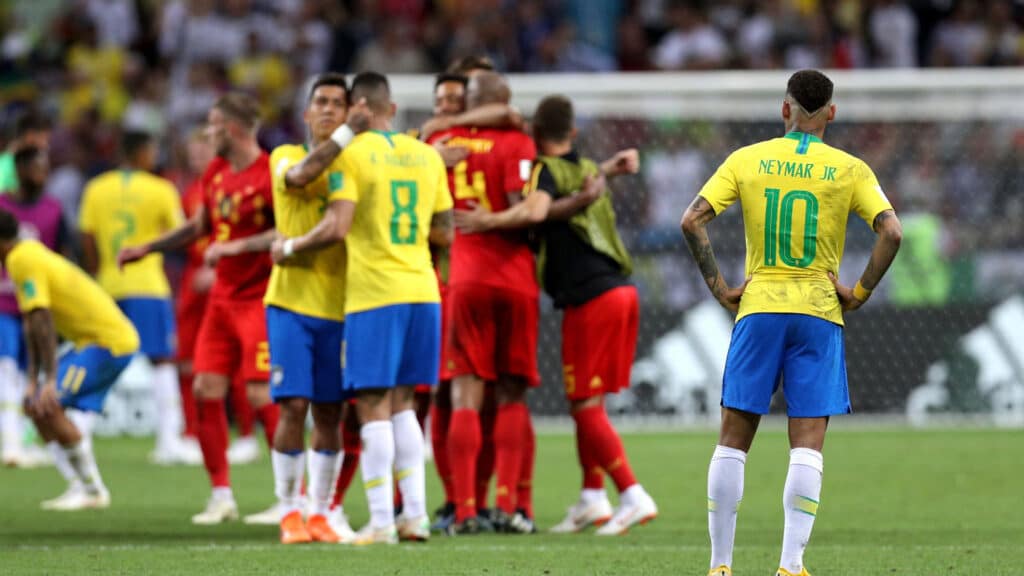
The yellow shirt once made opponents nervous before a ball was kicked. Now it carries a weight that feels almost paralyzing. Brazil is the only nation to qualify for every World Cup edition. It has also won the tournament five times, more than any other country. Yet Brazil has not reached a final since lifting the trophy in 2002. Another campaign has now ended before the last four. The same painful questions are surfacing all over again. For a football-mad nation, that repetition is becoming harder and harder to accept. Every four years, hope rises again, and every four years it ends the same way. This time, the elimination came earlier than most had honestly expected. Football has simply changed faster than Brazil has. The modern game rewards structure and collective discipline over flashes of individual brilliance. Brazil still produces extraordinary individual footballers, year after year. However, it has been slower than Europe to adapt tactically. Today’s football depends on pressing, compact defensive lines, and rapid transitions. It also leans heavily on data analysis and careful squad rotation. Brazil’s old faith in spontaneous genius sits awkwardly beside that machinery. The gap between Brazil and the leading nations is no longer about talent. It is about tactics, planning, and long-term consistency across cycles. Closing that gap will take more than simply finding better players. It will require patience, and patience has rarely been Brazilian football’s strongest quality. The Tactical Identity Crisis : Brazil’s long wait for another title owes plenty to its own dugout. The Brazilian Football Confederation has changed managers after nearly every World Cup cycle. That revolving door has stopped the team from building anything like a long-term project. Each new coach arrives with a different footballing philosophy. Players are left adjusting to new demands every single time. The result is a national side that struggles to settle on an identity. Some argue Brazil’s coaches have grown too cautious in recent years. They have traded old attacking flair for rigid defensive shape instead. That leaves the team stuck awkwardly in between two worlds. It is no longer frightening in attack like before. It is also not yet reliable enough in defense either. Fans are left watching a team without a clear sense of its own strengths. This identity crisis fuels constant argument among fans and pundits alike. Coaches keep changing, but the deeper problem runs much further. There is no shared blueprint connecting the youth system to the senior side. From tournament to tournament, the tactical approach keeps shifting entirely. Brazil often looks like a group of gifted individuals rather than a settled unit. When matches demand a quick tactical adjustment, the coaching staff often hesitates. Rejuvenated European sides and increasingly physical South American rivals have exposed this hesitation repeatedly. Brazil can no longer win purely on reputation and history. In recent tournaments, games have often turned tactically in the second half. Brazil has repeatedly struggled to respond in time. That pattern has now repeated across several different World Cup cycles in a row. Opposing coaches increasingly plan specifically around exploiting this exact weakness. Until Brazil fixes it, knockout football will keep punishing the same mistake. Every tournament seems to bring a new coach facing the exact same old problem. The Cost of European Influence : Brazilian football built its global reputation on flair, joy, and constant improvisation. Fans nicknamed this style Jogo Bonito, meaning the beautiful game. Today’s players look like products of a very different school. They are shaped by rigid, highly structured European coaching systems from an early age. Some critics say young Brazilians are no longer taught to express themselves freely. Individual creativity now often takes a back seat to strict positional discipline. Structure certainly matters in the modern game, without any question at all. Yet plenty of observers feel Brazil has sacrificed too much of its old identity. That old identity once made the national team beloved across the entire footballing world. Losing even part of it feels, to many supporters, like losing something irreplaceable. Much of this shift traces back to how early young Brazilian talents leave home. Domestic clubs chase quick transfer fees rather than long-term player development. They send teenagers abroad almost as soon as any promise appears. Those players then grow up almost entirely inside European coaching structures. They become tactically disciplined but slowly lose touch with old improvisational instincts. Domestic clubs rarely keep a young star long enough to build around him. Brazil’s own domestic league has weakened badly as a direct result of this pattern. It struggles constantly to hold onto players during their peak playing years. This constant churn disrupts squad chemistry and long term continuity at every single level. It is no surprise that fans increasingly describe the national team as more European than Brazilian. That comment applies to both style of play and overall temperament on the pitch. For a nation that once exported its footballing philosophy worldwide, that shift stings. It also raises hard questions about what Brazilian football should look like going forward. Some argue the answer lies in blending both worlds rather than choosing one over the other. Others believe Brazil should simply trust its own footballing instincts again. The Knockout Curse : The numbers tell an uncomfortable and remarkably consistent story here. Over the last six World Cups, a clear pattern has taken firm shape. Brazil keeps losing at the hands of well-drilled European sides. Since the historic 2002 win, Brazil has reached the semi-finals only once. In 2006, they lost 0–1 to France in the quarter-finals, outplayed by a Zinedine Zidane masterclass in midfield. Then, a chaotic second-half defensive collapse caused a 1–2 quarter-final loss to the Netherlands in 2010. Four years later, they suffered the heaviest defeat in World Cup history, losing 1–7 to Germany in the semi-finals. In 2018, a ruthless, lightning-fast Belgium picked them apart on the counter-attack for another 1–2 quarter-final exit. Croatia then knocked them out on penalties after a late equalizer deep in
The Emergency Europe Keeps Refusing to Solve
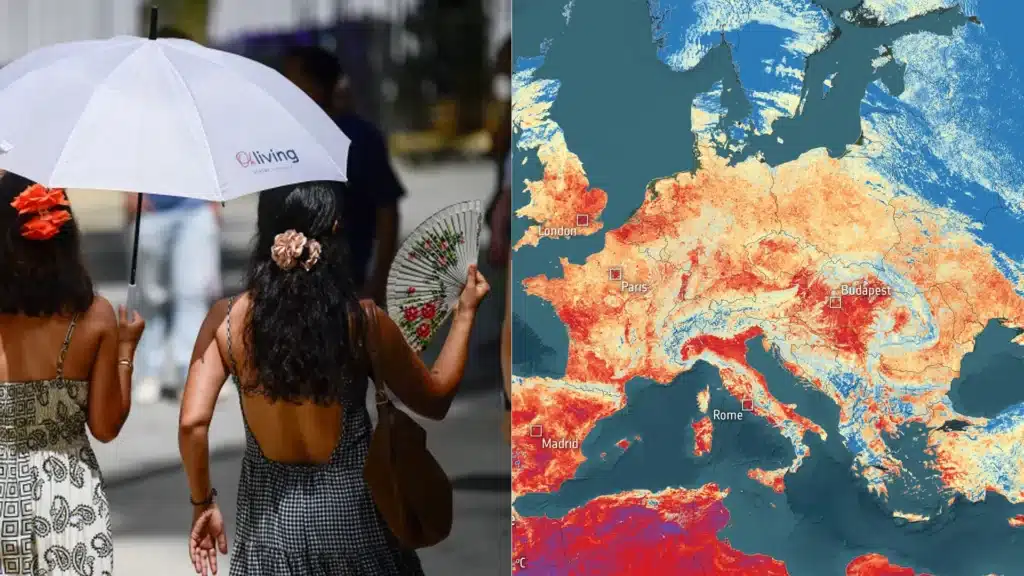
On June 24, 2026, France recorded its hottest day since measurements began in 1947. The record it broke had been set the day before. The temperature reached 44.3 degrees Celsius in parts of the country. The killer was not a disease, not a conflict, not a natural disaster in any conventional sense. It was the temperature outside. In Belgium, electricity prices broke records as power stations strained under surging demand. In the Netherlands, bridges stopped working. Roads buckled. Rail lines bent. In Spain, over 200 people died in four days. Across Europe, the death toll crossed 1,300 people in just ten days. At least 55 people drowned in France alone, seeking relief in unsupervised swimming spots. This is not a story about bad weather. It is a story about a continent that knew this was coming. Europe is the fastest-warming landmass on Earth. It heats at twice the global average. It has faced record heatwaves in 2003, 2019, 2022 and now 2026. The world has warmed by nearly 2 degrees Fahrenheit over the past 50 years. A similar heatwave in 1976 would have been 6.3 degrees Fahrenheit cooler. Each time disaster strikes, officials express shock. Each time, the structural problems are left intact when the heat breaks. Nothing fundamental changes. The cycle simply repeats. A CONTINENT BUILT FOR COLD The most fundamental reason Europe struggles with heat is architectural. The continent’s housing stock was built over centuries to keep warmth in. Thick stone walls, small windows, dark rooftops, dense urban construction all designed around one assumption. Cold was the primary enemy. That assumption made sense for most of European history. It no longer does. The climate these buildings were designed for has shifted permanently beneath them. Only 20% of European homes have air conditioning. In the United States, that figure is 90%. In the United Kingdom, it sits at just 7%. France has experienced two of its hottest summers on record within a decade. Yet the vast majority of French homes including social housing and elderly care facilities have no mechanical cooling. When nighttime temperatures stay above 25 degrees Celsius, the body cannot recover from daytime heat stress. In a continent where most bedrooms trap heat rather than shed it, the night becomes as dangerous as the afternoon. High night-time temperatures are where the real killing happens. Prolonged heat causes dehydration, cardiovascular stress, respiratory failure and kidney injury. The elderly are most vulnerable. Europe has one of the oldest populations in the world. They are concentrated in old, dense, poorly ventilated urban housing. France’s excess deaths this heatwave are disproportionately among people over 65. Of the 52 heatwaves recorded in France since 1947, two-thirds have occurred since the beginning of the 21st century. This is not a coincidence. It is entirely predictable. It has been predictable for years. And yet the housing has not changed. INFRASTRUCTURE THAT WAS BUILT FOR A DIFFERENT WORLD The deaths are the most visible failure. The infrastructural breakdown is equally revealing. In the Netherlands, drawbridges malfunctioned across multiple cities. Roads suffered structural failure under thermal expansion. Rail networks buckled. Residential electricity consumption jumped by 50% as people turned on whatever cooling they had. The grid strained to keep up. Emergency engineers worked through the night across multiple countries simultaneously. In Germany, Deutsche Bahn allowed passengers to cancel bookings as heat threatened tracks, signals and overhead lines. In France, schools closed. Museums shut early. In Paris, people crowded into the Metro seeking shade. Underground temperatures sometimes exceeded those above ground. The current heatwave is being driven by an omega block weather pattern, a formation named for the Greek letter it resembles. It traps hot, dry air from North Africa over a region and pushes temperatures up to 18 degrees Celsius above their seasonal average. The system was not designed for this. None of them were. These failures do not stand alone. They connect. Every system broke because engineers built it for a different world. European railways cannot handle these temperatures. Electrical grids were never designed for mass cooling demand. Hospitals have no heat resilience built into them. The continent built everything for a climate that has now changed permanently. Scientists say this heatwave would have been virtually impossible just a few decades ago. Heatwaves that were once once-in-300-year events now occur more than once a decade. When everything fails at once, under conditions now becoming routine, the word unprecedented stops being accurate. This is a pattern. THE AIR CONDITIONING DILEMMA The question of air conditioning has split Europe. The answer should be simple — people are dying, cooling saves lives. In practice, it has become one of the most contested debates in European climate politics. The EU is phasing out HFCs, the greenhouse gases that power most conventional AC units, while simultaneously facing record demand for cooling. The Fit for 55 strategy has tightened quotas significantly. Manufacturers are shifting toward natural refrigerants. The transition is necessary. But it is happening at the worst possible moment. Climate activists argue that mass AC adoption would strain renewable energy targets and accelerate the very warming driving these crises. Every unit sold commits the grid to years of additional emissions. For some, the greater good must come first. It is a position easier to hold when you already have ways to stay cool. It is an argument made by people with options, directed at people without any. The WHO estimates over 200,000 Europeans have died from heat-related causes in four years. Most deaths were preventable. Denying cooling to elderly people in unventilated social housing is its own form of harm. Calling AC a luxury rather than a public health necessity is a moral position dressed as an environmental one. The right-wing response has been to exploit this tension, largely in bad faith. The same politicians championing AC have opposed the emissions reductions that would slow this warming. But the underlying grievance is real. Wealthier households can buy cooling or leave overheated cities. Renters, the elderly, and lower-income families cannot.