
Temple Corridor: How the State Bought Its Way Back into the Temple
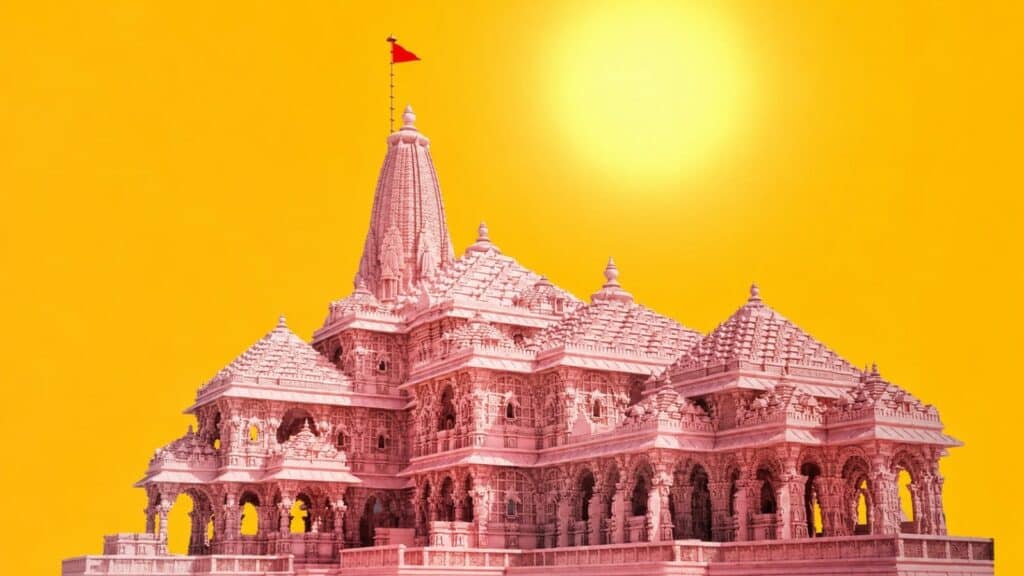
The flagship religious infrastructure project of the current government quietly dwarfed a long-standing demand. What the verdict didn’t settle. Imagine a karsevak, a litigant, or a bystander picturing life after a favourable Ram Janmabhoomi verdict. It would not take much imagination to picture the joy that followed. But there was more than celebration alone that preceded the legal victory. We were just as quickly handed new responsibilities and new questions. How could this single win serve the wider welfare of Hindus and Hinduism? How should the temple now be managed and run? These questions had long been debated in the “free temple” discourse. Although I would argue “free temple movement” is itself a misnomer. Undoing state control over temples is only half the job. The harder, often neglected half is building a Hindu trust capable of running temples well. That trust must be capable of delivering on standards laid down by wiser voices in the discourse. In that sense, the verdict tested our ability to deliver on years of theorizing on temple discourse. Yet the free temple movement was dwarfed by the scale of this once-in-a-century event. Partly, this was also because the movement has primarily camped in southern states. To this day, very few free-temple believers have pushed to undo temple control in BJP-ruled states. That is likely because BJP itself kickstarted this movement and similar temple initiatives. In doing so, BJP spun a cocoon around itself, immune to the suspicion tied to state control. Never Just a Temple Look past the temple gates. What you find is an entire town re-engineered around a temple. Wider roads, new footpaths, and public sanitation infrastructure has made its place in city landscape. In more ambitious cases, even airports get built. They anticipated the footfall a “developed” temple town would generate. Multitudes of land get folded into the original temple grounds along the way. Temple corridors never really limited themselves to a temple’s traditionally marked boundaries. Rather, the project naturally spilled out to re-engineer the city itself. Fair enough: temples in their traditional settings were never meant to stand in solitude. They were always accompanied by a kshetra, sacred groves, mountains, rivers, and smaller shrines. So, it’s not surprising that anyone revamping the kshetra wouldn’t stay within the temple’s boundaries alone. Corridors fairly treated the temples as one node in a larger, interconnected web, rather than an isolated structure. From Sacred to Spectacular We also saw a heavy push to connect the temple town with devotees at scale. Efforts were made to make it more accessible to tourists. Promises followed, of giving the temple genuine global fame it deserves. Narrow lanes once occupied a city architecture, sometimes even its theological centre. These lanes were pushed aside to keep pace with hiked footfall. Big hotel and food chains were invited in to guarantee a hospitality standard. Other kinds of recreational spots seeped into spaces where they were once considered out of place. These ambitions sat a little oddly among free-temple adherents. None of them were part of the pitch made in free-temple discourse. We rarely see this instinct applied so deliberately to a religious site. The instinct is to make something sacred “popular,” the way profane, worldly attractions are. It’s worth asking why this ambition was largely absent from the original free-temple discourse. The free-temple case, as originally made, was built almost entirely around governance. Who holds decision-making power? Who is accountable to whom? Are ritual and doctrine safeguarded by people qualified to do so? These were questions about internal correctness. Global fame, footfall records, and tourist appeal simply weren’t part of that vocabulary. There is also a quieter reason it may have been overlooked. Turning a sacred site into a leading tourist destination sits in some tension with reverence itself. Fame invites footfall for its own sake, commercial tenancy, and a kind of spectacle-logic. Traditional custodianship was often sceptical of this. The sacred was meant to be approached, not marketed. Yet it was entirely consistent with the revivalist ethos of the Sangh and its sister organizations. Their core diagnosis has long been that Hindu society lacks visible scale and confidence compared to other faiths. Working towards this goal then obviously be treated as part of cure. Built to Stay All the public infrastructure built for footfall and visibility does something quieter too. It steadily deepens the state’s own stake in temple administration. This is the mechanism sociologist Michael Mann calls infrastructural power. It is a state’s quiet capacity to embed itself in daily life through logistics and administration. This differs from despotic power, which is simply the ability to issue a decree. Infrastructural power is far more irreversible than any decree placing a temple under state oversight could ever be. A decree claiming “the state has power over the temple” is a far weaker claim. Infrastructural development produces something stronger: the state becomes structurally inseparable from the temple’s functioning. The state’s grip on a place like Ayodhya isn’t a standing order anyone signed. It’s the accumulated fact of roads, sanitation systems, added land, and administrative dependencies. All of it was built piece by piece through state machinery. That is infrastructural power, and it doesn’t reverse the way a decree does. Each individual piece is easily justifiable. Who will object to better sanitation or wider roads? Yet the sum total quietly makes the state indispensable to the site’s operation. Every Kilo-meter of road and every acre of acquired land is a stake the state has planted. So is every crore spent on scale-driven infrastructure. So is every hotel chain and real estate giant invited onto the grounds. Each stake is planted administratively, financially, or politically. You cannot hand back something rebuilt as state infrastructure without a tedious process. The scale of investment is precisely what makes a future transfer of power almost unthinkable. This is not through any explicit decision to keep control. It is simply through the sheer hardship of ever untangling it. BJP as a Lone Guardian Temple corridors are,