
A Case for Privatising Guwahati
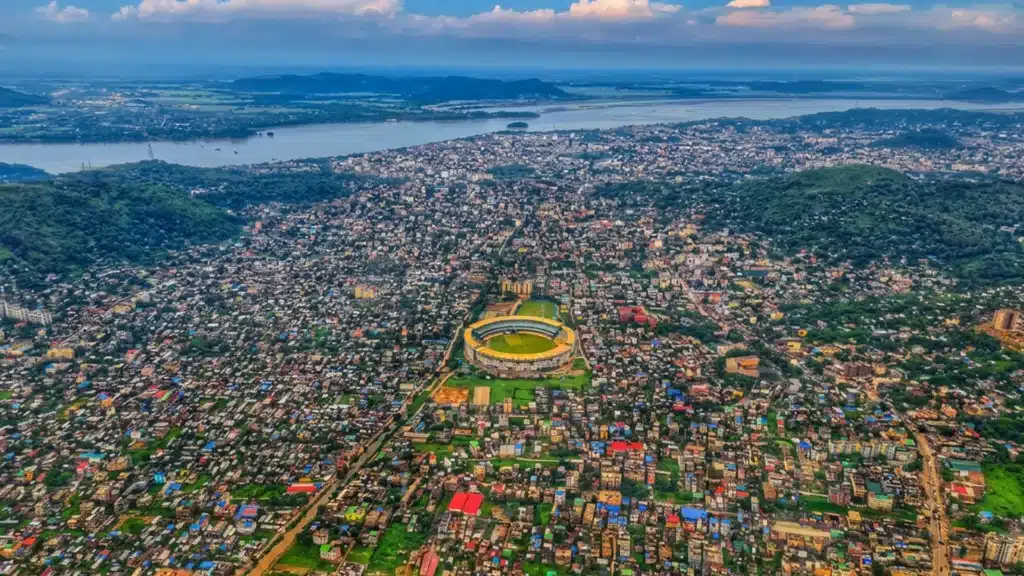
Part I: A City That Builds Faster Than It Maintains Guwahati has transformed beyond recognition over three decades. The city once revolved around Panbazar and Fancy Bazar. Today its footprint stretches from Jalukbari to Sonapur. It has become Northeast India’s undisputed economic capital. Thousands migrate here yearly for education and healthcare. The city’s aspirations have grown alongside its population. Few would dispute Guwahati’s unprecedented public investment recently. New flyovers dominate the skyline. Electric buses have modernised public transport. Hospitals and convention centres have emerged citywide. Water supply projects continue expanding steadily. Several roads have been widened considerably. Riverfront development has reshaped neglected public spaces. A metro rail project has entered planning stages. These investments reflect real governmental commitment to infrastructure. Two Cities, One Geography Yet Guwahati often feels like two cities sharing one geography. One city appears in official presentations and inaugurations. The other appears underfoot during an ordinary morning walk. Broken pavements force pedestrians onto dangerous roads. Open drains remain uncovered for months. Garbage accumulates around blocked culverts regularly. Public infrastructure ages far faster than expected. This contradiction deserves serious examination. Infrastructure spending has undoubtedly increased substantially. Public satisfaction, however, remains stubbornly inconsistent. Inadequate funding alone cannot explain this disconnect. Assam’s fiscal capacity has improved since the early 2000s. If investment alone guaranteed quality, Guwahati would look different. Instead, maintenance has become the city’s weakest public service. Construction Over Care Urban economists distinguish capital expenditure from lifecycle management. Governments often prioritise new assets over existing ones. New bridges and roads generate immediate political visibility. Routine maintenance rarely attracts similar public attention. Yet cities derive lasting quality from maintenance, not construction. A neglected footpath diminishes mobility regardless of nearby flyovers. Poor maintenance steadily erodes earlier public investments. Guwahati illustrates this institutional imbalance with unusual clarity. The city seldom lacks ambitious, headline-grabbing projects. It instead struggles with ordinary municipal functions daily. Pavements require continuous repairs or simply don’t exist. Storm-water drains demand scheduled, regular desiltation. Streetlights require preventive, not reactive, maintenance. These tasks rarely involve real engineering complexity. They instead require organisational discipline and continuity. Too Many Hands, No Single Owner The explanation partly lies in Guwahati’s governance architecture. No single institution holds comprehensive authority over city assets. Responsibilities remain scattered across multiple departments and agencies. Collectively, these agencies create administrative fragmentation citywide. Citizens encounter one city in daily life. Governments effectively administer many separate jurisdictions simultaneously. Roads illustrate this fragmentation perfectly well. One agency constructs the carriageway itself. Another installs water pipelines beneath it. A different department lays sewer networks nearby. Electricity and telecom utilities excavate trenches separately. Municipal authorities maintain drains along roadsides. Each agency works within its own mandate. Few possess incentives to coordinate schedules comprehensively. Consequently, the same road may face repeated excavation within a year. The Price of Fragmentation This fragmented approach raises both financial and social costs. Public money finances repeated reconstruction instead of durable solutions. Traffic congestion intensifies during successive repair cycles. Businesses lose customers because of prolonged disruptions nearby. Infrastructure quality declines despite recurring expenditure overall. Citizens understandably conclude that government works lack permanence. Their frustration reflects institutional outcomes, not isolated failures. Drainage presents an equally revealing example. Guwahati’s topography complicates urban flood management significantly. The city occupies a narrow valley surrounded by hills. Seasonal rainfall arrives with extraordinary intensity here. Storm-water therefore needs uninterrupted movement toward natural channels. Every blocked drain increases pressure elsewhere nearby. Effective flood management demands continuous maintenance, not seasonal intervention. Despite repeated desiltation drives, flash floods remain common across neighbourhoods. The explanation extends beyond rainfall volume alone. Urban drainage depends on integrated planning across multiple sectors. Separate agencies frequently address these issues independently of each other. Even well-designed infrastructure performs poorly without institutional integration. A Question Worth Asking These observations should not diminish current government achievements. Guwahati required substantial investment after decades of underdevelopment. Many completed projects have delivered measurable public benefits. The real challenge lies elsewhere entirely. Maintaining infrastructure determines whether investments retain value over decades. Cities succeed through operational excellence, not construction alone. This distinction now confronts Guwahati at a decisive moment. Population growth continues accelerating year after year. Economic activity expands steadily toward the east. Existing structures increasingly struggle to match this pace. Fragmentation will likely grow costlier as the city expands. Guwahati therefore faces a much larger policy question. Should India keep expanding cities through traditional departmental administration? Or should new urban districts adopt different governance models entirely? Several cities have already tested alternative frameworks successfully. Their experiences offer lessons for Guwahati’s next growth phase. Those lessons begin not in Assam, but beside a Delhi airport. Part II: Learning from Cities That Outsourced Maintenance, Not Governance Urban governance rarely succeeds through expenditure alone. Institutional design often matters more than financial allocation. Cities prosper when accountability survives political transitions smoothly. They also prosper when maintenance receives priority equal to construction. This principle explains why some districts outperform neighbouring municipalities. The difference frequently lies in governance, not engineering. The Aerocity Blueprint Delhi Aerocity illustrates this distinction remarkably well. Located beside Indira Gandhi International Airport, it thrives visibly. The project emerged through a structured public-private partnership. Government agencies retained ownership of all strategic land. Private developers invested in buildings, hotels, offices and public spaces. Long-term leases aligned commercial incentives with continuous maintenance. The most important lesson concerns responsibility itself. Developers did not simply construct buildings and leave. They remained responsible for operating the entire district. Roads and public areas directly influenced commercial value. Poor maintenance reduced occupancy and rental income sharply. Financial incentives therefore encouraged excellence over minimum compliance. Breaking the Build-and-Forget Habit This distinction deserves closer attention here. Traditional public contracts often separate construction from maintenance. Contractors finish projects, then move elsewhere entirely. Institutional continuity weakens during this transition period. Accountability becomes diffuse and hard to trace. Deferred maintenance gradually becomes accepted administrative practice. Aerocity adopted a fundamentally different philosophy instead. Construction and maintenance formed one integrated obligation. Developers anticipated lifecycle costs before construction even began. Durable materials became financially sensible from the start. Maintenance