
Bastille Day: How France Traded a Crown for the Guillotine
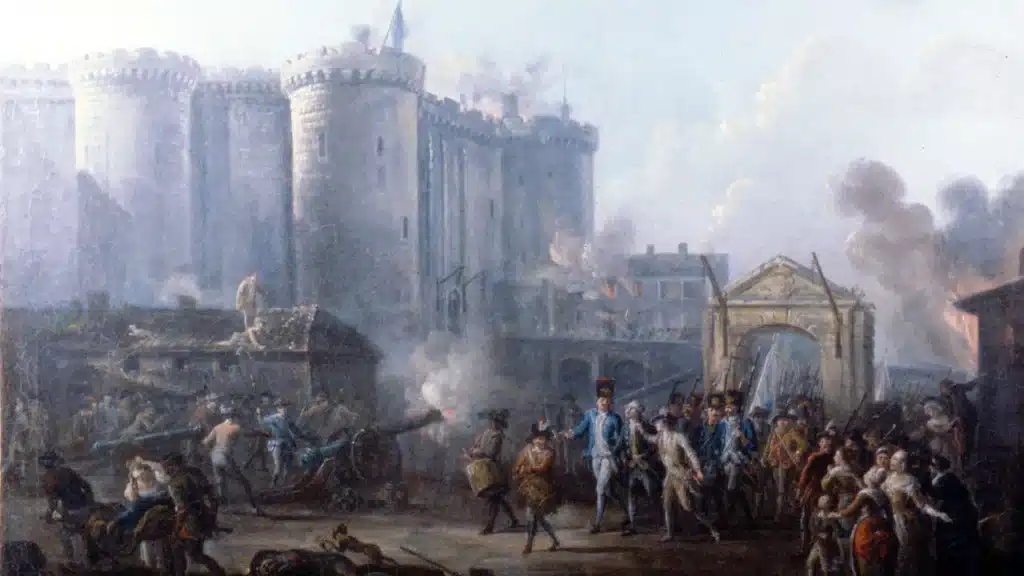
Every 14 July, France celebrates the storming of the Bastille as liberty’s triumphant birth. Fireworks illuminate Paris while military parades honour the Revolution’s enduring legacy. Schoolchildren inherit a familiar tale of oppressed masses overthrowing decadent tyranny. It remains one of modern history’s most powerful political myths. Yet enduring myths deserve careful examination rather than unquestioning reverence. The French Revolution changed Europe forever, but not always for noble reasons. Behind its inspiring slogans stood propaganda, ideological violence and remarkable historical distortions. Few revolutions have controlled their own narrative so successfully. Even fewer continue shaping global political imagination over two centuries later. The Revolution presented itself as humanity’s inevitable march toward freedom and equality. Its leaders claimed monarchy represented inherited oppression while republicanism embodied universal justice. Reality proved considerably more complicated. France did suffer financial distress, administrative stagnation and widespread social inequalities. These failures deserved serious reform. Yet reform differs fundamentally from revolutionary destruction. The Jacobins transformed legitimate grievances into ideological absolutism. They dismantled institutions faster than they could replace them. The resulting vacuum produced bloodshed, dictatorship and eventually another emperor. Before celebrating the Bastille, we should ask whether France truly escaped tyranny or merely changed its custodians. More importantly, we must ask what lessons it teaches all of us. The Monarchy that built France The Bourbon monarchy was neither flawless nor immune from criticism. France faced mounting debts, inefficient taxation and growing political tensions by the late eighteenth century. Many reforms were necessary and long overdue. Yet civilisations should also be judged by what they create and preserve. Measured by that standard, the French monarchy’s achievements remain extraordinary. The kingdom that entered 1789 was among Europe’s foremost cultural powers. Its institutions, architecture, language and artistic traditions shaped the continent for centuries. The Revolution inherited a civilisation it did not build. Consider what modern France proudly showcases to the world. Visitors flock to the Palace of Versailles, not revolutionary committee halls. They admire royal palaces, royal gardens, royal collections and royal patronage. The grandeur of the Palace of Fontainebleau and Château de Chambord reflects centuries of monarchical investment. French kings sponsored academies, standardised administration, expanded infrastructure and nurtured the arts. These projects demanded long horizons that only stable institutions could provide. They emerged from a political culture that viewed stewardship as a dynastic obligation rather than a temporary mandate. Even the Republic depends heavily upon monarchical inheritance for its global prestige. France’s cultural identity remains inseparable from achievements realised under royal patronage. The nation’s most celebrated landmarks predate the Revolution. Its greatest artistic treasures often originated in royal collections. Millions travel each year to experience the splendour created by kings and queens. This reality presents an uncomfortable question for revolutionary mythology. If monarchy represented only oppression and decay, why does republican France continue celebrating its civilisational legacy? The answer is simple. The Bourbons built far more than the Revolution ever destroyed. On the contrary, the Jacobins excelled at dismantling institutions but struggled to create lasting ones. Their rhetoric promised a regenerated France founded upon reason and universal liberty. Their record proved strikingly different. Churches were desecrated, traditions abolished and centuries-old customs discarded with revolutionary zeal. Even the calendar was reinvented to erase France’s Christian memory. Names, festivals and symbols became targets of ideological purification. The Revolution sought not merely political change but civilisational rupture. Such revolutions rarely preserve; they first destroy. The institutions most closely associated with Jacobin rule proved remarkably short-lived. Extraordinary tribunals vanished after the Terror. Revolutionary committees dissolved with changing political fortunes. The Cult of Reason and the Cult of the Supreme Being disappeared almost as quickly as they emerged. Their constitutional experiments collapsed under relentless factionalism. The Republic repeatedly consumed its own architects. Stability remained elusive because ideology rewarded permanent revolution over durable governance. Few societies flourish while constantly reinventing themselves. The Jacobins’ most enduring legacy was not institutional but psychological. They normalised political violence as a legitimate instrument of moral transformation. Opponents became enemies rather than fellow citizens. Dissent became evidence of treason. Suspicion became civic virtue. These habits survived long after the guillotines fell silent. Later revolutionary movements across Europe adopted similar methods with devastating consequences. The Jacobins therefore left behind something far more dangerous than monuments. They bequeathed a political template where virtue justified terror, and ideology outweighed human life. The Queen and the Crook No figure suffered more from revolutionary propaganda than Marie Antoinette. Popular memory still recalls an indifferent queen mocking hungry subjects with, “Let them eat cake.” She almost certainly never uttered those words. The phrase appeared years before her arrival in France. Jean-Jacques Rousseau mentioned a similar anecdote in his Confessions, written before Marie Antoinette became queen. Historians overwhelmingly reject the attribution today. Yet the story endured because it perfectly served revolutionary purposes. It reduced a complex political crisis into the supposed arrogance of one woman. Myth proved more durable than evidence. The campaign against the queen extended far beyond a fabricated quotation. Revolutionary pamphleteers flooded France with obscene libelles portraying her as sexually depraved and politically treacherous. She faced accusations of adultery, lesbian affairs, incest and even conspiracy with foreign powers. Most of these allegations rested on rumour, fantasy or outright invention. They aimed to destroy her moral legitimacy before destroying her physically. Modern historians recognise these pamphlets as an early masterpiece of organised political defamation. Long before social media, France witnessed how relentless falsehoods could manufacture public hatred. The historical Marie Antoinette appears markedly different from the revolutionary caricature. She patronised artists, supported charitable causes and remained devoted to her children during extraordinary hardship. Imprisonment stripped away royal privilege but revealed remarkable composure. Even during her final journey to the guillotine, witnesses described her dignity. She maintained her calm on her way to the execution spot, despite abuses hurled at her by the crowd. Moments before execution, she accidentally stepped on her executioner’s foot. Her last recorded words were “Pardonnez-moi, monsieur. Je ne l’ai pas fait exprès. (Pardon me, sir, I did not do it on purpose).” Such