
Why The Gulf Crisis Refuses to End
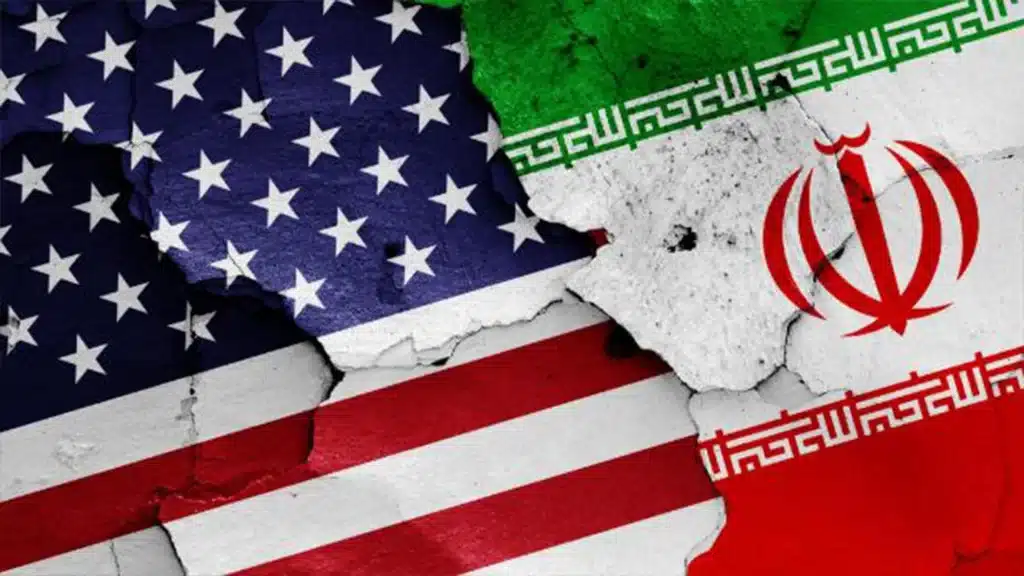
Decades of Mutual Distrust Has Made Sure the Crisis Continue The skies over the Persian Gulf have lit up with heavy fire once again. The United States military has launched a fresh series of airstrikes on coastal targets. Fighter jets and naval vessels struck military facilities near the port of Bandar Abbas. Precision munitions also hit fortified weapons sites on Qeshm Island and in Sirik. Breaking weeks of nighttime operations, American forces carried out strikes in broad daylight. U.S. Central Command confirmed a ninety minute bombing run focused heavily on Greater Tunb Island. Separate air raids also struck active military barracks deep in the southern provinces. In response, Tehran fired waves of ballistic missiles and explosive drones at American bases. Projectiles also hit installations in Bahrain and Kuwait, rattling the region’s already fragile stability. The violence confirms that the newly brokered ceasefire has now fully collapsed. That breakdown carries weight far beyond the immediate combat zone. With diplomacy failing, the world’s most critical energy corridor now faces possible closure. Global financial markets are reacting with real volatility as fears of wider war grow. Major powers are scrambling to contain the fallout before it spreads further. President Trump has warned that strikes could soon target power plants and bridges. What began as a contained conflict is fast becoming a dangerous global flashpoint. The Roots of a Long Conflict Today’s hostilities are rooted in nearly five decades of deep, bitter mistrust. The modern confrontation began with the 1979 Iranian Revolution. The overthrow of the Western backed monarchy reshaped Middle Eastern politics overnight. Tensions escalated sharply when student revolutionaries seized the American Embassy in Tehran soon after. They held dozens of American diplomats hostage for 444 days, freezing relations. Washington responded with long-term economic sanctions meant to isolate the new republic. Over the decades, that freeze evolved into a dangerous, multifront proxy war. Friction deepened in the early 2000s over Iran’s growing nuclear enrichment program. Washington viewed this as a path toward a destabilizing nuclear weapon. The landmark 2015 nuclear agreement offered a brief window of diplomatic hope. The U.S. withdrawal from that pact in 2018 shattered what fragile progress had been made. Trust evaporated almost overnight, paving the way for a swift return to retaliation. Tehran, meanwhile, expanded its regional influence by backing armed groups across the Levant. Financial and military support flowed steadily to Hezbollah in Lebanon and Houthi rebels in Yemen. These proxy networks let Iran project real power without fighting a direct conventional war. Washington countered by strengthening military ties with wealthy Gulf Arab states and Israel. Every diplomatic effort to ease the standoff has buckled under that historical weight. Decades of mutual distrust mean neither side believes the other’s peaceful promises today. Why Peace Deals Keep Collapsing The rapid breakdown of the Islamabad Memorandum reflects a familiar pattern in U.S.–Iran diplomacy. A ceasefire is an interim agreement meant to pause active military combat. Both nations initially accepted this Pakistani-mediated peace framework after intense diplomatic sessions. The explicit goal was a cooling-off period to negotiate a lasting treaty. Under the initial terms, Washington agreed to lift certain oil sanctions. In exchange, Tehran promised to freeze nuclear enrichment and guarantee safe maritime transit. It was a fragile compromise meant to prevent an all-out regional war. That understanding quickly eroded into bitter, public accusations from both capitals. The United States accused Iran of violating the spirit of the peace memorandum. American intelligence alleged that Tehran secretly directed covert attacks on Western commercial ships. Iran, in turn, accused Washington of bad faith and imperialist aggression in the Gulf. They argued the constant presence of American warships violated their sovereign waters. In the end, the lack of any verification mechanism caused the whole deal to collapse. Historical Failures This failure closely echoes past diplomatic disasters, most notably the 2015 nuclear deal. That landmark agreement unraveled in 2018 when Washington unilaterally withdrew from its commitments. Historically, both nations treat temporary truces as tactical pauses to regroup and rearm. Washington demands that Iran permanently dismantle its regional proxy networks and missile arsenal. Tehran, in turn, treats its missile program as a non-negotiable shield against encirclement. Because neither side makes real structural compromises, surface level pacts rarely last long. The Chokepoint Driving Global Anxiety The Strait of Hormuz is a narrow, vital waterway separating Iran from the Arabian Peninsula. Geographically, it forms the single most important chokepoint in global energy transit. Roughly onefifth of the world’s daily oil supply flows through this narrow strait. Any military disruption here quickly affects the economic survival of distant industrial nations. Control over these waters gives Tehran real, asymmetric leverage over its geopolitical rivals. It has long served as their main shield against foreign economic pressure. To counter this geographic advantage, the Pentagon deployed sophisticated maritime surveillance and strike systems. American forces introduced new sea drones, including the newly combat tested Corsair unmanned surface vessels. These autonomous units are designed to track and neutralize hostile fast attack craft. In response, Iran activated advanced antistealth radar systems acquired through backchannel defense deals. This high tech arms race has turned the narrow channel into a volatile, computerized testing ground. A single technical error or system miscalculation could ignite an uncontrollable, large-scale war. The current escalation spiked when commercial tankers reported hostile maritime attacks. Washington called these disruptions a direct threat to global freedom of navigation. President Trump recently dropped his widely criticized proposal for a twenty percent transit tax. He has instead issued a stark ultimatum, threatening infrastructure strikes if Tehran refuses a deal. The strategic waterway is now a heavily militarized zone under a tight naval blockade. The Global Cost of Escalation The economic shockwaves of this maritime conflict are already hitting global markets hard. Crude oil prices spiked sharply the moment the naval blockade took effect. Shipping insurance rates have skyrocketed, forcing cargo fleets into long, costly detours. Major freight routes are now diverting around Africa, delaying critical manufacturing supply chains. These factors together threaten a fresh wave of
The Divine Symphony of Jagannath Rath Yatra
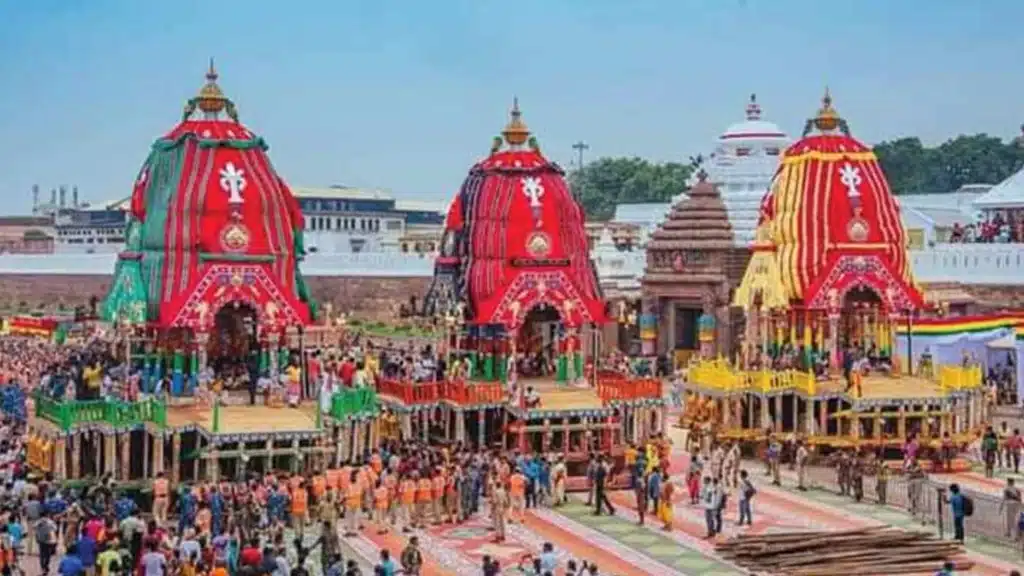
In the sacred geography of India, the spiritual and the material seamlessly intertwine. Here exists a grand phenomenon that transcends ordinary human experience. It is a spectacle of color, devotion, and cosmic drama. It unfolds annually on the eastern shores of Odisha. This happens in the holy city of Puri. This is the Rath Yatra—the Festival of the Chariots. To the casual observer, the Rath Yatra may look like a majestic public procession. It can seem like a vibrant display of traditional pageantry. Or it may appear as a massive gathering of humanity. But to the seeker, the devotee, and the student of mysticism, it is a cosmic event. It is a living metaphor for the soul’s journey back to its divine source. When the hot summer winds of Ashadha (June–July) sweep across Puri’s golden sands, the air grows heavy with anticipation. The atmosphere vibrates with the resonant boom of the Kahali (horns). It carries the rhythmic clash of Kanjiris (cymbals). It rings with the thunderous, ecstatic chanting of: “Hari Bol! Jagannath Swami Nayana Patha Gami Bhava Tume.” On this sacred day, the heavy wooden doors of the Shree Mandir’s inner sanctum swing wide open. The Lord of the Universe, Mahaprabhu Jagannath, leaves the shadowy chamber of the temple. He is joined by his elder brother Balabhadra and their sister Subhadra. Together they step out into the blinding, open sunlight. What Makes the Rath Yatra Unique? This act of leaving the sanctum sanctorum is a theological revolution. In most ancient traditions, the deity stays stationary in the temple’s deepest part. That space is reachable only by a select priestly class. But Jagannath is the Lord of the masses. He is the friend of the fallen, the Patita Pavana. If the poor or the sick cannot enter His temple, the Lord Himself will act. He will climb down from His throne and step onto the dusty streets. He walks among the people Himself. The Rath Yatra is a divine play (Lila) of love, longing, and homecoming. In this exploration, we dive into the rich tapestry of mythological origins. We examine the esoteric secrets of the wooden deities. Especially tracing the emotional saga of Vrindavan. Ultimately uncovering the timeless spiritual metaphors that make Rath Yatra a global masterpiece of devotion. Part I: The Mythological Tapestry of the Chariot’s Origin The origins of the Rath Yatra are not tied to one historical event. They are not fixed to a single mythological story. Instead, they are woven from multiple threads of sacred folklore. Each thread reflects a unique aspect of ancient India’s socio-religious consciousness. These stories show the different ways humanity has understood its relationship with the Supreme. The Departure from Gokul: The Catalyst of Devotion One of the oldest stories of the Rath Yatra’s origin begins in Gokul. The tyrannical King Kansa, Lord Krishna’s maternal uncle, ruled Mathura with an iron fist. He had heard a prophecy that Devaki’s eighth child would end his life. Kansa lived in perpetual fear because of this prophecy. He discovered his nemesis was the young cowherd boy Krishna. Krishna lived across the Yamuna in Gokul at the time. So Kansa devised a lethal plan against him. He organized a grand festival of weapons (Dhanur Yajna) in Mathura. He sent his respected minister and uncle, the pure-hearted Akrura, to invite Krishna. Akrura also invited Krishna’s elder brother Balarama. Akrura arrived in Gokul with a magnificent, royal chariot. News of Krishna’s departure spread quickly through Vrindavan and Gokul. To the Gopis and the residents of Vraja, Krishna was their very life. He was the soul of their souls to them. The thought of Him leaving on a chariot brought unbearable grief. This moment of departure, when the young Lord boarded the chariot, mattered deeply. He stepped onto it to fulfill His destiny. Some celebrate this as the primary inspiration behind the Rath Yatra. The chariot’s journey represents the Divine’s movement from playful, hidden groves of childhood. It marks His entry into the broader arena of cosmic duty. It also marks the destruction of evil. The Triumphant Darshan of Mathura A continuation of the Mathura saga offers another origin story. After entering the city, Krishna and Balarama faced Kansa’s wrestlers. They defeated them, eventually slaying the tyrant king himself. They freed their biological parents, Devaki and Vasudeva, in the process. The citizens of Mathura had lived under Kansa’s cruelty for years. They were ecstatic once he was defeated. They gathered in the millions to catch a glimpse of their young saviors. To honor their love and grant them his Darshan, Krishna climbed onto a chariot. Balarama joined him, and together they paraded through Mathura’s streets. Many believe this euphoric celebration was the historical prototype of the Chariot Festival. The citizens cheered and pulled the chariot of the victorious brothers that day. The Royal Tour of Dwarika In his later years, Lord Krishna established the golden island kingdom of Dwarika. It sat on the western coast of India. It was a city of unparalleled splendor, full of crystal palaces and lush gardens. Golden towers rose throughout the city as well. According to this legend, Subhadra expressed a deep desire one day. She wanted to see the magnificent city of Dwarika, wished to witness its grandeur and walk through its markets. Equally, she wanted to interact with its citizens too. To fulfill her wish, the two brothers lovingly prepared a grand chariot. They seated their sister comfortably between them on it. They personally drove her through the wide avenues of Dwarika. The citizens were overjoyed to see the three siblings together. They celebrated the day with singing, dancing, and grand feasts. This family excursion is believed to have started a tradition. It established placing the three siblings together on their chariots. The Ecstasy of Vrajkatha and Narada’s Vision Perhaps the most mystically profound story involves two important figures. These are the sage Deva Rishi Narada and Mother Rohini. Rohini was the mother of Balarama, and this concerns the deities’ origin. Years