
Why Did Hundreds Dance Until They Collapsed?
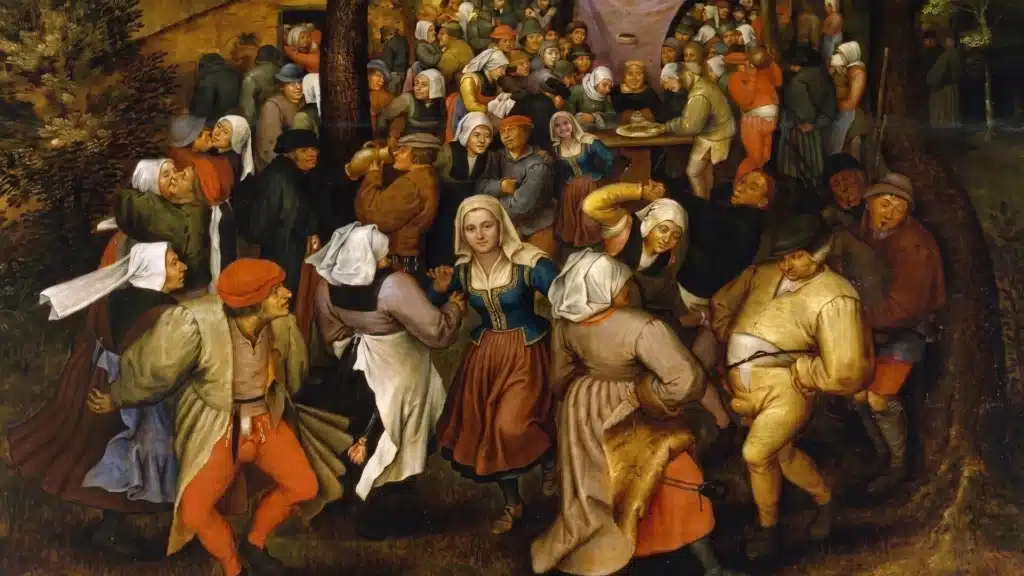
On July 14, 1518, a woman stepped out of her home in Strasbourg and began to dance. Her name was Frau Troffea. There was no music. There was no celebration. No reason anyone could identify. She danced wildly and without stopping in the narrow cobbled street outside her house. Her husband pleaded. Her neighbours stared. She ignored all of them and danced through the afternoon, through the evening and into the night. She kept dancing the next day. And the day after. Within a week, others had joined her. Within a month, the streets of Strasbourg held between 50 and 400 people, all dancing uncontrollably. Many wept or screamed as they moved. Some collapsed from exhaustion. Some died. This was the Dancing Plague of 1518 — one of the strangest mass events in recorded human history. THE CITY BEFORE THE PLAGUE To understand what happened, you have to understand where it happened. Strasbourg in 1518 was not a peaceful city. It sat within the Holy Roman Empire, a sprawling and often unstable political structure. It had a population of around 20,000 people. Its streets were narrow, its buildings tightly packed, its residents living in close and often desperate proximity to one another. The city had been struck by a series of bad harvests in the years leading up to 1518. Famine was a living reality for its poorest residents. Smallpox and syphilis were circulating through its population simultaneously. Martin Luther had posted his 95 Theses just the year before, in 1517, sending religious shockwaves across the empire. Strasbourg’s residents were living under conditions of extreme collective stress — economic, physical, and spiritual. The city was primed for something to break. In July 1518, something did. Strasbourg also carried a specific historical memory that would prove significant. Dancing manias had struck the Rhine valley before. A major outbreak had hit the region in 1374, just years after the Black Death had devastated Europe. Smaller episodes had followed across the next century and a half. Every major dancing plague between 1374 and 1518 had occurred near Strasbourg. The city’s residents knew, at some level, that this kind of thing was possible. That knowledge would prove dangerous. HOW IT SPREAD Frau Troffea danced for four to six days before she was taken to a shrine of St. Vitus. By then the contagion had already taken hold. Within a week of her initial outbreak, dozens of others were dancing in the streets. The spread was rapid and terrifying. Men, women, and children joined the afflicted. They showed no signs of joy. Contemporary accounts describe their faces as blank or anguished. Many cried out for help while their bodies continued to move. They could not stop. The dancing was not celebratory. It was compulsive, spasmodic, and exhausting. Victims danced until they collapsed, rested briefly, and then resumed. Some developed bleeding feet, some suffered strokes, some, according to the records that survive, died of heart failure or sheer physical exhaustion. At the epidemic’s peak, as many as 400 people may have been caught in the mania simultaneously. The city’s authorities were alarmed. The Strasbourg city council convened to discuss the crisis. They turned to local physicians for guidance. The physicians diagnosed the affliction as a fever not possession, not sin, but a medical condition caused by overheated blood. Their prescription followed logically from the diagnosis. If the fever had to burn itself out, then the dancing had to continue. The council cleared spaces for the dancers. They hired professional musicians — drummers, pipers, horn players — to accompany them day and night. They even brought in healthy citizens to watch over the afflicted and help them when they fell. The intention was to accelerate the fever’s course. The effect was the opposite. The music made things worse. More people joined. The epidemic grew. THE AUTHORITIES RESPOND — AND MAKE IT WORSE The decision to hire musicians was one of the most consequential mistakes of the entire episode. It legitimised the dancing, gave it rhythm and an audience. What had been a frightening, involuntary affliction now resembled a public spectacle. Healthy bystanders were drawn in. Some joined out of curiosity. Some joined out of sympathy. The social contagion spread further. The council had tried to treat a disease it did not understand. The framework it used made the disease worse. By August 1518, the situation had become critical. The authorities changed course entirely. They banned all music and dancing across Strasbourg. They shut down the temporary stages they had built. The musicians were sent away. The crowds were dispersed. The most severely affected dancers were sent on pilgrimage to the shrine of St. Vitus in Saverne. The hope was that the saint would lift whatever curse had fallen on the city. Slowly, over the following weeks, the mania subsided. By September 1518, it was over. As suddenly and mysteriously as it had begun, it stopped. THE CURSE OF ST. VITUS To understand what happened, you have to understand who St. Vitus was. He was a Christian martyr whose name had, over centuries, become associated with involuntary movement disorders. The phrase “St. Vitus’s Dance” referred to neurological conditions like Sydenham’s chorea and to strange mass outbreaks alike. In 16th-century Strasbourg, St. Vitus was not a historical figure. He was a living threat. People genuinely believed that failing to honour him could result in being cursed with compulsive, unstoppable dancing. That belief was not fringe superstition. It was mainstream religious conviction, reinforced by the Church and shared across communities. Historian John Waller, who has studied the 1518 outbreak more thoroughly than anyone, argues that this belief was central to what happened. The people of Strasbourg did not merely fear they might be cursed. They believed they already were. That conviction, Waller argues, was itself enough to make the symptoms real. The curse did not descend from above. It rose from within — generated by a community’s own shared terror, given form by centuries of religious belief. The relationship