
La Roja’s Renaissance: Spain’s Return to Football Glory
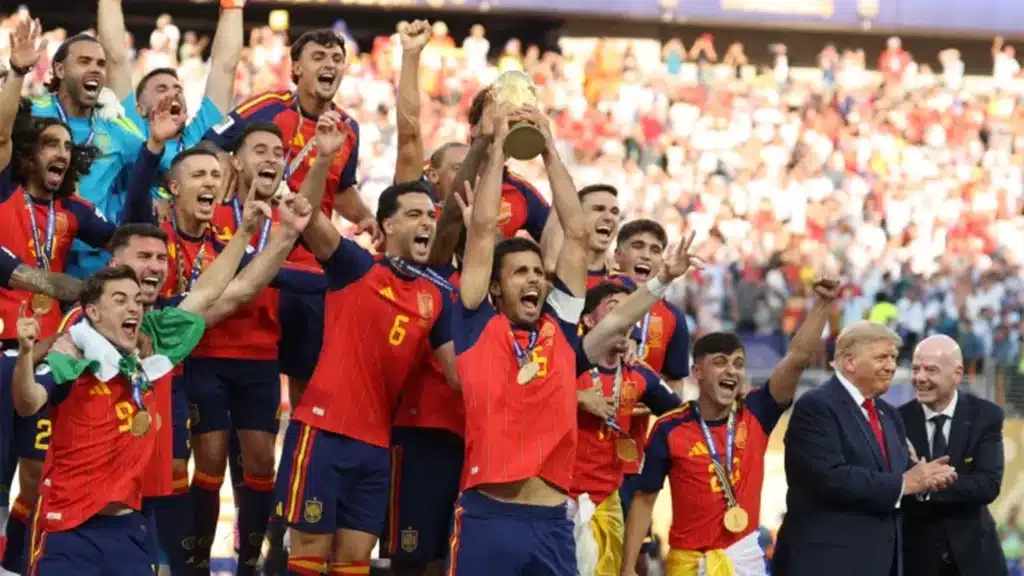
The Story of How Spain Reconquered Football When the final whistle blew in Curitiba during the 2014 World Cup, Spanish football lay in ruins. The reigning world and European champions had just suffered a humiliating group-stage exit. They were crushed 5-1 by the Netherlands and outplayed by Chile. The football world buried Spain’s legendary golden generation on the spot. The era of total dominance looked finished for good. Plenty of experts figured Spain was headed for years in the wilderness. Then, against every expectation, the story flipped completely. Over the next decade, Spanish football pulled off one of the most complete rebuilds in modern sports history. This wasn’t luck, and it wasn’t sudden. It came from long-term planning, real structural unity, and constant tactical evolution. Between 2023 and 2026, Spain went on an unprecedented run of silverware across every level of the game. During their breathtaking 2026 run, Spain conceded just one single goal in eight full matches. That’s the most dominant defensive campaign in modern World Cup history.Spain also stretched their unbeaten run to 38 straight matches. They became the first nation ever to hold both the men’s and women’s World Cup titles at once. So here’s the question every football fan is asking. How did Spain build the most unstoppable footballing machine on the planet, all over again? The Reinvention of Tiki-Taka To understand Spain’s resurgence, you have to go back to where their tactical identity began. Before 2008, Spain was international football’s biggest underachiever. They had incredible individual talent through Real Madrid and Barcelona. Yet they kept failing on the biggest stages. Deep political divisions and fierce club rivalries split the national dressing room for years. That painful story changed under Luis Aragonés at Euro 2008. Vicente del Bosque built on that foundation at the 2010 World Cup and Euro 2012. Spain pioneered Tiki-Taka, a style built on short passing, fluid movement, and geometric control. Xavi, Andrés Iniesta, and Sergio Busquets simply starved opponents of the ball. They turned possession into both a weapon and a shield. So why did that legendary system collapse after 2014? Opponents had simply figured out how to counter slow, predictable possession. Teams sat deep and exploited the space Spain left behind on the counter. At the 2014 and 2018 World Cups, Spain kept completing over a thousand passes a match. Yet they created almost no real scoring chances. Possession had gone from a deadly weapon to a sterile security blanket. They held the ball, but they’d lost their edge. The Architect Behind It All Was Luis de la Fuente When Luis Enrique left after a disappointing Qatar 2022, fans wanted a big, glamorous name. Instead, the federation picked De la Fuente. Critics and mainstream media mocked the appointment almost immediately. They branded him an unglamorous “PE teacher” pick with no top club pedigree. But De la Fuente had quietly spent over a decade coaching Spain’s youth teams. He led Spain to European titles at both Under-19 and Under-21 level. He also won Olympic silver in Tokyo before taking gold in Paris. De la Fuente never had to go scout Spain’s next generation of stars. He’d already coached them personally since they were fifteen. He built an unbroken pipeline running straight from the academies to the senior side. Every rising player grew up sharing the same tactical language and culture. The quiet insider ended up outsmarting the world’s most expensive celebrity coaches. The Art of Modern Football Spain didn’t throw away its core footballing principles. Instead, the coaching staff modernized them for today’s faster, more intense game. The core idea of controlling tempo through technical mastery remains unchanged. But the execution today looks completely different from the 2010 golden era. Traditional Tiki-Taka relied on patient horizontal passing and inverted playmakers. Matches were slow, hypnotic, and centered entirely on possession stats. Modern Spanish football, by contrast, prioritizes verticality, quick transitions, and explosive wingers. Under De la Fuente, Spain looked forward the instant they won the ball back. They no longer pass sideways just to pad the possession count. When Spain loses the ball, they immediately counter-press hard and high up the pitch. Spain is also no longer tactically rigid or predictable. They can comfortably control the game against deep defensive blocks. But they’re just as lethal on quick counters against aggressive opponents. Matches are won through squad depth, physical power, and sharp tactical adjustments. Youth, Academies and the Negation of Toxicity Spain’s tactical revolution works because of remarkable talent in every single position. The undisputed crown jewel of this new era is Lamine Yamal. At just sixteen, he shattered records as the youngest player in European Championship history. He famously finished his high school homework in his hotel room between Euro 2024 matches. On the pitch, his fearless dribbling and iconic curling shots announced a generational prodigy. Opposite Yamal stands Nico Williams, forming one of the most feared wide partnerships in world football. Their pace, trickery, and directness give Spain explosive vertical threats that had been missing for a decade. In midfield, Rodri operates as the world’s premier anchor, offering balance and unmatched tactical intelligence. Beside him, Pedri and Gavi combine supreme technical skill with relentless work rate. Meanwhile, Fabián Ruiz and Dani Olmo bring creative flair and dangerous late runs into the box. Defensively, young talents like Pau Cubarsí represent the next wave of ball playing center backs. Cubarsí’s calm composure under pressure helped him earn the Best Young Player award at the 2026 World Cup. This deep talent pipeline exists because Spanish club academies remain unmatched worldwide. National team success has always mirrored the strength of Barcelona’s famous academy, La Masia. In 2010, La Masia provided the core of Spain’s first world title. Today, history has repeated itself, with La Masia supplying the backbone of another golden generation. Meanwhile, Athletic Bilbao’s academy instills real physical power and direct wing play. Real Sociedad and Villarreal excel at teaching tactical discipline and high-pressing structure. Together, these academies make sure Spain never runs
The Romance of Revolution and the Burden of Democracy
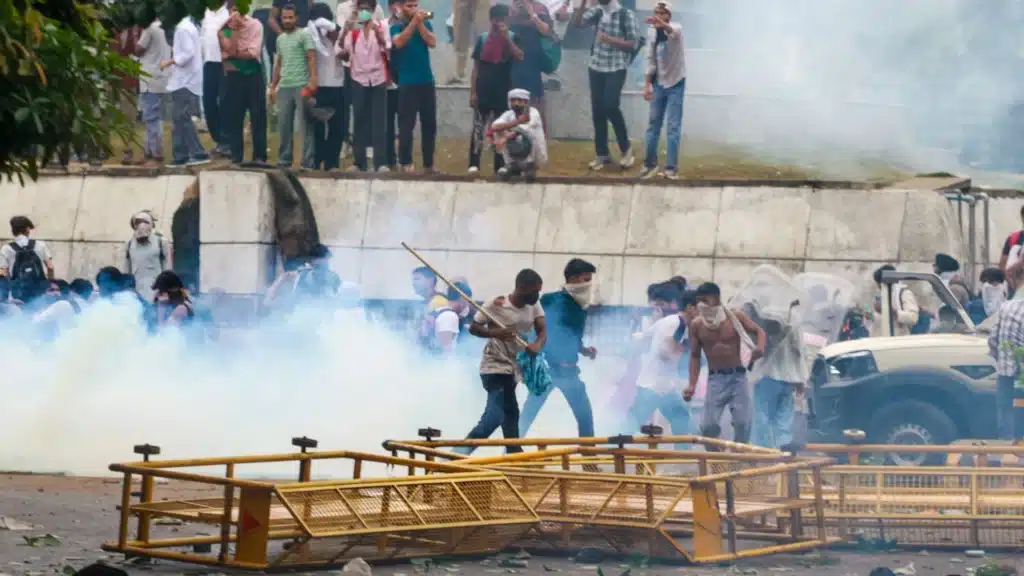
Every generation dreams of changing the world. Few generations, however, have been as politically connected as Generation Z. They consume news in real time, organise movements through social media, and possess an instinctive distrust of authority. They have mobilised for climate action, gender justice, corruption, transparency, and democratic accountability across the world. This political awakening is, in many ways, a healthy sign. Democracies require vigilant citizens, not passive spectators. Yet political awareness is not the same as political wisdom. The temptation of every young generation is to mistake disruption for progress, outrage for courage, and revolution for reform. Modern politics often romanticises the image of the protester standing against the establishment while paying little attention to what follows after the barricades fall. History repeatedly demonstrates that revolutions are rarely remembered for their ideals alone. They are remembered equally for the chaos, violence, instability, and authoritarianism they frequently unleash. This is not an argument against protest. It is an argument against confusing democratic dissent with revolutionary politics. Young citizens should certainly question governments, demand accountability, expose corruption, and vote for change. But they should be extremely cautious before allowing themselves to become instruments in campaigns that seek to delegitimise democratic institutions altogether. Democracy survives because governments can be criticised without the state itself being destroyed. The Romance of Revolution Revolutions possess enormous emotional appeal. They promise moral clarity. They divide society neatly between heroes and villains. And they transform ordinary participants into historical actors. The symbolism is intoxicating. Protest sites become sacred spaces. Viral slogans become articles of faith. Political complexity disappears beneath hashtags and emotional narratives. Young people are especially susceptible to this romance because idealism is one of youth’s greatest strengths. Yet revolutions almost never unfold according to their original promises. Edmund Burke recognised this during his critique of the French Revolution. Burke did not defend every injustice of the old regime. Rather, he warned against the belief that societies could be completely dismantled and rebuilt according to abstract ideals. Institutions, customs, traditions, and constitutional arrangements develop over generations. Destroying them overnight often creates power vacuums that are quickly filled by more ruthless actors than those who were originally removed. The French Revolution began with lofty declarations of liberty, equality, and fraternity. It eventually descended into the Reign of Terror. Thousands died beneath the guillotine. Political rivals became enemies of the people. Revolutionary purity demanded ever greater violence until the revolution ultimately consumed many of its own architects. History repeatedly illustrates Burke’s caution: tearing down institutions is easier than building stable ones. Protest Is a Democratic Right; Violence Is Not German sociologist Max Weber offered one of political science’s most influential definitions of the modern state. According to Weber, the state is the institution that successfully claims the monopoly over the legitimate use of physical force within a given territory. This idea is frequently misunderstood. Weber was not celebrating violence. He was explaining why functioning societies require a recognised authority capable of enforcing laws, protecting citizens, and maintaining public order. Without such authority, competing groups begin exercising violence independently. That condition is not freedom. It is anarchy. Peaceful protest occupies an honoured place within democratic societies. However, democratic protest carries corresponding responsibilities. Burning buses paid for by taxpayers does not punish governments. It punishes citizens. Destroying railway stations, hospitals, schools, or public infrastructure delays development for ordinary people. Attacking police officers transforms political disagreement into physical confrontation. The legitimacy of a democratic movement depends not merely upon its demands but also upon its methods. Violence weakens public sympathy, polarises society, and often provides justification for further escalation. Democracy works best when disagreement remains constitutional. Demanding better governance is not anti-national. Questioning public policy is not disloyal. Holding elected representatives accountable is among the highest duties of citizenship. Democracy improves because citizens remain engaged. But engagement differs fundamentally from permanent destabilisation. No government should become immune from criticism. Neither should every policy disagreement become a justification for portraying constitutional institutions as illegitimate. There exists a profound difference between seeking governmental reform and seeking systemic breakdown. The first strengthens democracy. The second risks destroying it. Healthy democracies require strong oppositions, independent media, active civil society organisations, and politically conscious youth. They do not require perpetual revolutionary mobilisation. Do Not Become Someone Else’s Political Career Not every protest is noble simply because it challenges authority. Likewise, not every government action deserves unquestioning support simply because it comes from elected representatives. Citizens must evaluate movements independently. Who is organising the protest? What objectives are being pursued? Are constitutional remedies exhausted? Is there transparency regarding funding and leadership? Are participants being encouraged towards peaceful civic engagement or towards confrontation with state institutions? These questions matter because politics frequently rewards those who manufacture crises. Throughout history, ambitious political entrepreneurs have mobilised public anger not merely to solve problems but to advance their own careers. Young protesters often provide the numbers, energy, and legitimacy. Others frequently reap the political rewards. Idealism should therefore always be accompanied by scepticism. Political movements deserve informed participants, not unquestioning followers. History contains countless examples of ordinary citizens making extraordinary sacrifices while political leaders negotiated positions, entered governments, or built personal careers from movements that demanded enormous public costs. The young often bear the greatest risks. They miss examinations. They lose employment opportunities. They suffer injuries. Sometimes they acquire criminal records. Occasionally they lose their lives. Political leaders, however, frequently move on. Some become legislators. Others become ministers. Many simply reinvent themselves under different slogans. This asymmetry should encourage caution rather than cynicism. Young citizens should ask whether their participation genuinely advances constitutional reform or merely serves someone else’s political ambitions. Political engagement is essential. Political manipulation is dangerous. The distinction matters. Democracy Offers Something Revolutions Never Can Many young people understandably become frustrated with democratic processes. Legislation moves slowly. Courts take time. Consensus appears tedious. Compromise often feels unsatisfying. Yet this deliberate pace serves an important purpose. Democracy forces competing interests to negotiate rather than eliminate one another. Its