
Manufactured Lies: Deepfakes, Algorithms and Generative AI
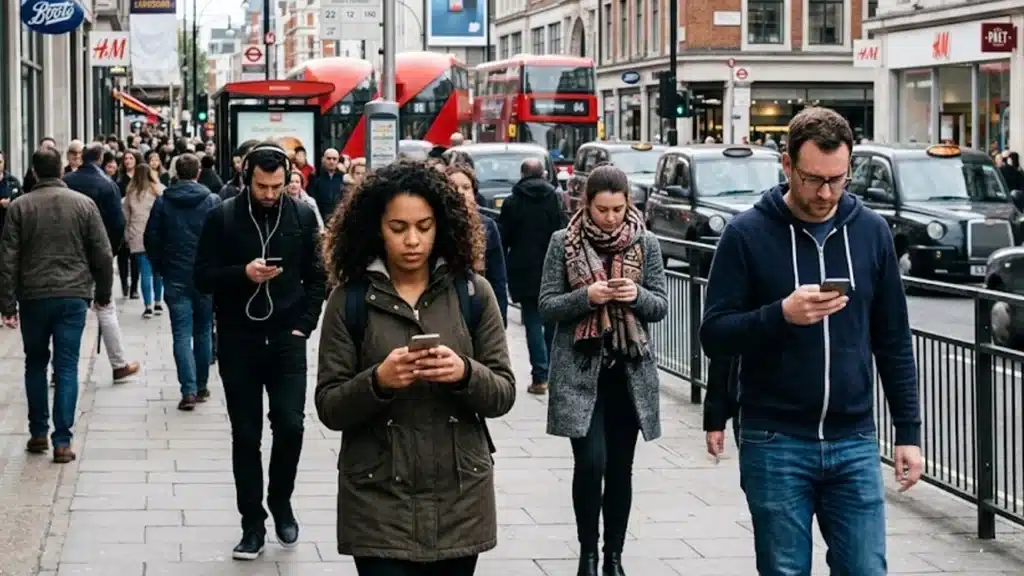
Imagine walking down a familiar street in your city at dusk. All around you, people move like specters, faces glowing with a cold, monochromatic blue light. It emanates from small shards of glass held in their palms—their smartphones. That light does more than illuminate; it seems to slowly consume their eyes, bypassing conscious thought and gripping the heart. Consequently, they do not notice the person standing right next to them, nor hear the sounds of their neighborhood. Instead, they sit trapped in an invisible web, woven by code and content creators thousands of miles away. In unison, they react—shouting, venting, sharing outrage, panicking over threats that exist only in the digital ether. This is not a dystopian scene from a science fiction novel. Rather, it is our lived reality in the year 2026. Throughout history, technological shifts have opened new horizons. The wheel, the printing press, the steam engine, and the internet all propelled civilization forward. Each shift changed how we work and organize society. Yet standing in the latter half of this decade, something feels fundamentally different. Technology is no longer a passive tool for convenience. Nor is it merely a medium for transmitting thought—it has become the architect of thought itself. At a time when information should have liberated humanity, something else happened instead. An unprecedented mix of overload, algorithmic manipulation, and misinformation took hold. As a result, the global sociopolitical landscape is fracturing, and trust in institutions has evaporated. Communities are turning inward with heightened hostility. The world today is not stable; it is shaking. The epicenter of this tremor is not a natural disaster. Instead, it is a lethal, human-made cocktail of algorithms, generative AI, and manufactured lies. Fast-Paced Technology vs. The Stagnant Human Brain To understand this instability, consider a fundamental mismatch: the chasm between exponential technological evolution and slow human biology. The neural architecture of the brain has barely changed in tens of thousands of years. Indeed, it still processes fear, tribal defense, and anger much like our ancestors did on the savannah. Our brains are hardwired to scan for threats, seek tribal validation, and react instantly to danger. Meanwhile, tech conglomerates have spent two decades mapping these exact vulnerabilities, capitalizing on them to maximize profit. Consider traditional media, which dominated the 20th century. Far from perfect, it still operated within real checks and balances. Reporters, investigators, fact-checkers, and editors were bound by laws on libel and slander. Fabrications carried severe professional penalties, and a deliberate buffer separated an event from its verified publication. The Web 2.0 and smartphone revolution then shattered that gatekeeping framework overnight. The barrier to global publishing dropped to zero, and anyone with a phone became an instant, unverified publisher. This promised a utopian era of free speech and decentralized power. What it lacked was any structure of editorial accountability. Anyone could publish anything to millions without verification, so the digital square quickly grew cluttered and toxic. Consequently, the breath of fresh air soured into a dense cloud, leaving the average brain overwhelmed and vulnerable to manipulation. How You Are Trapped The chaos in the physical world—riots, neighbor turning against neighbor—traces back to a specific source: the server farms of major tech platforms. Click one provocative video, for instance, and notice how your feed suddenly floods with nearly identical content. That is no coincidence; it is the deliberate output of recommendation algorithms. The foundational business model of the modern internet is the “Attention Economy.” Here, the currency is not money but human time. These algorithms exist to maximize engagement, keeping users glued to screens for as long as mathematically possible. To do that, they do not care about truth or nuance—only about the metrics. Studies repeatedly show that the brain prioritizes negative emotions over positive ones. Content that triggers outrage, fear, and tribal hostility keeps people scrolling longer than content promoting nuance or peace. Naturally, then, algorithms favor and amplify the most polarizing voices in any society. The Echo Chamber Effect: Over time, these systems build an invisible ideological prison, often called an “Echo Chamber” or “Filter Bubble.” The platform tracks your biases and leanings, progressively filtering out anything contrary and feeding you a diet that confirms what you already believe. If a user holds a political stance, the algorithm rewards it constantly. It praises that side while framing opponents as existential threats. The result is a dangerous illusion: users believe their curated feed reflects objective reality, and anyone who disagrees must be malicious or brainwashed. This kind of manipulation has hyper-polarized societies across every continent. Rational debate has evaporated, and compromise is treated as betrayal. Consequently, societies now split into two irreconcilable factions, locked in a permanent psychological war: “Us” versus “Them.” The Death Knell of Truth Algorithmic polarization laid the groundwork; generative AI and synthetic media have since amplified the crisis exponentially. Fabricating misinformation once required real skill and effort. Today, however, a simple text prompt produces convincing images, cloned voices, and video. This has effectively delivered a death blow to shared objective truth. Deepfakes—realistic synthetic media showing people doing things they never did—pose an unprecedented threat to global stability. Consider the scale of this synthetic deluge: This flood of synthetic media has, in turn, triggered an unprecedented assault on institutional security. According to the Gartner AI Risk Management Survey, nearly two-thirds of enterprises have faced deepfake social engineering attacks. These are not parlor tricks, but sophisticated operations targeting executives directly. Cloned audio calls account for 41 percent of incidents, while simulated video conferences account for another 35 percent. Both are designed to authorize illicit transfers or breach sensitive data. The sociopolitical stakes are even higher than the corporate ones. Human accuracy at spotting a quality deepfake has dropped below one-in-four. In that world, the foundation of public discourse crumbles. Picture, for example, a realistic video surfacing hours before a national election, showing a candidate taking a bribe. It could swing the outcome before any fact-checker responds. This dynamic creates what scholars call an “Epistemic Crisis”—a breakdown