
The Unyielding Legacy of Lokmanya Tilak Remembered
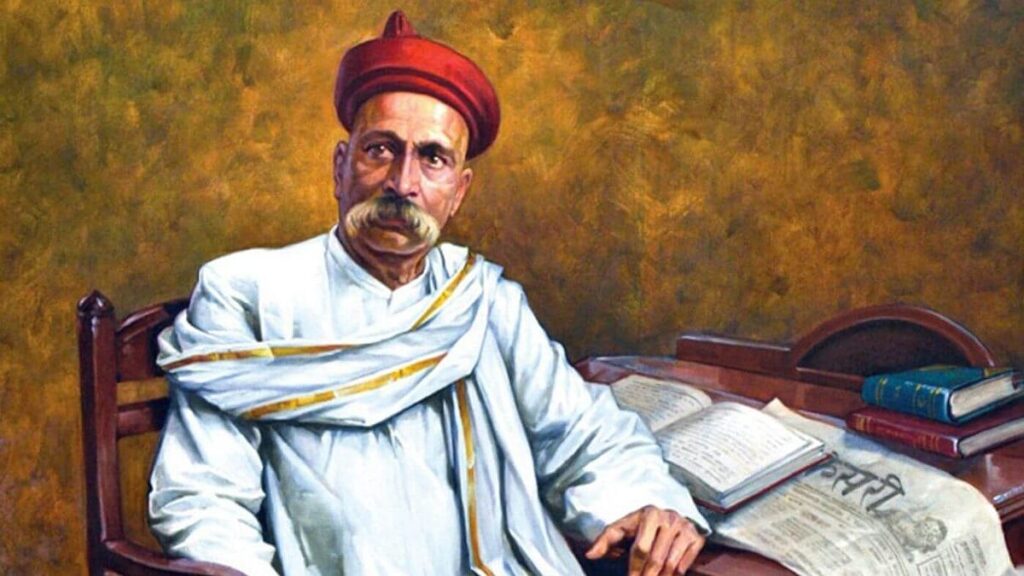
The Transition of an Era On August 1, 1920, Bal Gangadhar Tilak passed away in Mumbai at age sixty-four. His death marked the end of the early radical nationalist era in India’s freedom struggle. It also opened the portal for the Gandhian era of non-violent mass resistance across India. Over one million grief-stricken citizens gathered on the streets of Mumbai for his final journey. Prominent national leaders carried his bier, while Mahatma Gandhi called him the Maker of Modern India. British administrators branded him the father of the Indian unrest due to his anti-colonial stance. To millions of citizens, Tilak was the fearless leader who demanded absolute self-rule as a right. His body was cremated on Girgaon Chowpatty beach before a massive sea of mourning citizens. The loss was felt deeply across every province, village and town of the vast subcontinent. Citizens recognized that a giant pillar of national dignity and political resistance had fallen. Tilak had spent four decades transforming passive subjects into active, proud, and courageous patriots. He taught Indians to stand tall and reject the humiliation of foreign imperial rule. His passing created an overwhelming void in the leadership of the anti-colonial movement. Yet, his relentless work had prepared the ground for a decisive new political chapter. Gandhi seamlessly took up the mantle of leadership on the very day of Tilak’s death. The fight for national liberation entered a new phase, built firmly upon Tilak’s foundation. Early Foundations: Birth, Family, and Intellect Bal Gangadhar Tilak was born on July 23, 1856, in Ratnagiri, Maharashtra. He grew up in a cultured family that deeply valued Sanskrit scholarship and strong moral values. His father was a respected schoolteacher who instilled discipline and traditional learning in young Bal. After losing both parents during his youth, Tilak developed fierce self-reliance and intellectual courage. In 1877, he earned his Bachelor of Arts degree in mathematics from Deccan College in Pune. He later completed his law degree at Government Law College in Mumbai in 1879. Tilak declined lucrative government employment, choosing instead a lifelong path of dedicated public service. He believed serving colonial authorities was unacceptable when his nation required total political awakening. His academic training in mathematics and law profoundly shaped his analytical approach to political agitation. He viewed societal problems through a lens of strict logic, structural cause, and moral clarity. His legal knowledge allowed him to challenge colonial legislation and defend civil liberties in court. Rather than seeking personal wealth or professional prestige, he directed his mind toward popular education. He understood that a nation under foreign rule must first understand its own subjugation. Without intellectual clarity, citizens could not organize an effective resistance against imperial power. Tilak committed his youth to building institutions that would foster independent thought among Indians. This decision set the course for a heroic life dedicated entirely to national liberation. The Visionary Educator: Building Indigenous Institutions Tilak recognized that colonial education was designed to produce submissive clerks for the British Empire. He believed true liberation required indigenous schools rooted in national pride, history, and character building. In 1880, Tilak and Gopal Ganesh Agarkar co-founded the New English School in Pune. This popular institution provided affordable, high-quality secondary education to students from all social backgrounds. In 1884, they formally established the Deccan Education Society to expand their national educational network. The society opened Fergusson College in 1885, which quickly became a nursery for future freedom fighters. Tilak taught mathematics and Sanskrit at the college while accepting only a very modest salary. His engaging teaching style inspired students to think critically and question arbitrary colonial authority. He argued that genuine education must cultivate self-respect, physical strength, and devotion to the motherland. Under his guidance, students learned to analyze foreign economic policies and historical struggles for liberty. The Deccan Education Society demonstrated that Indians could successfully build and manage world-class academic institutions. This success shattered the colonial myth that Indians were incapable of self-governance and higher administration. Fergusson College produced generations of writers, reformers, political leaders, and dedicated public servants. Tilak’s educational work created an intellectual community committed to questioning imperial rule at every level. He viewed teachers not merely as instructors, but as guardians of the nation’s spiritual and civic future. Education remained the bedrock upon which all his subsequent political and social campaigns were built. Journalism as a Weapon: Kesari and Mahratta In January 1881, Tilak and his associates founded two groundbreaking newspapers to educate the adult public. Kesari was published in Marathi for the masses, while Mahratta was published in English. Tilak became editor-in-chief of Kesari in 1887 and transformed it into a powerful voice against empire. He wrote in clear, forceful Marathi prose that farmers, laborers, and shopkeepers could easily understand. Through his articles, he exposed economic exploitation, high taxes, and the systematic drain of Indian wealth. Kesari became an essential weekly institution, turning passive subjects into politically conscious, active citizens. Villagers regularly gathered in public meeting houses to hear Tilak’s fiery editorials read aloud. Imperial authorities quickly recognized the newspaper as a dangerous catalyst for popular anti-colonial defiance. Through his editorials, Tilak dissected complex government budgets, famine relief failures, and land revenue laws. He translated economic theories into plain language, showing how colonial policies caused widespread rural poverty. Kesari did not merely report news; it functioned as a permanent political school for the public. Tilak insisted that a newspaper must act as an uncompromising watchdog against administrative tyranny. He faced constant government surveillance, heavy censorship threats, and legal prosecutions for his writings. Yet, he refused to soften his tone or seek official favor at the expense of truth. His fearless journalism set a lasting national standard for press freedom and public accountability. Kesari grew into one of the most widely read and influential regional newspapers in India. Cultural Nationalism: Uniting a Divided Society Tilak understood that deep caste hierarchies and regional divisions weakened the anti-colonial struggle. He sought vibrant cultural symbols that could unite a largely illiterate population across all social strata.