
Blaming the State, Forgetting Ourselves
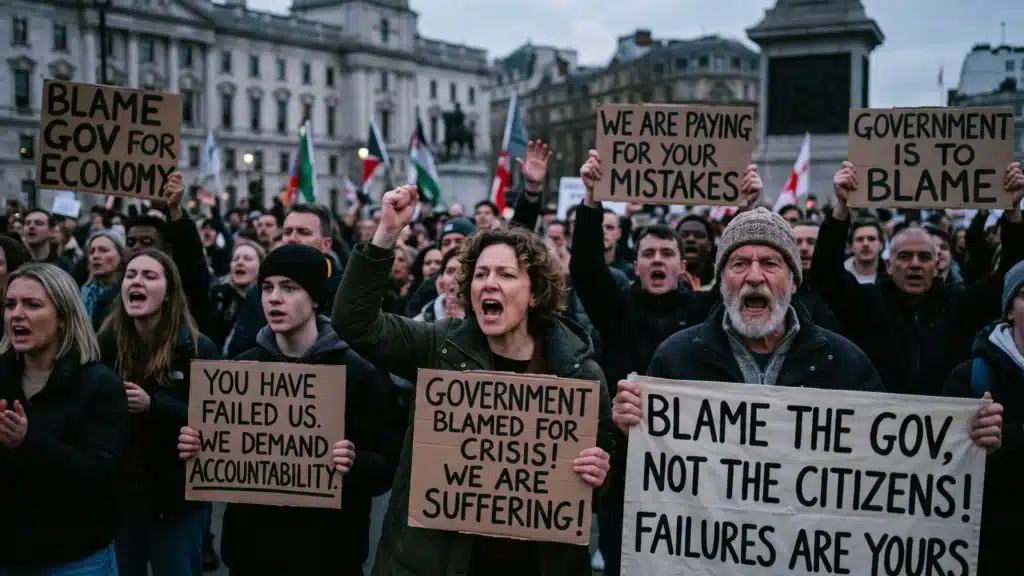
Imagine a normal morning. A person wakes up, drinks tea, and eats biscuits. Then they toss the empty packet into the drain outside. After that, they leave for work. Outside, rain is falling heavily. The roads are waterlogged up to the knees. Waste-filled drain water is overflowing onto the streets. Annoyed, the person mutters, “Inefficient government! It cannot even clean a drain.” On the way to office, they break a traffic rule. Then, to dodge a police fine, they quietly slip a hundred-rupee note. Once at the office, they lecture their colleagues loudly. “The country is going to ruin,” they say. “There is only corruption and government incompetence everywhere!” This scene is a living reflection of our present society. Nowadays, one ideology has taken root everywhere. Whatever happens in the country, the government alone gets blamed. Even if a sweet is too sweet, we blame the government. We are alert and impatient about our rights. Yet we stay equally indifferent toward our own duties. As the saying goes, do not thatch your roof with royal straw. In a democracy, the government must certainly be held accountable. However, without citizens’ cooperation and morality, no society stays healthy through laws alone. We have forgotten to ask ourselves a simple question. What exactly are we doing? Through the mindset of “someone else will do it,” we keep running from our own responsibilities. The Great Crutch of Modern Citizenship For decades, governance debates in India have centered on state accountability. Demanding efficiency from public institutions is vital for democracy. However, this demand has become a psychological crutch for citizens. Consequently, individual agency has surrendered almost entirely to state machinery. As a result, active stakeholders have turned into passive, disgruntled consumers. Furthermore, when dissatisfaction becomes reflexive rather than thoughtful, civic duty starts fraying. Originally, communities shared both pride and the burden of maintenance together. Now, that collective identity has shifted toward hyper-individualism. Today, the state is treated like an external vendor. We demand world-class infrastructure, yet resist small personal adjustments. Similarly, we expect transparency, yet exploit tiny loopholes for convenience. This cognitive dissonance quietly drives our public crises. Ultimately, democracy is a balance of governance and civic virtue. When systems operate alone, without an ethical public, laws fail. Indeed, laws are only as strong as our willingness to respect them. Meanwhile, depending on the state to fix individual behavior is unrealistic. For a nation of 1.4 billion, it is simply impossible. Nature’s Wrath or Our Negligence? Today, artificial flooding plagues almost every major Indian city. Assam is no exception to this trend. Even light rain submerges roads in cities like Guwahati. Immediately, we criticize the municipal corporation and government. Certainly, the government must build proper drains and scientific drainage systems. But what are we doing as citizens? We dump household waste, plastic bottles, and polythene bags into nearby drains. Consequently, these drains get blocked easily. How much can the government realistically clean? Can it truly station a watchman outside every house? For answers, we can learn from other countries. Japan offers one such example. There, citizen awareness drives cleanliness more than any government department. In Japanese schools, students clean their own classrooms and toilets. Therefore, the mindset “my waste is my responsibility” grows from childhood. Public dustbins are rare there for a specific reason. Citizens carry their waste home and dispose of it properly. Similarly, consider Indore city in Madhya Pradesh, India. Indore has repeatedly been ranked India’s cleanest city. This success comes not from machines or municipal staff alone. Rather, it stems from spontaneous citizen participation. Residents segregate waste at home into dry, wet, and hazardous categories. Until we take similar responsibility ourselves, floods will persist regardless of government change. The Anatomy of Civic Indifference The urban flood crisis reveals how civic neglect defeats structural investment. Municipal corporations spend heavily on desilting drains every year. They also build stormwater networks and deploy high-capacity pumps. Yet these solutions get choked constantly by single-use plastics and debris. Ironically, the same people discard this waste and then complain about waterlogging. This behavior stems from a deep psychological disconnect. Once an item leaves someone’s hand, it becomes the “government’s problem.” Personal responsibility seems to end at one’s own doorstep. Public squares, street corners, and drains become lawless dumping zones. However, physics does not respect this civic apathy. A blocked drain, ignored through the dry winter, returns as a monsoon torrent. It floods homes and paralyzes entire business districts. True urban resilience needs behavioral change alongside structural transformation. Global models like Tokyo, and national ones like Indore, prove this. Community discipline matters more than municipal budget size. When waste segregation becomes daily ritual, infrastructure finally works as intended. Likewise, littering must be treated as a serious social offense. Who is the Customer? Corruption remains another terrible malady of Indian society. Frequently, we raise voices against corruption in government offices and police systems. However, bribery is never truly a one-sided act. The bribe-taker is certainly a criminal, but so is the bribe-giver. Laws and vigilance departments exist to prevent corruption. Yet, until we stop taking shortcuts through bribery, it will persist. Corruption from the Perspective of Statistics According to Transparency International’s Global Corruption Barometer for Asia, roughly 32% of Indian bribe-givers act independently. They offer bribes without anyone even asking, purely for convenience. This statistic proves corruption is rooted in mindset, not just systems. Singapore offers a noteworthy example here. In the 1970s, Singapore adopted strict anti-corruption policies. Alongside tighter laws, the public also grew genuinely aware. Today, bribery there is considered a deep social shame. Similarly, we could refuse bribes and act against corruption ourselves. Reporting corruption to the anti-corruption wing is our duty. Instead, we prefer paying bribes for convenience and blaming the government later. Breaking the Transactional Cycle Transparency International’s statistic challenges a comfortable narrative. It suggests citizens are always victims of extortion. But when a third of bribes come from citizens themselves, this narrative collapses. People bypass lines, skip verifications, or fast-track applications willingly. Consequently,