
Seven Years of Article 370’s Abrogation
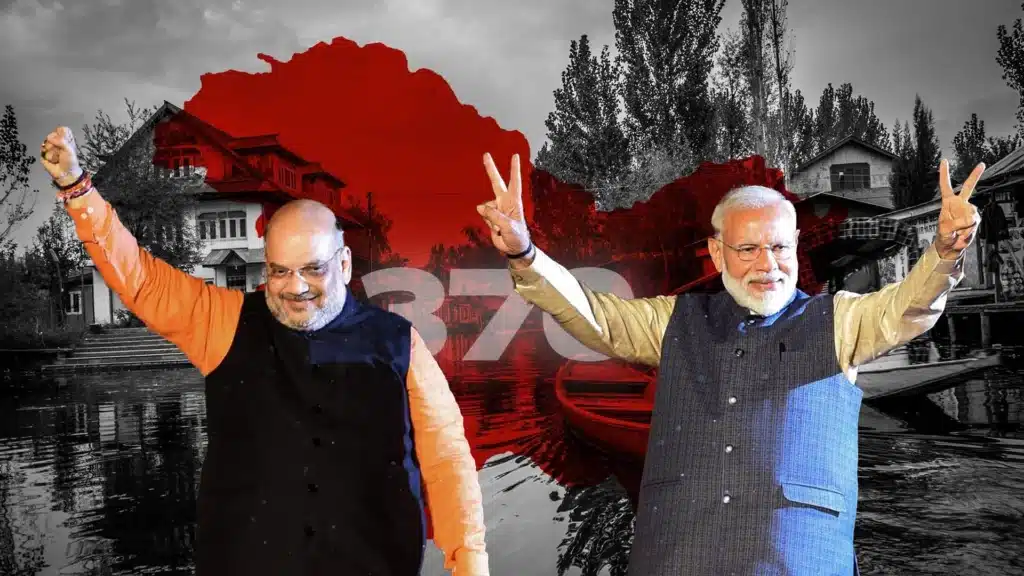
On August 5, 2019, India altered Jammu and Kashmir’s constitutional status. The move reshaped the region’s politics and its relationship with the Union. It also reignited India’s broader debate on federalism. Seven years on, the abrogation remains one of India’s most contested constitutional decisions. The government presents it as full integration and development. Critics still question the process, democratic representation, and unresolved promises. This article revisits Article 370‘s origins and its abrogation. It also covers the Supreme Court’s 2023 verdict and today’s situation. The Origins of a Special Status Jammu and Kashmir’s unique status traces back to Partition in 1947. It was a princely state with a Muslim-majority population and a Hindu ruler. Both India and Pakistan sought to claim it. Maharaja Hari Singh initially wanted independence for the state. He was wary of joining either newly formed country. Pakistan then threatened and attacked the state. Singh appealed to India for military protection on October 24, 1947. In return, he agreed to cede Jammu and Kashmir to India. This led to the signing of the Instrument of Accession on October 27, 1947. The Instrument limited India’s Parliament to three subjects: defence, external affairs, and communications. All other matters remained with Jammu and Kashmir itself. India was still drafting its own Constitution at the time. It therefore did not consider itself bound by it yet. India also could not alter the Instrument without the state’s consent. Lawmakers later introduced Article 370 to formalise this arrangement. They framed it explicitly as a temporary provision. It was meant to ease the state’s transition into India, not remain permanent. What Article 370 Actually Did Article 370 limited Parliament’s power over Jammu and Kashmir to three subjects. These subjects came directly from the Instrument of Accession. It exempted the state from most of India’s Constitution, except Article 1. It also let only the President amend the provision. The President needed the consent of the state’s Constituent Assembly to do so. This final clause later became central to legal disputes. Many scholars argued the Assembly was meant to settle Article 370’s fate permanently. They believed this should happen before the Assembly dissolved. Jammu and Kashmir established its Constituent Assembly in 1951. Five years later, the Assembly adopted the state’s own Constitution. It affirmed Jammu and Kashmir as an integral part of India. The Assembly abolished the Maharaja system. It replaced the Maharaja with an elected Head of State. However, it made no changes to Article 370 itself. The Assembly dissolved permanently in January 1957. This raised a key question about future amendments. The body empowered to change Article 370 no longer existed. That question would resurface decades later. The 2019 Abrogation Process The ruling Bharatiya Janata Party long intended to abrogate Article 370. It stated this goal in its 2014 and 2019 election manifestos. After winning the 2019 election, the government moved to dissolve the provision. It used two Presidential Orders issued on August 5 and 6, 2019. The first order amended Article 367, which governs constitutional interpretation. It replaced “Constituent Assembly” in Article 370 with “Legislative Assembly.” This applied specifically to Jammu and Kashmir’s Legislative Assembly. The state was under President’s Rule at the time. Parliament therefore exercised the powers of the Legislative Assembly. The President assumed the functions of the Governor. This arrangement let Parliament stand in for the defunct Constituent Assembly. A parliamentary resolution followed immediately afterward. A second Presidential Order the next day declared Article 370 inoperative. Parliament then passed the Jammu and Kashmir Reorganisation Act, 2019. This Act split the former state into two Union Territories. Jammu and Kashmir retained a legislative assembly. Ladakh received no legislative assembly. The change expanded Parliament’s legislative powers beyond the original three subjects. It rendered the region’s separate constitution and flag obsolete. It also abolished special property rights for permanent residents. Divided Reactions The abrogation drew sharply divided responses across India. Former Chief Minister Mehbooba Mufti called the decision “sinister.” She argued it aimed to alter the region’s demographics. She said it stripped away autonomy granted since 1947. Senior Congress leader P. Chidambaram criticised the unprecedented step. He noted no state had ever become a Union Territory before. Congress later demanded the restoration of statehood. Supporters framed the decision very differently. Government leaders said it ended decades of “temporary” ambiguity. They said it fully integrated the region with India. They argued it created conditions for development and investment. The old arrangement, they claimed, had held these back. Internationally, Pakistan and China objected to the move. Both called it a breach of territorial sovereignty. The government maintained the matter was purely internal to India. These competing narratives still frame the debate today. The Supreme Court’s 2023 Verdict Petitioners challenged the abrogation in the Supreme Court almost immediately. They argued the Union achieved indirectly what it couldn’t do directly. This happened through reinterpreting “Constituent Assembly” as “Legislative Assembly.” They also argued Parliament exceeded its powers under Article 3. Article 3, they said, does not allow downgrading a state’s status. After delays, a five-judge Constitution Bench heard arguments in August 2023. Chief Justice D.Y. Chandrachud led this bench. On December 11, 2023, the Bench delivered its verdict. The 476-page ruling was unanimous. It upheld the constitutionality of the abrogation. The Court ruled that Jammu and Kashmir held no separate internal sovereignty. It held the Constituent Assembly was never meant to be permanent. The Court called Article 370 an interim wartime arrangement. The judgment gave the government a major political and legal victory. Still, it left public opinion divided within the region and beyond. The Court avoided ruling on the Union Territory split itself. It treated that question as a separate matter. However, it ordered the government to restore Jammu and Kashmir’s statehood. It also ordered assembly elections by September 2024. One concurring opinion recommended a Truth and Reconciliation Commission. This aimed to address the region’s difficult recent history. The government has not acted on this recommendation. Seven Years Later: What Has Changed Several developments distinguish today’s Jammu