
Architect Of Stars: The Legacy of Dr. Vikram Sarabhai
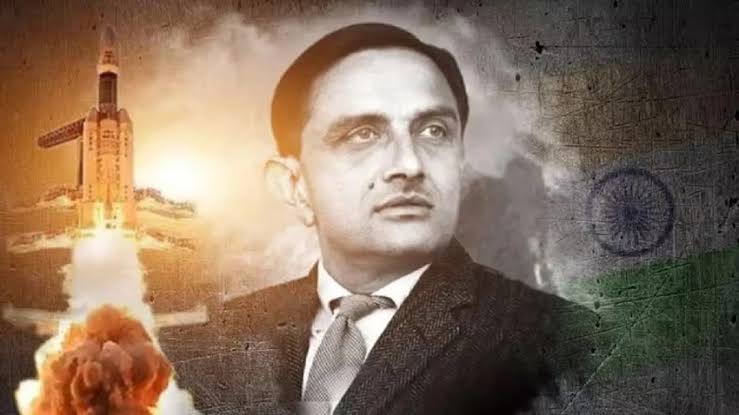
Celebrating A Visionary Pioneer on His Birth Anniversary Every year on August twelfth, India honors the birth anniversary of Dr. Vikram Ambalal Sarabhai. He is globally celebrated as the visionary founding father of the Indian space exploration program. His remarkable life redefined how a developing nation could harness science for genuine social progress. Sarabhai was not merely a brilliant physicist or an ambitious astronomer pursuing personal scientific acclaim. He was a master institution builder, an industrial pioneer, an educator, and a compassionate humanist. On his birth anniversary, citizens across India reflect on his enduring legacy and monumental contributions. His life proved that space technology is not an expensive luxury reserved for wealthy nations. Instead, he showed that space exploration could serve as a powerful engine for national development. His vision transformed rural communication, weather forecasting, education, agriculture, and defense infrastructure across India. Today, as India stands as a formidable global space power, Sarabhai’s guiding philosophy remains relevant. Understanding his journey helps us appreciate the foundation of modern Indian scientific and socioeconomic achievements. The birth anniversary of Vikram Sarabhai offers more than a moment of historical national remembrance. It provides an opportunity to evaluate how scientific purpose can transform human society at scale. In an era dominated by rapid technological disruption, Sarabhai’s ethical clarity remains an inspiring compass. He insisted that human welfare must always remain the ultimate destination of any scientific endeavor. Whether launching humble weather rockets or designing complex satellite networks, his goal remained clear. He sought to empower the farmer, the student in rural classrooms, and coastal fishermen. This human-centric focus established an enduring blueprint for technological innovation across the global South. Early Life, Elite Pedigree, and Academic Foundations Vikram Sarabhai was born on August twelfth, 1919, in the vibrant city of Ahmedabad. He was born into an opulent and highly influential Jain industrialist family with deep roots. His father, Ambalal Sarabhai, was a leading textile magnate deeply committed to Indian independence causes. His mother, Sarla Devi Sarabhai, was a dedicated social reformer advocating quality progressive education methods. Growing up in the Sarabhai household exposed young Vikram to a unique blend of culture. Eminent figures such as Mahatma Gandhi and Jawaharlal Nehru frequently visited his family home. These early interactions instilled in him a profound sense of national responsibility and progressive idealism. He completed his initial college education at Gujarat College before traveling abroad to study engineering. He pursued higher studies at the prestigious University of Cambridge, earning his Tripos degree in 1940. The onset of World War Two interrupted his academic tenure in Europe, prompting his return. Back home, he joined the renowned Indian Institute of Science located in the city of Bengaluru. Under Nobel Laureate Sir C. V. Raman, Sarabhai conducted pioneering cosmic ray research experiments. He worked alongside brilliant contemporary scientists like Dr. Homi Bhabha during this crucial period. Once World War Two concluded, Sarabhai returned to Cambridge to complete his advanced doctoral thesis work. In 1947, he was awarded a doctorate for investigating cosmic rays in tropical latitude regions. Equipped with world-class scientific training, he returned home determined to build robust scientific research institutions. Physical Research Laboratory: The Cradle of Space Sciences Upon returning to independent India in 1947, Sarabhai took his first major building step. At age twenty-eight, he established the Physical Research Laboratory in his hometown of Ahmedabad. The laboratory initially operated out of a modest room in his family’s private residential estate. With financial assistance from charitable trusts and educational societies, the institute expanded its operational research footprint. It was formally established at the M. G. Science Institute in Ahmedabad in November 1947. The Physical Research Laboratory quickly gained widespread recognition as the cradle of Indian space sciences. Sarabhai focused institutional research on cosmic rays, atmospheric physics, theoretical physics, and radio astronomy. He understood that fundamental scientific research was necessary before embarking on practical technological missions. Under his leadership, the laboratory nurtured a generation of brilliant experimental physicists and space researchers. The institution served as the intellectual incubator where early ideas about satellite technology were conceived. Sarabhai served as director of the Physical Research Laboratory until his untimely passing in 1971. Today, the institute remains a premier center for advanced research in space and planetary sciences. The growth of PRL established a template for interdisciplinary research environments in post-independence India. Sarabhai encouraged young researchers to explore cross-disciplinary connections between physics, meteorology, and communications. He believed that narrow academic specialization could hinder innovative problem solving in a developing society. By building open laboratory spaces, he cultivated an ethos of continuous inquiry and mutual collaboration. Many scientists trained at PRL later formed the backbone of India’s burgeoning space workforce. The laboratory stood as living proof that world-class scientific research could thrive within Indian borders. Founding ISRO: From Humble Starch to High Orbit In October 1957, the Soviet Union launched Sputnik 1, ushering humanity into the space age. While global powers viewed space primarily through geopolitical lenses, Sarabhai saw human development opportunities. He recognized that space technology could bridge vast developmental gaps across India’s sprawling rural landscape. In 1962, Sarabhai persuaded Prime Minister Nehru to establish the National Committee for Space Research. This landmark committee laid the organizational framework for what eventually became ISRO in August 1969. Sarabhai articulated his visionary philosophy regarding space exploration in a speech that remains legendary today. He stated that India had no ambiguity of purpose regarding its space activities. He declared that India did not fantasize about competing with advanced nations in moon exploration. However, he insisted India must be second to none in applying technologies to human problems. To launch India’s first sounding rocket, Sarabhai scouted for a site near the equator. He selected Thumba, a quiet fishing village located near Thiruvananthapuram in southern Kerala state. With remarkable diplomacy, he persuaded local villagers and church authorities to yield their local church. The sacred church building served as the laboratory, while the bishop’s residence became the office. Rocket parts and scientific equipment were transported across sandy beaches