
The Dawn of Moving Pictures: Thomas Edison’s Kinetograph
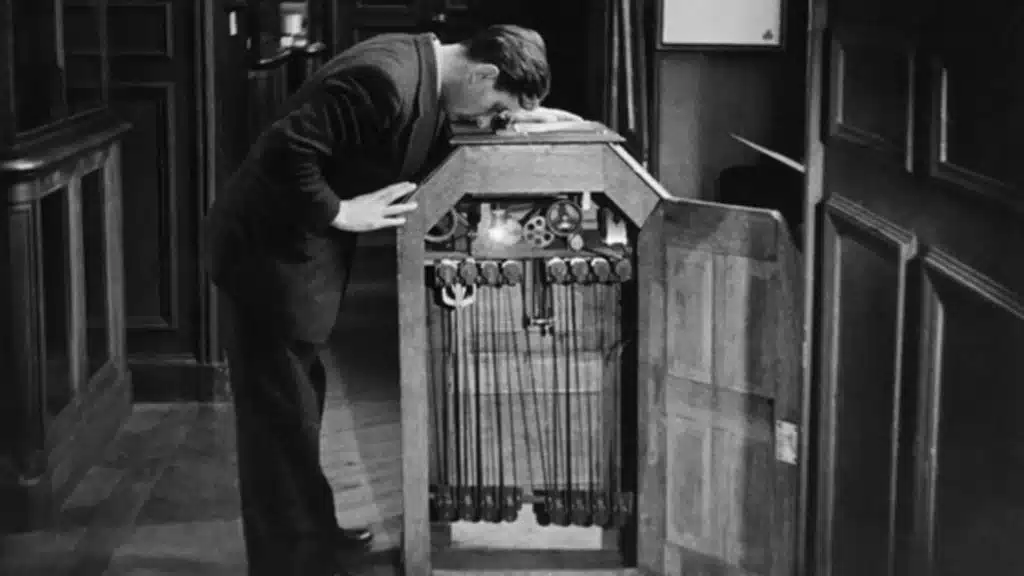
On August 24, 1891, Thomas Edison officially submitted his patent application for the Kinetograph motion picture camera. This historic legal filing marked a pivotal moment that forever changed the global landscape of modern media and culture. The Vision for Moving Visuals During the late nineteenth century, visual scientists across Europe and America sought to capture continuous real-time motion using photography. Static cameras captured single moments, but inventors wanted an automatic mechanism to document fluid physical movement across passing time. Thomas Edison recognized that recording moving images would transform global mass entertainment culture into a massive commercial industry. Before this breakthrough, early inventors struggled repeatedly to record continuous photographic action on a single unified recording device. Early photographic experiments utilized heavy glass plates and rigid rotating cylinders, which severely restricted recording duration and image clarity. Inventors needed a flexible, durable material capable of moving through a high-speed camera lens mechanism without tearing under tension. Edison realized that combining rapid optical exposures with continuous flexible celluloid film strips could solve these stubborn technical problems. The quest to record visual movement paralleled earlier audio breakthroughs achieved inside Edison’s famous industrial research laboratory in New Jersey. Edison declared his ambitious intention to build an advanced optical apparatus that would record images like phonographs recorded sounds. He envisioned a commercial ecosystem where public audiences could easily watch recorded theatrical performances, sporting events, and cultural moments. This grand vision required solving complex engineering problems regarding precise film transport speed, exposure timing, and material durability. William Dickson and Laboratory Innovation Edison entrusted his brilliant chief laboratory technician William Dickson to design and construct the complex physical movie camera mechanism. Operating inside Edison’s West Orange laboratory, Dickson performed grueling mechanical experiments to master frame synchronization and transport mechanics. He spent many months evaluating various optical shutters, gear assemblies, and electric driving motors to achieve dependable visual performance. Dickson faced immense technical pressure to create a durable apparatus that could pull delicate flexible film quickly without tearing. Dickson purchased long rolls of flexible celluloid film manufactured by George Eastman’s photographic enterprise for his laboratory tests. To prevent the delicate plastic strip from slipping during exposure, Dickson punched tiny perforations along both outer edges. These regular edge holes engaged internal mechanical sprocket teeth, ensuring every individual image frame advanced cleanly through the lens. Without these tiny side perforations, maintaining precise alignment and uniform frame spacing across long film rolls remained virtually impossible. Working conditions inside the laboratory required endless trial and error, testing hundreds of different mechanical gear configurations and speeds. Dickson often worked late into the night, hand-crafting small metal components to refine the camera’s delicate transport drive assembly. His relentless technical dedication translated Edison’s broad commercial vision into a fully functioning physical prototype that reliably recorded motion. This fruitful collaboration between visionary entrepreneur and master engineer proved essential for birthing the world’s first practical cinema camera. Mechanical Precision Inside the Kinetograph The heavy motorized Kinetograph camera utilized a rapidly spinning metal disk shutter to regulate light exposures during filming sessions. An internal electric motor drove the transport gears, pulling film forward at a consistent rate of forty frames per second. An intermittent transport mechanism held each frame completely still for a fraction of a second inside the camera plane. This precise stop-and-go mechanical cycle allowed crisp individual photographic exposures before advancing the film strip to the next frame. These rapid sequential exposures created a convincing illusion of fluid physical movement when viewed through matching peep-show Kinetoscopes later. Edison chosen to standardize the width of this perforated film strip at precisely thirty-five millimeters across the recording area. This specific mechanical measurement provided optimal visual resolution while maintaining total structural stability as film pulled through internal gears. Thirty-five millimeter film eventually became the international standard across global theatrical cinema production for over a full century. Calculating the correct exposure speed required a delicate balance between available natural sunlight and the sensitivity of early chemicals. If the transport mechanism moved too slowly, captured action appeared jerky, unnatural, and visually distorted upon playback inside cabinets. Conversely, moving the delicate celluloid strip too quickly through driving gears risked ripping edge perforations and jamming the mechanism. The team settled on high recording speeds to ensure extremely smooth visual playback for paying audiences visiting early parlors. Construction of the Black Maria Studio To record bright high-contrast motion pictures consistently, Edison constructed the world’s first dedicated movie studio in early 1893. Workers covered the entire wooden building in heavy black asphalt paper, prompting laboratory technicians to nickname the structure Black Maria. The building featured a slant window roof that opened upward to admit direct natural sunlight directly onto the stage. Technicians rotated the heavy studio along a circular ground track throughout the workday to keep actors illuminated by sunlight. This dark structure allowed complete control over scenic backgrounds while maximizing the natural solar illumination required for high-speed filming. Inside this specialized dark studio, Dickson filmed famous vaudeville acts, professional athletes, dancers, and unusual laboratory performances for distribution. Early short subjects included strongman demonstrations, acrobatic routines, animal acts, and the famous copyrighted recording of Fred Ott sneezing. These brief silent strips were loaded into cabinet viewers for single patrons paying coins at public commercial novelty parlors. The Black Maria served as the functional prototype for modern sound stages, establishing dedicated indoor production spaces for entertainment. Filming inside the studio was often physically demanding, as the black tar paper absorbed intense summer heat from direct sunlight. Performers endured scorching interior temperatures while executing acrobatic tricks or dancing before the heavy motorized Kinetograph recording unit. Despite uncomfortable working conditions, the studio produced hundreds of short motion pictures that captivated early audiences across American cities. This crude wooden shed represented the official birth of commercial film production, transforming raw invention into popular global culture. Commercial Emergence and Kinetoscope Parlors The commercial rollout of Edison’s motion picture system relied on single-viewer exhibition cabinets called Kinetoscopes rather than mass projectors. In April 1894, the first commercial Kinetoscope parlor opened its doors