
The Vedantic Foundations of Dr. Sarvepalli Radhakrishnan
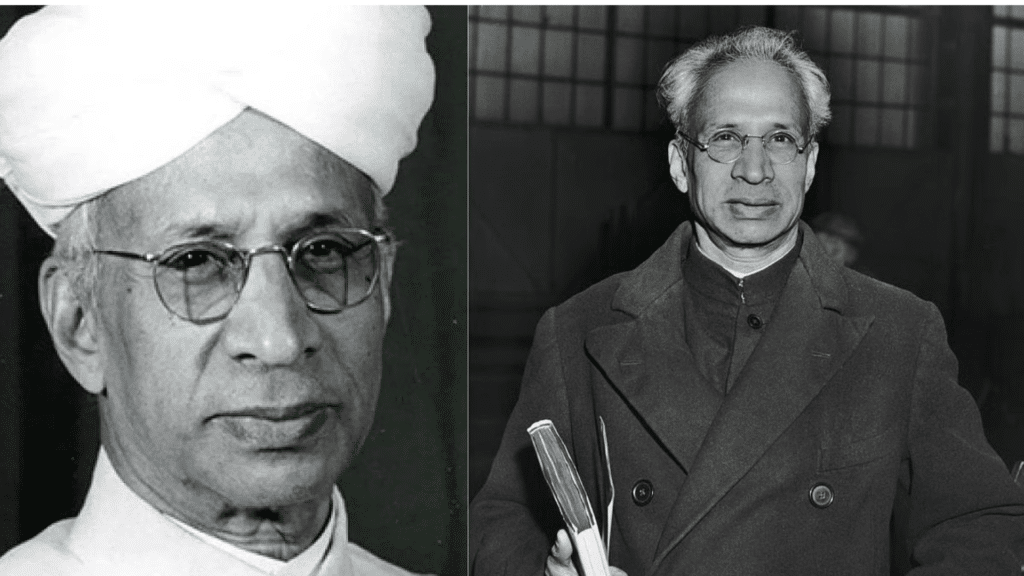
For Sarvepalli Radhakrishnan, Vedanta was more than a theory about the nature of reality. It was a way of understanding human life. He believed that the deepest truths of metaphysics had consequences for how we behave, how we understand ourselves and how we relate to other people. At the heart of Vedanta is the idea of Brahman, the ultimate reality. The world appears to us as a collection of separate things and separate individuals, but beneath this diversity lies a fundamental unity. The individual is not completely isolated from the rest of existence. There is a deeper reality in which all beings participate. This idea of unity provides the starting point for Radhakrishnan’s ethics. If reality is fundamentally interconnected, then the interests of the individual cannot be treated as completely separate from the interests of others. The realization of spiritual unity should gradually weaken the importance of selfishness. It should produce love, sympathy, fellowship and a willingness to sacrifice for others. This also changes the way we understand the self. Human beings ordinarily experience themselves through their desires, sensations and ego. We want things, pursue pleasures and become attached to particular people, possessions and ambitions. Radhakrishnan did not regard these aspects of human nature as simply evil. The problem arises when they control us. Vedanta And The Moral Life The moral life therefore requires self-mastery. Reason has to guide our desires rather than allowing desire to dictate our actions. Radhakrishnan draws on the famous chariot analogy from the Katha Upanishad. The body is compared to a chariot, the senses to horses, the mind to the reins and the intellect to the charioteer. A person whose senses are uncontrolled is like a chariot being pulled in different directions. A person guided by reason can direct them towards a proper goal. This emphasis on self-control leads naturally to Radhakrishnan’s understanding of action. Vedanta, in his interpretation, does not ask us to escape from the world. The Bhagavad Gita’s teaching of Nishkama Karma is central here. We should perform our duties, but without becoming selfishly attached to the rewards of our actions. The distinction is important. Action itself is not the problem. The problem is acting primarily for personal gain. A person can work, struggle, compete and fulfil social responsibilities while remaining inwardly detached from the fruits of those actions. What matters is the motive and the spirit in which the action is performed. This gives Radhakrishnan’s philosophy an active character. Spirituality does not mean sitting apart from society while the world goes on around us. The individual has duties and responsibilities, and these have to be fulfilled. The Gita’s example of Arjuna was particularly important for this idea. Faced with a difficult moral situation, Arjuna is not told to abandon action altogether. He is asked to act according to his duty, without selfish attachment. Morality Cannot Be Rules Radhakrishnan also believed that morality cannot be reduced to following a fixed list of rules. Truth, justice, compassion and other virtues can sometimes come into conflict. What matters ultimately is the larger moral purpose behind them. For him, the highest principle is the movement away from selfishness towards the welfare of others. This is why the realization of Vedanta should express itself in service. The person who genuinely understands the unity of existence should begin to see the suffering and happiness of others as morally significant. Spiritual realization has to become visible in one’s conduct. This idea also explains Radhakrishnan’s broader intellectual outlook. He was deeply interested in bringing Indian and Western philosophy into conversation with one another. He wanted Indian philosophical traditions to be taken seriously as systems of rational thought rather than being dismissed as collections of mystical beliefs. At the same time, his universalist interpretation of Vedanta allowed him to look for underlying spiritual truths across different religious traditions. His philosophy thus moves through a fairly simple sequence. We begin by recognizing the unity of reality. We then recognize that our ordinary ego gives us an incomplete picture of ourselves. Through reason and self-discipline, we gain greater control over our desires. This allows us to act without being dominated by selfish motives. The result should be a life directed towards the welfare of others. For Radhakrishnan, then, Vedanta was ultimately a philosophy that connected the deepest questions about reality with the ordinary question of how a human being should live. Its movement can be summed up simply: Unity of reality → realization of the self → self-mastery → selfless action → service to humanity. The value of spiritual philosophy, in his view, was finally measured by what it did to the person who believed it. The Spark of Inquiry: A Challenge to Faith To truly understand how Radhakrishnan arrived at this philosophy of active, socially engaged Vedanta, one must look at the circumstances of his early life. Born on September 5, 1888, into a Telugu Brahmin family in the town of Tiruttani (in present-day Tamil Nadu), Radhakrishnan’s early environment was steeped in traditional Hindu customs. However, his path to becoming a philosopher was remarkably accidental. Coming from a financially constrained background, he entered Madras Christian College at the age of 17. When a cousin who had recently graduated handed down his philosophy textbooks, Radhakrishnan’s academic trajectory was decided by economic necessity rather than initial design. It was at Madras Christian College that his foundational philosophy was forged—not in a vacuum, but in the crucible of critique. His teachers, including the prominent Christian thinker Dr. Alfred George Hogg, frequently criticized Hinduism as a system lacking ethical depth, characterizing it as mystical, dogmatic, and detached from social realities. Radhakrishnan later confessed that this “uninformed Western criticism” deeply disturbed his faith and shook the traditional props on which he leaned. Rather than retreating, his pride was galvanized. He felt an urgent need to study his own heritage to separate “what is living and what is dead in it.” At the young age of twenty, he wrote his Master’s thesis titled The Ethics of