
World Bank praises India poverty reduction progress

The World Bank published a major report praising India for remarkable economic progress. Researchers confirmed that India achieved one of the fastest poverty reductions worldwide. Extreme poverty dropped drastically from 27.1 percent in 2011 to 2.6 percent by 2023. The global financial institution stated that the nation lifted nearly 496 million citizens out of poverty. Strong household consumption and surging job opportunities drove this historic socioeconomic transformation. The lower-middle-income poverty line rate plummeted from 57.7 percent down to 16.1 percent. Employment figures expanded significantly between 2017 and 2023 across multiple economic sectors. Increased participation of rural women in paid work boosted overall household earnings. Targeted welfare transfers and food security programs provided essential financial protection for vulnerable families. Financial experts emphasized that continuous human capital development remains vital for sustainable growth. Economists project that ongoing structural reforms will accelerate future prosperity across every region.
Severe Cyclone Murasu threatens Andhra coast tonight

Severe Cyclonic storm Murasu intensified rapidly over the western Bay of Bengal. Meteorological officials expect the powerful storm to cross the southern Andhra Pradesh coast tonight. The Cyclonic storm will likely strike between Nellore and Narsapur, Andhra during late operating hours. The India Meteorological Department predicted sustained wind speeds reaching 110 kilometers per hour. Violent gusts could touch 120 kilometers per hour near the coastal belt. State authorities placed multiple districts on high alert and deployed disaster response teams. Heavy rainfall will lash coastal regions while triggering severe waterlogging and structural damage. Officials urged residents in vulnerable zones to move immediately toward designated relief shelters. Fishermen must avoid venturing into rough seas until weather conditions improve significantly.
Amitabh Bachchan greets fans behind bulletproof glass
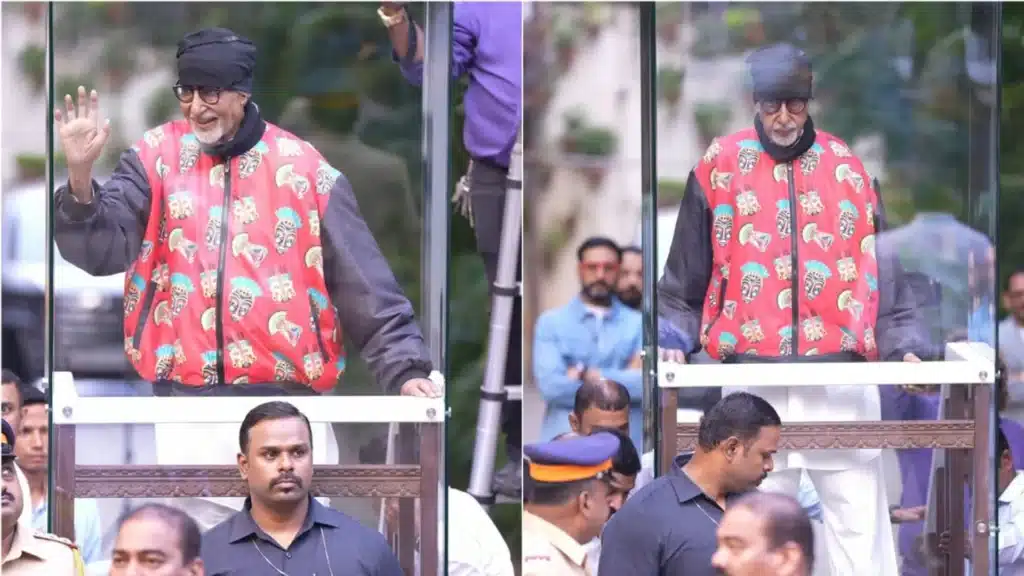
Bollywood megastar Amitabh Bachchan surprised admirers by greeting them from behind a transparent protective shield. Amitabh Bachchan continued his famous Sunday ritual outside his Mumbai residence, Jalsa. However, heightened security measures replaced the traditional open-air platform with a secure bulletproof enclosure. Mumbai Police recently received an anonymous email threatening to blow up the celebrity residence. Law enforcement agencies immediately strengthened security arrangements around the entire neighborhood. Actor Abhishek Bachchan stood close beside his father throughout the entire interaction. Security personnel monitored the massive crowd vigilantly while private guards maintained strict surveillance. Hundreds of loyal supporters still gathered outside the gates to catch a glimpse of the icon. Fans cheered loudly and waved banners despite the new safety precautions. The legendary actor folded his hands and acknowledged the passionate supporters respectfully. Recent security incidents involving prominent film stars prompted authorities to enforce stringent safety protocols. Police officials continue investigating the origin of the threatening email while maintaining round-the-clock patrols.
Guwahati–Delhi Bullet Train: Northeast Set to Join India’s High-Speed Rail Network

In a major development for Northeast India’s connectivity, Prime Minister Narendra Modi has approved the extension of the proposed Northern Bullet Train Corridor to Guwahati, potentially bringing the national capital within eight hours of Assam. Railway Minister Ashwini Vaishnaw announced the approval on October 31, 2026, while speaking at the launch of the Vande Bharat Sleeper Express between Varanasi and New Delhi. The proposed corridor will connect Delhi with major cities across Uttar Pradesh, Bihar and West Bengal before extending into Assam. The proposed route includes Agra, Kanpur, Lucknow, Ayodhya, Varanasi, Prayagraj, Patna and Siliguri, with Guwahati serving as its northeastern terminus. Assam Chief Minister Himanta Biswa Sarma welcomed the decision, revealing that the original proposal was intended to end at Siliguri. He said he had written to the Railway Minister and met him in July to push for Guwahati’s inclusion. According to Sarma, the extension could reduce the Delhi–Guwahati journey to under eight hours. Currently, the fastest conventional rail journey between Guwahati and Delhi takes approximately 28 hours. The proposed high-speed connection would therefore represent a dramatic reduction in travel time. The project could also have significant economic implications for the Northeast. Faster connectivity with major commercial centres could encourage tourism, improve access to markets, attract investment and support the movement of skilled professionals. Sarma has particularly highlighted the potential benefits for Assam’s ambitions to attract high-tech industries. However, the announcement does not mean that construction or passenger services are about to begin. Detailed alignment, project implementation timelines and other execution details are yet to be established. If realised, the corridor would mark a major milestone in bringing Northeast India into the country’s emerging high-speed railway network.
Arsenal End Anfield Hoodoo to Claim Top Spot

Arsenal secured a historic 1-0 victory over Liverpool at Anfield on Sunday.
El-Sayed’s Locker Room Comments Draw Backlash

El-Sayed is facing growing backlash after controversial comments made during an interview with Ross Douthat .
The Internet’s first cyberattack
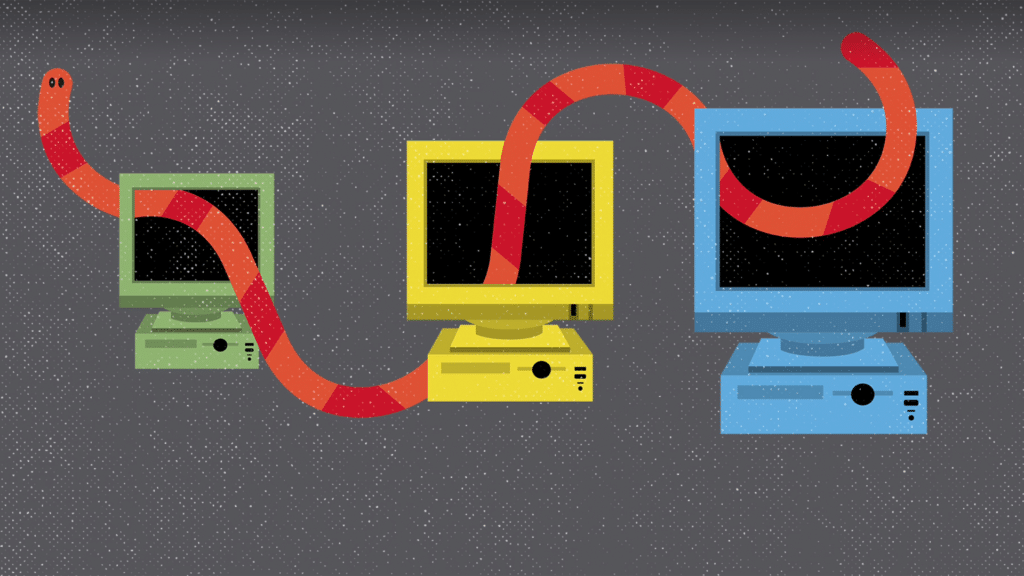
On November 2, 1988, LLNL computer scientist Russell Brand noticed a sudden spike on his VAX computer from his home in Berkeley. The load increased by one thousand times within mere seconds. Tracing the problem, Russell Brand discovered unusual files and processes on his machine. Believing a worm had breached his system, Brand contacted fellow students at UC Berkeley’s Experimental Computing Facility. They confirmed an ongoing attack across the internet. The internet was under twenty years old then. It consisted of slightly over five hundred autonomous unclassified networks connecting approximately sixty thousand computers. Two massive networks dominated the American landscape. The National Science Foundation and the Department of Defense sponsored them. DARPA established ARPANET in the late 1960s as a prototype unclassified network. On January 1, 1983, TCP/IP protocols were installed on ARPANET, officially birthing the internet. Five years prior to ARPANET, Livermore computer scientists created a local classified time-sharing network called Octopus. By 1974, Octopus simultaneously connected over a thousand remote terminals and printers. Livermore’s pioneering hardware and software later modeled NSFNET. NSFNET served as the primary backbone for explosive internet growth in the nineties. Cornell Graduate Unleashes the Program Robert Morris Jr., a Cornell computer science graduate student, created the experimental self-replicating program. That evening, he hacked into an MIT computer from his Cornell terminal and released the worm. The program targeted specific UNIX versions and spread rapidly by exploiting known security flaws. Morris quickly realized his program was far too successful. The worm replicated and reinfected machines much faster than anticipated. Seeking a solution, Morris consulted a Harvard friend. They sent an anonymous message containing instructions on how to kill the worm. Unfortunately, the network bogged down, and the instructions arrived too late. Within hours, the worm hit an estimated six thousand connected computers. Vital military, government, and university functions slowed to a crawl. The incident shattered the widespread complacency and familiarity among early internet users. Public awareness of computer system vulnerabilities did not yet exist. Lawrence Livermore National Laboratory Responds LLNL computer security manager Chuck Cole learned of the intruder from Russell Brand. Discovering that UNIX systems were most vulnerable, Cole severed connections between the Lab’s unclassified computers and the internet. UC Berkeley students quickly developed a computer patch. LLNL’s Computer and Communications Security Group modified it for Lab systems. Because of early knowledge and coordination with Berkeley, LLNL became a national focal point for assistance. Organizations nationwide relied on the experience Livermore gained during the night. Thanks to a quick response from employees like Brand and Doug Mansur, damage was limited to six infected Lab computers. None of those systems crashed. Livermore restored Open Labnet connections within a day and reconnected to the internet on Friday. Other organizations remained disconnected for up to a week. The worm caused millions of dollars in damages by creating widespread havoc. Legal Consequences and Cybersecurity Evolution In the aftermath, Robert Morris became the first person convicted under the 1986 Computer Fraud and Abuse Act. Courts spared him prison time, issuing fines, probation, and community service instead. Morris later became an MIT professor and co-founded Viaweb, which Yahoo acquired for nearly fifty million dollars. Acting on lessons learned, the Department of Energy established the Computer Incident Advisory Capability on February 1, 1989. Livermore hosted this center due to its demonstrated leadership during the attack. CIAC responded to security incidents across the DOE on a twenty-four-hour basis. This capability eventually evolved into the modern DOE Joint Cybersecurity Coordination Center. Today, LLNL applies cutting-edge science and technology to defend the nation from sophisticated cyber threats. The Lab’s programs protect critical civilian infrastructure and national security against advanced adversaries.