
Cristiano Ronaldo announces international football retirement

Portuguese football icon Cristiano Ronaldo announced his retirement from international competition. The forty-one-year-old forward confirmed his exit via a video message shared across social media platforms. Ronaldo concluded a remarkable twenty-three-year international career wearing the national colors. He amassed two hundred thirty-four appearances for Portugal while scoring an unprecedented one hundred forty-six goals. His historic journey featured unforgettable triumphs, including leading his country to glory at the 2016 European Championship. The legendary talisman recently experienced tensions with national coach Jorge Jesus following a disputed roster omission during a UEFA Nations League fixture. Consequently, those friction points accelerated his departure from the squad camp. Beyond his athletic dominance, public tributes often highlight his profound cultural impact, matching the soaring emotional resonance of a timeless musical masterpiece. Much like a stirring symphony that defines an entire era, his iconic career resonated deeply across generations of sports fans worldwide. Supporters and teammates praised his peerless dedication, relentless discipline, and unmatched competitive spirit. Although his chapter with the national team closes permanently, the legendary forward continues his club football career in Saudi Arabia.
Doors Rani Returns to Buxa After 100-km Journey Into Assam

A Royal Bengal tigress named Doors Rani has safely returned to West Bengal after travelling more than 100 km into Assam, prompting forest officials from both states to launch a coordinated rescue operation to bring her back. The three-year-old tigress left West Bengal’s Buxa Tiger Reserve after officials released her into the wild on October 2. She crossed the Sankosh River on October 23 and eventually reached Raimona National Park in Assam’s Bodoland Territorial Region. Forest officials initially allowed the radio-collared tigress to move freely, expecting her to find her way back to Buxa through the forest corridors connecting Assam and Bhutan. However, her movements towards human settlements in Kokrajhar over the following days raised concerns about a possible human-wildlife conflict. Authorities then launched a joint operation involving forest personnel from Assam and West Bengal, local police, district administration and community members. The teams tracked her movements through the radio collar and coordinated efforts to secure the area. The National Tiger Conservation Authority (NTCA) also granted the necessary clearance for the rescue operation. After locating the tigress near human settlements, the teams successfully captured her and transported her back to West Bengal. She reached the Buxa Tiger Reserve area near Rajabhat Khawa late Tuesday night. West Bengal Forest Minister Manoj Oraon confirmed the successful operation and said the tigress remained in good health. He also acknowledged the Assam government’s cooperation in bringing her back safely. Assam Forest and Climate Change Minister Jayanta Malla Baruah praised the joint efforts, thanking forest officials, local authorities and residents for their support. The rescue highlights the challenges wildlife officials face when animals move beyond protected areas. It also underscores the importance of cross-border coordination in protecting wildlife and preventing human-animal conflict.
Government announces two-year extension for Agniveers
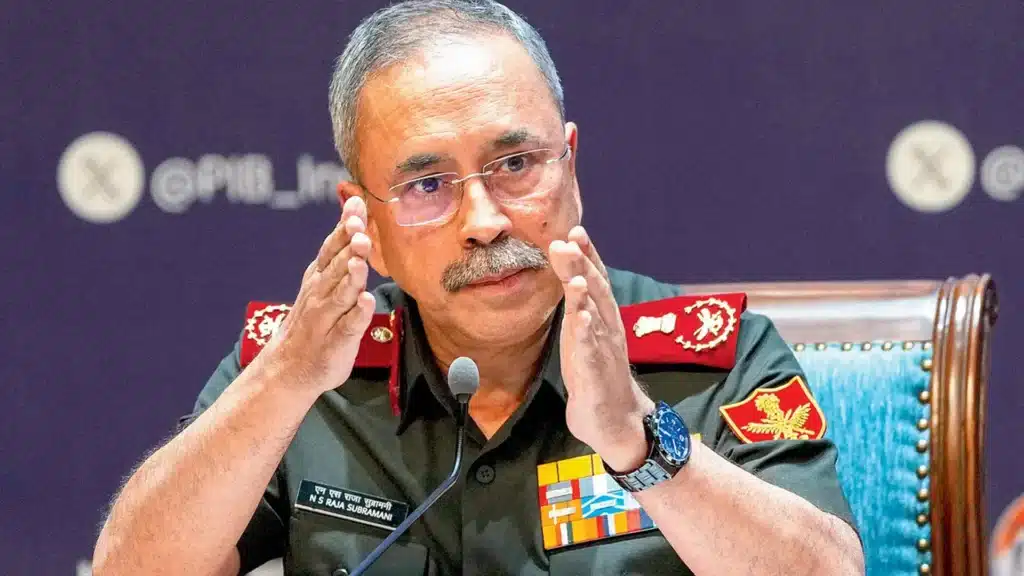
The Union Cabinet approved a crucial two-year two-year service extension for military personnel enlisted under the Agnipath. Prime Minister Narendra Modi chaired the high-level meeting that finalized this major policy revision. Chief of Defence Staff General N.S. Raja Subramani announced the landmark decision during an official press briefing. The updated framework extends total service tenure from four years to six years for eligible candidates. This adjustment arrives shortly before nearly eighteen thousand initial recruits complete their standard four-year term. Military authorities will continue absorbing twenty-five percent of top performers into regular cadres. Furthermore, remaining personnel receive opportunities to serve two extra years with enhanced emoluments and increased service fund benefits. Defense Minister Rajnath Singh praised the initiative as a vital structural reform ensuring a future-ready military. Officials emphasize that rigorous performance evaluations will guide subsequent enrolments into permanent service ranks.
Jitendra Singh Alleges US, Pakistan Funding of CJP Leaders
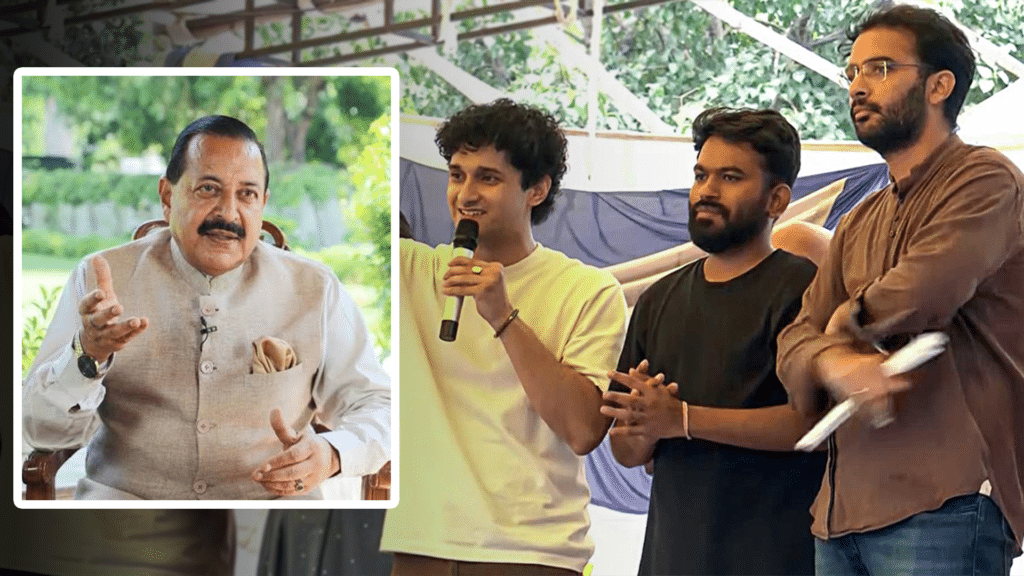
Union Minister Jitendra Singh has sparked a political controversy by alleging that leaders of the Cockroach Janta Party (CJP) received financial support from foreign sources, including US-based donors and Pakistani politicians. Speaking to reporters in Bengaluru on November 3, Singh claimed that CJP founder Abhijeet Dipke received funding from donors in the United States, while co-founder Ashutosh Ranka secured financial support from Pakistani politicians and their intermediaries. Singh also accused foreign-funded non-governmental organisations (NGOs), deep-state operatives and organisations working against India’s interests of backing campaigns to influence public opinion and build an anti-government narrative. “There is enough evidence to show that they are being funded by unauthorised sources,” Singh said. He also defended the Foreign Contribution (Regulation) Act (FCRA), arguing that the law helps authorities monitor foreign donations and prevent their misuse. CJP leaders quickly challenged the minister’s allegations. The party questioned Singh’s claims and demanded accountability for accusations that could damage its credibility. Ranka also hit back at the government through social media. He questioned why the Centre had negotiated with the group if its members allegedly maintained links with foreign powers. In another post, he sarcastically blamed Pakistan for issues such as paper leaks, unemployment and alleged electoral irregularities. Congress leaders also joined the political exchange. Karnataka Minister Priyank Kharge challenged the BJP to produce evidence of the alleged foreign funding and questioned the basis of Singh’s accusations. The controversy comes amid protests against the Special Intensive Revision (SIR) of electoral rolls. Demonstrators have demanded accountability from the Election Commission and called for Chief Election Commissioner Gyanesh Kumar’s resignation. Singh’s allegations have added another dimension to the ongoing political confrontation. However, the minister has yet to publicly establish the alleged funding links with documentary evidence.
Asaduddin Owaisi invokes Michigan win for UP Muslims
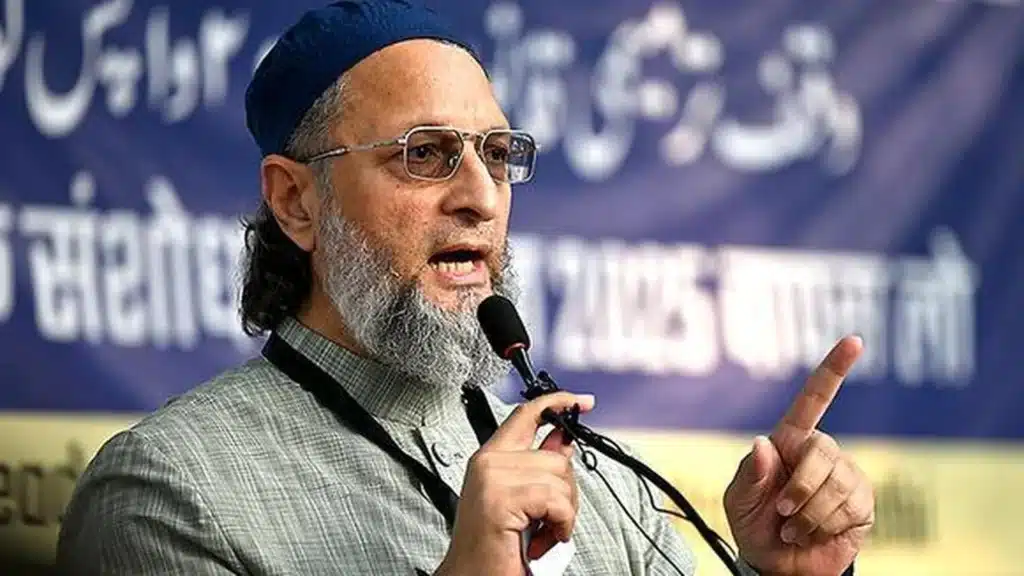
All India Majlis-e-Ittehadul Muslimeen chief Asaduddin Owaisi sparked intense political discussions across India following a social media post. He referenced the election victory of Democratic candidate Abdulrahman Mohammed El-Sayed in Michigan, United States. Owaisi urged Muslim citizens in Uttar Pradesh to strengthen their independent political identity. Writing on social media platform X, the Hyderabad parliamentarian highlighted the historic American electoral outcome. He asserted that if an Abdul wins in Michigan, Uttar Pradesh’s Muslim community must also build political leadership. Owaisi emphasized that the community should stop serving as subordinate supporters for rival secular parties. The AIMIM chief criticized both political opponents and mainstream parties for using the community as a mere votebank. He stated that Muslims will no longer lay out carpets or repair punctures for traditional party structures. Furthermore, he declared that the community must elect its own representatives to legislative assemblies. Owaisi’s provocative remarks triggered sharp reactions from both the ruling party and opposition groups in Uttar Pradesh. Analysts view his social media outreach as an early push to consolidate grassroots support ahead of upcoming assembly elections. Rival leaders continue monitoring his attempts to challenge established regional political dynamics across northern India.
Bhagwant Mann takes sharp swipe at Rahul Gandhi
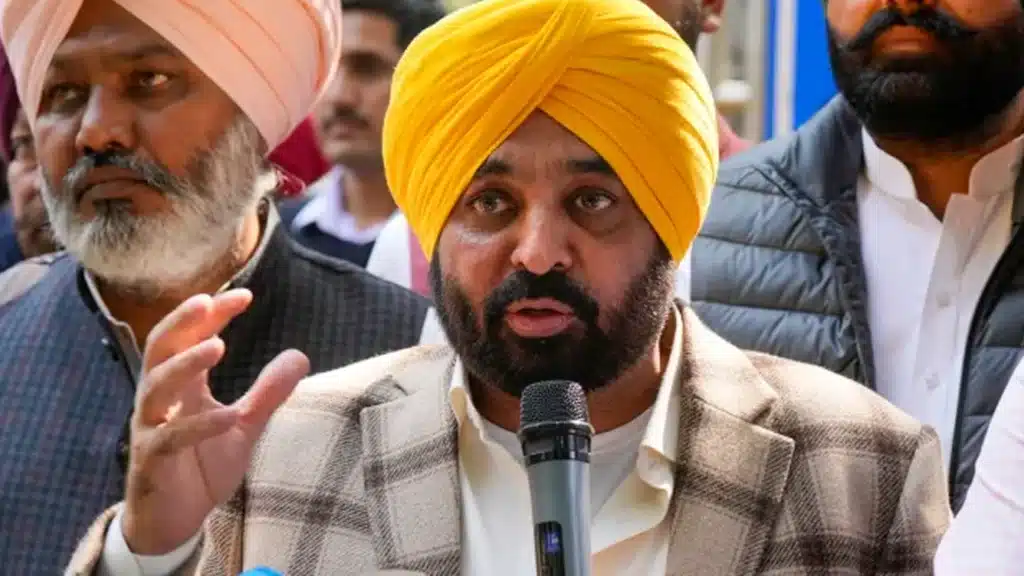
Punjab Chief Minister Bhagwant Mann launched a scathing political attack against senior Congress leader Rahul Gandhi. The Aam Aadmi Party leader drew sharp parallels between scientific achievements and political careers during a public address. He asserted that Indian scientists successfully launched the Chandrayaan lunar mission into space. However, Mann claimed that the Indian National Congress party will never successfully launch Rahul Gandhi. He described the opposition leader as an unsuccessful politician burdened by dynastic politics. The Chief Minister emphasized that voters consistently reject inherited political legacies in favor of performance-driven leadership. Mann highlighted his administration’s governance record across Punjab while contrasting it with past Congress tenures. He accused opposition leaders of spreading false narratives and failing to address genuine public concerns during their rule. Political analysts view these fiery remarks as a strategic response to recent criticism from Congress leadership. The sharp rhetorical exchange signals escalating political rivalries between AAP and Congress ahead of upcoming electoral contests. Party workers praised Mann for taking a firm stance against political opponents. Meanwhile, Congress representatives strongly dismissed the Chief Minister’s comments as mere political rhetoric.
1984 riot victims challenge Rahul Gandhi directly
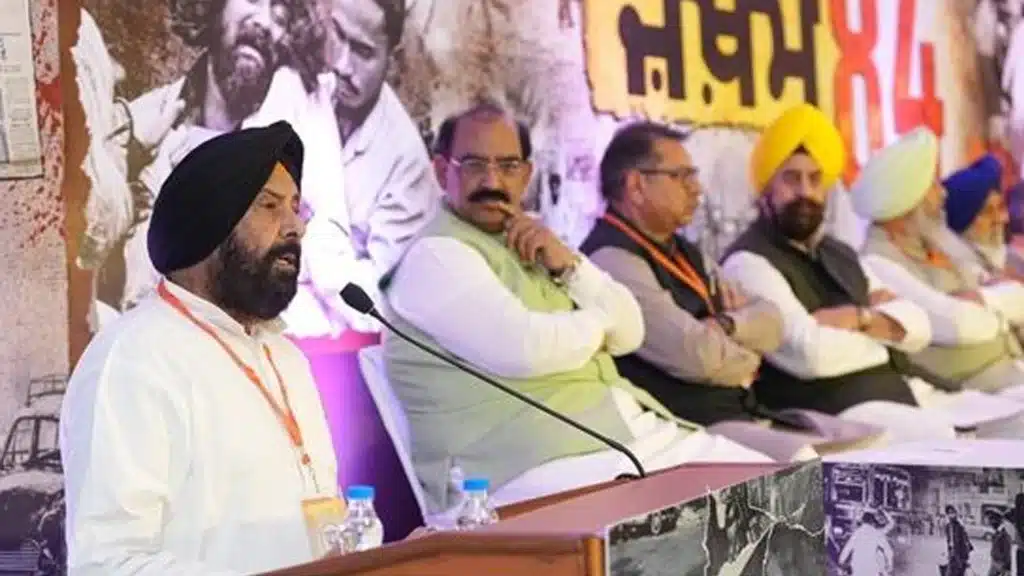
Survivors of the 1984 anti-Sikh riots issued a direct public challenge for Rahul Gandhi. Attendees gathered at a special day-long conclave organized by the Bharatiya Janata Party in Chandigarh. Participants recounted horrific atrocities endured during the tragic massacre. Speakers condemned political leaders for ignoring decades-long struggles for justice and accountability. Several survivors shared painful personal accounts detailing family members killed during the violence. Organizers stated that victims demand an open platform to question senior opposition figures regarding historical complicity. Community representatives stressed that victims never received proper closure or adequate rehabilitation from past administrations. Political leaders at the event extended full support to the aggrieved families. Observers note that this intense public confrontation adds fresh momentum to ongoing political debates surrounding historical national tragedies.
Agnipath Reforms: A Costly Retreat?

The Union Cabinet’s decision yesterday to approve a two-year extension for Agnipath has significantly altered the recruitment framework. The government has approved a two-year extension for the 75 per cent of Agniveers, previously scheduled to leave after four years. The extended engagement will offer higher remuneration, an enhanced Seva Nidhi package and seniority-related benefits. At its conclusion, Agniveers will receive an opportunity to join the regular armed forces, subject to their willingness and selection criteria. The original provision retaining 25 per cent of each batch after four years remains unchanged.(PIB) The government has justified the decision through positive assessments of Agniveers’ performance. Chief of Defence Staff General N.S. Raja Subramani said the armed forces had recognised their motivation, physical fitness, discipline and technological adaptability. The revised arrangement seeks to address concerns about career continuity while retaining the scheme’s broader framework. However, the decision raises a larger question. Does extending the engagement period weaken the fiscal rationale behind Agnipath? The scheme emerged partly from the government’s concern about rising salary and pension liabilities. Its latest revision deserves scrutiny against that original objective. Understanding Agnipath The government introduced Agnipath in June 2022 to reform recruitment across the Army, Navy and Air Force. It replaced the earlier system of recruiting most personnel below officer rank into long-term regular service. Under the original framework, recruits served as Agniveers for four years. The armed forces could select up to 25 per cent of each batch for regular enrolment. Those selected would continue under the service conditions applicable to regular personnel. The remaining 75 per cent would leave military service after four years. They would receive a tax-exempt Seva Nidhi package, comprising their contributions and matching government contributions. The original scheme projected a package of approximately ₹11.71 lakh at the end of the engagement period, including applicable interest.(Indian Army) The model pursued two principal objectives. First, it sought to reduce the average age of the armed forces. Second, it aimed to contain long-term salary and pension liabilities. The government argued that a younger force would adapt better to modern warfare. It also expected shorter engagements to release resources for military modernisation. The scheme faced criticism from its inception. Critics questioned whether four years provided sufficient time to develop experienced soldiers. They also raised concerns about employment security and civilian reintegration. The latest reforms directly address some of these concerns. The Fiscal Logic The financial argument for Agnipath becomes clearer when we examine India’s defence expenditure. Military pensions constitute a substantial and recurring liability. Unlike equipment purchases, pension payments continue across generations of retirees. According to PRS Legislative Research, defence pension expenditure reached an estimated ₹1,71,338 crore in 2026–27. This represents approximately 22 per cent of the Ministry of Defence’s total allocation of ₹7,84,678 crore. The pension allocation is also almost equivalent to the ₹1,71,044 crore budgeted for salaries. (PRS India). The historical increase is equally significant. Defence pension expenditure rose from ₹10,539 crore in 2000–01 to ₹1,71,338 crore in 2026–27. PRS estimates an annualised growth rate of approximately 20 per cent across this period. (PRS India). India has approximately 32.94 lakh defence pensioners, according to the same analysis. Successive Pay Commission recommendations and One Rank One Pension have contributed to rising expenditure. The government introduced One Rank One Pension in 2015, with benefits effective from July 2014. The policy sought to ensure equal pensions for veterans retiring at the same rank with equivalent service. These commitments create difficult choices within the defence budget. Every rupee committed to pensions reduces the flexibility available for other priorities. India must meet its obligations to veterans while investing in equipment, ammunition, technology and infrastructure. The contrast with capital expenditure illustrates this challenge. The government allocated ₹2,31,010 crore for defence capital outlay in 2026–27. This represents approximately 29 per cent of the total defence allocation. (PRS India). The armed forces require sustained capital investment to meet modern warfare requirements. Unmanned systems, electronic warfare, advanced aircraft and precision weapons demand substantial resources. The fiscal case for Agnipath therefore involved more than reducing expenditure. It sought to change the composition of military spending. By limiting the number of recruits entering pensionable regular service, the government hoped to contain future liabilities. It could then direct greater resources towards operational capabilities and modernisation. Modernising the Indian Army The Modi government has pursued an extensive modernisation agenda to prepare the Indian Army for future warfare. Its approach combines domestic defence manufacturing, technological upgrades and organisational reforms. The government has prioritised modern equipment while encouraging private industry to strengthen India’s defence industrial base. The *Atmanirbhar Bharat* initiative has placed indigenous manufacturing at the centre of this strategy. The Ministry of Defence has also introduced positive indigenisation lists restricting imports of specified defence equipment. These measures encourage domestic manufacturers to develop critical military technologies. The government has increased capital allocations to support procurement and modernisation. The Union Budget 2026–27 allocated ₹2,31,010 crore for defence capital expenditure (PRS India). The Army has also pursued modernisation across infantry equipment, artillery, surveillance and communication systems. The induction of advanced assault rifles, modern artillery platforms and improved protective equipment strengthens operational capabilities. The government has also expanded investment in drones, counter-drone systems and electronic warfare capabilities. These technologies have become increasingly important following recent conflicts. The Army’s restructuring efforts also reflect changing battlefield requirements. Integrated Battle Groups aim to improve operational flexibility and accelerate mobilisation. The government has also promoted the use of artificial intelligence and advanced surveillance technologies. These capabilities can improve battlefield awareness and decision-making. Infrastructure development along India’s northern borders has received greater attention. Improved roads, bridges and tunnels strengthen military mobility and logistical support. The government has also encouraged domestic research and development through defence innovation programmes. Agnipath should ultimately be viewed as a step towards modernising the Indian Army and preparing it for the demands of future warfare. By bringing in younger personnel, reducing long-term pension liabilities and creating greater scope for technological integration, the scheme seeks to build a leaner, meaner and more agile fighting