
Gauhati High Court Rules Identity Cards Cannot Prove Citizenship

The Gauhati High Court recently delivered a landmark legal verdict. It declared that PAN cards and voter IDs alone cannot prove Indian citizenship. A division bench resolved this critical dispute in Assam. The judges reviewed a petition challenging an earlier Foreigners Tribunal order. That local tribunal had previously declared the female petitioner a foreigner. To establish her identity, the woman submitted several official documents. Her legal team presented electoral rolls, ration cards, and tax cards. However, the high court rejected these records as standalone proof. Authorities issue PAN cards and voter IDs based entirely on self-declarations. Such administrative processes involve no rigorous verification of an applicant’s nationality. Consequently, the court emphasized the need for robust, continuous lineage records. Petitioners must bridge generational gaps using credible historical evidence. During the hearing, the bench identified major inconsistencies in the woman’s family history. Crucial residence records between 1970 and 1997 remained completely missing. Furthermore, her submitted voter lists contained several unexplained discrepancies. Ultimately, the petitioner failed to discharge her statutory burden under Indian law. The Gauhati High Court dismissed her petition and upheld the tribunal’s original order. This strict judgment reinforces rigorous evidentiary standards for citizenship cases across Assam.
Arunachal CM Khandu Offers Talks On Dam

Arunachal CM Pema Khandu directly invites angry protesters to discuss the controversial Siang dam project. He assures citizens that the state government will meet them anywhere they prefer. Technical experts will join these critical discussions to address every lingering public doubt. Local communities fiercely oppose the massive hydropower initiative over severe ecological and cultural fears. Residents worry that large-scale construction will destroy vital river ecosystems and displace indigenous tribes. Activists previously staged intense demonstrations across the region to halt preliminary survey work. Protesters initially demanded the unconditional release of detained activists before considering any peace talks. State authorities recently freed those individuals to build trust and encourage open dialogue. Government officials emphasize that transparent conversations will eliminate widespread confusion surrounding the project. However, protest leaders still insist on canceling all survey activities before accepting the invitation. Opposition parties also leverage this widespread public anger to complicate ongoing negotiations. Despite rising political tensions, the administration maintains an open-door policy to restore regional calm.
“I don’t identify as a woman, but as a non-binary”: Neha Bora

Neha Bora recently raised objections regarding media coverage. Several outlets utilized she/her pronouns in published reports. Bora clarified that she identifies as a non-binary person rather than a woman. The activist argued that respecting non-binary pronouns carries significant political weight. Bora compared this linguistic demand to calling for the resignation of Chief Election Commissioner Gyanesh Kumar. Media organizations face ongoing scrutiny over pronoun accuracy. Activists emphasize that correct terminology prevents misgendering in public discourse. While the other side considers the use of pronouns to be a social contagion and not a legitimate demand, due to biological realities. Observers note that debates surrounding inclusive language continue to draw diverse public reactions.
Assam launches online portal for Rs 500-cr UNNATI subsidy
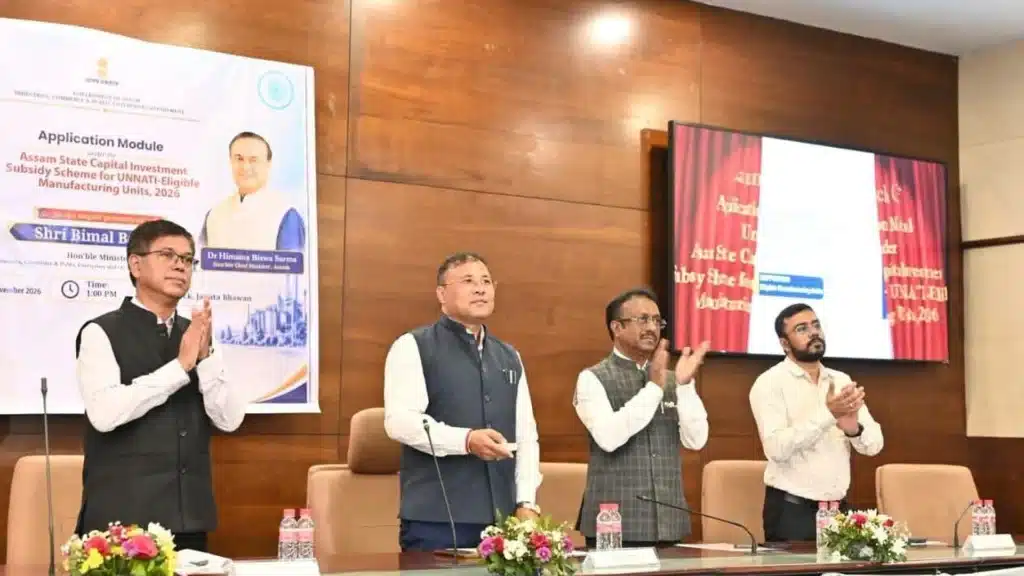
The Assam government launched an online application portal for a massive investment subsidy scheme. Officials rolled out this module to support industrial growth across the state. The central government introduced the UNNATI scheme to promote manufacturing and boost employment in the Northeast region. This new state initiative provides financial backing to eligible industrial units. Officials designed the portal to streamline application procedures for business owners. Industrial units can register on the platform to claim capital investment incentives. The scheme targets manufacturing enterprises and service sector businesses. Authorities distribute approved subsidy amounts in five equal annual installments. This structured payout mechanism sustains long-term industrial momentum. Leaders expect this digital transition to remove bureaucratic hurdles for investors. Business developers can now submit paperwork directly through the online system. Manufacturing enterprises seeking financial expansion should access the portal immediately.
CCPA Fines Ola ₹10 Lakh Over Pre-Ride Tipping Feature
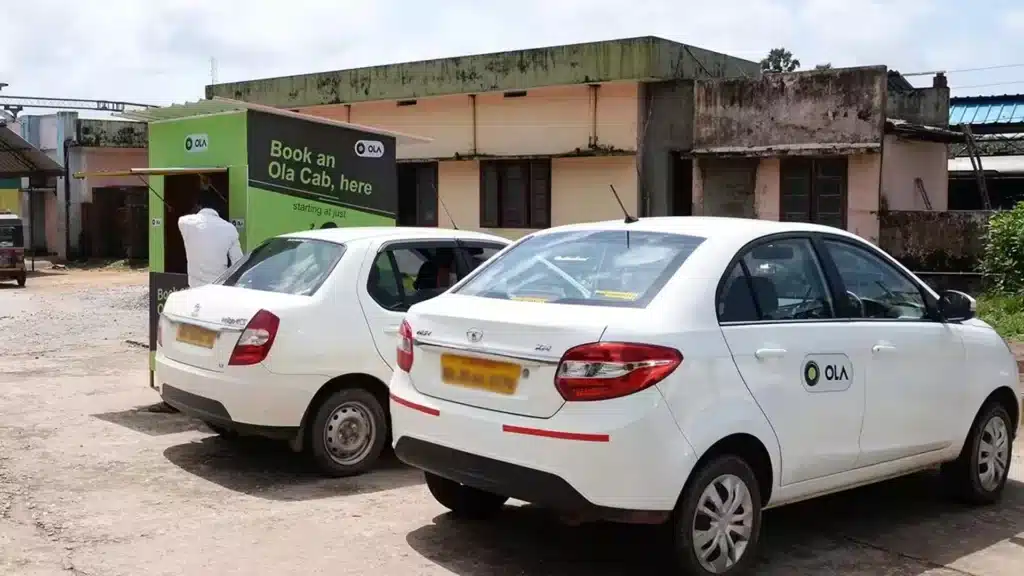
The Central Consumer Protection Authority has imposed a penalty of Rs 10 lakh on ANI Technologies Private Limited. This company operates the popular ride-hailing platform Ola across India. Regulators penalised the firm for misleading consumers through its pre-ride tipping feature. Furthermore, the authority directed the company to immediately discontinue this controversial practice. Officials ruled that the feature constitutes an unfair trade practice under consumer protection laws. Specifically, the regulator determined that the application employs a prohibited dark pattern to influence riders. This enforcement action sends a clear warning to digital platforms regarding transparent pricing and user interface design. The regulatory proceedings originally stemmed from a formal complaint that the authority received in May 2025. That consumer complaint raised serious concerns regarding Ola’s advance tipping mechanism. During its investigation, the regulator closely examined the exact wording displayed inside the mobile application. The authority found that specific promotional prompts created a false impression among passengers. Messages stated that adding a tip might help increase the chances of getting a ride faster. Another prompt urged riders to tip immediately to boost the chances of getting a ride sooner. Regulators concluded that these statements misled users into believing extra payments could accelerate ride confirmation. Subsequently, Ola attempted to modify the feature by renaming the tip option as an add-on. However, the consumer watchdog found that the underlying operational practice remained completely unchanged. Officials reviewed Ola’s own internal booking records covering the period from 1 to 15 June 2026. That empirical booking data failed to support the suggestion that additional payments improved ride acceptance rates. In fact, the records contradicted the implied promise of faster driver allocation. Consequently, the company’s rebranding effort did not resolve the core regulatory violations identified during the probe. The regulator also highlighted glaring inconsistencies in the ride-hailing platform’s official defence. Officials observed that Ola’s legal position appeared fundamentally contradictory during the regulatory hearings. Specifically, the company maintained that additional payments did not actually influence ride allocation algorithms. Yet, the platform’s user interface actively suggested the exact opposite outcome to booking customers. Moreover, the authority emphasised the basic definition of a tip within service industries. A tip ordinarily signifies voluntary appreciation from a customer for a service already rendered. In contrast, Ola solicited additional money even before any driver had accepted the trip booking. Finally, the regulator confirmed that the advance payment prompt breached established transport sector rules. Regulators found that the feature violated the Motor Vehicles Aggregators Guidelines, 2025. Those official transport guidelines permit customer tipping strictly after the completion of a journey. Soliciting extra gratuities prior to ride fulfilment directly contravenes federal regulatory standards for aggregators. By ordering an immediate halt to the feature, the authority reinforced consumer rights against manipulative digital interfaces. Ride-hailing operators must align their booking platforms with statutory guidelines and transparent trade practices.
135 Families being Evicted From Govt Land in Lakhimpur

Lakhimpur district authorities launched a massive eviction drive in Assam’s Boginadi area. Bulldozers demolished the homes of 135 families across 320 hectares of protected grazing land. Officials targeted unauthorized settlements inside the Boginadi Professional Grazing Reserve under the Kadam revenue circle. Revenue and police teams arrived at the site early in the morning to execute the clearance operation. Heavy machinery tore down concrete structures and temporary dwellings throughout the day. Many local residents dismantled their own houses and salvaged building materials before the bulldozers arrived. Authorities had issued prior eviction notices and held consultations with local occupants before starting the drive. The Gauhati High Court had earlier directed officials to pass individual speaking orders before removing residents. Following legal compliance, the administration moved forward to reclaim the encroached public reserve. Security forces maintained strict law and order across the Kadam revenue circle during the demolition. Police and paramilitary personnel cordoned off the area to prevent any untoward incidents. Residents cooperated with the authorities, allowing the drive to proceed smoothly without major clashes. This operation marks a key phase in Lakhimpur’s ongoing November anti-encroachment campaign. Earlier this month, district teams cleared 32 commercial shops from government land in Bihpuria. The administration also plans to conduct final eviction drives at Koilamari and Borbil on November 14. State officials remain firm on freeing protected grazing reserves and government plots from illegal occupation. Displaced families now face the urgent challenge of finding new shelter after losing their homes.
Baloch Martyrs Day: Courage Remembered

November 13 stands as a day of remembrance for many in the Baloch community.
Microsoft Struggles to Contain Global Outage

Microsoft is struggling to contain a sprawling global outage.