
Assam Transport Strike From November 20-21

Assam is set to witness a 48-hour statewide transport strike from November 20, potentially disrupting daily commutes. Transport owners’ and workers’ associations have called the shutdown over several unresolved demands. The strike is expected to affect commercial transport services across Guwahati and other parts of the state. Thousands of commuters could face difficulties during the two-day agitation. The strike will begin at 6 am on November 20 and continue until 6 am on November 22. The Motor Transport Sector Owners-Workers Coordination Committee is spearheading the protest. Several transport organisations have extended their support to the statewide agitation. The shutdown could affect passenger buses, city buses, taxis, Magic vehicles and tourist cabs. Commercial auto-rickshaws, electric autos and goods-carrying vehicles may also remain off the roads. The disruption could affect both passenger movement and commercial activities. Commuters may face difficulties reaching workplaces, educational institutions and other destinations. Businesses dependent on regular goods transportation could also experience delays. Transport Organisations Raise Four Key Demands The organisations have placed four major demands before the Assam government. Their primary demand seeks immediate implementation of the Assam Transport Workers Social Security Scheme. They have also demanded a 70 per cent increase in passenger vehicle fares. The associations argue that authorities last revised fares in 2019. Transport representatives say rising fuel prices and vehicle spare-part costs have increased operating expenses. They claim existing fares no longer cover the growing financial burden. The organisations have also demanded an end to alleged harassment of motor workers. They want authorities to review rising taxes, charges and arbitrary fines. Their fourth demand seeks a system for issuing commercial vehicle fitness certificates through District Transport Officer offices. The organisations believe this would make the certification process more accessible. They have urged the government to address these concerns and resolve the ongoing dispute. Around 25 Lakh People Could Face Impact The coordination committee estimates that around 25 lakh people depend on Assam’s private transport sector. This includes workers, employees, self-employed individuals and small vehicle owners. The organisations claim they have submitted several memorandums seeking government intervention. However, they say repeated appeals have failed to produce satisfactory results. The proposed shutdown could affect passengers, businesses and goods movement across the state. Commuters should check transport availability before planning their journeys. They may also need to arrange alternative travel options during the strike. The organisations have appealed to transport workers and vehicle owners to support the agitation.
Malaysia To End Visa-Free Entry For Indians From January 1, 2027

Malaysia will withdraw its visa-free entry facility for Indian nationals from January 1, 2027. Indian passport holders will need a valid visa before travelling to the Southeast Asian country. The Immigration Department of Malaysia announced the decision in a notice dated November 17. It said the exemption for Indian citizens would end at the start of next year. The department said Indian nationals must obtain a valid visa before arriving in Malaysia. Applicants can submit visa applications through the MyVISA online portal from December 1, 2026. The existing arrangement allows Indian passport holders to visit Malaysia without a visa for up to 30 days. The facility will remain available until December 31, 2026. Travellers planning visits from January must secure the required visa before departure. The announcement comes after the Indian High Commission in Kuala Lumpur issued an advisory in September. The mission warned Indian nationals against using the visa-free facility to seek employment in Malaysia. The High Commission said it had noticed more Indians arriving under the 30-day exemption to look for jobs. It clarified that the facility covers tourism and social visits, not employment. The mission also warned travellers about agents making false job promises. Such offers could expose Indians to overstaying, illegal immigration status, exploitation, detention and legal action. It advised jobseekers to obtain the required work permit or Visa With Reference. Malaysia has also clarified that visa processing fees will remain non-refundable. Applicants will not receive refunds if authorities reject applications or travel plans change. Indian travellers planning trips early next year should check the latest requirements before booking. They should apply through the official MyVISA portal and secure approval before departure. The policy marks a major change for Indian tourists. It will affect those travelling for tourism and social visits from January 1.
SC Dismisses ED Plea Challenging Azam Khan’s Interim Bail
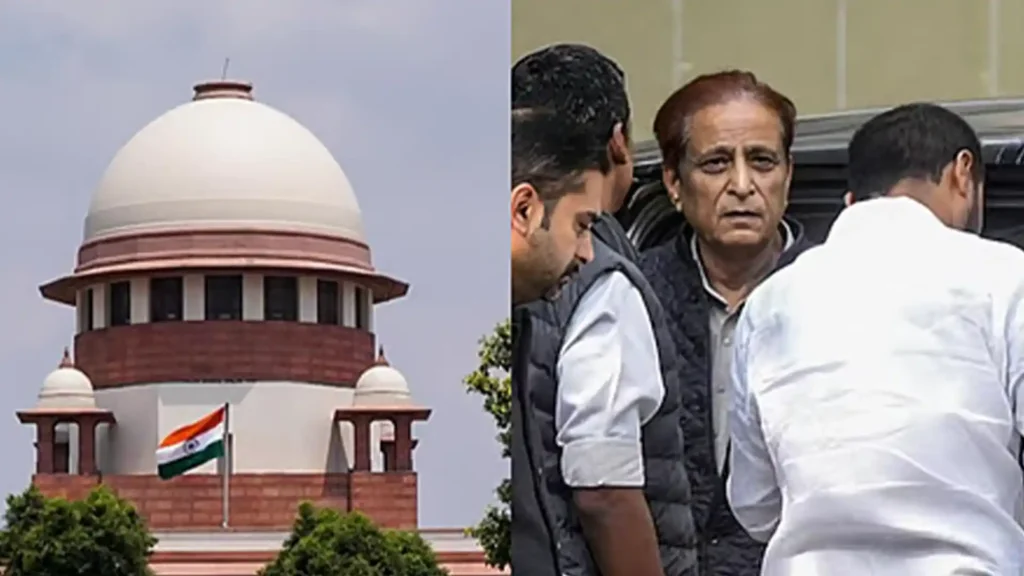
The SC dismissed the Directorate of Enforcement’s petition challenging the Allahabad High Court’s interim bail order for Samajwadi Party leader Azam Khan. Justices M.M. Sundresh and P.B. Varale declined to disturb the temporary relief in the money laundering case. The bench noted that the High Court granted only interim bail. It clarified that those preliminary remarks will not affect the final adjudication. Additional Solicitor General S.V. Raju represented the Enforcement Directorate and challenged the High Court’s reasoning. Raju argued that officers supplied the grounds of arrest to Khan. He claimed Khan refused to accept the documents outside Rampur jail on October 31. Raju also objected to the High Court calling the arrest mala fide without naming individual officers. He contended that the High Court passed a hasty order on the first day of hearing. Senior Advocate Kapil Sibal appeared for Khan and defended the relief. The Allahabad High Court granted interim bail to Khan on November 17. It found prima facie lapses regarding Article 22(1) and Section 19 of the Prevention of Money Laundering Act. Those provisions require authorities to inform arrested individuals of their arrest grounds. The High Court observed that the arrest right after Khan secured bail in another case looked motivated. Khan approached the High Court after the Supreme Court transferred his plea on November 5. The money laundering probe stems from alleged financial irregularities and predicate forgery offenses involving Khan and his family. Earlier, a Rampur court convicted Khan and his son Abdullah in a dual PAN card case. They faced allegations of fabricating age records to contest the 2017 Assembly elections. The Allahabad High Court scheduled the next hearing for December 10. It gave the agency time to file a detailed counter-affidavit.
Gauhati HC Seeks Railways’ Reply on Waterbody Construction PIL

A division bench of the Gauhati HC issued notice to the respondents in a public interest litigation. Chief Justice Ashutosh Kumar and Justice Kaushik Goswami heard the plea concerning Badarpur Railway Station in Assam. The bench posted the matter next for February 5, 2027. The petition challenges proposed railway buildings, offices, and a multi shopping arcade near the station. According to the court’s observations, railway authorities published a sketch map inside a bid document. That sketch map covers expanding buildings and offices near and over a waterbody by the approach road. A railway passengers’ association filed the plea against filling up the long-standing waterbody. Advocate Prakriteesh Sarma represented the petitioner association before the division bench. The petitioner argues that the sketch map omits a vital detail. It fails to show that construction would fill up an old waterbody. The association claims this plan violates the Indian Railways Water Policy and Railway Board directives. It also states that the project clashes with environmental laws and protection principles. Filling the waterbody could inflict lasting harm on the local ecosystem, the plea warns. Beyond ecological risks, the petition highlights worsening conditions along the station’s approach road. Travelers face constant waterlogging there because drainage systems fail to cope. Missing street lights create further hardships and raise serious safety concerns for commuters. The association asks the High Court to order basic amenity upgrades at Badarpur. Passengers need better drainage, clear approach roads, and dependable lighting around the station premises. Authorities must now file their responses ahead of the next hearing date.
Assam CM Approves ₹15 Crore for Zubeen Kshetra’s First Phase

Assam CM approved Rs 15 crore for the first phase of Zubeen Kshetra. This memorial honors late singer Zubeen Garg. Sarma announced the decision on November 18, marking Garg’s 54th birth anniversary. Officials plan to build the project at Sonapur in Kamrup Metropolitan district. The Assam Cabinet resolved a land hurdle by allotting two bighas of alternative land. An expert committee submitted the project blueprint. Authorities will initiate the tendering process and prepare a Detailed Project Report. Sarma shared the update in Assamese on social media. He stated that future generations will experience Zubeen through this cultural space. Visitors will explore his creative works and carry his artistic spirit forward. Sarma noted that Garg’s music shapes Assam’s culture and collective consciousness. The state previously sanctioned Rs 319.75 lakh for a site boundary wall. Plans also include a museum and an open-air theatre after wall construction. Work on the second phase will follow once the first phase finishes. Fans across Assam celebrated Garg’s first birthday since his passing in September 2025. Enthusiasts gathered at the Sonapur site on Tuesday night to sing his songs. His wife Garima Saikia Garg hosted a naam-prasanga in Mumbai. Family members and neighbors paid floral tributes to his statue in Guwahati. In Dibrugarh, fans organized a musical evening with his close associates. The government also invited entries for the Yuva Lekhok Sanman literary award. Through Zubeen Kshetra, Assam aims to keep Garg’s musical legacy alive.
“India Playing Whole New Game”: PM Modi’s GTA-Style Dig

Prime Minister Narendra Modi marked the launch of Grand Theft Auto VI on Thursday with a viral social media post. The post uses gaming imagery to compare India during the 2013 GTA V era with its current standing. Writing that India plays a whole new game, Modi aimed a sharp jab at the opposition UPA government. The carousel adopts the signature Pricedown font and visual style of the blockbuster franchise. Modi contrasts past economic vulnerabilities with recent growth across key sectors. The slides note that India rose from the Fragile 5 group to become a leading fast-growing economy. Modi highlights sweeping gains in welfare, security, and technology over the past thirteen years. The cards cite sharp poverty reduction, completed sanitation drives, wider electrification, and higher solar power capacity. They also point to 440 registered space technology startups and stronger defence exports. To engage young gamers directly, the post spotlights cheaper mobile data. High-speed internet rates dropped from Rs 308 per gigabyte to Rs 7.51 per gigabyte. The graphics further claim India ended Naxalism across violent districts. GTA VI arrived at midnight, thirteen years after GTA V debuted in 2013. Analysts estimate development costs exceeded $1 billion, while pre-orders reached roughly $1.1 billion. The launch broke pre-order records across the entertainment industry. Modi frequently taps pop culture to reach younger audiences online. The post gathered nearly 60,000 likes and 2,000 comments within ten minutes. Enthusiastic commenters praised the unexpected crossover and hailed the Prime Minister as an influencer.
The Aesthetics Of Decline

How aesthetics are conceived can tell us everything about an age.
Global Hindu Population To Reach 1.4 Billion by 2070: Pew Report

A new Pew Research Centre study projects that the global Hindu population will rise by 199 million by 2070. Between 2020 and 2070, the worldwide Hindu count will reach a total of nearly 1.4 billion people. However, non-Hindu populations across the world will grow at an even faster overall pace during these five decades. Consequently, Hindus will shrink slightly as a global share, falling from 15% in 2020 to 14%. Researchers analysed demographic data across 201 countries and territories, covering 99.98% of the world’s total population. In India, home to over 1 billion Hindus in 2020, the Hindu population will grow by 176 million. Although India’s overall fertility rate has fallen rapidly, Indian Muslims still have more children per woman than Hindus. Given this fertility gap and Muslims’ younger age profile, Hindus will decline slightly as an Indian population share. Nevertheless, Pew projects that Hindus will continue making up more than three-quarters of India’s total population in 2070. Furthermore, India and Nepal will remain the only two Hindu-majority countries in the world by 2070. Outside India, substantial Hindu population growth will occur primarily in Pakistan and the United States over the coming decades. Pakistan’s Hindu population will double from 5 million to 10 million, keeping Pakistan in fourth place globally. Natural increase, where births outnumber deaths, will drive Pakistan’s rapid Hindu population expansion. Meanwhile, immigration will fuel Hindu growth in the United States, adding 4 million people to rank fifth globally. Simultaneously, Australia will join the top ten list at ninth place with roughly 3 million Hindus. Regional demographic shifts will also alter Hindu population shares across major global continents between 2020 and 2070. In the Asia-Pacific region, where 99% of Hindus live, the Hindu population will grow by 191 million. Thus, Hindus will comprise 28% of the Asia-Pacific population in 2070, rising from 26% in 2020. In North America, the Hindu population will more than double, from 4 million to 9 million. Conversely, Sub-Saharan Africa and Latin America will see slight absolute decreases, keeping Hindus below 0.1% there. Several core demographic factors shape these long-term global projections for the Hindu population. Globally, Hindus maintain a total fertility rate of 1.9 children per woman, trailing non-Hindus at 2.3 children. Additionally, Hindus exhibit a remarkably high religious retention rate, with 99% of raised Hindus keeping their faith. Therefore, religious switching will reduce the global Hindu population by only 1 million people over fifty years. Finally, international migration will add over 8 million Hindus across North America, Europe, and the Middle East and North Africa.