
Bullet Train Trials Scheduled for May 2027 on Surat-Bilimora Zone
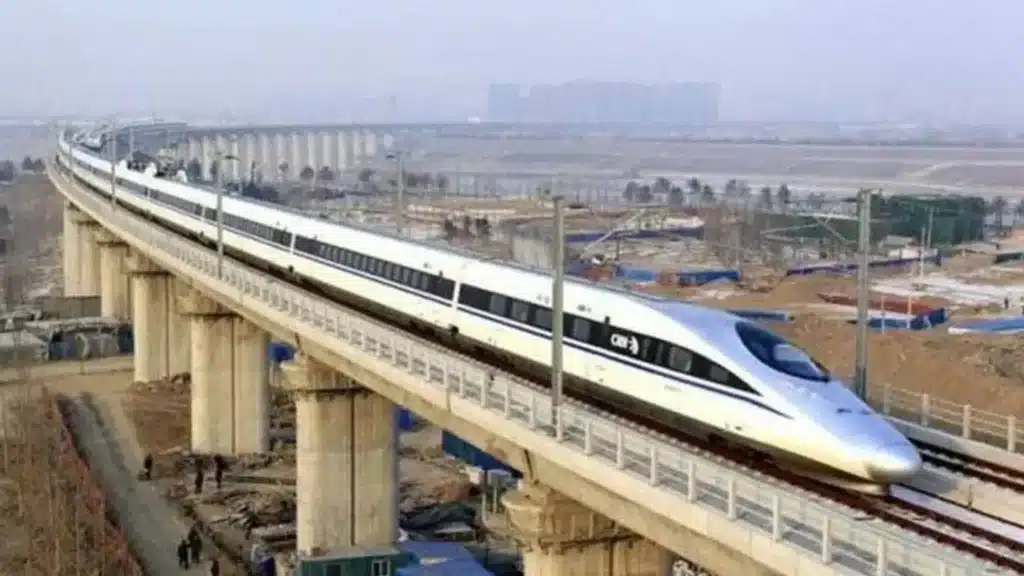
Union Railway Minister Ashwini Vaishnaw confirmed that India’s first bullet train trials will commence in May 2027. Specifically, engineers will conduct these initial runs on the 50-kilometre Surat-Bilimora section in Gujarat. This vital stretch forms part of the ambitious Mumbai-Ahmedabad High-Speed Rail Corridor. Meanwhile, workers have already completed electrification work across the entire Surat-Bilimora stretch. Furthermore, technical teams expect to finish all signalling-related work by January 2027. Earlier, engineers energised the overhead electrification system on the elevated section on November 20. Notably, this modern electrical system covers both tracks and operates on a 2×25 kV traction system. At the same time, technicians completed all installation work at the Bilimora traction substation. During the upcoming May 2027 trials, technicians will use the advanced B-28 train for initial testing. Engineers specifically designed this high-speed train to operate safely at speeds up to 280 kilometres per hour. Prior to track trials, the B-28 train successfully cleared a rigorous squeeze test. During that evaluation, engineers subjected the train to pressure levels twice the normal expected atmospheric pressure. Consequently, the B-28 train clearly demonstrated its ability to endure demanding operational conditions. Looking ahead, project authorities expect to complete the broader Ahmedabad-Vapi section by the end of 2027. Subsequently, railway officials target extending bullet train services to reach Thane by 2029. Overall, authorities will commission the Mumbai-Ahmedabad bullet train project in carefully planned phases. Accordingly, the Surat-Bilimora stretch becomes the first section of India’s first high-speed rail corridor to undergo testing. Across the corridor, the Mumbai-Ahmedabad High-Speed Rail project has recorded significant construction progress. Specifically, construction teams completed 371 kilometres of viaduct construction as of September 2026. Ultimately, the 508-kilometre high-speed corridor will connect 12 stations across Maharashtra, Gujarat, and Dadra and Nagar Haveli. Currently, construction work on the Maharashtra portion of the corridor, including the undersea tunnel, is progressing well. Meanwhile, project planners continue targeting the last quarter of 2027 for launching the first commercial service. Through steady engineering milestones, India moves closer to operating its inaugural high-speed passenger rail network.
Gukesh Faces Rising Star Sindarov in World Chess Showdown

Defending champion Gukesh Dommaraju enters the 2026 World Chess Championship as a surprising underdog against challenger Javokhir Sindarov. The two 20-year-old grandmasters begin their 14-game classical match in Geneva this Tuesday. Despite holding the crown, Gukesh faces steep odds-on paper. The Indian star struggled for consistency throughout 2026 and cut back his classical tournament schedule. Consequently, his FIDE rating dropped to 2710, pushing him down to the world number 26 spot. Meanwhile, Sindarov surged up the rankings with dominant performances. The Uzbek prodigy won the 2025 World Cup and captured the Candidates Tournament with a round to spare. Sindarov currently sits at world number four and holds a 72-point rating advantage over the champion. Across his first four major events this year, Sindarov posted an impressive average performance rating of 2837. Many former world champions and leading grandmasters now back the challenger to claim the title. However, Gukesh refuses to accept the pressure of defending his throne. At Sunday’s opening press conference, he declared that he came to Geneva to win the title all over again. He famously defied expectations in 2024 when he defeated Ding Liren in Singapore at age 18. That victory made him the youngest undisputed classical world champion in chess history. Gukesh brings valuable big-stage experience to the board, while Sindarov relies on red-hot form and intense recent preparation. Both young stars promise an exciting battle over the next three weeks as chess crowns its next champion.
Ramayana Tops Overseas Box Office Outside China

Director Nitesh Tiwari’s Ramayana claimed the top spot among Indian films in overseas markets excluding China. The mythological epic reached this milestone in just 11 days of its theatrical run. Audiences worldwide packed theaters after the November 5 release. Ranbir Kapoor plays Rama while Yash portrays Ravana. Sai Pallavi stars as Sita in this grand production. Sony Pictures Releasing International distributes the film across global territories. The film earned $51.75 million overseas during its first 11 days. That surge pushed Ramayana past previous Phase 1 overseas leaders like Dhurandhar 2, Pathaan, Jawan, and Baahubali 2. North America led the international charge with roughly $24 million. The UK and Ireland added $5.55 million, and Gulf markets brought in $5.40 million. Australia contributed $4.20 million while European circuits added $2.5 million. Strong second-weekend holds powered the record-breaking climb. The UK market posted a sharp £1.10 million during that second weekend. Across all markets, the movie collected $38.1 million on its second weekend after opening at $55.7 million worldwide. Core territories showed steady retention with only modest week-on-week drops. Globally, Ramayana reached $147.5 million in 11 days and crossed Rs 1,400 crore. This run placed the movie among the top seven highest-grossing Indian films worldwide. Additional countries continue joining the theatrical rollout in late November. Audiences in Brazil, Italy, Ukraine, and Hungary gained access on November 19, followed by Poland on November 20. Argentina, Central America, Colombia, Ecuador, Peru, and Czechia start screenings on November 26. Makers also plan releases in China, Russia, Japan, and South Korea in 2027.
Russia Warns of Dangerous Trend After Libya, Baltic Strikes

Kremlin spokesman Dmitry Peskov warned Ukraine on Monday against escalating naval attacks across distant waters. Peskov labeled Ukrainian operations near Libya and the Baltic Sea a very dangerous trend. He told reporters that Moscow expects painful consequences for Kyiv after these strikes. Ukrainian forces recently targeted Russian vessels far beyond the Black Sea. President Volodymyr Zelenskyy stated that Ukrainian maritime drones sank the Russian corvette Merkury near Libya. Zelenskyy added that the strike also destroyed a Russian Ka-27 helicopter. Eastern Libyan authorities reported that the vessel had stopped for supplies and refueling. Medical teams in Benghazi treated ten injured people, including Russians and Libyans. Days earlier, a drone sparked a fire on the Russian cargo ship Sparta II in the Baltic Sea. The vessel traveled toward Russia’s Kaliningrad exclave when the strike hit. Finnish officials linked the attack to Ukraine and noted that rescuers evacuated all sixteen crew members. Ships from Russia, Estonia, and Finland fought the blaze before towing began. Peskov accused Kyiv of spreading terrorist activity across the Baltic region. He urged neighboring Baltic states to press Ukraine into halting further attacks. Meanwhile, eastern Libyan officials asked the United Nations Security Council to investigate western Libya’s role in launching the strike. The maritime clashes coincide with fierce fighting across Ukraine and stalled peace talks. Russian missiles and drones recently killed dozens of people in Ukrainian cities, including Kyiv. Analysts warn that wider sea strikes risk drawing neighboring nations deeper into the conflict.
AI: Who Gets Credit For Human Work?

Artificial intelligence is changing how people write, research, create and solve problems. It can produce articles, generate artwork, compose music and analyse complex scientific questions. However, its rapid growth has raised an uncomfortable question: Is AI advancing human creativity, or is it gradually taking ownership of human intellectual work? This debate is becoming increasingly important as AI enters industries built on human knowledge and creativity. Behind every AI-generated answer lies a complicated relationship with human knowledge. AI systems learn from enormous collections of information, much of which humans have created over generations. These collections include books, research papers, photographs, artwork, music, articles and publicly available online content. However, the original creators do not always know how companies use their contributions. In many cases, creators receive neither recognition nor compensation when AI systems use material derived from their work. This raises serious concerns about intellectual property, copyright, consent and fair compensation. The concern becomes greater as AI systems begin producing work that resembles human creativity. Writers, researchers, artists and musicians now face competition from technologies trained on material created by people like them. The problem is not simply that AI can produce something quickly. The deeper concern involves ownership, recognition and the value of human intellectual labour. If a machine learns from thousands of human contributions, who deserves credit for its final output? More importantly, should technology companies benefit commercially without acknowledging the people whose work helped build their systems? The Riemann Hypothesis: A New Question About Human Achievement A recent development involving the Riemann Hypothesis has brought this debate into sharper focus. Proposed by German mathematician Bernhard Riemann in 1859, the problem remained unsolved for more than 160 years. It concerns the distribution of prime numbers, which form the foundation of several mathematical concepts. Generations of mathematicians have studied the hypothesis, hoping to establish its validity through mathematical proof. On November 20, 2026, Levent Alpöge, a mathematician at Anthropic, announced a possible breakthrough. He said he had developed a proof with the assistance of Claude, Anthropic’s artificial intelligence model. The announcement attracted considerable attention because of the problem’s mathematical importance. The Riemann Hypothesis also belongs to the Clay Mathematics Institute’s seven Millennium Prize Problems, each carrying a $1 million prize for a correct solution. Alpöge reportedly worked with Claude for approximately six weeks. His announcement included a four-page explanation and a formalisation containing approximately 17 million lines of Lean code. However, the announcement came alongside another striking development. On the same day, mathematician Alessandro Maria Masullo presented a separate proof that he had developed without AI assistance. Masullo had reportedly spent nearly 12 years working on the problem. His work represented years of independent mathematical research, patience and intellectual effort. The two announcements created an unusual situation in the mathematical community. One mathematician presented a possible breakthrough developed with AI assistance, while another presented an independent human-written proof. The developments do not establish that Claude copied Masullo’s work. There is no verified evidence supporting such an allegation. Nevertheless, they raise an important question about recognition in an age increasingly shaped by artificial intelligence. When AI helps produce a major intellectual breakthrough, how should society distribute credit? Should recognition belong to the human researcher, the AI developer or the original creators whose knowledge trained the system? The distinction matters because human researchers spend years developing specialised knowledge. Their work often builds on earlier discoveries, but established academic practices require researchers to acknowledge those contributions. AI systems complicate this tradition because they can combine information from countless sources without consistently identifying every original contributor. The Riemann episode therefore offers a glimpse into a future where human achievement and machine assistance increasingly overlap. It also highlights the need for transparent attribution when AI contributes to scientific discoveries. The central issue is not whether machines can assist researchers in solving difficult problems. Instead, society must decide how to recognise human contributions when machines become part of the discovery process. How AI Can Use Human Work Without Giving Credit Most generative AI systems learn patterns from enormous datasets. These datasets can contain material collected from websites, digital libraries, research databases and other sources. The systems analyse these materials to identify relationships between words, images, sounds and other forms of information. They then use those patterns to generate new responses. However, collecting information from the internet does not automatically settle questions about ownership. Much of that information belongs to individual creators, publishers and organisations. A writer might spend months researching and producing an investigative report. An artist might spend years developing a distinctive visual style, while a researcher might dedicate an entire career to studying a particular subject. Their work can potentially become part of datasets used to train AI systems. Yet creators may have limited visibility into how companies collect, process and reuse their material. This creates an imbalance between technology companies and individual creators. Companies can develop valuable commercial products using large collections of human-created material, while original creators may receive neither payment nor meaningful recognition. The concern extends beyond whether AI reproduces an entire copyrighted work. It also involves whether systems benefit commercially from human creativity without adequate permission or compensation. AI-generated outputs can sometimes obscure the contributions of original writers and creators. Consequently, the people behind the underlying knowledge may lose visibility while the technology receives public attention. This can affect creators’ recognition, readership and potential income. Their intellectual contributions remain embedded within technology, even when audiences never encounter their original work. The issue becomes particularly serious when AI-generated responses replace the need to visit original sources. It raises questions about whether creators can continue earning a livelihood when their work fuels competing products. Writers And Journalists Face A Growing Challenge The writing industry offers one of the clearest examples of this problem. AI tools can now generate articles, summaries, advertisements, scripts and social media posts within seconds. These capabilities offer convenience to businesses and media organisations. However, they also create uncertainty for professional writers and journalists. A journalist spends hours interviewing sources,
India Administers Over 10 Million Doses of HPV Vaccine to Girls
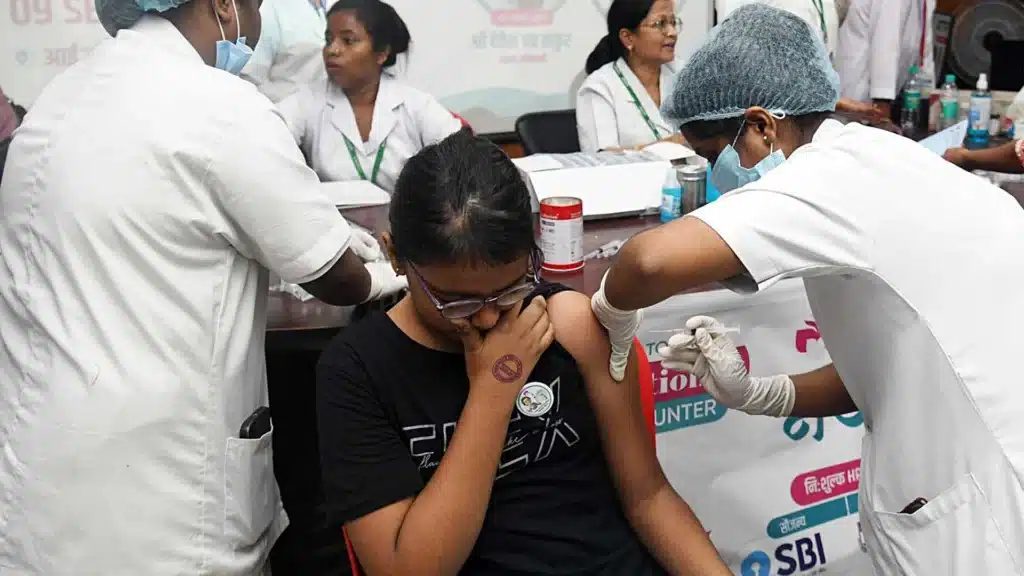
The World Health Organization praised India for administering over 10 million doses of the human papillomavirus vaccine. Specifically, health teams delivered these life-saving vaccine doses to girls aged 14 across the entire country. Notably, this significant public health accomplishment highlights India’s strong national commitment to preventing cervical cancer among young females. Furthermore, the global health agency commended India for achieving this remarkable milestone in widespread disease prevention. In a recent social media update, the World Health Organization highlighted the broad teamwork behind this success. Specifically, the agency stated that this achievement reflects the collective efforts of the Indian government, health professionals, and communities. Together, these dedicated groups actively work toward protecting young girls against cervical cancer nationwide. Moreover, the World Health Organization emphasized the vital importance of ensuring that every girl has access to the HPV vaccine. Indeed, global health experts recognise this vaccine as a key medical tool in effective cancer prevention. Subsequently, Indian Prime Minister Narendra Modi also acknowledged this landmark public health achievement across the nation. Specifically, Modi praised the extensive collaboration involved in executing this massive nationwide vaccination campaign. Earlier, Union Health Minister J. P. Nadda shared a social media post detailing the campaign’s impressive progress. According to Nadda’s post, Prime Minister Modi noted that administering one crore doses covers roughly 87 percent of eligible girls. Thus, the ongoing immunization drive reaches the vast majority of the annual group of eligible girls in India. Additionally, Prime Minister Modi described the vaccination milestone as a crucial step in advancing preventive healthcare practices. Within the country, health leaders prioritize preventive medicine to protect vulnerable populations before serious illnesses develop. Furthermore, Modi expressed hope that every single vaccine dose contributes to a healthier future for young girls. He also hoped that these immunizations effectively guard young women against the severe risks of cervical cancer. Ultimately, this nationwide vaccination initiative strongly bolsters India’s ongoing efforts to enhance overall public health outcomes. Simultaneously, the campaign actively raises public awareness about the vital importance of vaccination in preventing various dangerous diseases. Looking ahead, Indian health authorities remain keen to continue these vital community outreach programmes across all regions. Specifically, officials aim to deliver comprehensive health education alongside broad vaccination accessibility for all eligible populations nationwide. Through sustained outreach and preventive care, India continues to strengthen health protections for its younger generations.
India Pledges $1.62 Billion for Nepal Flood Recovery

India pledged a $1.62 billion economic package to help Nepal recover from devastating August floods. Prime Minister Narendra Modi announced this massive relief commitment during bilateral talks in New Delhi on Monday. Nepali Prime Minister Balendra Shah visited the Indian capital for a two-day trip. This journey marks Shah’s first official visit abroad since he took office in March. Standing beside Shah, Modi expressed deep condolences for the tragic loss of life. Modi announced the development cooperation package worth 240 billion Nepali rupees to support reconstruction. The package includes a $377 million grant for post-disaster rebuilding and new infrastructure projects. India will also provide a $1.24 billion line of credit for energy development. The deadly disaster struck on August 26 when a mountain glacier collapsed. Scientists blamed climate change for triggering the event. A massive torrent of water and mud swept through Nepal’s Rasuwa and Nuwakot regions. The floodwaters also damaged parts of China’s Tibet region. Authorities confirmed more than 1,300 deaths, while over 5,000 people remain missing. In October, the United Nations climate fund allocated $20 million to aid Nepal. Through this new aid, New Delhi aims to strengthen ties with its Himalayan neighbor. India currently competes heavily with China for regional influence. World Bank figures show India remains Nepal’s largest trading partner. India supplies over 60 percent of Nepal’s imports, while China provides 13 percent. Beyond financial relief, both nations agreed to expand cooperation in several key sectors. They will collaborate on education, scientific research, satellite communications, and sustainable urban development. The two leaders also jointly inaugurated a new cross-border railway link. Concluding the meeting, Shah wished for bilateral trust to stand as tall as the Himalayas.
Hunger Strike Erupts in Mizoram Over Recruitment Errors

Mizo Students’ Union president Laldinsanga began an indefinite hunger strike on Monday evening. Protesters gathered outside the Mizoram Public Service Commission office in Aizawl. The union demands chairman R. Lalramnghaka’s resignation over repeated recruitment errors. Students and job seekers joined a peaceful sit-in demonstration earlier on Monday. Leaders escalated their agitation after authorities failed to resolve long-standing grievances. Laldinsanga linked the demand to systemic issues since May 20, 2024. The union highlighted alleged flaws across several recruitment processes. These include the MCS Combined Examination 2025 and Junior Grade engineering posts. Storekeeper recruitment under the FCS&CA Department also drew scrutiny. Earlier, student leaders pointed to technical glitches during data imports. Scanned OMR sheet data entered spreadsheets and included invalid roll numbers. Candidates also faced hurdles with document uploads and online portals. On November 16, 2026, the union issued a five-day ultimatum. Leaders sought the chairman’s exit, an inquiry, and administrative reforms. Another student body, MZP, separately demanded action against errant officials. Authorities ordered an inquiry into the storekeeper recruitment process. Yet students argue piecemeal steps fail to fix deeper problems. Job seekers urge the commission to protect fairness in public exams. Laldinsanga vowed to continue his fast until leadership accountability follows. Tensions remain high around the commission’s headquarters in Aizawl. Officials face mounting pressure from students across the state.