
11 injured in Houthi drone attack on Riyadh tower
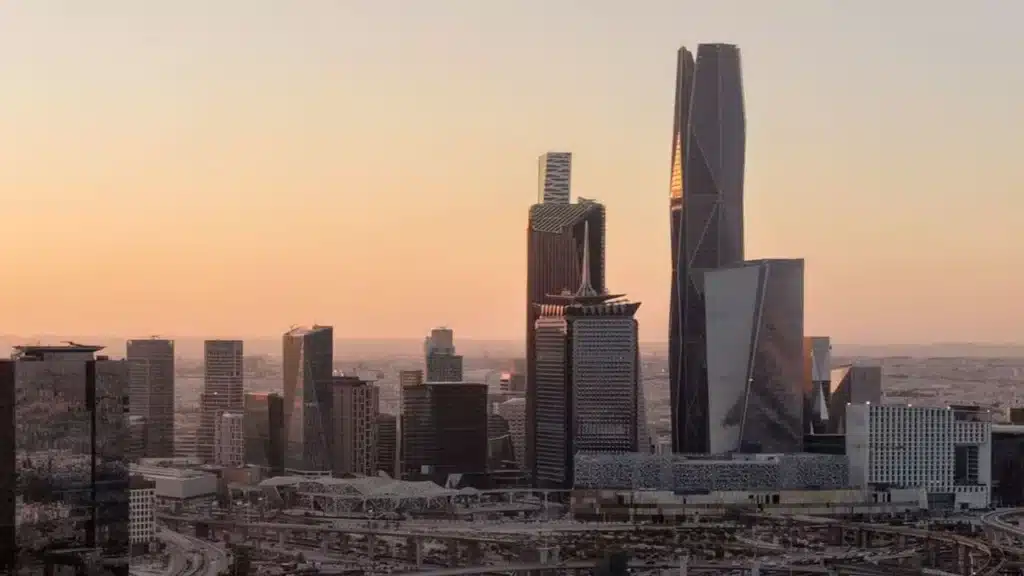
The Middle East crisis escalates as fighting widens across the Strait of Hormuz, Yemen, and Saudi Arabia. President Donald Trump threatens fresh strikes against Iran next year and warns that forces will sink blockade runners. Tension spikes around the Strait of Hormuz, where tankers face naval mines, fires, and maritime restrictions. In Riyadh, Houthi forces struck the Public Investment Fund Tower inside the King Abdullah Financial District. This skyscraper anchors Crown Prince Mohammed bin Salman’s plan to diversify the Saudi economy away from oil. Officials reported injuries after the attack, marking another strike on the landmark tower within days. The assault follows earlier damage to an Aramco building in the same financial hub. Houthi military spokesmen claim their forces fired cruise missiles toward Riyadh’s financial district and international airport. Meanwhile, the Saudi-led coalition intercepted drones and launched airstrikes on Houthi missile depots and workshops in Yemen. Fighting also flared in Sanaa and across Yemeni provinces as government troops clashed with Houthi fighters. Saudi officials warn allies that the Yemen campaign could stretch on for another six months. Riyadh demands that forces loyal to Yemen’s internationally recognized government recapture territory before entering talks with the Houthis. The Saudi foreign ministry urges permanent security council members to enforce existing resolutions and asserts the kingdom’s right to defend its territory. Across the Gulf, strikes and interceptions keep regional airspace and shipping lanes on edge. Markets and insurers react sharply as attacks threaten major infrastructure and energy transit routes. Leaders across the region face mounting pressure to contain the widening conflict before it disrupts global trade further.
Adani lays foundation stone for 666-Bed Rest House at GMCH
Health Minister Ashok Singhal joined the foundation stone ceremony for a new 666-bed rest house at Gauhati Medical College Hospital. The ceremony took place on Tuesday in Guwahati. The Adani Group funds and constructs this project through its corporate social responsibility program. Patient attendants often struggle to find affordable shelter near major hospitals. This rest house offers practical relief for families traveling long distances. The facility will include laundry services, clean washrooms, and a 250-seat dining hall. Attendants will pay roughly Rs 100 to Rs 150 per stay. Singhal noted that the project does not offer free lodging. Modest charges help maintain daily operations and keep the building clean. Singhal spoke directly to hospital workers during the event. He urged staff members to treat every patient with dignity and compassion. He wants residents across Assam to notice real progress in public healthcare. “I believe through this project, we will expand our healthcare also to the attendants of the patients,” Singhal said. He thanked the Adani Group for backing this initiative. State leaders plan to replicate this model across other medical campuses. The Adani Group currently considers building a similar rest house at Dibrugarh Medical College. Officials hope similar spaces will support families across upper and lower Assam. Families caring for hospitalized relatives face heavy emotional and financial stress. Affordable rooms right beside the hospital campus cut daily travel costs. Clean dining and laundry spaces also help caregivers maintain their health. The new facility marks a concrete step toward family-centered care in Guwahati. If execution stays on track, attendants will soon gain reliable shelter near GMCH.
The $8.50 Box That Let Ordinary People Talk Through the Air
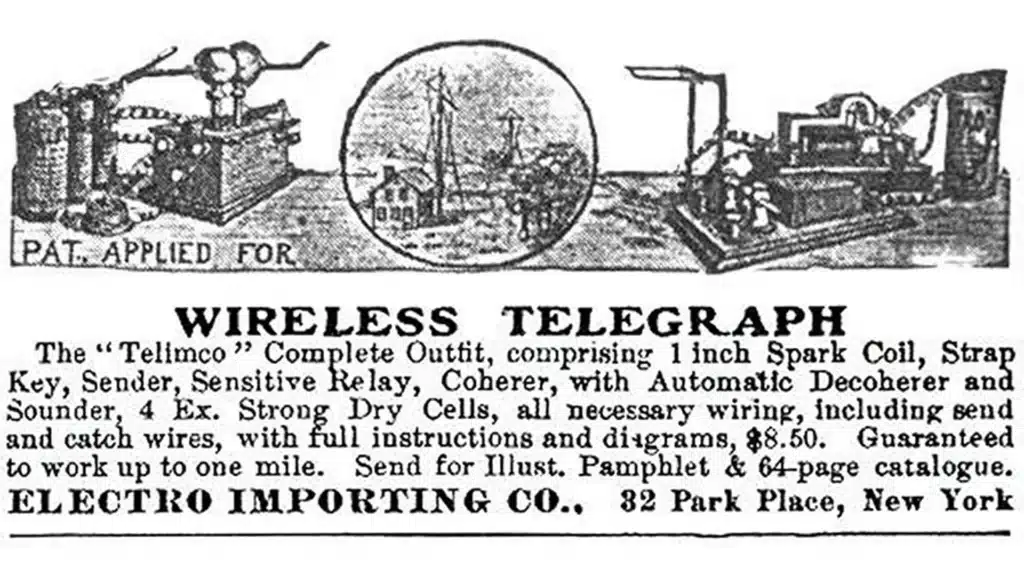
On November 25, 1905, a small notice appeared near the back of Scientific American. It offered a complete wireless telegraph outfit for $8.50 with a one-mile range guarantee. No wire joined the sender to the receiver. Collectors call it the first advertisement for a radio set. The notice handed cutting-edge technology to anyone with curiosity and a few dollars. This article explores what the kit did, who built it, who bought it, and why it matters. A Quiet Ad With Big Consequences In 1905, wireless belonged to navies, shipping firms, and large companies. Ordinary people rarely touched it. Radio waves sounded like science fiction to most Americans. The Electro Importing Company of New York changed that. Hugo Gernsback ran the firm and later became famous as a publisher of science fiction. He had worked on a small portable transmitter and receiver in 1903 and 1904, believing the public would buy it. He called the product the Telimco Wireless Telegraph Outfit, shortening “The Electro Importing Company.” The Henry Ford museum believes the Telimco was one of the first complete radio sets sold to the general public. Gernsback recalled a January 1906 date decades later. Catalog records and collectors point to the November 1905 issue. The ad ran in a magazine whose readers loved gadgets and invention. Gernsback aimed straight at them. What Came in the Box The outfit contained everything a beginner needed. It held a one-inch spark coil, a strap key, and a sensitive relay. It included a coherer with an automatic decoherer, a sounder, and four dry cells. The box carried all the wiring, including wires for the sending and receiving antennas. The buyer needed only a table and patience. That completeness mattered. Few people in 1905 could gather scattered wireless parts on their own. How the Machine Worked A spark transmitter could not carry voice or music. It sent bursts of radio energy. The operator spelled out Morse code with a key. The sender pressed the key. Current from the dry cells flowed into the spark coil, building up a high voltage. A spark jumped across a small gap. Every spark produced radio waves. The antenna sent those waves outward. The receiver relied on a coherer. This glass tube held loose metal filings. Radio waves made the filings clump together. The clump let battery current flow, ringing a bell or working a sounder. Gernsback explained the signal code simply. The bell rang as long as the sender held the key down. A long ring meant a dash. A short ring meant a dot. The automatic decoherer tapped the filings loose after each signal. Operators did not reset the tube by hand. That feature made the kit friendlier to beginners than many earlier designs. The One-Mile Promise, Read Closely The headline range deserves a careful look. Gernsback later wrote that the set reached only 300 to 500 feet without a ground connection. Buyers who raised a 50-to-100-foot aerial got better results. They grounded both sets to a water or gas pipe. That setup stretched the range to about a mile. Some users reported even greater distances. The guarantee held. It demanded effort. The sticker promised one mile. The buyer earned it with wire, height, and a good ground. Gernsback’s own account shows setup mattered more than the box. This detail makes the story richer. The kit rewarded tinkerers. Anyone wanting a longer range had to learn how antennas and grounds behaved. Learning by doing came built into the product. Who Bought the Sets and Why Gernsback pitched the kit to beginners. His 1910 catalog said “every wide-awake American boy” should want one. It promised the buyer might someday lead a wireless company, as Marconi had. Boys and young men formed the core market. They read inventor magazines, built things in basements, and dreamed big. The kit cost far less than commercial wireless gear. Electro Importing sold higher-end equipment for advanced experimenters. Those items required more money and technical knowledge. A buyer could start cheaply and climb the ladder. The firm kept customers as their skills grew. Gernsback later described his firm as the first radio mail-order house in the world. The model worked. Customers across the country ordered parts by post and sent testimonials back. The community grew. Crowded Airwaves and a New Law Cheap transmitters multiplied. Trouble followed. Crude spark transmitters spread their signals across a wide slice of the spectrum. Amateurs talked over one another and fought for clear air. The Titanic sank in April 1912. Congress acted. President Taft signed the Radio Act of 1912 on August 13. It became the first U.S. law to require licenses for radio stations. The law barred amateurs from main commercial and military wavelengths. It gave the government power to fine violators up to $500 and revoke their licenses. Amateurs mostly complied. More than 5,000 amateur and private stations applied and received licenses within the first full year. That number equaled roughly half of the stations thought to exist. The hobby had grown large enough to need rules. From Spark to Broadcast The spark era ended around 1917. Vacuum tubes replaced spark gaps and coherers. Tubes made voice and music possible. Amateurs kept experimenting. Frank Conrad, a Westinghouse engineer, ran his own amateur station in Pittsburgh. He enjoyed an advantage most hobbyists lacked: easy access to Westinghouse vacuum tubes. On November 2, 1920, Westinghouse station KDKA broadcast the Harding-Cox presidential election returns. Conrad helped launch it. Within four years, 600 commercial radio stations operated in the United States. A direct line connects these events. The hobby that began with spark kits grew into an industry. Early amateurs supplied the skills, curiosity, and audience broadcasting needed. What the Ad Teaches Us Access drives invention. Gernsback did not invent wireless. He packaged it at a price a young person could afford. That choice turned spectators into participants. Buyers learned by wiring, testing, and failing. Many solved problems professionals ignored. The same pattern keeps repeating. Cheap computers, hobby electronics, and smartphones followed
Tamil Nadu Defies Supreme Court on Karthigai Deepam Lighting
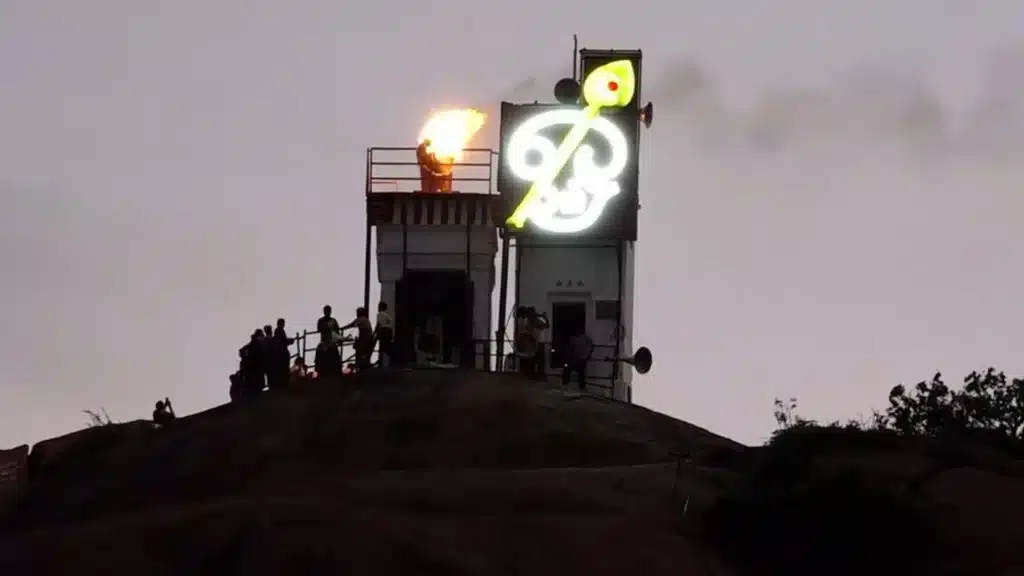
Authorities lit the ceremonial Karthigai Deepam lamp at the traditional Deepa Mandapam near the Uchi Pillaiyar temple in Thirupparankundram today. However, this action defied the Supreme Court’s November 20 order permitting a one-time lighting at the disputed Deepathoon stone pillar. Meanwhile, the Tamil Nadu government and temple administration maintained that officials have traditionally lit the lamp near the temple. Furthermore, temple priests affirmed that this traditional lighting practice aligns directly with established Agama traditions. Consequently, state officials bypassed the disputed hilltop structure despite clear judicial directions from the nation’s highest court. Earlier, the Supreme Court had permitted a restricted team to light the lamp at the Deepathoon atop Thirupparankundram hill. Specifically, the apex court granted this permission strictly as a temporary one-time arrangement for the annual festival. At the same time, judges clarified that the order created no customary right or permanent ownership claim. Additionally, the court barred all public gatherings, processions, and political demonstrations at the sensitive hilltop site. Instead, judges restricted site access exclusively to authorised temple representatives and government officials under strict district supervision. Nevertheless, officials chose to proceed with the ceremonial lighting at the customary location rather than the disputed stone pillar. Notably, the stone pillar sits approximately 50 metres away from the controversial ‘Sulthan Sikkandar Avulia Dargah’ atop the hill. Immediately, this administrative decision triggered widespread protests from Hindu groups demanding full compliance with the Supreme Court directive. Subsequently, police detained or placed several BJP leaders under house arrest while they attempted to reach Thirupparankundram. Specifically, detained leaders included Tamil Nadu BJP president Nainar Nagenthran and former Union minister L Murugan. To maintain strict control, authorities deployed over 5,600 police personnel across Thirupparankundram hill and its surrounding areas. Fundamentally, the Deepathoon dispute centres on where devotees should perform the annual Karthigai Deepam ritual. While temple officials favour the traditional Uchi Pillaiyar location, devotees say the stone pillar is a ceremonial lamp structure. Previously, the Tamil Nadu government argued in the Supreme Court that no established custom existed for lighting the Deepathoon. Specifically, Senior Advocate Jaideep Gupta stated that temple priests affirmed traditional lighting at the Deepa Mandapam, not near the Dargah. Following today’s ceremonial events, agitated protesters staged loud demonstrations directly outside the Thirupparankundram temple complex. Inevitably, these tense demonstrations resulted in physical scuffles with deployed police personnel and multiple arrests across the area. Through heavy security deployments and detentions, state authorities prevented protesters from reaching the hilltop stone pillar. Ultimately, the confrontation highlights deep religious and legal tensions surrounding traditional worship practices at Thirupparankundram hill.