
PM Modi Reviews ₹78,000 Cr Infra Projects in PRAGATI Meeting
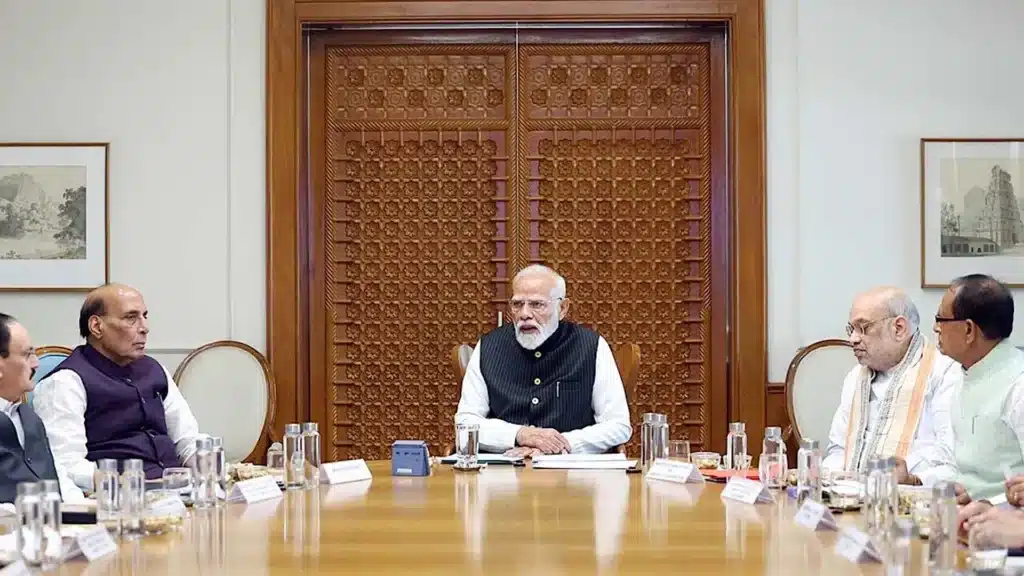
Prime Minister Narendra Modi chaired the 55th meeting of Pragati at Seva Teerth on Wednesday, November 25. Specifically, Pragati serves as the ICT-enabled governance platform for Pro-Active Governance and Timely Implementation. During this important session, the Prime Minister reviewed five critical infrastructure projects across India. Notably, these projects span the road, power, coal, and railway sectors, carrying a combined investment exceeding ₹78,000 crore. Through regular monitoring, the central government actively tracks major national infrastructure initiatives to accelerate progress. During the review, the Prime Minister emphasised that infrastructure delays carry serious consequences beyond mere cost escalation. Specifically, project delays postpone vital benefits intended for ordinary citizens, businesses, and the wider national economy. Therefore, Modi called upon government officials to resolve all pending issues with clear responsibility and realistic timelines. Furthermore, he stressed that teams must accompany timely project execution with uncompromisingly high construction standards. Consequently, officials must balance rapid delivery schedules with durable infrastructure quality across every active site. Reviewing ongoing road projects, Prime Minister Modi reiterated the crucial need to focus on outcomes over outlays. Accordingly, he called for expeditious implementation to ensure citizens quickly experience improved transport connectivity. Turning to the power sector, Modi suggested exploring innovative models for decentralised solar and wind projects. Specifically, engineers should position these clean energy installations closer to major consumption centres. Ultimately, this decentralised approach aims to improve affordable power availability while easing heavy pressure on transmission infrastructure. Next, while reviewing coal projects, Modi highlighted the human dimension of major industrial development. Specifically, he stressed that authorities must undertake rehabilitation and resettlement in a timely and dignified manner. Officials must execute these welfare measures seamlessly alongside ongoing coal project implementation. By prioritising affected families, project teams can prevent social disruptions while advancing essential domestic energy production. Finally, the 55th Pragati meeting also thoroughly reviewed India’s Industrial Training Institute ecosystem. Specifically, officials assessed progress under the Pradhan Mantri Skilling and Employability Transformation through Upgraded ITIs initiative. Addressing state leaders, Modi called upon chief ministers and chief secretaries to strengthen ITIs and deepen industry participation. Additionally, he advocated a ‘Classroom–Company–Career’ approach to directly connect vocational training with meaningful employment. Overall, Modi emphasised that institutions must organise skilling programs around local industrial clusters and specific sectoral requirements.
PM Modi Accuses Opposition of Targeting OBC Quota for Muslims
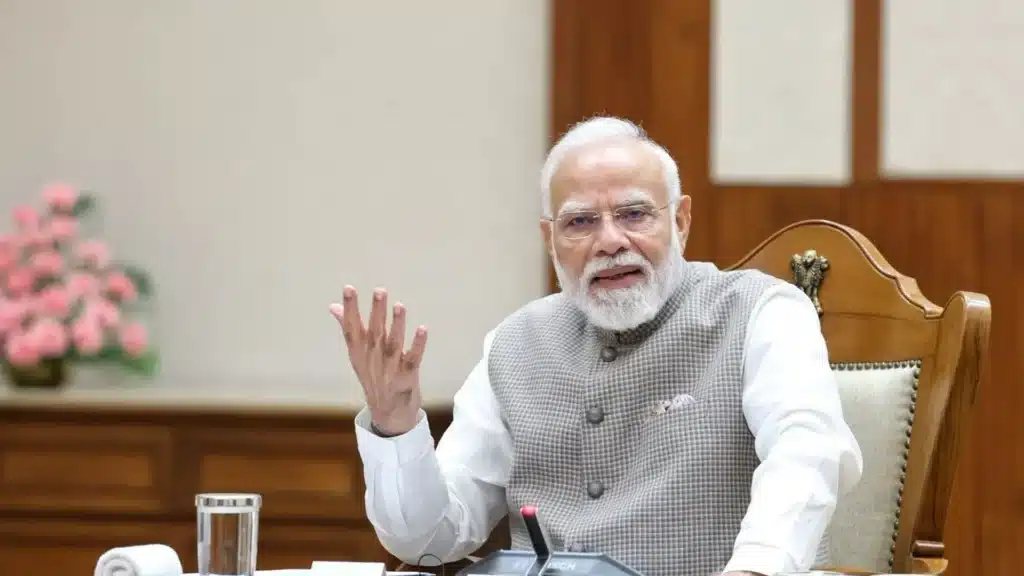
PM Modi accused the Opposition of seeking to cut Other Backward Classes quotas for Muslim reservations. He published this critique on his website on November 26, 2026. Modi called the plan appalling while pointing at the largest Opposition party. Dr. Babasaheb Ambedkar and the Constitution makers firmly opposed religion-based quotas. Lawmakers drew sharp criticism from Modi for blocking parliamentary proceedings. Disrupting democratic work fails to replace constitutional duties. Addressing the women’s reservation bill that failed in April, Modi accused the Opposition of blocking its passage. Parliament had debated linking the 33 percent quota to delimitation. Past governments that governed India for five decades faced strong attacks in the op-ed. Modi highlighted 75 years since the First Amendment and 50 years since the 42nd Amendment, noting both curtailed freedoms. Repeated misuse of Article 356 against state governments drew scrutiny. Removing Articles 370 and 35A in 2019 extended full constitutional rights to Jammu and Kashmir. Celebrating the end of Maoism this year, Modi stated tribal citizens now exercise rights safely. He warned against “dimagi Naxals” attempting to derail growth. Marking the Constitution’s adoption on November 26, 1949, Modi honored Rajendra Prasad and the Constituent Assembly. Recalling his modest background, he credited constitutional values for shaping his journey. Citing a World Bank report, Modi noted nearly 50 crore Indians escaped poverty. Welfare schemes like PM Awas Yojana, Ujjwala Yojana, and Ayushman Bharat lifted millions. Young Indians received a call to study constitutional history and serve the nation with duty.