
End of Trumpism?
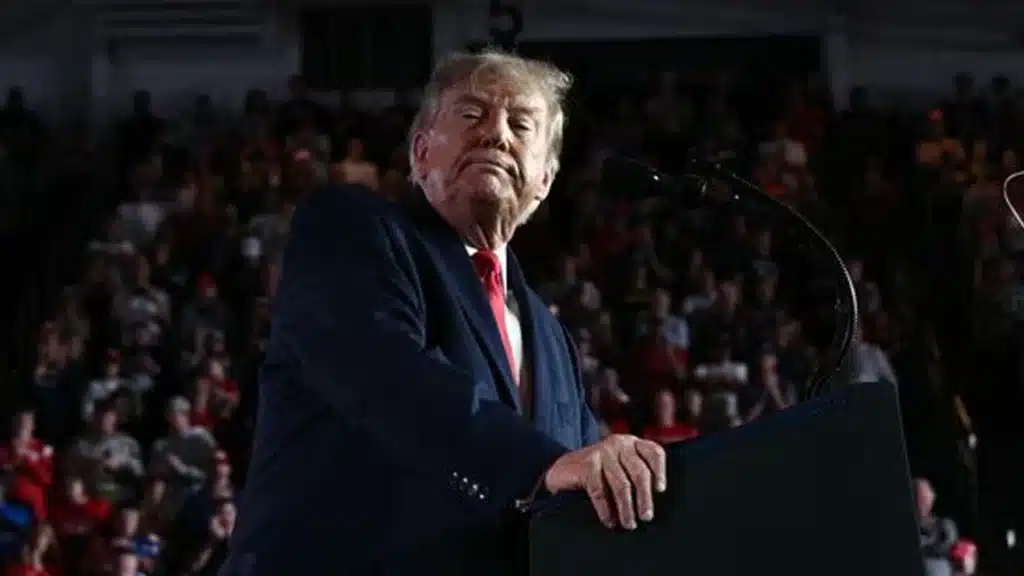
US President Donald Trump has suffered a major political setback after Democrats won control of both chambers of Congress in the November 3, 2026, midterm elections. The results mark a significant rejection of the Republican administration and reshape the political landscape ahead of the 2028 presidential election. In the Senate, Democrats secured at least seven Republican-held seats, winning in Kansas, Iowa, Texas, Ohio, Maine, North Carolina and South Carolina. The latest reported tally put Democrats and their two independent allies at 53 seats, against 41 Republicans. Six of the 35 Senate races remained uncalled in the reported results. The Senate has 100 seats, with 51 required for a majority. The House of Representatives also shifted to Democratic control. Democrats flipped more than 24 Republican-held districts, including several constituencies that supported Trump by double-digit margins in 2024. The 435-member House requires 218 seats for a majority. At the latest reported count, Democrats had secured 214 seats against 126 Republicans, with 95 races yet to be called. Subsequent projections confirmed Democratic control. The Republican setback extended beyond Congress. Thirty-six states held gubernatorial elections, with Democrats flipping several Republican-held governorships, including Georgia, Ohio, Iowa and Texas. Voter dissatisfaction played a significant role in the outcome. According to exit polling, around 75% of voters expressed anger or dissatisfaction with the country’s direction. Meanwhile, 70% wanted Congress to exercise stronger checks and balances on the President. Trump, who had urged voters to treat the midterms as a personal referendum, congratulated Democrats on their campaigning but rejected the suggestion that the results reflected his leadership. The Democratic victory will significantly limit Trump’s legislative influence during his final two years in office. With control of both chambers, Democrats can block legislation, scrutinise administration policies and challenge presidential appointments. The results mark a dramatic shift in Washington and set the stage for an increasingly contested political battle ahead of 2028.
Hyderabad police bust massive counterfeit currency racket
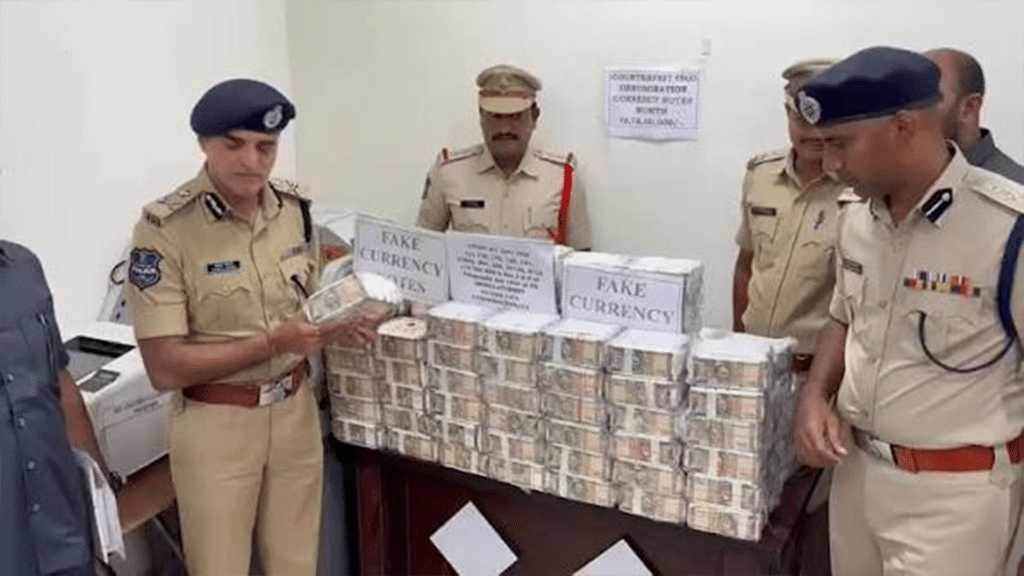
Hyderabad Police busted a massive counterfeit currency ring operating from a rented house in Kuntloor. Law enforcement officers arrested four suspects and seized fake 500-rupee banknotes worth 6.78 crore rupees. The Abdullapurmet Police and the Shadnagar Special Operations Team intercepted a vehicle near Ramoji Film City. Officers conducted a detailed vehicle search, uncovering fake notes along with high-tech printing machinery. Investigators revealed that the gang members scanned genuine notes and edited images using Photoshop software. The prime suspect learned advanced graphic editing techniques by watching social media and online tutorials. The syndicate lured victims by offering fake bills at one-third of their face value. The criminals also possessed walkie-talkies, fake police identity cards, and a dummy pistol. They impersonated police officers, threatened prospective victims, and extorted genuine cash during staged transactions. Police produced the four arrested suspects before a local court, which remanded them to judicial custody. Meanwhile, law enforcement agencies launched intensive search operations to track down three absconding gang members. Officials expect further breakthroughs as investigations into the distribution network continue.
The Decline of the Right: A Global Political Realignment

The American midterm elections have delivered a warning to the political Right that extends well beyond Washington. Donald Trump’s Republican Party has suffered a significant electoral setback, with Democrats making major gains and capturing the Senate, the House of Representatives and the gubernatorial posts. Among the emerging figures is Abdul El-Sayed, whose rise in Michigan reflects the growing visibility of Muslim politicians within the American Left. But America is not an isolated case. In Brazil, the Bolsonaro political movement has failed to reclaim the presidency. In Israel, Benjamin Netanyahu has struggled to secure a parliamentary majority, while Arab political parties have gained greater significance in the country’s electoral arithmetic. Different countries, different political realities, but an increasingly familiar pattern: right-wing political establishments are facing mounting challenges from increasingly consolidated opposition forces. What makes these developments particularly interesting is that the opposition is not necessarily united by a common ideology. Left-wing activists, liberal voters, minority communities and regional political formations often have very different priorities. Yet, when confronted with a common political adversary, they have demonstrated an ability to find electoral common ground. For the Right, this presents a challenge that goes beyond losing individual elections. It raises questions about the durability of its voter coalitions, its ability to respond to changing political aspirations and, perhaps most importantly, its capacity to prevent disparate opposition groups from coming together. Is this the beginning of a broader global retreat of the Right, or are we witnessing a new phase of electoral politics in which coalition-building matters more than ideological strength? Is the Right beginning to lose the arithmetic? Brazil: The Bolsonaro Movement Fails to Reclaim Power Brazil offers one of the clearest examples of the difficulties confronting the global Right. Jair Bolsonaro’s political movement, which once transformed the country’s political landscape, has struggled to translate its considerable electoral support into a lasting hold over power. Bolsonaro’s defeat in the 2022 presidential election to Luiz Inácio Lula da Silva was narrow. Lula secured 50.9 per cent of the vote against Bolsonaro’s 49.1 per cent, exposing just how deeply divided Brazilian society had become. But the bigger test for the Brazilian Right came with the question of whether the Bolsonaro brand could survive beyond Bolsonaro himself. The answer has proved complicated. In the 2026 presidential election, Lula defeated Flávio Bolsonaro, Jair Bolsonaro’s son, in the October runoff, securing 51.8 per cent of the vote against his opponent’s 48.2 per cent. The attempt to transfer the political legacy of Bolsonaro to the next generation had failed to bring the presidency back to the Right. There is, however, an important distinction. Bolsonaro’s political movement has not disappeared. The Right continues to command considerable support in Brazil’s Congress, and its electoral base remains substantial. What it has struggled to achieve is a broad enough coalition to regain control of the presidency. This is where the Brazilian experience becomes particularly relevant. A political movement can retain a loyal ideological base and still struggle to win a national election. Lula’s victory suggests that the ability to bring together different constituencies, including working-class voters, sections of the urban electorate and those opposed to Bolsonaro’s political legacy, can prove decisive. For the Brazilian Right, the challenge is no longer simply about defending Bolsonaro’s record. It is about finding a political identity that can appeal beyond his established support base. And that is perhaps the first lesson emerging from Brazil: a movement may survive the defeat of its leader, but surviving electorally and returning to power are two very different things. Israel: Netanyahu’s Electoral Setback and the Growing Influence of Arab Parties In Israel, where Benjamin Netanyahu has dominated national politics for much of the past decade, the latest election has exposed a significant weakness in the country’s right-wing political establishment. Despite emerging as the largest individual political party, Netanyahu’s Likud has failed to translate its electoral performance into a parliamentary majority. More importantly, the changing balance of power has brought Arab-led political parties into a position of unprecedented significance. The October 2026 election left Netanyahu’s coalition with 53 seats in the 120-member Knesset, eight short of the 61 required to form a government. The opposition bloc secured 48 seats, while Arab-led parties collectively won 19. The latter figure is particularly significant, representing a substantial increase from their combined tally of 10 seats in the previous election. The final count was released on October 30, with formal certification scheduled for November 4. The numbers tell an interesting story. Netanyahu’s political alliance, which held 68 seats in the outgoing parliament, has lost its majority. Meanwhile, the two Arab-led formations, the Joint List and Ra’am, have emerged as potentially decisive players in determining who governs Israel next. This does not mean that the Arab parties have automatically aligned themselves with the Israeli Left or that they constitute a unified political bloc. They have different political positions and strategic priorities. However, their combined parliamentary strength has made it considerably more difficult for Netanyahu’s opponents to form a government without either a Unity government that now seems unlikely or engaging with Arab political representatives. That possibility also exposes the contradictions within the Israeli opposition. Several parties opposed to Netanyahu have been reluctant to cooperate with Arab-led formations, complicating efforts to assemble a viable alternative government. The opposition may have the numbers to challenge Netanyahu, but whether it can overcome its own political differences remains uncertain. There is another dimension to this development. Arab citizens constitute a significant minority within Israel, and their political representation has frequently been central to discussions about the country’s democratic character. Their increased parliamentary presence gives them greater leverage in a political system where even a handful of seats can determine the fate of a government. For Netanyahu, the setback is particularly consequential. His political survival has long depended on maintaining a coalition of right-wing, religious and nationalist parties. The latest election suggests that this arrangement is becoming increasingly difficult to sustain in the face of growing left, liberal and Muslim cooperation.
New Delhi pollution ignites intense political blame game
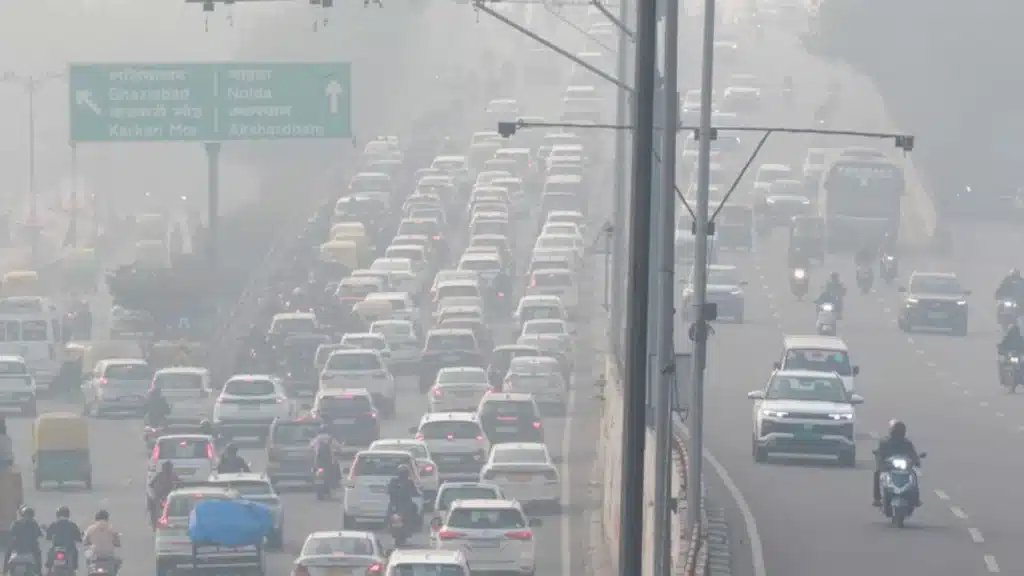
Political tensions escalated sharply in New Delhi over worsening air quality indices and rising stubble-burning incidents. Leaders from rival parties launched fierce verbal attacks concerning regional environmental management failures. Bharatiya Janata Party representatives accused the Punjab administration of neglecting agricultural residue management protocols. Party leaders highlighted satellite data showing hundreds of active farm fires across northern districts. They claimed that state authorities failed to utilize central funds allocated specifically for stubble control equipment. Meanwhile, regional opponents dismissed these accusations as politically motivated propaganda. Spokespersons argued that central agencies overlooked industrial emissions and vehicular exhaust inside the capital. Critics asserted that governing authorities avoided implementing long-term solutions for persistent urban smog. Environmental experts urged politicians to prioritize public health initiatives over continuous partisan disputes. Citizens continue experiencing severe respiratory discomfort as hazardous particulate matter blankets residential neighborhoods. Municipal corporations enforce emergency anti-pollution measures to curb dust and vehicular congestion across major arterial corridors.
Texas Turns Blue: The Red Stronghold Finally Crumbles
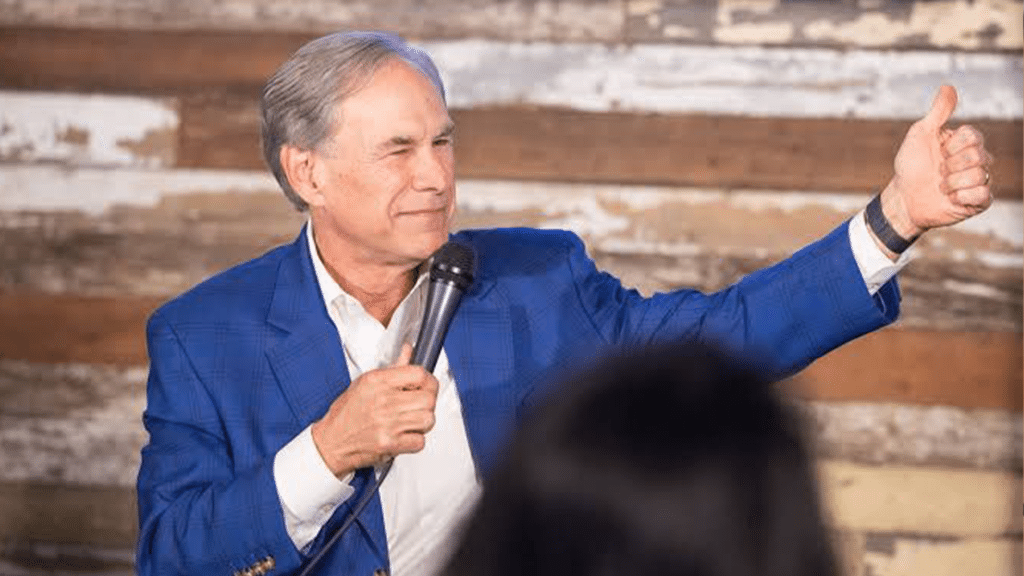
In a stunning political realignment that few believed possible, Texas has turned blue in the 2026 midterms.
Hardik Pandya faces potential IPL trade talks
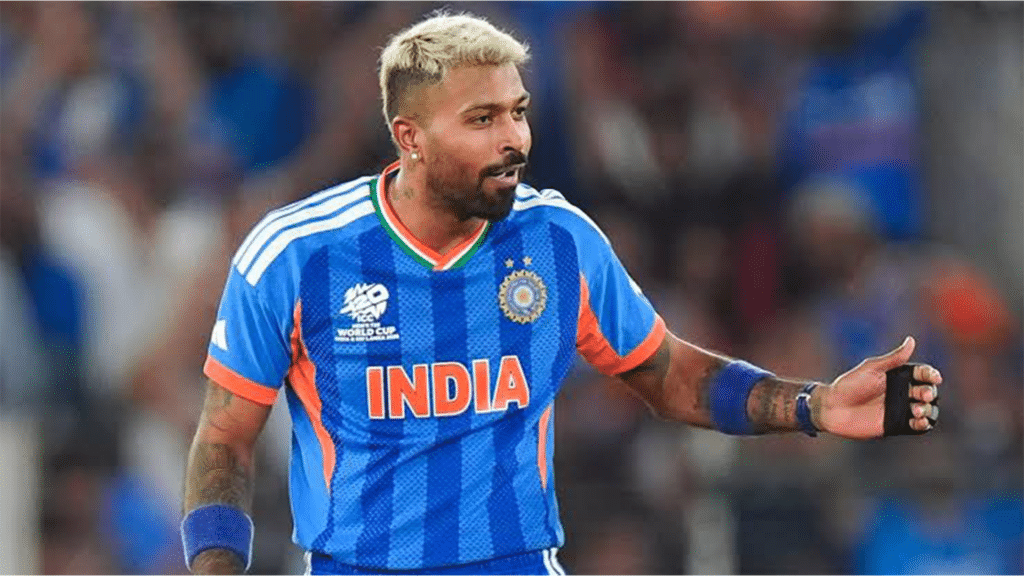
Kolkata Knight Riders showed renewed interest in securing star all-rounder Hardik Pandya for upcoming Indian Premier League tournaments. Franchise officials evaluate leadership options following recent squad adjustments. Mumbai Indians initiated complex discussions regarding potential player exchanges. Mumbai management requested fast bowler Harshit Rana and young batter Angkrish Raghuvanshi in return for Pandya. Meanwhile, Kolkata leaders remain hesitant about releasing key emerging talents from their core setup. Analysts emphasize that player fitness evaluations and captaincy requirements heavily influence ongoing negotiations between both franchises. Team representatives plan further meetings ahead of upcoming retention deadlines. Observers anticipate major roster announcements before the next mini auction takes place.
Old Trafford Witnesses Stunning European Comeback

Manchester United end their nine-game winless streak with a comeback win over AS Roma.
Himanta warns Chicken neck corridor Railway challenges
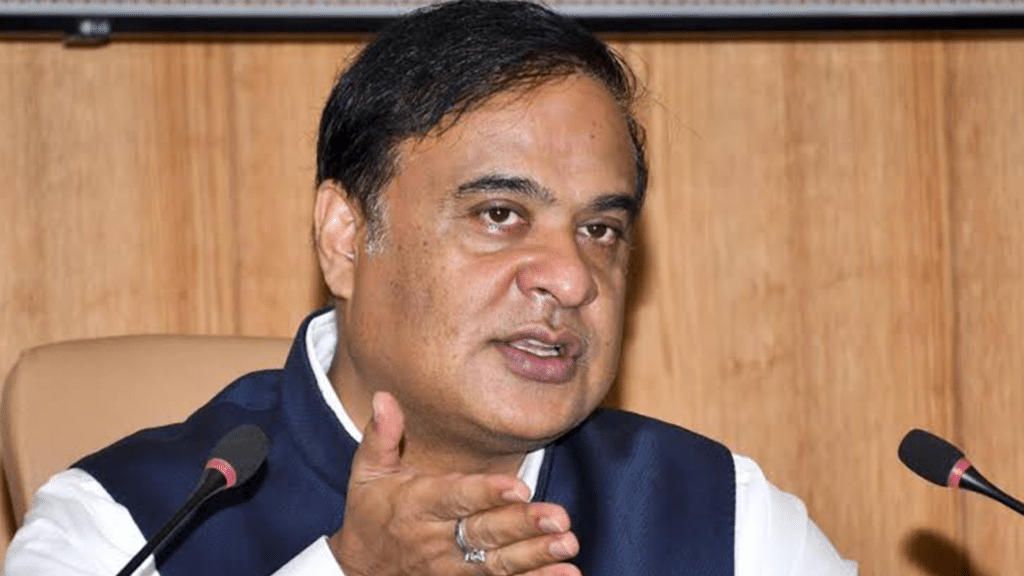
Assam Chief Minister Himanta Biswa Sarma discussed major engineering obstacles regarding the proposed Delhi-to-Guwahati bullet train route. He highlighted severe geographical constraints posed by the sensitive Siliguri corridor. The narrow land strip connects mainland India with northeastern states. Constructing high-speed railway tracks through this vulnerable region demands extraordinary geological planning. National security considerations and dense international borders complicate extensive infrastructural excavation along the narrow passage. Sarma acknowledged that central ministries prioritize regional connectivity enhancements across eastern zones. However, technical experts must evaluate environmental hazards before finalizing detailed project reports. Engineers face difficult terrain, heavy monsoon flooding, and unstable soil conditions throughout the eastern alignment. Railway authorities continue exploring alternative pathways to bypass congested zones safely. Officials emphasize that safety standards remain paramount during high-speed railway route surveys. Meanwhile, passenger services improve steadily through upcoming Vande Bharat sleeper train expansions linking Guwahati directly with major national hubs.